Loading...
Franjo Tuđman vs Julius Caesar
Julius Caesar leads by 25.6 pts · 2 figures compared
…
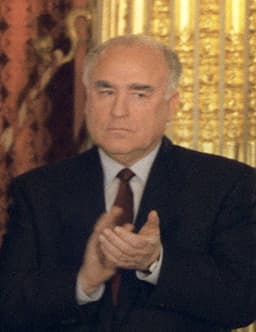
Franjo Tuđman
Politician · Modern
57.2Total

Julius Caesar
General · Ancient
82.8Total
Basic Information
Born
1922
-100
Died
—
-44
Era
Modern
Ancient
Nationality
Croatia
Roman Republic
Occupation
Politician
General
Civilization
Western
Western
Score Comparison
Military (10%)
41.6
88.0
Political (20%)
68.0
78.0
Influence (20%)
60.0
85.0
Legacy (20%)
49.2
82.0
Leadership (15%)
68.0
80.0
Strategy (15%)
53.8
85.0
TOTAL
57.2
82.8
Franjo Tuđman — Complete Timeline
1990 AD
Election as First President of Independent CroatiaPolitical Action◆ Major
Franjo Tuđman was elected president of the Socialist Republic of Croatia in the first multi-party elections on May 30, 1990. His Croatian Democratic Union (HDZ) won a majority, and he led Croatia toward independence from Yugoslavia, declaring sovereignty later that year.
IndependenceElectionCroatia
Impact: nationalconstructive
1991 AD
Declaration of Croatian IndependencePolitical Action◆ Major
Tuđman led Croatia in declaring independence from Yugoslavia on June 25, 1991, following a referendum. This triggered the Croatian War of Independence against the Yugoslav People's Army and Serb rebels, resulting in a four-year conflict that ended with Croatian victory.
IndependenceWarYugoslav Breakup
Impact: regionalconstructive
1995 AD
Operation StormWar◆ Major
Tuđman ordered the Croatian Army to launch Operation Storm in August 1995, a military offensive that recaptured the Serb-held Krajina region. The operation ended the Croatian War of Independence but resulted in the exodus of approximately 200,000 Serb civilians and accusations of war crimes.
Military OffensiveWar CrimesCroatian War
Impact: regionaldestructive
Signing of the Dayton AgreementPolitical Action◆ Major
Tuđman signed the Dayton Peace Agreement on December 14, 1995, ending the Bosnian War. The agreement established Bosnia and Herzegovina as a decentralized state with two entities, and Tuđman's role was criticized for supporting Croat separatism in Bosnia.
Peace TreatyBosnian WarDiplomacy
Impact: regional
1999 AD
Death and Legacy ControversyOther◆ Major
Tuđman died on December 10, 1999, after a long battle with cancer. His death marked the end of an era, and his legacy remains divisive: praised for achieving Croatian independence but criticized for authoritarian tendencies and nationalist policies that contributed to ethnic conflict.
DeathLegacyCroatia
Impact: national
Julius Caesar — Complete Timeline
58 BC
Gallic WarsWar◆ Major
Caesar, as proconsul of Gaul, launched a series of campaigns that conquered all of Gaul (modern France, Belgium, and parts of Switzerland). He fought numerous battles, including against the Helvetii, the Belgae, and the Gallic chieftain Vercingetorix. The wars brought immense wealth and a loyal army to Caesar.
Gallic WarsConquestRoman Expansion
Impact: regional
49 BC
Crossing the RubiconPolitical Action◆ Major
Caesar led Legio XIII across the Rubicon River into Italy, defying the Roman Senate's order to disband his army. This act triggered a civil war against Pompey and the Optimates, ultimately leading to Caesar's dictatorship and the end of the Roman Republic.
Roman Civil WarEnd of RepublicPower Struggle
Impact: global
48 BC
Battle of PharsalusWar◆ Major
Caesar's outnumbered army defeated the larger forces of Pompey the Great at Pharsalus in Greece. Caesar's tactical use of a reserve line to counter Pompey's cavalry charge proved decisive. Pompey fled to Egypt, where he was assassinated, leaving Caesar as the undisputed master of the Roman world.
Roman Civil WarBattleDecisive Victory
Impact: regional
44 BC
Appointment as Dictator for LifePolitical Action◆ Major
The Roman Senate appointed Caesar dictator perpetuo (dictator for life), granting him unprecedented personal power. This move concentrated military, legislative, and judicial authority in one person, effectively ending the Roman Republic's traditional system of checks and balances and alarming many senators.
DictatorshipEnd of RepublicPower Consolidation
Impact: regionaldestructive
Assassination on the Ides of MarchPolitical Action◆ Major
A group of Roman senators, led by Marcus Junius Brutus and Gaius Cassius Longinus, stabbed Caesar to death at a meeting of the Senate in the Theatre of Pompey. The assassination was intended to restore the Republic, but instead triggered another civil war that led to the rise of the Roman Empire.
AssassinationRoman PoliticsEnd of Republic
Impact: globaldestructive
Expert Analysis
franjo-tu-man-vs-julius-caesar
# The Man Who Crossed the Rubicon and the Man Who Crossed the Balkans
On a winter morning in 44 BCE, a Roman senator named Gaius Julius Caesar walked into the Senate chamber at the Theatre of Pompey, ignoring warnings of danger. Within minutes, he lay dead, stabbed twenty-three times by men he had once called friends. Two thousand years later, in December 1999, another leader—Franjo Tuđman, the first president of an independent Croatia—died in a Zagreb hospital bed, surrounded by a nation still debating whether he was its father or its flawed patriarch. Both men remade their worlds, but the paths they walked could not have been more different. What drove Caesar to cross the Rubicon and Tuđman to cross the Balkans? The answer lies not only in their ambitions, but in the eras that shaped them.
Origins
Julius Caesar was born into a patrician family in 100 BCE, at a time when the Roman Republic was already fraying at the seams. His uncle, Gaius Marius, had been a populist reformer; his father died when Caesar was sixteen. The young aristocrat inherited a name, a debt, and a burning desire to rise above his station. He was raised in a world of civil wars, slave revolts, and senatorial intrigue—a crucible that taught him that power was something to be seized, not waited for.
Franjo Tuđman was born in 1922, in the village of Veliko Trgovišće, in what was then the Kingdom of Serbs, Croats, and Slovenes. His father was a farmer and a local politician; his mother died when he was a child. Tuđman grew up in a land of ethnic tension, where being Croatian meant navigating a maze of empires—Austro-Hungarian, Ottoman, and Yugoslav. He joined the Partisans during World War II, fighting against fascism, but he never forgot the dream of a Croatian state. Where Caesar inherited a sense of entitlement, Tuđman inherited a sense of grievance.
Rise to Power
Caesar’s rise was a masterclass in calculated risk. He climbed the Roman political ladder—quaestor, aedile, praetor—always spending more than he had, borrowing from wealthy allies like Crassus, and building a network of loyal soldiers and clients. His appointment as governor of Gaul in 58 BCE gave him the platform he needed. For eight years, he conquered a territory larger than Italy itself, winning battles that would become legend—Alesia, the Rhine, the first Roman invasion of Britain. His Commentaries on the Gallic Wars were not just history; they were propaganda, crafted to make him seem invincible.
Tuđman’s rise was slower, more bureaucratic. He became a historian and a general in the Yugoslav People’s Army, but his nationalist views cost him his career. In the 1970s, he was imprisoned for "counter-revolutionary activities." He emerged not as a conquering hero, but as a dissident intellectual. When Yugoslavia began to disintegrate in 1990, Tuđman was ready. He was elected president of the Socialist Republic of Croatia on May 30, 1990, in the first multi-party elections. His opportunity came not from a river crossing, but from a political vacuum.
Leadership & Governance
Caesar governed like a whirlwind. As dictator, he reformed the calendar, granted citizenship to provinces, launched public works, and centralized power in his own hands. His military genius was unquestioned—at Pharsalus in 48 BCE, he defeated Pompey’s larger army with tactical brilliance. But his political wisdom was more fragile. He pardoned his enemies, but they did not forgive him. He tried to rule as a monarch without a crown, and the Republic’s elite saw him as a tyrant.
Tuđman governed like a builder in a storm. His first task was to forge a nation from a war. On June 25, 1991, he declared Croatian independence, triggering a brutal conflict with the Yugoslav Army and Serbian paramilitaries. His military strategy was pragmatic: he waited for international support, built a Croatian army from scratch, and then struck. In August 1995, he ordered Operation Storm, a lightning offensive that recaptured Serb-held territory. It was his Pharsalus. But his political rule grew authoritarian—he muzzled the press, centralized power in his own party, and ruled with a heavy hand. He signed the Dayton Agreement on December 14, 1995, ending the Bosnian War, but the peace came at a cost: Croatia gained land, but lost its soul to nationalist fervor.
Triumph & Tragedy
Caesar’s greatest moment was his triumph over Gaul—a feat that made Rome rich and Caesar immortal. But his tragedy was the Ides of March. He had conquered the world, but he could not conquer the Senate. His assassination on March 15, 44 BCE, plunged Rome into another civil war, and his adopted heir, Octavian, would finish what Caesar started by founding the Empire.
Tuđman’s greatest moment was the birth of an independent Croatia—a dream that had eluded his people for centuries. He led his nation through war, won recognition, and built a state. But his tragedy was the legacy of division. His authoritarian tendencies, his refusal to reckon with wartime atrocities, and his death in 1999 left Croatia with a fractured identity. Was he a liberator or a despot? The question remains unanswered.
Character & Destiny
Caesar was a gambler. He crossed the Rubicon in 49 BCE because he believed he could not survive without power. He was vain, brilliant, and ruthless—a man who wept when he saw a statue of Alexander the Great, because he felt he had achieved nothing by the same age. His character drove him to risk everything, and his destiny was to die by the sword.
Tuđman was a survivor. He endured war, imprisonment, and exile. He was stubborn, proud, and deeply nationalistic—a man who believed that the Croatian nation had been wronged by history, and that he alone could set it right. His character made him a relentless leader, but also a lonely one. His destiny was to die in office, still fighting battles that had already ended.
Legacy
Caesar’s legacy is the Roman Empire. His name became a title—Kaiser, Tsar—and his reforms shaped Western civilization for two millennia. He is remembered as a military genius, a political revolutionary, and a cautionary tale about ambition.
Tuđman’s legacy is a small nation that survived against the odds. Croatia is independent, a member of NATO and the European Union, but it remains haunted by the wars of the 1990s. Tuđman is honored as a founding father, but also criticized for his authoritarianism. His legacy score of 67.7 reflects a figure who is neither hero nor villain, but something in between.
Conclusion
Caesar and Tuđman both crossed their Rubicons—one a river, the other a war. Both men changed history, but the scale of their transformations was vastly different. Caesar remade the known world; Tuđman remade a corner of it. Yet both faced the same dilemma: how to hold power without losing oneself. Caesar died with a dagger in his back, a victim of his own success. Tuđman died in a hospital bed, a victim of his own contradictions. In the end, the difference between them is not just time or place, but the nature of their dreams. Caesar dreamed of an empire that would outlast him. Tuđman dreamed of a nation that would remember him. Both got what they wanted—and both paid for it.
Rankings
🥇
Julius CaesarLeader
Mil: 88.0Pol: 78.0Inf: 85.0
82.8
🥈
Franjo Tuđman
Mil: 41.6Pol: 68.0Inf: 60.0
57.2
+25.6 behind
How This Comparison Works
Algorithm
Each figure is scored on 6 dimensions (0—100 scale) based on structured historical data: Military (10%), Political (20%), Influence (20%), Legacy (20%), Leadership (15%), Strategy (15%). The weighted total produces the final ranking.
Data Sources
Scores are computed from structured sub-indicators in the database. Scale factors adjust for era (Ancient ×0.85, Modern ×1.0) and civilization size (Eastern ×1.05, Other ×0.80) to account for differences in population and military scale.
Maximum 3 Figures
Comparisons are limited to 2—3 figures to ensure readability and statistical meaningfulness.
Error Margins
±5 points per dimension — Sub-scores are derived from historical records with inherent uncertainty. Two figures within 5 points on a dimension should be considered roughly equivalent in that area.
Total Score Accuracy
±3 points overall — The weighted combination of 6 dimensions produces a total score with approximately ±3 points of uncertainty. Differences of less than 3 points are not statistically significant— the figures are effectively tied.
Known Limitations
- Historical records are incomplete and uneven across civilizations
- Figures from oral-tradition societies may be underrepresented
- Occupation labels can misclassify multi-role figures
- Scores measure capability and impact, not moral character
- Quantitative scoring is a comparison tool, not absolute truth
Capability Radar
Military (10%) — Battles & Warfare
Battles
10
95
Win Rate
10
92
Expansion
10
97
Political (20%) — Governance & Reform
Reform
60
90
Diplomacy
55
85
Economy
50
82
Influence (20%) — Cultural & Global Reach
Cultural
55
88
Global
45
94
Legacy (20%) — Historical Impact
Historical
55
95
Longevity
40
96
Leadership (15%) — Power & Stability
Tenure
65
75
Stability
40
60
Strategy (15%) — Tactics & Innovation
Strategy
10
94
Tactics
10
96
Reform
15
88
Similar Comparisons
Comments & Discussion
数据拆解师6/17/2026
军事胜利不能直接比较,但数据不会撒谎。凯撒在高卢战争中指挥了约5万罗马士兵,面对超过30万高卢联军,以少胜多记录令人发指。图季曼在1991-1995年指挥克罗地亚军队,总兵力约20万,主要靠国际承认和北约空袭打赢。凯撒的胜率是个人战略天才的产物,图季曼的“胜利”更依赖外交剧本。别把坦克损耗和战斧天降混为一谈。
Classics Grinder6/17/2026
Sure, let's compare Caesar's Commentarii—a masterpiece of propaganda and history combined—to Tuđman's dubious historical treatises. Caesar wrote with clarity, ambition, and self-aggrandizement that still shapes how we see the Gallic Wars. Tuđman cranked out revisionist tomes denying Jasenovac death tolls, trying to whitewash Ustaša crimes. One man used the pen to immortalize conquest; the other used it to muddy genocide. That’s not a comparison—that’s a moral canyon.
巴尔干史盲克星6/17/2026
你们都在谈军事和修辞,我来说点更深的。凯撒的罗马是扩张主义帝国,图季曼的克罗地亚是民族自决产物。凯撒为个人荣耀毁了共和国,图季曼为民族独立切碎了联邦。但关键区别:凯撒死后罗马陷入14年内战,奥古斯都才收场;图季曼死后克罗地亚平稳交接,没有血流成河。论破坏力,图季曼最多是个地区性的泥瓦匠,凯撒才是真正的帝国粉碎机。
Historian8756/17/2026
Two ambitious men, sure, but Tuđman was a historian first—PhD, institute director, wrote multiple books. Caesar was a politician-soldier who dabbled in memoirs. Yet Tuđman's scholarship is now considered ideologically tainted, especially his manipulation of Holocaust and genocide statistics. Caesar's propaganda at least has the decency to be entertaining and broadly accurate about geography. Tuđman's intellectual legacy is a cautionary tale: when the pen serves the flag, history becomes fiction.
Chronicler72136/17/2026
Tuđman vs Caesar? That’s like comparing a village mayor to a god-emperor. Caesar crossed the Rubicon with a single legion and plunged an entire Republic into civil war—Tuđman didn’t cross anything; he was handed a nation on a silver platter after Yugoslavia collapsed. Caesar personally led charges in Gaul, conquered a million men, and wrote his own history. Tuđman wrote nationalist speeches. Give me the man who fought his way to power, not the one who stumbled into it.