Loading...
Francois-Michel Le Tellier de Louvois vs Julius Caesar
Julius Caesar leads by 22.3 pts · 2 figures compared
…
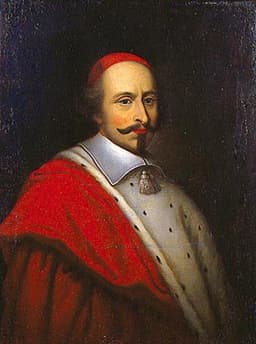
Francois-Michel Le Tellier de Louvois
Politician · Modern
60.5Total

Julius Caesar
General · Ancient
82.8Total
Basic Information
Born
1641
-100
Died
1691
-44
Era
Modern
Ancient
Nationality
France
Roman Republic
Occupation
Politician
General
Civilization
Western
Western
Score Comparison
Military (10%)
47.5
88.0
Political (20%)
65.0
78.0
Influence (20%)
55.0
85.0
Legacy (20%)
55.0
82.0
Leadership (15%)
80.0
80.0
Strategy (15%)
65.4
85.0
TOTAL
60.5
82.8
Francois-Michel Le Tellier de Louvois — Complete Timeline
1666 AD
Appointed Secretary of State for WarPolitical Action◆ Major
Louvois was appointed Secretary of State for War under Louis XIV. He became the king's principal military administrator, overseeing the army's organization, logistics, and discipline for over two decades.
French ArmyLouis XIVMilitary Administration
Impact: national
1668 AD
Reformed the French ArmyReform◆ Major
Louvois implemented major army reforms, including standardizing uniforms, improving supply systems, and establishing military hospitals. He also introduced a system of military intendants to ensure discipline and loyalty.
Military ReformFrench ArmyLouis XIV
Impact: nationalconstructive
1670 AD
Established the Hôtel des InvalidesReform
Louvois oversaw the creation of the H
Military WelfareSocial ReformFrench Army
Impact: nationalconstructive
1689 AD
Organized the Devastation of the PalatinateWar◆ Major
Louvois ordered the systematic destruction of the Palatinate region in Germany during the Nine Years' War. French troops burned towns, villages, and crops to deny resources to enemy forces, causing widespread suffering.
Nine Years' WarScorched EarthWar Crimes
Impact: regionaldestructive
Julius Caesar — Complete Timeline
58 BC
Gallic WarsWar◆ Major
Caesar, as proconsul of Gaul, launched a series of campaigns that conquered all of Gaul (modern France, Belgium, and parts of Switzerland). He fought numerous battles, including against the Helvetii, the Belgae, and the Gallic chieftain Vercingetorix. The wars brought immense wealth and a loyal army to Caesar.
Gallic WarsConquestRoman Expansion
Impact: regional
49 BC
Crossing the RubiconPolitical Action◆ Major
Caesar led Legio XIII across the Rubicon River into Italy, defying the Roman Senate's order to disband his army. This act triggered a civil war against Pompey and the Optimates, ultimately leading to Caesar's dictatorship and the end of the Roman Republic.
Roman Civil WarEnd of RepublicPower Struggle
Impact: global
48 BC
Battle of PharsalusWar◆ Major
Caesar's outnumbered army defeated the larger forces of Pompey the Great at Pharsalus in Greece. Caesar's tactical use of a reserve line to counter Pompey's cavalry charge proved decisive. Pompey fled to Egypt, where he was assassinated, leaving Caesar as the undisputed master of the Roman world.
Roman Civil WarBattleDecisive Victory
Impact: regional
44 BC
Appointment as Dictator for LifePolitical Action◆ Major
The Roman Senate appointed Caesar dictator perpetuo (dictator for life), granting him unprecedented personal power. This move concentrated military, legislative, and judicial authority in one person, effectively ending the Roman Republic's traditional system of checks and balances and alarming many senators.
DictatorshipEnd of RepublicPower Consolidation
Impact: regionaldestructive
Assassination on the Ides of MarchPolitical Action◆ Major
A group of Roman senators, led by Marcus Junius Brutus and Gaius Cassius Longinus, stabbed Caesar to death at a meeting of the Senate in the Theatre of Pompey. The assassination was intended to restore the Republic, but instead triggered another civil war that led to the rise of the Roman Empire.
AssassinationRoman PoliticsEnd of Republic
Impact: globaldestructive
Expert Analysis
francois-michel-le-tellier-de-louvois-vs-julius-caesar
# The General and the Bureaucrat
On a January morning in 49 BCE, Julius Caesar stood at the banks of the Rubicon River, a small stream separating his province of Gaul from Italy proper. To cross with his army was treason; to turn back was political oblivion. He hesitated, then reportedly said, “The die is cast,” and marched his legions into history. Half a world away and seventeen centuries later, a very different kind of warrior sat in a candlelit office in Versailles, drafting orders that would send French armies marching across Europe—not with a sword in his hand, but with a quill. François-Michel Le Tellier de Louvois never led troops into battle. Yet he, too, transformed the art of war. Caesar conquered nations; Louvois conquered logistics. Their stories reveal two radically different paths to power, and two visions of what it means to command.
Origins
Gaius Julius Caesar was born into the chaos of the late Roman Republic, a world of civil wars, senatorial corruption, and hungry populists. His family, the Julii, claimed descent from the goddess Venus, but they were neither rich nor powerful. Young Caesar learned early that in Rome, survival depended on alliances, debts, and sheer audacity. He was captured by pirates as a young man, laughed at their ransom demand, and after his release raised a fleet to crucify them. This was a man who believed the world owed him everything and would stop at nothing to collect.
Louvois, by contrast, was born in 1641 into the orderly machinery of absolute monarchy. His father, Michel Le Tellier, was already a powerful minister under Louis XIV. Young Louvois did not need to fight pirates or charm the masses; he needed to master paperwork. He studied law, administration, and the quiet arts of court intrigue. Where Caesar’s youth was a gamble, Louvois’s was a tutorial. The Republic demanded a gambler; the Sun King demanded a clerk.
Rise to Power
Caesar’s ascent was a masterpiece of risk-taking. He climbed the Roman political ladder—quaestor, aedile, praetor—by spending borrowed money on lavish games and bribes. He formed the First Triumvirate with Pompey and Crassus, an illegal but effective alliance. Then he secured command in Gaul, where over eight years he conquered a vast territory, built a loyal army, and wrote his own propaganda in the *Commentaries*. When the Senate ordered him to disband his forces, he crossed the Rubicon instead. Within four years, he was dictator for life.
Louvois rose differently. In 1666, at age twenty-five, he was appointed Secretary of State for War—not because he had won battles, but because his father arranged it. Yet Louvois proved that competence could be as dangerous as ambition. He standardized French army uniforms, improved supply lines, and created a system of military hospitals, most famously the Hôtel des Invalides, established in 1670. He turned the army from a feudal patchwork into a professional machine. His power came not from legions but from royal favor, and he kept it by being indispensable.
Leadership & Governance
Caesar ruled through personal magnetism and military genius. He led from the front, sharing rations with his soldiers and marching alongside them. His strategy at Alesia—building fortifications around both the Gauls inside and the relief army outside—remains a textbook example of siege warfare. Politically, he reformed the calendar, granted citizenship to provincials, and began public works that employed the poor. But his governance was autocratic, and his contempt for the Senate was barely concealed. He centralized power in himself, and that made him enemies.
Louvois ruled through systems. He did not need to inspire love; he needed to ensure that every soldier had a musket, every regiment a uniform, and every campaign a supply train. His military score of 62.7 reflects his lack of battlefield command, but his leadership score of 80.3 captures his administrative genius. He was ruthless in pursuit of efficiency. In 1689, during the Nine Years’ War, he ordered the Devastation of the Palatinate—a scorched-earth campaign designed to deny resources to the enemy. Thousands of civilians died. Louvois did not lose sleep. He was a bureaucrat who saw war as a problem to be solved, not a glory to be won.
Triumph & Tragedy
Caesar’s greatest triumph was his conquest of Gaul, which brought immense wealth and a veteran army to Rome. His greatest tragedy was his assassination on the Ides of March in 44 BCE, stabbed by senators he had pardoned. He had achieved absolute power, but he never learned to share it. His reforms died with him, though his adopted heir Octavian would build the empire Caesar had envisioned.
Louvois’s triumph was the transformation of the French army into the most formidable military force in Europe. His tragedy was that he was never truly trusted. Louis XIV kept him in place but never made him a friend. When Louvois died suddenly in 1691, at age fifty, some whispered poison. The king showed little grief. Louvois had been a brilliant tool, but tools are replaceable.
Character & Destiny
Caesar’s character was defined by audacity. He gambled, he won, and he gambled again. His mercy toward defeated enemies was legendary, but it was also strategic—he wanted them as allies, not martyrs. Yet his arrogance blinded him. He dismissed the conspiracy against him, ignored warnings, and walked into the Senate unarmed. His destiny was to be both the destroyer and the midwife of the Roman Republic.
Louvois’s character was defined by order. He was efficient, cold, and utterly loyal to the state as embodied by the king. He did not seek personal glory; he sought control. His destiny was to be forgotten by all but historians. While Caesar’s name became synonymous with power, Louvois’s name is known only to specialists. The general left a legend; the bureaucrat left a system.
Legacy
Caesar’s legacy is immeasurable. His name became a title—*Kaiser*, *Tsar*—and his writings shaped Western literature. The Roman Empire he set in motion lasted another five centuries in the West and a millennium in the East. His assassination did not save the Republic; it ended it. He scored 82.0 in legacy, and rightly so.
Louvois’s legacy is quieter but real. The modern military staff system, the idea that war can be managed from a desk, owes much to him. His reforms made the French army the envy of Europe. But his legacy score of 55.0 reflects a bitter truth: administrators rarely inspire. They are remembered only when something goes wrong.
Conclusion
Standing on opposite sides of history’s great divide—the ancient world of personal command and the modern world of bureaucratic organization—Caesar and Louvois embody two eternal types of power. One moved men by his presence; the other moved armies by his paperwork. Caesar died in a pool of blood, betrayed by friends. Louvois died in his bed, surrounded by silence. Yet both reshaped the world in their image. The general and the bureaucrat: one sought glory, the other order. In the end, both got what they wanted, and neither got what they deserved.
Rankings
🥇
Julius CaesarLeader
Mil: 88.0Pol: 78.0Inf: 85.0
82.8
🥈
Francois-Michel Le Tellier de Louvois
Mil: 47.5Pol: 65.0Inf: 55.0
60.5
+22.3 behind
How This Comparison Works
Algorithm
Each figure is scored on 6 dimensions (0—100 scale) based on structured historical data: Military (10%), Political (20%), Influence (20%), Legacy (20%), Leadership (15%), Strategy (15%). The weighted total produces the final ranking.
Data Sources
Scores are computed from structured sub-indicators in the database. Scale factors adjust for era (Ancient ×0.85, Modern ×1.0) and civilization size (Eastern ×1.05, Other ×0.80) to account for differences in population and military scale.
Maximum 3 Figures
Comparisons are limited to 2—3 figures to ensure readability and statistical meaningfulness.
Error Margins
±5 points per dimension — Sub-scores are derived from historical records with inherent uncertainty. Two figures within 5 points on a dimension should be considered roughly equivalent in that area.
Total Score Accuracy
±3 points overall — The weighted combination of 6 dimensions produces a total score with approximately ±3 points of uncertainty. Differences of less than 3 points are not statistically significant— the figures are effectively tied.
Known Limitations
- Historical records are incomplete and uneven across civilizations
- Figures from oral-tradition societies may be underrepresented
- Occupation labels can misclassify multi-role figures
- Scores measure capability and impact, not moral character
- Quantitative scoring is a comparison tool, not absolute truth
Capability Radar
Military (10%) — Battles & Warfare
Battles
40
95
Win Rate
45
92
Expansion
70
97
Political (20%) — Governance & Reform
Reform
90
90
Diplomacy
60
85
Economy
55
82
Influence (20%) — Cultural & Global Reach
Cultural
55
88
Global
60
94
Legacy (20%) — Historical Impact
Historical
75
95
Longevity
70
96
Leadership (15%) — Power & Stability
Tenure
85
75
Stability
70
60
Strategy (15%) — Tactics & Innovation
Strategy
60
94
Tactics
55
96
Reform
95
88
Similar Comparisons
Comments & Discussion
No comments yet. Be the first to share your thoughts!