Loading...
Francisco Madero vs Theobald Wolfe Tone
Theobald Wolfe Tone leads by 3.3 pts · 2 figures compared
…
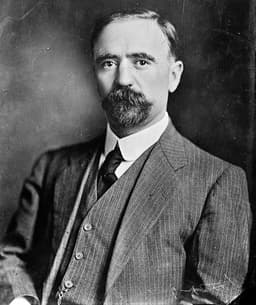
Francisco Madero
Revolutionary · Modern
44.5Total
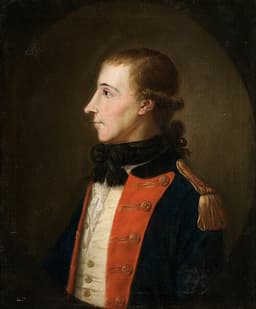
Theobald Wolfe Tone
Revolutionary · Modern
47.8Total
Basic Information
Born
1873
1763
Died
1913
1798
Era
Modern
Modern
Nationality
Mexico
Ireland
Occupation
Revolutionary
Revolutionary
Civilization
Western
Western
Score Comparison
Military (10%)
14.9
39.9
Political (20%)
48.0
27.9
Influence (20%)
49.4
57.2
Legacy (20%)
45.8
49.2
Leadership (15%)
43.8
57.1
Strategy (15%)
54.3
45.0
TOTAL
44.5
47.8
Francisco Madero — Complete Timeline
1908 AD
Published La Sucesión Presidencial en 1910Political Action◆ Major
Francisco Madero published a book criticizing the long dictatorship of Porfirio D
Mexican RevolutionDemocracyPolitical Writing
Impact: nationalconstructive
1910 AD
Issued the Plan of San Luis PotosíPolitical Action
After fleeing to the United States, Madero issued the Plan of San Luis Potos
Mexican RevolutionUprisingPlan
Impact: national
1911 AD
Elected President of MexicoPolitical Action◆ Major
Following the resignation of Porfirio D
Mexican RevolutionDemocracyPresidency
Impact: nationalconstructive
1913 AD
Assassinated During the Decena TrágicaPolitical Action
Francisco Madero was overthrown in a coup led by General Victoriano Huerta during the Ten Tragic Days in Mexico City. Madero was forced to resign and then executed along with Vice President Pino Su
AssassinationCoupMexican Revolution
Impact: nationaltragic
Theobald Wolfe Tone — Complete Timeline
1791 AD
Founding of the United IrishmenPolitical Action◆ Major
Tone co-founded the Society of United Irishmen in Belfast, a revolutionary organization seeking parliamentary reform and Catholic emancipation. The society later became a secret republican movement aiming for Irish independence.
Irish RepublicanismFoundingReform
Impact: nationalprogressive
Publication of 'An Argument on Behalf of the Catholics of Ireland'Cultural
Tone published a pamphlet arguing for the inclusion of Catholics in Irish political life. It helped bridge the gap between Protestant radicals and the Catholic majority, broadening the base of the United Irishmen.
PamphletCatholic EmancipationPolitical Thought
Impact: nationalprogressive
1796 AD
Expédition d'IrlandeWar◆ Major
Tone accompanied a French fleet of 43 ships carrying 15,000 troops to invade Ireland. The expedition was scattered by storms off Bantry Bay and failed to land, a major setback for the republican cause.
French InvasionNavalFailure
Impact: nationaltragic
Mission to FrancePolitical Action◆ Major
Tone traveled to France to secure French military support for an Irish rebellion. He persuaded the French Directory to launch an invasion of Ireland, leading to the dispatch of a large expeditionary force.
DiplomacyFrench RevolutionInvasion
Impact: national
1798 AD
Battle of Tory IslandWar◆ Major
Tone was captured aboard a French ship at the Battle of Tory Island, part of a second French invasion attempt. The French squadron was defeated by the Royal Navy, ending French hopes of aiding the Irish Rebellion.
1798 RebellionNaval BattleCapture
Impact: nationaltragic
Trial and SuicidePolitical Action◆ Major
Tone was tried for treason in Dublin and sentenced to death by hanging. Before execution, he cut his own throat to deny the British the spectacle of his hanging, dying from the wound a week later.
TrialSuicideMartyrdom
Impact: nationaltragic
Expert Analysis
Theobald Wolfe Tone vs Francisco Madero
# The Lost Apostles: Francisco Madero and Theobald Wolfe Tone
On a gray November morning in 1913, Francisco Madero knelt in the back of a police wagon rattling through Mexico City's streets. He had been promised safe passage out of the country, a deal brokered by the American ambassador. Instead, the wagon stopped outside the Lecumberri prison, and two gunshots ended the dream of Mexican democracy. Fifteen years earlier and an ocean away, Theobald Wolfe Tone lay in a Dublin prison cell, his throat slashed by his own hand. He had chosen suicide rather than let the British hang him like a common criminal. Two revolutionaries, two nations, two deaths that sealed their legends—but what drove these men, and why did their paths diverge so dramatically?
Origins
Francisco Madero was born into privilege in 1873, the scion of one of Mexico's wealthiest landowning families. Educated in France and the United States, he returned to his native Coahuila a spiritualist and a democrat, deeply influenced by European liberalism and the writings of Tolstoy. His world was one of haciendas and silver mines, where the gulf between the elite and the peasantry was measured in centuries. Theobald Wolfe Tone, born a decade earlier in 1763, came from a Dublin Protestant family of modest means. His father was a coachmaker, and Tone's path to revolution was paved by law and literature. He studied at Trinity College Dublin, where the ideas of the French Enlightenment—liberty, equality, fraternity—ignited his imagination. Where Madero inherited land, Tone inherited grievances: as an Irish Protestant, he saw firsthand how the British Ascendancy crushed Catholics and Presbyterians alike.
Rise to Power
Madero's entry onto the historical stage was cautious, almost academic. In 1908, after Porfirio Díaz declared in a famous interview that Mexico was ready for democracy, Madero published *La Sucesión Presidencial en 1910*. It was not a call to arms but a lawyer's brief, meticulously arguing for free elections. When Díaz rigged the 1910 vote and jailed Madero, the wealthy idealist fled to Texas. There, in October 1910, he issued the Plan of San Luis Potosí, declaring the election null and summoning Mexicans to revolution. It was a reluctant rebellion—Madero wanted ballots, not bullets.
Tone's rise was more theatrical. In 1791, he co-founded the Society of United Irishmen in Belfast, a revolutionary brotherhood that crossed sectarian lines. His pamphlet *An Argument on Behalf of the Catholics of Ireland* was a masterstroke of political bridge-building, arguing that Protestant liberty depended on Catholic emancipation. When the British government suppressed the Society, Tone did what Madero could not: he left his homeland and became a diplomat of revolution. In 1796, he sailed to France and persuaded the Directory to launch an invasion of Ireland. Tone was a revolutionary who understood that ideas needed armies.
Leadership & Governance
As president from 1911 to 1913, Madero was a study in tragic naivety. He believed that democracy alone could heal Mexico's wounds, that elections would dissolve the feudal power of the Church, the army, and the landowners. He kept Porfirio Díaz's federal army intact, trusting its generals—a fatal miscalculation. He refused to enact land reform, alienating the peasant armies of Emiliano Zapata. "The land belongs to those who work it," Zapata declared, but Madero could not hear him. His political wisdom was outstripped by his idealism; his leadership score of 38.4 reflects a man who inspired loyalty but could not command it.
Tone never governed, never faced the impossible compromises of power. His military score of 36.0 and strategy of 30.0 tell the story of a man who failed on the battlefield. The 1796 French expedition, 43 ships carrying 15,000 troops, was scattered by storms off Bantry Bay. Tone stood on the deck of the *Indomptable*, watching his army dissolve into the Atlantic. In 1798, a second attempt ended at the Battle of Tory Island, where Tone was captured aboard a French warship. Yet his political genius lay in organization and ideology. He forged a coalition of Catholics and Protestants, of farmers and urban radicals, that would outlive him.
Triumph & Tragedy
Madero's triumph was fleeting: the fall of Porfirio Díaz in 1911, the first free elections in Mexican history, the sight of a president who believed in the people. His tragedy was the Ten Tragic Days of February 1913, when General Victoriano Huerta, with the connivance of the American ambassador, staged a coup. Madero was arrested, forced to resign, and murdered on the road to prison. His death was not a battle but an execution.
Tone's triumph was spiritual. At his trial in Dublin, he delivered a speech that reverberates still: "I have attempted to establish the independence of my country. I have done my duty. I shall now do my duty in the face of the law." His tragedy was the failure of the 1798 rebellion itself—a bloody, disorganized uprising crushed by British forces. Tone died in prison, his throat cut, denying his captors the spectacle of his hanging. He became a martyr because he refused to be a victim.
Character & Destiny
Madero was a democrat in a land of caudillos, a man who believed that institutions could triumph over men. His personality was gentle, almost ethereal—he consulted mediums, wrote spiritualist tracts, and trusted his enemies. This trust destroyed him. Tone was a revolutionary of a harder stamp. He was a lawyer, a polemicist, a man who understood power and its uses. He wrote, "Our independence must be had at all hazards. If the men of property will not support us, they must fall. We can support ourselves by the aid of that numerous and respectable class of the community—the men of no property." Tone saw the class war coming; Madero refused to see it.
Legacy
Madero's legacy is complex. In Mexico, he is remembered as the "Apostle of Democracy," a martyr whose death opened the door to the Mexican Revolution's bloodiest phase. His influence score of 68.2 and legacy of 63.0 reflect a man who failed in life but succeeded in death. His democratic ideals would be invoked by generations, though often betrayed. Tone's legacy is more absolute. He is the "Father of Irish Republicanism," and his influence score of 73.2 and legacy of 67.7 show a man whose vision outlasted his failure. Every Irish republican from Patrick Pearse to Bobby Sands claimed his mantle. Tone gave Ireland not a government, but a dream.
Conclusion
Standing in the rain outside Dublin's St. Michan's Church, where Tone's headless body is said to lie, or walking past the Palacio Nacional in Mexico City, where Madero's ghost still haunts the halls, one feels the weight of what might have been. Both men shared a faith in revolution, a belief that ordinary people could govern themselves. But Madero thought democracy was enough; Tone knew it had to be fought for. One died with a bullet in his back, the other with a blade at his throat. Their bones are dust, but their questions remain: Can ideals survive power? Can liberty be born from blood? The answers, like the men themselves, are never simple.
Rankings
🥇
Theobald Wolfe ToneLeader
Mil: 39.9Pol: 27.9Inf: 57.2
47.8
🥈
Francisco Madero
Mil: 14.9Pol: 48.0Inf: 49.4
44.5
+3.3 behind
How This Comparison Works
Algorithm
Each figure is scored on 6 dimensions (0—100 scale) based on structured historical data: Military (10%), Political (20%), Influence (20%), Legacy (20%), Leadership (15%), Strategy (15%). The weighted total produces the final ranking.
Data Sources
Scores are computed from structured sub-indicators in the database. Scale factors adjust for era (Ancient ×0.85, Modern ×1.0) and civilization size (Eastern ×1.05, Other ×0.80) to account for differences in population and military scale.
Maximum 3 Figures
Comparisons are limited to 2—3 figures to ensure readability and statistical meaningfulness.
Error Margins
±5 points per dimension — Sub-scores are derived from historical records with inherent uncertainty. Two figures within 5 points on a dimension should be considered roughly equivalent in that area.
Total Score Accuracy
±3 points overall — The weighted combination of 6 dimensions produces a total score with approximately ±3 points of uncertainty. Differences of less than 3 points are not statistically significant— the figures are effectively tied.
Known Limitations
- Historical records are incomplete and uneven across civilizations
- Figures from oral-tradition societies may be underrepresented
- Occupation labels can misclassify multi-role figures
- Scores measure capability and impact, not moral character
- Quantitative scoring is a comparison tool, not absolute truth
Capability Radar
Military (10%) — Battles & Warfare
Battles
15
5
Win Rate
20
5
Expansion
5
5
Political (20%) — Governance & Reform
Reform
60
30
Diplomacy
40
25
Economy
20
5
Influence (20%) — Cultural & Global Reach
Cultural
35
45
Global
30
40
Legacy (20%) — Historical Impact
Historical
55
50
Longevity
40
55
Leadership (15%) — Power & Stability
Tenure
30
10
Stability
10
5
Strategy (15%) — Tactics & Innovation
Strategy
15
15
Tactics
10
10
Reform
5
20
Similar Comparisons
Comments & Discussion
Gallic Steel6/16/2026
As a military historian, I’ll give Madero the edge on tactics. He actually led armed revolts and understood that you can’t negotiate with a dictator like Porfirio Díaz—you have to shoot him. Tone, for all his fine words and French connections, never commanded a single victory. His 1798 rising was a logistical disaster, culminating in the Battle of Ballinamuck where he surrendered without a fight. Give me a man who dies with a rifle in his hand, not a razor blade.
数字掘墓人6/16/2026
数据研究员的冷笑:马德罗死于1913年,托恩死于1798年,中间隔了115年。但两人笔记里对"民主"的定义完全矛盾——马德罗要普选权,托恩要天主教解放,连对象都不同。后人把他们并排放在历史教科书里,是因为死亡时间凑巧,还是因为两个故事都卖得好?建议先读原始文献再谈理想。
ToneSwept6/16/2026
As a classics scholar, I’m appalled at how these two are forced into one narrative. Tone was a product of the Enlightenment—think Cicero, Rousseau, a constitutional republic. Madero was a spiritualist who channeled dead ancestors. They share nothing but an early grave. Comparing them is like comparing Cato the Younger to a voodoo priest. Let each revolutionary stand or fall on his own intellectual soil, not some historian’s romantic pairing.
异乡人6/16/2026
作为一个修正主义批评者,我提醒各位:两位"烈士"都输在脱离群众。托恩在法国募兵,马德罗靠美国斡旋——都是借外力推翻本国政权。爱尔兰农民盼的是土地,墨西哥农民要的是面包,两人给的却是议会和选票。结局一样:被自己人背叛,在监狱里等死。革命不需要外来知识分子,需要的是穿草鞋的将军。