Loading...
Francisco Madero vs Li Zicheng
Francisco Madero leads by 1.0 pts · 2 figures compared
…
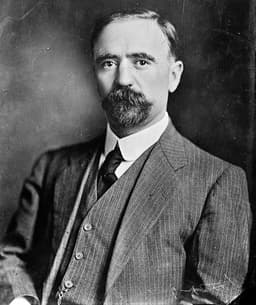
Francisco Madero
Revolutionary · Modern
44.5Total
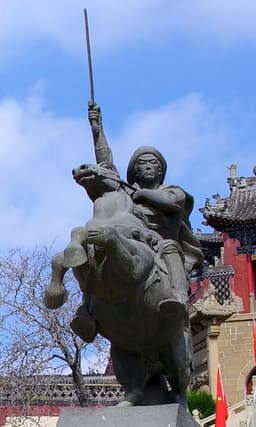
Li Zicheng
Revolutionary · Modern
43.5Total
Basic Information
Born
1873
1606
Died
1913
1645
Era
Modern
Modern
Nationality
Mexico
China
Occupation
Revolutionary
Revolutionary
Civilization
Western
Eastern
Score Comparison
Military (10%)
14.9
50.0
Political (20%)
48.0
27.9
Influence (20%)
49.4
52.5
Legacy (20%)
45.8
44.2
Leadership (15%)
43.8
39.0
Strategy (15%)
54.3
43.3
TOTAL
44.5
43.5
Francisco Madero — Complete Timeline
1908 AD
Published La Sucesión Presidencial en 1910Political Action◆ Major
Francisco Madero published a book criticizing the long dictatorship of Porfirio D
Mexican RevolutionDemocracyPolitical Writing
Impact: nationalconstructive
1910 AD
Issued the Plan of San Luis PotosíPolitical Action
After fleeing to the United States, Madero issued the Plan of San Luis Potos
Mexican RevolutionUprisingPlan
Impact: national
1911 AD
Elected President of MexicoPolitical Action◆ Major
Following the resignation of Porfirio D
Mexican RevolutionDemocracyPresidency
Impact: nationalconstructive
1913 AD
Assassinated During the Decena TrágicaPolitical Action
Francisco Madero was overthrown in a coup led by General Victoriano Huerta during the Ten Tragic Days in Mexico City. Madero was forced to resign and then executed along with Vice President Pino Su
AssassinationCoupMexican Revolution
Impact: nationaltragic
Li Zicheng — Complete Timeline
1644 AD
Captured Beijing and Ended the Ming DynastyWar
Li Zicheng led his rebel army to capture Beijing. The Chongzhen Emperor committed suicide, ending the Ming dynasty. Li Zicheng proclaimed the Shun dynasty and briefly ruled from the Forbidden City before being defeated by Qing forces.
Ming-Qing TransitionRebellionBeijing
Impact: globaldestructive
Defeated at the Battle of Shanhai PassWar◆ Major
Li Zicheng's army was defeated by the combined forces of Wu Sangui and the Manchus at the Battle of Shanhai Pass. The defeat forced him to abandon Beijing and retreat westward, effectively ending his control over northern China.
Ming-Qing TransitionBattleDefeat
Impact: globaltragic
Proclaimed the Shun DynastyPolitical Action◆ Major
After capturing Beijing, Li Zicheng formally proclaimed the establishment of the Shun dynasty in Xi'an. He adopted the title of emperor and began implementing his own administrative policies, though his rule was short-lived.
Shun DynastyProclamationRebellion
Impact: nationalconstructive
1645 AD
Killed in Jiugong MountainWar◆ Major
Li Zicheng was killed by a local militia while fleeing through Jiugong Mountain in Hubei province. His death marked the end of the Shun dynasty and the collapse of his rebellion, though some accounts claim he survived and became a monk.
Shun DynastyDeathRebellion
Impact: nationaltragic
Expert Analysis
Li Zicheng vs Francisco Madero
# The Rebel and the Reformer
On a spring morning in 1644, Li Zicheng’s ragged peasant army poured through the gates of Beijing, ending 276 years of Ming rule. Less than three centuries later and half a world away, Francisco Madero crossed the Rio Grande into Mexico, clutching a revolutionary plan that would topple another seemingly eternal dictator. Both men rose from the margins to challenge entrenched power. Both seized history’s greatest prize. And both saw their victories crumble into dust within months. Why did one fall to foreign invaders and the other to his own generals? The answer lies not in the stars, but in the men themselves.
Origins
Li Zicheng was born in 1606 to a poor farming family in Shaanxi province, a region ravaged by drought, famine, and government corruption. The Ming dynasty was collapsing under its own weight—taxes crushed the peasantry while the court hoarded silver, and a cascade of natural disasters left millions starving. Li lost his father early, worked as a shepherd, then a soldier, then a courier. When the Ming government eliminated his job and refused to pay his wages, he joined a rebel band. He had no education, no political philosophy, no vision beyond survival and vengeance. He was a man shaped by desperation.
Francisco Madero was born in 1873 into one of Mexico’s wealthiest landowning families. He studied in France and the United States, read widely in political philosophy, and became a spiritualist who believed in communicating with the dead. Where Li saw starvation, Madero saw injustice—the iron grip of Porfirio Díaz, who had ruled Mexico for thirty-five years, rigging elections and crushing dissent. Madero’s revolution was not born of hunger but of principle. He was a man shaped by privilege and idealism.
Rise to Power
Li Zicheng rose through the chaotic ranks of Ming rebels. By 1636, he was a chieftain, but his early campaigns ended in disaster. He was nearly killed, scattered, and reduced to hiding in the mountains. His genius lay in resilience: he rebuilt his army by promising land and tax relief to peasants, winning their loyalty where the Ming had lost it. His soldiers called him the “Daring King.” By 1643, he controlled most of northern China. In 1644, he marched on Beijing. The Ming emperor, isolated and betrayed, hanged himself on Coal Hill. Li took the Forbidden City without a fight.
Madero’s path was literary before it was martial. In 1908, he published *La Sucesión Presidencial en 1910*, a dry but devastating critique of Díaz’s regime. The book made him a national figure. When Díaz jailed him after a sham election, Madero fled to Texas and issued the Plan of San Luis Potosí, calling for armed revolt. The uprising spread like wildfire—not because Madero was a general, but because his name became a banner. By May 1911, Díaz resigned. Madero entered Mexico City as a hero.
Leadership & Governance
Here the contrast sharpens. Li Zicheng was a military commander of moderate skill—his strategy score of 59.6 reflects competence but not brilliance. His great triumph was speed and mass, not tactics. Once in Beijing, he proved incapable of governing. He alienated the scholar-officials who might have administered the realm, allowed his soldiers to loot the capital, and tortured Ming loyalists for their wealth. He proclaimed the Shun dynasty in Xi’an, but his rule was a fantasy: no bureaucracy, no tax system, no legitimacy. He had no political program beyond redistribution, and no allies beyond his army.
Madero was the opposite. His political score of 52.4 exceeds his military score of 32.2, and his presidency reflected that. He restored freedom of the press, allowed labor unions, and called for land reform. But he was a naive ruler in a violent land. He refused to purge Díaz loyalists from the army, believing in reconciliation. He trusted General Victoriano Huerta, who despised him. He tried to govern by democratic norms in a country that had known only dictatorship. His idealism became his undoing.
Triumph & Tragedy
Li Zicheng’s triumph was absolute: he destroyed a dynasty that had ruled for nearly three centuries. His tragedy was immediate. At the Battle of Shanhai Pass in May 1644, his army was crushed by the combined forces of Ming general Wu Sangui and the Manchu invaders. The defeat was total. Li fled Beijing, his army disintegrating. In 1645, while hiding in Jiugong Mountain, he was killed by a local militia—not by a great general, but by peasants with clubs. The man who had ended the Ming was erased by the very people he had claimed to lead.
Madero’s triumph was shorter still. He was president for fifteen months. In February 1913, during the Ten Tragic Days, Huerta staged a coup. Madero was arrested, forced to resign, and then shot “while attempting to escape.” His death was a political assassination, not a battlefield defeat. He died because he trusted the wrong man.
Character & Destiny
Li Zicheng’s character was forged in scarcity. He was ruthless, practical, and short-sighted. He could lead an army but not a nation. His failure was not military but political: he had no idea what to do with power once he seized it. He governed as he had fought—by force and fear—and that could not sustain a dynasty.
Madero’s character was forged in privilege. He was idealistic, principled, and blind to the realities of power. His failure was not political but strategic: he believed that democracy alone could heal Mexico, ignoring the armed factions that surrounded him. He governed as he had written—by persuasion and principle—and that could not survive a bullet.
Legacy
Li Zicheng is remembered in China as a cautionary tale: the peasant king who won the empire and lost it in a hundred days. His legacy is ambiguous—a revolutionary who cleared the way for the Manchu Qing dynasty, which ruled for another 267 years. Historians give him a legacy score of 62.0, acknowledging his impact but not his achievement.
Madero is remembered in Mexico as the “Apostle of Democracy.” His legacy score of 63.0 reflects his enduring symbolic power. He failed to transform Mexico, but he inspired the revolution that did. His death unleashed a decade of civil war that gave birth to modern Mexico—land reform, labor rights, and a political system that endured for most of the 20th century.
Conclusion
Two rebels, two failures, two different kinds of tragedy. Li Zicheng could break a dynasty but could not build one. Madero could inspire a movement but could not control it. One died in the mud, beaten by peasants. One died against a wall, shot by soldiers. Their stories remind us that revolution requires more than courage—it requires the ability to govern, to compromise, to see beyond the moment. The peasant king and the idealist president both learned this truth too late. History remembers them not for what they achieved, but for what they almost became.
Rankings
🥇
Francisco MaderoLeader
Mil: 14.9Pol: 48.0Inf: 49.4
44.5
🥈
Li Zicheng
Mil: 50.0Pol: 27.9Inf: 52.5
43.5
+1.0 behind
How This Comparison Works
Algorithm
Each figure is scored on 6 dimensions (0—100 scale) based on structured historical data: Military (10%), Political (20%), Influence (20%), Legacy (20%), Leadership (15%), Strategy (15%). The weighted total produces the final ranking.
Data Sources
Scores are computed from structured sub-indicators in the database. Scale factors adjust for era (Ancient ×0.85, Modern ×1.0) and civilization size (Eastern ×1.05, Other ×0.80) to account for differences in population and military scale.
Maximum 3 Figures
Comparisons are limited to 2—3 figures to ensure readability and statistical meaningfulness.
Error Margins
±5 points per dimension — Sub-scores are derived from historical records with inherent uncertainty. Two figures within 5 points on a dimension should be considered roughly equivalent in that area.
Total Score Accuracy
±3 points overall — The weighted combination of 6 dimensions produces a total score with approximately ±3 points of uncertainty. Differences of less than 3 points are not statistically significant— the figures are effectively tied.
Known Limitations
- Historical records are incomplete and uneven across civilizations
- Figures from oral-tradition societies may be underrepresented
- Occupation labels can misclassify multi-role figures
- Scores measure capability and impact, not moral character
- Quantitative scoring is a comparison tool, not absolute truth
Capability Radar
Military (10%) — Battles & Warfare
Battles
15
55
Win Rate
20
60
Expansion
5
65
Political (20%) — Governance & Reform
Reform
60
15
Diplomacy
40
20
Economy
20
10
Influence (20%) — Cultural & Global Reach
Cultural
35
40
Global
30
35
Legacy (20%) — Historical Impact
Historical
55
55
Longevity
40
30
Leadership (15%) — Power & Stability
Tenure
30
20
Stability
10
5
Strategy (15%) — Tactics & Innovation
Strategy
15
55
Tactics
10
50
Reform
5
30
Similar Comparisons
Comments & Discussion
SHANGHAI_MADERO6/16/2026
Madero didn't fail because he was too idealistic—he failed because he was too cowardly. The man had the balls to challenge Diaz but not the spine to actually govern. He let conservative generals like Huerta keep their posts, refused to arm the peasants who put him in power, and spent his presidency trying to appease the very oligarchy that wanted him dead. Li Zicheng at least had the courage to overthrow the dynasty completely. Madero tried to reform a rotten system with lace gloves. 80 words.
黄河骑兵_李6/16/2026
李自成的失败根本不是偶然,而是农民起义的必然结局。他进了北京就开始烧杀抢掠,纵容手下拷打明朝官员勒索钱财,连吴三桂的老爸都不放过。这种人能建国才怪!李自成的"大顺"在北京只待了42天就被清军赶跑了,历史证明,没有严明的军纪和政治远见,光靠仇恨和掠夺,革命注定失败。老兄连基本的社会秩序都建立不起来。82字.
HISTORY_BRUJO6/16/2026
The comparison ignores the elephant in the room: the foreign factor. Li Zicheng's downfall was sealed by the Ming general Wu Sangui opening the Shanhai Pass to the Manchus, a calculated betrayal that no amount of good governance could have prevented. Madero, on the other hand, was killed by his own vice president and army chief. Internal betrayal vs. external invasion are completely different failure modes. You'd think a military historian would know this basic distinction before drawing paralle
雨果家的牛角包6/16/2026
你把李自成和莫德罗放在一起比,简直就是把饿狼比成绵羊。李自成是彻底的破坏者,虽然出身贫苦,但他的起义军在1641年攻克洛阳后就开启了无限掠夺模式,连平民都杀。而莫德罗好歹是真心相信民主选举的绅士,1910年他竞选总统失败被捕,后来流亡美国却还能写出《1910年总统继承计划》这种有明确政治纲领的文献。两人的思想水平完全不在一个维度上。89字.
NORTHERN_NOMAD6/16/2026
As a military strategy nut, I see one crucial difference neither side mentions: Li Zicheng's army was a disorganized mob that peaked at roughly 100,000 ragtag fighters, while Madero had actual military figures like Orozco and Villa who commanded disciplined rural armies. The Shaanxi peasant rebellion collapsed when facing Wu Sangui's trained Ming border troops and the Qing cavalry—Li never reformed his military structure. Madero's problem was precisely the opposite: his military was too strong a