Loading...
Francisco Madero vs Gulbuddin Hekmatyar
Francisco Madero leads by 6.2 pts · 2 figures compared
…
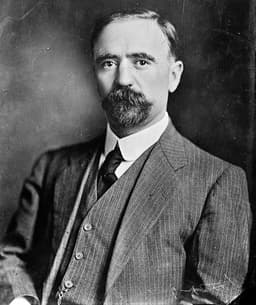
Francisco Madero
Revolutionary · Modern
44.5Total
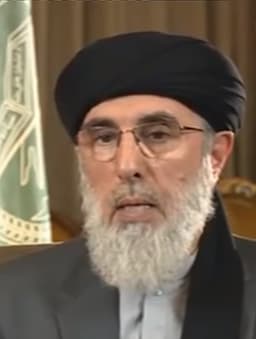
Gulbuddin Hekmatyar
Revolutionary · Modern
38.3Total
Basic Information
Born
1873
1947
Died
1913
—
Era
Modern
Modern
Nationality
Mexico
Afghanistan
Occupation
Revolutionary
Revolutionary
Civilization
Western
Middle Eastern
Score Comparison
Military (10%)
14.9
35.0
Political (20%)
48.0
26.4
Influence (20%)
49.4
47.1
Legacy (20%)
45.8
36.7
Leadership (15%)
43.8
40.4
Strategy (15%)
54.3
38.3
TOTAL
44.5
38.3
Francisco Madero — Complete Timeline
1908 AD
Published La Sucesión Presidencial en 1910Political Action◆ Major
Francisco Madero published a book criticizing the long dictatorship of Porfirio D
Mexican RevolutionDemocracyPolitical Writing
Impact: nationalconstructive
1910 AD
Issued the Plan of San Luis PotosíPolitical Action
After fleeing to the United States, Madero issued the Plan of San Luis Potos
Mexican RevolutionUprisingPlan
Impact: national
1911 AD
Elected President of MexicoPolitical Action◆ Major
Following the resignation of Porfirio D
Mexican RevolutionDemocracyPresidency
Impact: nationalconstructive
1913 AD
Assassinated During the Decena TrágicaPolitical Action
Francisco Madero was overthrown in a coup led by General Victoriano Huerta during the Ten Tragic Days in Mexico City. Madero was forced to resign and then executed along with Vice President Pino Su
AssassinationCoupMexican Revolution
Impact: nationaltragic
Gulbuddin Hekmatyar — Complete Timeline
1975 AD
Founding of Hezb-e Islami (1975)Political Action◆ Major
Gulbuddin Hekmatyar founded the Hezb-e Islami political party, an Islamist faction that became one of the most powerful mujahideen groups during the Soviet-Afghan War. The party received significant support from Pakistan's ISI and foreign Islamist donors.
MujahideenIslamist PartyCold War
Impact: national
1993 AD
Prime Minister during Civil War (1993-1994)Political Action◆ Major
Hekmatyar served as Prime Minister of Afghanistan from 1993 to 1994 under President Burhanuddin Rabbani. His tenure was marked by intense factional fighting, including rocket attacks on Kabul that caused thousands of civilian casualties, contributing to the devastation of the city.
Civil WarKabulRocket Attacks
Impact: nationaldestructive
1996 AD
Alliance with Taliban (1996-2001)Political Action
After the Taliban captured Kabul in 1996, Hekmatyar initially fled to Iran. He later aligned with the Taliban regime, though his influence waned. He remained in Afghanistan until the US-led invasion in 2001, after which he fled to Pakistan.
TalibanExileAlliance
Impact: national
2016 AD
Peace Agreement with Afghan Government (2016)Political Action◆ Major
Hekmatyar signed a peace agreement with the Afghan government of President Ashraf Ghani in 2016. The deal allowed him to return to Afghanistan from exile, with his party recognized as a political entity and his fighters integrated into state security forces.
Peace DealReconciliationGhani
Impact: nationalconstructive
Expert Analysis
Gulbuddin Hekmatyar vs Francisco Madero
# The Revolutionary's Dilemma: Why Madero Died and Hekmatyar Survived
On a February morning in 1913, Francisco Madero stepped out of the National Palace in Mexico City, his hands bound, a guard’s rifle pressed against his back. He was marched into the darkness of an alley, and with a single shot, the man who had toppled a thirty-year dictatorship was gone—betrayed by his own general. Eighty years later and half a world away, Gulbuddin Hekmatyar sat in a guarded villa in Kabul, having just been named Prime Minister of a country in flames. He would survive civil war, exile, and a peace deal with his enemies, dying only in 2025 at the age of seventy-eight. Both were revolutionaries. Both sought power in fractured nations. But one ended in a bullet, the other in a comfortable old age. The difference was not in their ideals, but in their understanding of power itself.
Origins
Francisco Indalecio Madero was born in 1873 into one of Mexico’s wealthiest landowning families. He studied in France and the United States, returned home a spiritualist and a democrat, and believed—with a sincerity that would prove fatal—that elections could cure a nation. His era was the twilight of the Porfiriato, a long peace bought with dictatorship. Madero saw the injustice, but he also saw the order. He was a reformer who trusted institutions that had never existed.
Gulbuddin Hekmatyar, born in 1947 in Afghanistan’s Kunduz province, came from a different world entirely. His family was Pashtun and relatively privileged—his father was a landowner—but Afghanistan in the mid-twentieth century was a kingdom sliding toward chaos. Hekmatyar studied engineering at Kabul University, where he joined the Muslim Youth organization, a hotbed of anti-communist and anti-monarchist sentiment. He was expelled, imprisoned, and radicalized. By 1975, he had founded Hezb-e Islami, an Islamist party that blended religious fervor with ruthless pragmatism. His era was not one of reform but of collapse.
Rise to Power
Madero’s rise was literary before it was political. In 1908, he published *La Sucesión Presidencial en 1910*, a book that dared to say what everyone knew: Porfirio Díaz had rigged the system. The book made him a symbol. When Díaz imprisoned him, Madero fled to Texas and issued the Plan of San Luis Potosí in 1910, calling for armed revolution. The uprising spread faster than he could control it. Peasants, miners, and bandits rose under leaders like Pancho Villa and Emiliano Zapata. Díaz resigned in 1911. Madero, the apostle of democracy, was elected president in a landslide.
Hekmatyar’s path was forged in war, not words. The Soviet invasion of Afghanistan in 1979 transformed Hezb-e Islami from a fringe party into a major mujahideen faction. Hekmatyar received massive support from Pakistan’s Inter-Services Intelligence and the CIA, who saw him as a reliable anti-Soviet asset. He was not a battlefield commander like Ahmad Shah Massoud; his military score of 46.8 reflects a man who fought more with money than men. But his political score of 45.9 and strategy score of 63.7 reveal a different kind of talent. Hekmatyar understood that in Afghanistan, survival meant balancing alliances, switching sides, and never trusting anyone completely.
Leadership & Governance
Madero governed as he campaigned: idealistically. He kept the old federal army, believing its generals would obey civilian authority. He allowed free press, free speech, and open elections. But he underestimated the forces he had unleashed. The Zapatistas wanted land, not ballots; the conservative elite wanted order, not liberty. Madero’s leadership score of 38.4 is not a judgment on his character but on his fatal naivety. He tried to reconcile enemies who wanted his destruction.
Hekmatyar governed as he fought: through fear and negotiation. As Prime Minister from 1993 to 1994, his tenure was a disaster—rocket attacks on Kabul, shifting alliances with warlords, and a complete failure to deliver governance. He was accused of destroying more of Kabul than the Soviets had. But he survived. When the Taliban captured Kabul in 1996, Hekmatyar fled to Iran, then later aligned with the very regime that had ousted him. His legacy score of 47.8 reflects a man remembered as a spoiler, not a builder.
Triumph & Tragedy
Madero’s triumph was the election of 1911—a peaceful transfer of power after decades of dictatorship. His tragedy was the Decena Trágica of 1913, the Ten Tragic Days when a coup led by General Victoriano Huerta, whom Madero had trusted, overthrew and murdered him. Madero’s own ambassador to the United States had conspired against him. His death was not just murder; it was a lesson in the limits of democracy without institutions.
Hekmatyar’s greatest moment was arguably the peace agreement he signed with President Ashraf Ghani in 2016. After years as an outlaw, he returned to Kabul, renounced violence, and entered politics as a legal figure. It was a triumph of pragmatism. His tragedy was that he had spent decades making Afghanistan ungovernable, and his peace came too late to matter. He died in 2025, largely irrelevant, a footnote to the Taliban’s return.
Character & Destiny
Madero was a man of conviction. He believed that democracy was a moral force, that if he spoke the truth, others would follow. He was short, energetic, and spoke with a high-pitched voice that made him seem more like a professor than a president. His character was his destiny: he could not imagine betrayal from those he had freed.
Hekmatyar was a man of calculation. He was known for his fiery speeches and his willingness to use violence against rivals—including fellow mujahideen. He was called the “Engineer,” a title that suited his cold, strategic mind. He could ally with the Taliban one year and the American-backed government the next. His character was survival itself. He outlived the Soviets, the Taliban, and two Afghan republics.
Legacy
Madero is remembered as the “Apostle of Mexican Democracy,” a martyr whose death paved the way for the Mexican Revolution’s more radical phase. His influence score of 68.2 and legacy score of 63.0 reflect a man whose failure inspired others. He is a cautionary tale: idealism without power is noble, but dangerous.
Hekmatyar’s legacy is contested. To some, he is a freedom fighter who resisted the Soviet occupation. To others, he is a warlord who turned Kabul into a battlefield. His influence score of 61.9 is high, but his legacy score of 47.8 is low. He is remembered not for what he built, but for what he destroyed.
Conclusion
Standing at the end of their lives, one sees a tragic symmetry. Madero died because he trusted the system too much; Hekmatyar survived because he trusted no one at all. Madero wrote a book; Hekmatyar signed a peace deal. One believed in the power of ideas, the other in the power of force. Their total scores are nearly identical—Madero at 52.2, Hekmatyar at 51.6—but their fates could not be more different. In the end, the revolutionary’s dilemma remains: do you change the world through faith or through fear? Madero chose faith and was broken. Hekmatyar chose fear and endured. History, as always, refuses to tell us which was wiser.
Rankings
🥇
Francisco MaderoLeader
Mil: 14.9Pol: 48.0Inf: 49.4
44.5
🥈
Gulbuddin Hekmatyar
Mil: 35.0Pol: 26.4Inf: 47.1
38.3
+6.2 behind
How This Comparison Works
Algorithm
Each figure is scored on 6 dimensions (0—100 scale) based on structured historical data: Military (10%), Political (20%), Influence (20%), Legacy (20%), Leadership (15%), Strategy (15%). The weighted total produces the final ranking.
Data Sources
Scores are computed from structured sub-indicators in the database. Scale factors adjust for era (Ancient ×0.85, Modern ×1.0) and civilization size (Eastern ×1.05, Other ×0.80) to account for differences in population and military scale.
Maximum 3 Figures
Comparisons are limited to 2—3 figures to ensure readability and statistical meaningfulness.
Error Margins
±5 points per dimension — Sub-scores are derived from historical records with inherent uncertainty. Two figures within 5 points on a dimension should be considered roughly equivalent in that area.
Total Score Accuracy
±3 points overall — The weighted combination of 6 dimensions produces a total score with approximately ±3 points of uncertainty. Differences of less than 3 points are not statistically significant— the figures are effectively tied.
Known Limitations
- Historical records are incomplete and uneven across civilizations
- Figures from oral-tradition societies may be underrepresented
- Occupation labels can misclassify multi-role figures
- Scores measure capability and impact, not moral character
- Quantitative scoring is a comparison tool, not absolute truth
Capability Radar
Military (10%) — Battles & Warfare
Battles
15
45
Win Rate
20
30
Expansion
5
25
Political (20%) — Governance & Reform
Reform
60
15
Diplomacy
40
20
Economy
20
10
Influence (20%) — Cultural & Global Reach
Cultural
35
25
Global
30
25
Legacy (20%) — Historical Impact
Historical
55
30
Longevity
40
20
Leadership (15%) — Power & Stability
Tenure
30
30
Stability
10
5
Strategy (15%) — Tactics & Innovation
Strategy
15
35
Tactics
10
40
Reform
5
20
Similar Comparisons
Comments & Discussion
No comments yet. Be the first to share your thoughts!