Loading...
Flavius Aetius vs Qin Shi Huang
Qin Shi Huang leads by 23.6 pts · 2 figures compared
…

Flavius Aetius
General · Ancient
61.6Total
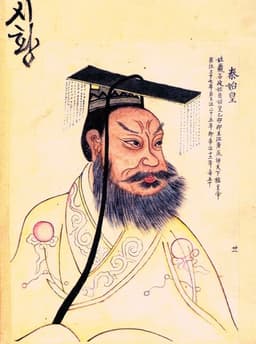
Qin Shi Huang
Emperor · Ancient
85.2Total
Basic Information
Born
391
-259
Died
454
-210
Era
Ancient
Ancient
Nationality
Roman Empire
China
Occupation
General
Emperor
Civilization
Western
Eastern
Score Comparison
Military (10%)
80.0
80.0
Political (20%)
68.0
90.0
Influence (20%)
72.0
85.0
Legacy (20%)
40.0
90.0
Leadership (15%)
48.8
78.0
Strategy (15%)
80.8
82.0
TOTAL
61.6
85.2
Flavius Aetius — Complete Timeline
428 AD
Defeat of the Franks and Settlement of the AlansWar
Aetius defeated the Franks and forced them to accept Roman authority. He also settled the Alans in Gaul as foederati (allied barbarians), using them to bolster Roman defenses. These actions stabilized the Rhine frontier temporarily.
FranksAlansFrontier
Impact: regional
432 AD
Struggle for Power with BonifaciusPolitical Action◆ Major
Aetius fought a civil war against his rival Bonifacius, the comes of Africa. Aetius was defeated at the Battle of Rimini (432) and fled to the Huns, but returned after Bonifacius's death to become the dominant figure in the Western Empire.
Civil WarBonifaciusPower Struggle
Impact: national
436 AD
Campaigns against the Visigoths and BurgundiansWar◆ Major
Aetius campaigned against the Visigoths in Gaul, defeating them at the Battle of Mons Colubrarius (436). He also suppressed the Burgundians, leading to the destruction of their kingdom at Worms (437), which later inspired the Nibelungenlied.
CampaignVisigothsBurgundians
Impact: regional
451 AD
Battle of the Catalaunian PlainsWar
Flavius Aetius, commanding a coalition of Romans, Visigoths, and other barbarians, defeated Attila the Hun at the Catalaunian Plains (near modern Ch
BattleHunsAttila
Impact: global
454 AD
Assassination of Flavius AetiusPolitical Action
Emperor Valentinian III personally stabbed and killed Flavius Aetius during a meeting, accusing him of treason. This act removed the Western Empire's most effective general and led to a rapid decline in Roman military power.
AssassinationValentinian IIIDecline
Impact: globaltragic
Qin Shi Huang — Complete Timeline
246 BC
Construction of the Mausoleum and Terracotta ArmyOther◆ Major
Qin Shi Huang commissioned a vast mausoleum complex near Xi'an, guarded by thousands of life-sized terracotta soldiers, horses, and chariots. The project employed hundreds of thousands of workers and reflected his obsession with immortality and imperial power.
Impact: global
230 BC
Conquest of the Six Warring StatesWar
From 230 to 221 BCE, Ying Zheng led the Qin state in a series of campaigns that conquered the Han, Zhao, Wei, Chu, Yan, and Qi states. This unified China under a single ruler for the first time, ending the Warring States period.
Impact: global
221 BC
Standardization of Writing, Currency, and MeasurementsReform◆ Major
Qin Shi Huang ordered the standardization of Chinese script, currency, and weights and measures across the unified empire. This facilitated administration, trade, and cultural integration, laying a foundation for future dynasties.
Impact: globalconstructive
Proclamation of the Qin DynastyPolitical Action
After conquering the last independent state, Ying Zheng declared himself Shi Huangdi (First Emperor), founding the Qin Dynasty. He adopted a new title to signify his supreme authority and initiated centralized imperial rule.
Impact: global
214 BC
Initiation of the Great Wall ConstructionOther◆ Major
Qin Shi Huang ordered the connection and extension of existing northern fortifications to create a unified defensive wall against nomadic Xiongnu raids. This project involved massive conscripted labor and became the precursor to the later Great Wall.
Impact: regional
213 BC
Burning of Books and Burying of ScholarsPolitical Action◆ Major
On the advice of Li Si, Qin Shi Huang ordered the burning of historical records and philosophical texts not aligned with Legalist doctrine. He also had 460 Confucian scholars buried alive to suppress dissent and consolidate ideological control.
Impact: nationaldestructive
Expert Analysis
flavius-aetius-vs-qin-shi-huang
# The Emperor and the General: Two Visions of Order in a Fractured World
In the winter of 454 AD, a Roman emperor drew his sword and stabbed his greatest general to death with his own hands. Three centuries earlier and half a world away, another ruler had ordered hundreds of scholars buried alive to silence dissent. Both men—Qin Shi Huang and Flavius Aetius—had spent their lives imposing order on chaos. Both succeeded, for a time. Yet one founded an empire that would echo across millennia, while the other died with his work crumbling behind him. What made the difference? The answer lies not in their ambitions, which were equally vast, but in the worlds they inherited and the tools they dared to use.
Origins
Ying Zheng was born in 259 BC into a China of warring states, a world where seven kingdoms had clawed at each other for two centuries. His father was a hostage in another state; his mother, a former concubine. The boy king grew up surrounded by spies, poison, and betrayal. He learned early that trust was a weakness and power a thing to be seized.
Flavius Aetius, born in 391 AD, entered a Roman Empire that was already dying—not from war, but from rot. Barbarian tribes pressed every frontier; generals proclaimed themselves emperors; the treasury was hollow. Aetius spent his youth as a hostage among Huns, learning their language, their horsemanship, their ruthlessness. He returned to Rome fluent in violence, but also fluent in the art of survival among predators.
Rise to Power
Qin Shi Huang’s path was direct: he inherited a kingdom at thirteen and spent the next two decades methodically destroying his enemies. Between 230 and 221 BC, his armies rolled through the six rival states like a tide of iron. He did not negotiate. He did not compromise. He conquered.
Aetius rose differently. In 432 AD, he fought a civil war against his rival Bonifacius and lost. He fled to the Huns, raised an army, and returned to force a settlement. Power in the late Roman Empire was a game of alliances, not conquests. Aetius became the empire’s most powerful general not by crushing his enemies, but by outmaneuvering them—marrying his daughter to a Visigothic king, settling Alans in Gaul as allies, playing barbarian against barbarian. Where Qin Shi Huang built with a sword, Aetius wove with threads.
Leadership & Governance
Qin Shi Huang’s reign was a revolution. In 221 BC, he declared himself Shi Huangdi—First Emperor—and immediately set about remaking the world. He standardized writing, currency, and measurements across his new empire. He ordered the connection of northern fortifications into what would become the Great Wall. His legalist philosophy demanded absolute obedience: the law was the emperor’s will, and the emperor’s will was law.
Aetius governed through persuasion. He had no empire to command, only a network of obligations. His greatest military achievement came in 451 AD at the Catalaunian Plains, where he assembled a coalition of Romans, Visigoths, and other barbarians to stop Attila the Hun. He did not win by superior force; he won by convincing men who hated each other to fight side by side. It was a masterpiece of political generalship, but it rested entirely on his personal authority.
Triumph & Tragedy
Qin Shi Huang’s triumph was total: he unified China. His tragedy was equally total. In 213 BC, on the advice of his chancellor Li Si, he ordered the burning of all historical records and philosophical texts not aligned with his regime. Scholars who protested were buried alive. The First Emperor feared the past, because the past remembered other rulers, other truths. He wanted history to begin with him.
Aetius’s triumph was the salvation of Western civilization from the Huns. His tragedy was that no one thanked him for it. Emperor Valentinian III, weak and paranoid, saw Aetius’s popularity as a threat. In 454 AD, during a meeting at the palace, Valentinian drew a sword and stabbed the general to death. When a courtier asked why he had killed his best defender, the emperor replied: “It is enough that I have disposed of my enemy.”
Character & Destiny
Qin Shi Huang was a man of absolute certainty. He believed he could conquer death itself, sending expeditions for the elixir of immortality while his workers built a mausoleum guarded by thousands of life-sized terracotta soldiers. His character was his destiny: he could imagine unity, but not fragility. He could build, but not sustain.
Aetius was a man of flexible loyalty. He had survived by knowing when to fight and when to flee, when to threaten and when to bargain. That flexibility made him indispensable—and vulnerable. In a world where power depended on personal relationships, one broken relationship could destroy everything. Valentinian’s dagger proved the point.
Legacy
Qin Shi Huang’s dynasty lasted only fifteen years after his death in 210 BC. But his empire endured. The writing he standardized, the measurements he unified, the administrative structures he created—these became the foundation of every Chinese dynasty that followed. The First Emperor is remembered as a tyrant, but also as a founder. His name means “China.”
Aetius left no such legacy. After his death, the Western Roman Empire collapsed within two decades. The general who had held the barbarians at bay was forgotten, his victory at the Catalaunian Plains a footnote to the larger story of Rome’s fall. He is remembered, if at all, as “the last of the Romans”—a title that acknowledges his greatness while mourning its futility.
Conclusion
The difference between these two men is not a difference of skill or courage. Both were brilliant. Both were ruthless. Both achieved the impossible. The difference is that Qin Shi Huang ruled a civilization that was rising, while Aetius defended one that was falling. The First Emperor could impose his will on a world hungry for order; the Roman general could only delay the inevitable collapse of a world exhausted by its own history. In the end, the men were not so different. It was their times that made them.
Rankings
🥇
Qin Shi HuangLeader
Mil: 80.0Pol: 90.0Inf: 85.0
85.2
🥈
Flavius Aetius
Mil: 80.0Pol: 68.0Inf: 72.0
61.6
+23.6 behind
How This Comparison Works
Algorithm
Each figure is scored on 6 dimensions (0—100 scale) based on structured historical data: Military (10%), Political (20%), Influence (20%), Legacy (20%), Leadership (15%), Strategy (15%). The weighted total produces the final ranking.
Data Sources
Scores are computed from structured sub-indicators in the database. Scale factors adjust for era (Ancient ×0.85, Modern ×1.0) and civilization size (Eastern ×1.05, Other ×0.80) to account for differences in population and military scale.
Maximum 3 Figures
Comparisons are limited to 2—3 figures to ensure readability and statistical meaningfulness.
Error Margins
±5 points per dimension — Sub-scores are derived from historical records with inherent uncertainty. Two figures within 5 points on a dimension should be considered roughly equivalent in that area.
Total Score Accuracy
±3 points overall — The weighted combination of 6 dimensions produces a total score with approximately ±3 points of uncertainty. Differences of less than 3 points are not statistically significant— the figures are effectively tied.
Known Limitations
- Historical records are incomplete and uneven across civilizations
- Figures from oral-tradition societies may be underrepresented
- Occupation labels can misclassify multi-role figures
- Scores measure capability and impact, not moral character
- Quantitative scoring is a comparison tool, not absolute truth
Capability Radar
Military (10%) — Battles & Warfare
Battles
85
85
Win Rate
80
90
Expansion
70
90
Political (20%) — Governance & Reform
Reform
65
95
Diplomacy
90
75
Economy
60
90
Influence (20%) — Cultural & Global Reach
Cultural
70
95
Global
75
85
Legacy (20%) — Historical Impact
Historical
85
95
Longevity
80
95
Leadership (15%) — Power & Stability
Tenure
75
70
Stability
70
65
Strategy (15%) — Tactics & Innovation
Strategy
90
85
Tactics
88
80
Reform
75
95
Similar Comparisons
Comments & Discussion
BLOOD_OVER_BRONZE6/17/2026
Qin Shi Huang buried scholars alive—Aetius just got stabbed by his own emperor. That tells you everything about who had cleaner hands. The First Emperor unified writing, weights, and measures across warring states; Aetius couldn’t even keep Valentinian III from panicking. One built a system that outlasted him by two thousand years; the other’s legacy collapsed before his body was cold. Sorry, but empire-building beats crisis management every time.|
长城下的算盘6/17/2026
别跟我扯什么秦朝暴政——统一度量衡和文字需要铁腕,不是软弱。嬴政的做法可能血腥,但结果就是中国两千年的统一基础。Aetius呢?守着西罗马的烂摊子,打了几场胜仗就觉得自己了不起,最后连命都保不住。数据说话:秦朝奠定了现代中国,Aetius的帝国呢?一堆废墟。谁更有分量,一目了然。|
PRAETORIAN_SKEPTIC6/17/2026
Let's pump the brakes on the Aetius worship. Yes, he defeated Attila at Chalons, but that was more a Hun withdrawal than a Roman triumph. His real talent was political survival in a collapsing state—not exactly a blueprint for greatness. Meanwhile, Qin Shi Huang created the first centralized bureaucracy in world history. Standardized script? Check. Unified currency? Check. Built the Great Wall's foundation? Check. Aetius managed to get assassinated by his own emperor. That's not tragedy; that's
史海沉钩6/17/2026
你们这些西方历史粉最大的问题就是只看表面。Aetius被称为“最后的罗马人”,可他的胜利哪次真正改变了罗马衰落的命运?相反,秦始皇虽然手段极端,但他建立的郡县制、书同文、车同轨,直接影响了两千年后的中国政治形态。一个阻止了匈奴一时入侵,一个融合了华夏文明基因。别拿战术成功来碰瓷战略伟业。|
LATE_ANTIQUITY_APOLOGIST6/17/2026
You're all missing context. Aetius didn't inherit a unified China—he got a Rome fractured by civil wars for fifty years straight. He spent two decades keeping barbarians at bay without the resources Qin Shi Huang had: no massive conscript armies, no total state control, just declining tax revenues and mutinous legions. The First Emperor could bury scholars because he had the power to do so; Aetius couldn't even stop his emperor from stabbing him. Different leagues, different games.|
残阳如铁6/17/2026
说实话,拿秦始皇和Aetius比就像拿泰山和小土丘比高度。前者用铁血手段把七国碎片铸成帝国模板,后者最多算是在西罗马的烂墙上打了几个补丁。看看结局:秦制延续到