Loading...
Fernando Alvarez de Toledo Duke of Alba vs Owen Roe ONeill
Fernando Alvarez de Toledo Duke of Alba leads by 18.4 pts · 2 figures compared
…
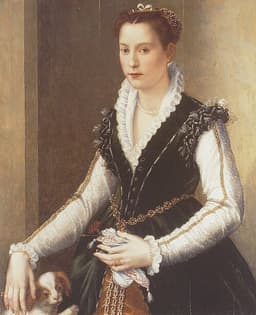
Fernando Alvarez de Toledo Duke of Alba
General · Modern
65.3Total

Owen Roe ONeill
General · Modern
46.9Total
Basic Information
Born
1507
1585
Died
1582
1649
Era
Modern
Modern
Nationality
Spain
Ireland
Occupation
General
General
Civilization
Western
Western
Score Comparison
Military (10%)
74.0
30.0
Political (20%)
48.0
37.9
Influence (20%)
65.0
53.3
Legacy (20%)
72.0
45.0
Leadership (15%)
62.0
50.7
Strategy (15%)
72.0
60.0
TOTAL
65.3
46.9
Fernando Alvarez de Toledo Duke of Alba — Complete Timeline
1567 AD
Established the Council of TroublesPolitical Action◆ Major
Alba established the Council of Troubles, also known as the Blood Council, to prosecute those involved in the Dutch Revolt. This tribunal sentenced thousands to death, including the Counts of Egmont and Horne, intensifying resistance.
RepressionDutch RevoltInquisition
Impact: regionaldestructive
1568 AD
Battle of JemmingenWar◆ Major
Alba's Spanish army decisively defeated the rebel forces of Louis of Nassau at Jemmingen. The rebel army was destroyed, with thousands killed or drowned in the Ems River, temporarily crushing the revolt's military strength.
BattleDutch RevoltSpanish Army
Impact: regionaldestructive
1571 AD
Imposed the Tenth Penny TaxReform◆ Major
Alba attempted to impose a 10% sales tax (the Tenth Penny) on all movable goods in the Netherlands. This tax was deeply unpopular and sparked widespread economic disruption and renewed rebellion, undermining Spanish control.
TaxationRevoltEconomic Policy
Impact: regionaldestructive
1573 AD
Recalled from the NetherlandsPolitical Action◆ Major
King Philip II recalled Alba from his governorship of the Netherlands after his policies failed to suppress the revolt. Alba's harsh rule had alienated both Catholics and Protestants, and his military campaigns had stalled.
RecallNetherlandsSpanish Empire
Impact: regional
Owen Roe ONeill — Complete Timeline
1642 AD
Returned from Spanish service to lead Irish ConfederatesPolitical Action◆ Major
Owen Roe O'Neill returned to Ireland from Spanish military service to command the Ulster army of the Irish Confederate Catholics. His military experience and leadership were crucial in organizing the Confederate forces against the English Parliamentarians and Scottish Covenanters.
Confederate WarsReturnLeadership
Impact: regionalconstructive
1646 AD
Battle of BenburbWar◆ Major
Owen Roe O'Neill, commanding the Irish Confederate forces, defeated a Scottish Covenanter army under Robert Monro at Benburb in County Tyrone. The victory was the most significant Irish military success of the Confederate Wars, securing Ulster for the Confederates.
Confederate WarsBattleVictory
Impact: regional
Opposed the First Ormond PeacePolitical Action◆ Major
O'Neill refused to accept the First Ormond Peace, a treaty between the Irish Confederates and the Royalists that he considered too favorable to the English. His opposition led to a split within the Confederate movement and weakened the Irish war effort.
Confederate WarsPeace treatyDivision
Impact: regionaldestructive
1649 AD
Died mysteriouslyOther◆ Major
Owen Roe O'Neill died at Cloughoughter Castle in County Cavan under suspicious circumstances, possibly poisoned. His death occurred just as Oliver Cromwell was launching his invasion of Ireland, depriving the Irish resistance of its most capable military leader.
DeathCromwellian conquestMystery
Impact: regionaltragic
Expert Analysis
Origins
**Fernando Alvarez de Toledo, Duke of Alba** (1507–1582) was born into the highest echelons of Spanish nobility. His father died when he was young, and he was raised by his grandfather, who was a key advisor to King Ferdinand. Alba received a rigorous military education and served in the Spanish army from age 16. His early campaigns included the conquest of Tunis (1535) and the Battle of Mühlberg (1547), where he helped defeat the Schmalkaldic League. Alba's family background and proximity to the Habsburg court gave him access to the highest levels of power.
**Owen Roe O'Neill** (c. 1585–1649) was born into the Gaelic nobility of Ulster. His uncle was Hugh O'Neill, Earl of Tyrone, who led the Nine Years' War against English rule. After the Flight of the Earls (1607), Owen Roe fled to the Spanish Netherlands, where he served in the Spanish Army of Flanders for over 30 years. He fought in the Eighty Years' War, gaining experience in siege warfare and infantry tactics. His military career in Spain shaped his strategic thinking, but he remained an exile longing to liberate Ireland.
Rise to Power
Alba's rise was tied to his military successes and loyalty to the Habsburgs. He became a trusted commander of Emperor Charles V and later King Philip II. In 1567, Philip appointed Alba as Governor of the Spanish Netherlands, tasked with suppressing the Dutch Revolt. Alba arrived with a veteran army of 10,000 men, determined to enforce Catholic orthodoxy and royal authority. His reputation preceded him, and he quickly established a regime of terror.
O'Neill's rise to prominence came later in life. In 1641, the Irish Rebellion broke out, and the Irish Catholic Confederates sought experienced leaders. O'Neill returned to Ireland in 1642 with Spanish support, landing at Doe Castle. He was appointed commander of the Ulster army of the Confederation. His military experience gave him an edge over local leaders, but he faced challenges from rival factions, including the Anglo-Irish Confederates who favored negotiation with the Royalists.
Leadership & Governance
Alba's governance was defined by iron-fisted repression. He established the Council of Troubles (known as the Blood Council) in 1567, which executed over 1,000 people for heresy and rebellion. He imposed the Tenth Penny tax (a 10% sales tax on all movable goods), which alienated both Catholics and Protestants. His military campaigns, such as the Battle of Jemmingen (1568), were tactically successful—he scored 74.0 in military power—but his political score of 48.0 reflects his failure to pacify the Netherlands. Alba's strategy of terror unified the opposition and fueled the Dutch Revolt.
O'Neill's leadership was more focused on military strategy than governance. As commander of the Ulster army, he emphasized discipline and modern tactics learned in Spain. He scored 60.0 in strategy, reflecting his ability to outmaneuver enemies. His greatest victory was the Battle of Benburb (1646), where his 5,000 men defeated a larger Scottish Covenanter army under Robert Monro. However, his political score of 37.9 shows his weakness in navigating the complex alliances of the Confederate Wars. He opposed the First Ormond Peace (1646), which he saw as a sellout, but his refusal to compromise isolated him.
Triumph & Tragedy
Alba's triumph was his swift suppression of the initial Dutch revolt. At Jemmingen (1568), his army destroyed the rebel force under Louis of Nassau, killing thousands. He also successfully besieged rebel cities like Haarlem (1573). Yet his greatest failure was his inability to end the revolt. The Tenth Penny tax sparked widespread resistance, and his recall in 1573 marked a humiliating end to his governorship. Alba's legacy is tarnished by the Blood Council's atrocities, which scored him 65.3 overall.
O'Neill's triumph was Benburb, a stunning victory that secured Confederate control over Ulster. However, his tragedy came soon after. He died in 1649 under suspicious circumstances—likely poisoned—just as Oliver Cromwell's invasion began. His death left the Irish Confederates without their best commander, contributing to their eventual defeat. O'Neill's total score of 46.9 reflects his limited impact.
Character & Destiny
Alba was ruthless, rigid, and authoritarian. He believed in absolute obedience and Catholic uniformity. His character made him effective as a military commander but disastrous as a governor. He lacked diplomatic skills and alienated potential allies. His fate was to be scapegoated for the Dutch Revolt's intractability.
O'Neill was cautious, patient, but politically inflexible. He prioritized military victory over compromise, which limited his ability to unite the Confederates. His mysterious death cut short his potential. Historians debate whether he was poisoned by rivals or by Cromwell's agents.
Legacy
Alba's legacy is that of a brutal enforcer. The Council of Troubles became a symbol of oppression, and his policies inadvertently strengthened Dutch nationalism. His military tactics influenced Spanish warfare, but his political failures are a cautionary tale. He scored 72.0 in legacy.
O'Neill is remembered as a patriot and military hero in Ireland. Benburb is celebrated as a rare Irish victory. However, his death prevented him from shaping Ireland's fate. His legacy score of 45.0 reflects his limited long-term impact.
Conclusion
While O'Neill's tactical skill at Benburb was impressive, Alba's overall impact on European history is greater. Alba's actions shaped the Dutch Revolt, which led to the independence of the Netherlands and the decline of Spanish power. His military score (74.0) and legacy (72.0) far exceed O'Neill's (30.0 and 45.0). O'Neill's influence is confined to Irish history, whereas Alba's influence spans international relations and governance. Despite his political failures, Alba's role in the 80 Years' War makes him the more consequential figure.
Rankings
🥇
Fernando Alvarez de Toledo Duke of AlbaLeader
Mil: 74.0Pol: 48.0Inf: 65.0
65.3
🥈
Owen Roe ONeill
Mil: 30.0Pol: 37.9Inf: 53.3
46.9
+18.4 behind
How This Comparison Works
Algorithm
Each figure is scored on 6 dimensions (0—100 scale) based on structured historical data: Military (10%), Political (20%), Influence (20%), Legacy (20%), Leadership (15%), Strategy (15%). The weighted total produces the final ranking.
Data Sources
Scores are computed from structured sub-indicators in the database. Scale factors adjust for era (Ancient ×0.85, Modern ×1.0) and civilization size (Eastern ×1.05, Other ×0.80) to account for differences in population and military scale.
Maximum 3 Figures
Comparisons are limited to 2—3 figures to ensure readability and statistical meaningfulness.
Error Margins
±5 points per dimension — Sub-scores are derived from historical records with inherent uncertainty. Two figures within 5 points on a dimension should be considered roughly equivalent in that area.
Total Score Accuracy
±3 points overall — The weighted combination of 6 dimensions produces a total score with approximately ±3 points of uncertainty. Differences of less than 3 points are not statistically significant— the figures are effectively tied.
Known Limitations
- Historical records are incomplete and uneven across civilizations
- Figures from oral-tradition societies may be underrepresented
- Occupation labels can misclassify multi-role figures
- Scores measure capability and impact, not moral character
- Quantitative scoring is a comparison tool, not absolute truth
Capability Radar
Military (10%) — Battles & Warfare
Battles
85
45
Win Rate
80
50
Expansion
70
25
Political (20%) — Governance & Reform
Reform
40
20
Diplomacy
30
35
Economy
35
15
Influence (20%) — Cultural & Global Reach
Cultural
55
30
Global
65
20
Legacy (20%) — Historical Impact
Historical
70
35
Longevity
60
25
Leadership (15%) — Power & Stability
Tenure
65
30
Stability
20
20
Strategy (15%) — Tactics & Innovation
Strategy
85
50
Tactics
90
55
Reform
75
30
Similar Comparisons
Fernando Alvarez de Toledo Duke of Alba vs Julius CaesarFernando Alvarez de Toledo Duke of Alba vs Napoleon BonaparteFernando Alvarez de Toledo Duke of Alba vs George S. PattonFernando Alvarez de Toledo Duke of Alba vs John FrenchFernando Alvarez de Toledo Duke of Alba vs Merzifonlu Kara Mustafa PashaAmbrogio Spinola vs Owen Roe ONeill
Comments & Discussion
No comments yet. Be the first to share your thoughts!