Loading...
Fernando Alvarez de Toledo Duke of Alba vs Julius Caesar
Julius Caesar leads by 17.5 pts · 2 figures compared
…
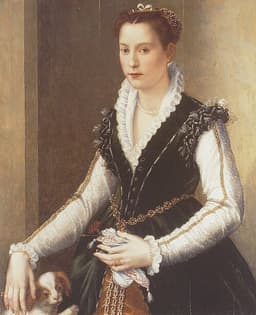
Fernando Alvarez de Toledo Duke of Alba
General · Modern
65.3Total

Julius Caesar
General · Ancient
82.8Total
Basic Information
Born
1507
-100
Died
1582
-44
Era
Modern
Ancient
Nationality
Spain
Roman Republic
Occupation
General
General
Civilization
Western
Western
Score Comparison
Military (10%)
74.0
88.0
Political (20%)
48.0
78.0
Influence (20%)
65.0
85.0
Legacy (20%)
72.0
82.0
Leadership (15%)
62.0
80.0
Strategy (15%)
72.0
85.0
TOTAL
65.3
82.8
Fernando Alvarez de Toledo Duke of Alba — Complete Timeline
1567 AD
Established the Council of TroublesPolitical Action◆ Major
Alba established the Council of Troubles, also known as the Blood Council, to prosecute those involved in the Dutch Revolt. This tribunal sentenced thousands to death, including the Counts of Egmont and Horne, intensifying resistance.
RepressionDutch RevoltInquisition
Impact: regionaldestructive
1568 AD
Battle of JemmingenWar◆ Major
Alba's Spanish army decisively defeated the rebel forces of Louis of Nassau at Jemmingen. The rebel army was destroyed, with thousands killed or drowned in the Ems River, temporarily crushing the revolt's military strength.
BattleDutch RevoltSpanish Army
Impact: regionaldestructive
1571 AD
Imposed the Tenth Penny TaxReform◆ Major
Alba attempted to impose a 10% sales tax (the Tenth Penny) on all movable goods in the Netherlands. This tax was deeply unpopular and sparked widespread economic disruption and renewed rebellion, undermining Spanish control.
TaxationRevoltEconomic Policy
Impact: regionaldestructive
1573 AD
Recalled from the NetherlandsPolitical Action◆ Major
King Philip II recalled Alba from his governorship of the Netherlands after his policies failed to suppress the revolt. Alba's harsh rule had alienated both Catholics and Protestants, and his military campaigns had stalled.
RecallNetherlandsSpanish Empire
Impact: regional
Julius Caesar — Complete Timeline
58 BC
Gallic WarsWar◆ Major
Caesar, as proconsul of Gaul, launched a series of campaigns that conquered all of Gaul (modern France, Belgium, and parts of Switzerland). He fought numerous battles, including against the Helvetii, the Belgae, and the Gallic chieftain Vercingetorix. The wars brought immense wealth and a loyal army to Caesar.
Gallic WarsConquestRoman Expansion
Impact: regional
49 BC
Crossing the RubiconPolitical Action◆ Major
Caesar led Legio XIII across the Rubicon River into Italy, defying the Roman Senate's order to disband his army. This act triggered a civil war against Pompey and the Optimates, ultimately leading to Caesar's dictatorship and the end of the Roman Republic.
Roman Civil WarEnd of RepublicPower Struggle
Impact: global
48 BC
Battle of PharsalusWar◆ Major
Caesar's outnumbered army defeated the larger forces of Pompey the Great at Pharsalus in Greece. Caesar's tactical use of a reserve line to counter Pompey's cavalry charge proved decisive. Pompey fled to Egypt, where he was assassinated, leaving Caesar as the undisputed master of the Roman world.
Roman Civil WarBattleDecisive Victory
Impact: regional
44 BC
Appointment as Dictator for LifePolitical Action◆ Major
The Roman Senate appointed Caesar dictator perpetuo (dictator for life), granting him unprecedented personal power. This move concentrated military, legislative, and judicial authority in one person, effectively ending the Roman Republic's traditional system of checks and balances and alarming many senators.
DictatorshipEnd of RepublicPower Consolidation
Impact: regionaldestructive
Assassination on the Ides of MarchPolitical Action◆ Major
A group of Roman senators, led by Marcus Junius Brutus and Gaius Cassius Longinus, stabbed Caesar to death at a meeting of the Senate in the Theatre of Pompey. The assassination was intended to restore the Republic, but instead triggered another civil war that led to the rise of the Roman Empire.
AssassinationRoman PoliticsEnd of Republic
Impact: globaldestructive
Expert Analysis
fernando-alvarez-de-toledo-duke-of-alba-vs-julius-caesar
# The Iron Hand and the Eagle’s Gaze
In the spring of 1568, a Spanish army of 12,000 men cornered a ragtag rebel force against the Ems River at Jemmingen. The commander of that army, Fernando Álvarez de Toledo, Duke of Alba, watched from a hill as his veterans methodically butchered the enemy, driving thousands into the water to drown. It was a perfect victory—clinical, absolute, and utterly hollow. A century and a half earlier, another general had stood on a battlefield in Gaul, watching his legions annihilate a barbarian host. That man, Julius Caesar, understood something Alba never grasped: victory is not the same as conquest, and fear is not the same as submission.
Origins
Caesar was born into the twilight of the Roman Republic, a world of crumbling institutions and cutthroat ambition. His family, the Julii, claimed descent from the goddess Venus, but their political influence had faded. Caesar’s childhood was marked by civil war and the dictatorship of Sulla, who proscribed his own enemies. The young patrician learned early that in Rome, survival meant playing a long game of alliances, debts, and calculated risks. He was a gambler by necessity, a pragmatist by instinct.
Alba, by contrast, emerged from the rigid hierarchy of Habsburg Spain, a world where God, king, and honor formed an unbreakable trinity. Born in 1507 to the house of Toledo, one of Castile’s most powerful noble families, he was raised to believe that order was divine and disobedience was heresy. His father died when he was three; his grandfather, the Duke of Alba, drilled into him the virtues of discipline, loyalty, and merciless efficiency. Where Caesar learned to charm and manipulate, Alba learned to command and punish.
Rise to Power
Caesar’s path to power was a masterclass in political navigation. He climbed the Roman ladder—quaestor, aedile, praetor—borrowing fortunes to fund games and bribe voters. His appointment as governor of Gaul in 58 BCE gave him the army he needed. Over eight years, he conquered a territory larger than Italy, wrote his own propaganda in the *Commentaries*, and built a legend. When the Senate ordered him to disband his legions, he crossed the Rubicon in 49 BCE, choosing civil war over submission. “The die is cast,” he reportedly said, and within four years he was dictator for life.
Alba’s rise was more linear, the product of a system that rewarded loyalty. He fought alongside Emperor Charles V at the Battle of Mühlberg in 1547, crushing the German Protestant Schmalkaldic League. By 1567, King Philip II needed a strong hand in the Netherlands, where Calvinist rebels and noble opposition were tearing the provinces apart. Alba was the obvious choice—a soldier of unwavering orthodoxy. He arrived with 10,000 Spanish troops, determined to restore order by any means necessary.
Leadership & Governance
Caesar ruled through a blend of clemency and calculation. After defeating his enemies, he pardoned them—Brutus, Cassius, even his rival Cicero. He reformed the calendar, granted citizenship to provincials, and initiated public works that employed the poor. His military genius lay in speed and improvisation: at the Siege of Alesia in 52 BCE, he built walls to trap the Gauls inside and walls to repel their relief army, fighting on two fronts simultaneously. He led from the front, sharing hardships with his men, who adored him.
Alba governed through terror. In 1567, he established the Council of Troubles, soon called the “Blood Council,” which executed thousands of suspected rebels, including the counts of Egmont and Horn—popular nobles who had opposed Philip’s policies. His military tactics were brutal but effective: at Jemmingen, he annihilated Louis of Nassau’s army, killing 7,000 rebels for the loss of 80 Spaniards. But Alba never understood the Dutch. He treated them as subjects to be crushed, not people to be won. In 1571, he imposed the Tenth Penny—a 10% sales tax on all movable goods—that united merchants, clergy, and peasants against him. The revolt he was sent to suppress only grew.
Triumph & Tragedy
Caesar’s greatest triumph was the conquest of Gaul, which brought Rome immense wealth and strategic security. His tragedy came on the Ides of March, 44 BCE, when sixty senators stabbed him to death in the Senate chamber. He had ignored warnings—including a soothsayer’s famous “Beware the Ides of March”—and dismissed his own bodyguard. His clemency had not bought loyalty; it had only given his enemies time to organize.
Alba’s greatest moment was Jemmingen, a textbook demonstration of how to destroy an enemy army. His tragedy unfolded slowly over six years in the Netherlands. By 1573, his policies had turned a regional rebellion into a national war of independence. The Spanish treasury was bankrupt, his troops were mutinying, and King Philip recalled him in disgrace. Alba returned to Spain a defeated man, his “iron fist” having shattered itself against Dutch resolve.
Character & Destiny
Caesar was a man of immense charm, intellect, and ambition. He could recite Greek poetry, seduce queens, and command legions with equal flair. His flaw was hubris—the belief that his genius could overcome any opposition. He centralized power without building the institutions to sustain it, and his assassination plunged Rome into another civil war. His adopted heir, Octavian, would learn from his mistakes, becoming Augustus, the first emperor.
Alba was rigid, devout, and utterly convinced of his own righteousness. He once said, “The king’s will is the law, and the law is God’s will.” His flaw was inflexibility—an inability to adapt to a changing world. He saw the Dutch Revolt as a criminal insurrection, not a political movement. By refusing to negotiate, he made compromise impossible. His legacy is a cautionary tale about the limits of coercion.
Legacy
Caesar’s name became synonymous with imperial power: “Caesar” evolved into *Kaiser* and *Tsar*. His military writings are still studied at war colleges. The Julian calendar, with minor adjustments, is the one we use today. He transformed Rome from a republic into an empire, for better and worse.
Alba is remembered in the Netherlands as a monster—the “Iron Duke” who burned towns and executed innocents. In Spain, he is a loyal servant of the crown, a symbol of discipline. His legacy is the Eighty Years’ War, which ended with Dutch independence and the decline of Spanish power. Where Caesar built a bridge between eras, Alba burned one.
Conclusion
Standing at the Ems River in 1568, Alba believed he had won. He had crushed an army, executed its leaders, and terrorized a province. But the Dutch did not surrender. They learned to fight differently—from the sea, from the marshes, with privateers and pamphlets. Caesar, at the Rubicon in 49 BCE, understood that power is not just about killing enemies; it is about creating a new order that people will accept. Alba could destroy, but he could not build. In the end, that is the difference between a general who changes the world and one who only stains it with blood.
Rankings
🥇
Julius CaesarLeader
Mil: 88.0Pol: 78.0Inf: 85.0
82.8
🥈
Fernando Alvarez de Toledo Duke of Alba
Mil: 74.0Pol: 48.0Inf: 65.0
65.3
+17.5 behind
How This Comparison Works
Algorithm
Each figure is scored on 6 dimensions (0—100 scale) based on structured historical data: Military (10%), Political (20%), Influence (20%), Legacy (20%), Leadership (15%), Strategy (15%). The weighted total produces the final ranking.
Data Sources
Scores are computed from structured sub-indicators in the database. Scale factors adjust for era (Ancient ×0.85, Modern ×1.0) and civilization size (Eastern ×1.05, Other ×0.80) to account for differences in population and military scale.
Maximum 3 Figures
Comparisons are limited to 2—3 figures to ensure readability and statistical meaningfulness.
Error Margins
±5 points per dimension — Sub-scores are derived from historical records with inherent uncertainty. Two figures within 5 points on a dimension should be considered roughly equivalent in that area.
Total Score Accuracy
±3 points overall — The weighted combination of 6 dimensions produces a total score with approximately ±3 points of uncertainty. Differences of less than 3 points are not statistically significant— the figures are effectively tied.
Known Limitations
- Historical records are incomplete and uneven across civilizations
- Figures from oral-tradition societies may be underrepresented
- Occupation labels can misclassify multi-role figures
- Scores measure capability and impact, not moral character
- Quantitative scoring is a comparison tool, not absolute truth
Capability Radar
Military (10%) — Battles & Warfare
Battles
85
95
Win Rate
80
92
Expansion
70
97
Political (20%) — Governance & Reform
Reform
40
90
Diplomacy
30
85
Economy
35
82
Influence (20%) — Cultural & Global Reach
Cultural
55
88
Global
65
94
Legacy (20%) — Historical Impact
Historical
70
95
Longevity
60
96
Leadership (15%) — Power & Stability
Tenure
65
75
Stability
20
60
Strategy (15%) — Tactics & Innovation
Strategy
85
94
Tactics
90
96
Reform
75
88
Similar Comparisons
Comments & Discussion
横刀史官6/17/2026
拿乌合之众和职业军团对比不公平——阿尔巴公爵面对的荷兰民兵连罗马辅助军都不如。但关键在于:凯撒在卢比孔河畔敢赌上整个罗马,阿尔巴却连腓力二世的朝臣都不敢违逆。一个统帅若只会执行上级命令而不懂政治博弈,充其量是个高级刽子手。阿尔巴在尼德兰烧杀七年,最终灰溜溜被召回,而凯撒征服高卢后成了独裁官。明白差距了?|
布衣史痴6/17/2026
阿尔巴公爵就是明朝的杨镐——打胜仗却输掉战争。他1580年攻陷里斯本时的冷酷精确确实堪比凯撒高卢之战的任何战术作品,但凯撒会写书、会演讲、能让高卢酋长变成他的朋友。阿尔巴呢?七个省总督向他求饶,他砍了伯爵的头。这哪是大将,分明是朝廷派来的催命鬼。西班牙军靴踩碎了尼德兰,踩出来的不是疆土,是三十年战争的火山口。|
Bellum Magister6/17/2026
I'll stop the Caesar-worshipping here. Alba's real achievement wasn't Jemmingen—it was the Spanish Road. He moved 10,000 troops from Milan to Brussels in 32 days through hostile territory, a feat Caesar never attempted. Alba revolutionized military logistics and created Europe's first standing army. Caesar won through political genius and personal charisma; Alba built systems that lasted centuries. If we're measuring legacy, Alba's iron hand actually governed whereas Caesar's dictatorship lasted
Historian3006/17/2026
The net assessment is damning. Alba inheriting Spain's military machine (tercios, matchlocks, siege artillery) had a 95% kill ratio in pitched battles. Caesar, with inferior technology and logistics, conquered Gaul (800 cities, 3M casualties) while fighting civil wars simultaneously. Alba's "success" at Jemmingen—4,000 dead rebels vs 80 Spaniards—actually cost Spain the war because it radicalized the resistance. Caesars brutal but flexible; Alba's just brutal. Win-loss records don't capture stra
Chronicler32746/17/2026
Alba's body count dwarfs Caesar's in proportional terms. In the Low Countries alone, his Council of Troubles executed over 1,800 people in three years—versus Caesar's relatively measured clemency after Alesia. Caesar knew that slaughtering 40,000 Gauls was a signal to the survivors; Alba thought butchering 12,000 Dutch rebels at Jemmingen would break their spirit. Instead, it created martyrs and hardened resistance. Tactical brilliance without strategic empathy is just butchery with a plan.|