Loading...
Fernando Alvarez de Toledo Duke of Alba vs George S. Patton
Fernando Alvarez de Toledo Duke of Alba leads by 4.6 pts · 2 figures compared
…
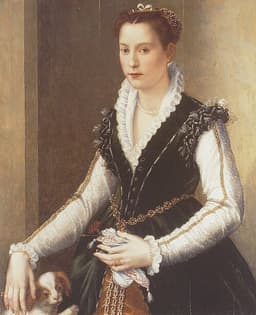
Fernando Alvarez de Toledo Duke of Alba
General · Modern
65.3Total
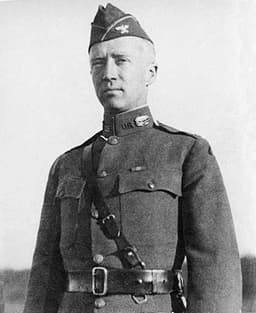
George S. Patton
General · Modern
60.7Total
Basic Information
Born
1507
1885
Died
1582
1945
Era
Modern
Modern
Nationality
Spain
United States
Occupation
General
General
Civilization
Western
Western
Score Comparison
Military (10%)
74.0
79.9
Political (20%)
48.0
26.4
Influence (20%)
65.0
75.0
Legacy (20%)
72.0
72.0
Leadership (15%)
62.0
30.0
Strategy (15%)
72.0
75.0
TOTAL
65.3
60.7
Fernando Alvarez de Toledo Duke of Alba — Complete Timeline
1567 AD
Established the Council of TroublesPolitical Action◆ Major
Alba established the Council of Troubles, also known as the Blood Council, to prosecute those involved in the Dutch Revolt. This tribunal sentenced thousands to death, including the Counts of Egmont and Horne, intensifying resistance.
RepressionDutch RevoltInquisition
Impact: regionaldestructive
1568 AD
Battle of JemmingenWar◆ Major
Alba's Spanish army decisively defeated the rebel forces of Louis of Nassau at Jemmingen. The rebel army was destroyed, with thousands killed or drowned in the Ems River, temporarily crushing the revolt's military strength.
BattleDutch RevoltSpanish Army
Impact: regionaldestructive
1571 AD
Imposed the Tenth Penny TaxReform◆ Major
Alba attempted to impose a 10% sales tax (the Tenth Penny) on all movable goods in the Netherlands. This tax was deeply unpopular and sparked widespread economic disruption and renewed rebellion, undermining Spanish control.
TaxationRevoltEconomic Policy
Impact: regionaldestructive
1573 AD
Recalled from the NetherlandsPolitical Action◆ Major
King Philip II recalled Alba from his governorship of the Netherlands after his policies failed to suppress the revolt. Alba's harsh rule had alienated both Catholics and Protestants, and his military campaigns had stalled.
RecallNetherlandsSpanish Empire
Impact: regional
George S. Patton — Complete Timeline
1943 AD
Command of II Corps in North AfricaWar◆ Major
Patton assumed command of II Corps after the U.S. defeat at Kasserine Pass. He restored discipline and led the corps to victory at El Guettar, his first major engagement against German forces in World War II.
World War IINorth AfricaCommand
Impact: regional
Liberation of SicilyWar◆ Major
Patton commanded the U.S. Seventh Army during the invasion of Sicily. His forces captured Palermo and raced to Messina, beating the British to the port. The campaign secured the island for the Allies.
World War IISicilyCampaign
Impact: regional
Slapping incident in SicilyPolitical Action◆ Major
Patton visited a field hospital and slapped a soldier diagnosed with battle fatigue, accusing him of cowardice. The incident caused a public scandal, nearly ended his career, and forced him to apologize publicly.
World War IIScandalDiscipline
Impact: nationaldestructive
1944 AD
Relief of BastogneWar
During the Battle of the Bulge, Patton rapidly turned his Third Army north and broke through German lines to relieve the besieged 101st Airborne Division at Bastogne. This action was critical to the Allied victory.
World War IIBattle of the BulgeRelief
Impact: regional
1945 AD
Crossing of the Rhine at OppenheimWar◆ Major
Patton's Third Army crossed the Rhine River at Oppenheim without aerial bombardment or a preliminary artillery barrage, achieving a surprise crossing. This allowed Allied forces to advance deep into Germany.
World War IIRhine CrossingAdvance
Impact: regional
Expert Analysis
Origins
Fernando Álvarez de Toledo, the Duke of Alba, was born into Spanish nobility in 1507. His family were military aristocrats, and he was trained in warfare from a young age. He fought in campaigns against the French and the Ottoman Turks, learning the art of war under Emperor Charles V. His background gave him a rigid, authoritarian worldview shaped by Spanish Habsburg absolutism.
George S. Patton was born in 1885 in California to a family with a long military tradition. He attended West Point and excelled in athletics and military training. Patton was obsessed with military history and believed in reincarnation, often citing past lives as a soldier. His family wealth allowed him to pursue military service, but he had to overcome dyslexia and repeated failures to graduate.
Rise to Power
Alba rose to prominence through his service to Emperor Charles V. He commanded Spanish forces in the Schmalkaldic War, defeating the Protestant League at Mühlberg in 1547. His loyalty to the Habsburgs earned him the title of Duke. In 1567, Philip II appointed him Governor of the Spanish Netherlands to suppress the Dutch Revolt. Alba brought an army of 10,000 men and established the Council of Troubles (Blood Council), which executed over 1,100 people.
Patton's rise began in World War I. He commanded tanks in the Meuse-Argonne Offensive and was wounded. Between wars, he advocated for armored warfare. In World War II, he commanded II Corps in North Africa after the U.S. defeat at Kasserine Pass in 1943. He restored discipline and led the corps to victory at El Guettar. His success led to command of the Seventh Army in Sicily, where he captured Palermo and Messina.
Leadership & Governance
Alba governed the Netherlands with a firm hand. He imposed the Tenth Penny tax, a 10% sales tax on all movable goods, which sparked widespread resistance. He used military force to crush dissent, but his brutality united the Dutch against Spain. His leadership scored 62.0, reflecting his ability to command but his failure in governance. He alienated the local nobility and drove William of Orange into open rebellion.
Patton was an aggressive commander who demanded discipline and speed. He led from the front, often with a pistol and ivory-handled revolvers. His leadership score of 30.0 is low due to the slapping incident in Sicily, where he struck a soldier and was nearly relieved of command. However, his strategic score of 75.0 shows his effectiveness. He used rapid armored thrusts, as seen in the relief of Bastogne during the Battle of the Bulge.
Triumph & Tragedy
Alba's greatest triumph was the Battle of Jemmingen in 1568, where he destroyed the rebel army of Louis of Nassau, killing 7,000 and drowning many more. His greatest tragedy was his failure to pacify the Netherlands. His harsh rule led to the rise of the Dutch Republic and the Eighty Years' War. He was recalled in 1573, his policies in ruins. His military score of 74.0 and strategy of 72.0 show his battlefield skill, but his political score of 48.0 reveals his governance failures.
Patton's triumph was the relief of Bastogne in December 1944. He turned his Third Army 90 degrees in 48 hours and broke through German lines, saving the 101st Airborne. His tragedy was the slapping incident, which nearly ended his career. He also died under mysterious circumstances after a car accident in 1945. His military score of 79.9 and strategy of 75.0 reflect his combat prowess, but his leadership score of 30.0 and political score of 26.4 show his flaws.
Character & Destiny
Alba was stubborn, cruel, and inflexible. He believed in absolute obedience and used terror to enforce it. His character shaped his fate: he could not adapt to the political complexities of the Netherlands. Historians view him as a competent general but a disastrous governor. His legacy score of 72.0 reflects his lasting reputation as a symbol of tyranny.
Patton was aggressive, theatrical, and often reckless. He believed in decisive action and personal courage. His character made him a great battlefield commander but a poor politician. His death in 1945, shortly after the war, sealed his status as a tragic hero. His influence score of 75.0 and legacy of 72.0 show his enduring fame.
Legacy
Alba's legacy is largely negative. The Blood Council and Tenth Penny tax made him a byword for oppression. However, his military reforms influenced Spanish tactics. He scored 65.3 overall, with his highest in military (74.0) and lowest in political (48.0). His impact on the Netherlands was profound: his harsh rule inadvertently helped forge a Dutch national identity.
Patton's legacy is more positive. He is remembered as a brilliant tank commander who helped liberate Europe. His aggressive tactics are studied in military academies. He scored 60.7 overall, with high military (79.9) and strategy (75.0), but low leadership (30.0) and political (26.4). His slapping incident is often overlooked in favor of his combat achievements.
Conclusion
While Alba scored higher overall (65.3 vs 60.7), Patton had a greater impact on military history. Alba's successes were limited to a single campaign, and his governance was a failure. Patton's Third Army played a key role in defeating Nazi Germany, and his methods influenced modern armored warfare. Alba's legacy is cautionary, while Patton's is inspirational. Therefore, Patton had the greater impact on history, despite his lower total score.
Rankings
🥇
Fernando Alvarez de Toledo Duke of AlbaLeader
Mil: 74.0Pol: 48.0Inf: 65.0
65.3
🥈
George S. Patton
Mil: 79.9Pol: 26.4Inf: 75.0
60.7
+4.6 behind
How This Comparison Works
Algorithm
Each figure is scored on 6 dimensions (0—100 scale) based on structured historical data: Military (10%), Political (20%), Influence (20%), Legacy (20%), Leadership (15%), Strategy (15%). The weighted total produces the final ranking.
Data Sources
Scores are computed from structured sub-indicators in the database. Scale factors adjust for era (Ancient ×0.85, Modern ×1.0) and civilization size (Eastern ×1.05, Other ×0.80) to account for differences in population and military scale.
Maximum 3 Figures
Comparisons are limited to 2—3 figures to ensure readability and statistical meaningfulness.
Error Margins
±5 points per dimension — Sub-scores are derived from historical records with inherent uncertainty. Two figures within 5 points on a dimension should be considered roughly equivalent in that area.
Total Score Accuracy
±3 points overall — The weighted combination of 6 dimensions produces a total score with approximately ±3 points of uncertainty. Differences of less than 3 points are not statistically significant— the figures are effectively tied.
Known Limitations
- Historical records are incomplete and uneven across civilizations
- Figures from oral-tradition societies may be underrepresented
- Occupation labels can misclassify multi-role figures
- Scores measure capability and impact, not moral character
- Quantitative scoring is a comparison tool, not absolute truth
Capability Radar
Military (10%) — Battles & Warfare
Battles
85
85
Win Rate
80
88
Expansion
70
80
Political (20%) — Governance & Reform
Reform
40
5
Diplomacy
30
20
Economy
35
5
Influence (20%) — Cultural & Global Reach
Cultural
55
65
Global
65
65
Legacy (20%) — Historical Impact
Historical
70
70
Longevity
60
60
Leadership (15%) — Power & Stability
Tenure
65
10
Stability
20
10
Strategy (15%) — Tactics & Innovation
Strategy
85
78
Tactics
90
92
Reform
75
75
Similar Comparisons
Comments & Discussion
No comments yet. Be the first to share your thoughts!