Loading...
Ferdinand II of Aragon vs Stefan Uros IV Dusan
Ferdinand II of Aragon leads by 7.5 pts · 2 figures compared
…
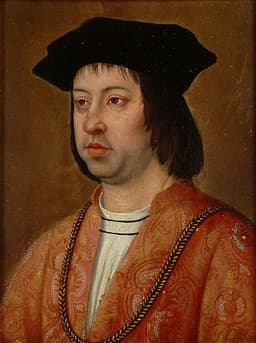
Ferdinand II of Aragon
Emperor · Medieval
70.4Total
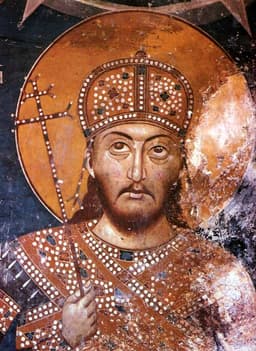
Stefan Uros IV Dusan
Emperor · Medieval
62.9Total
Basic Information
Born
1452
1308
Died
1516
1355
Era
Medieval
Medieval
Nationality
Spain
Serbia
Occupation
Emperor
Emperor
Civilization
Western
Western
Score Comparison
Military (10%)
76.0
76.0
Political (20%)
78.0
69.2
Influence (20%)
65.0
55.0
Legacy (20%)
65.0
55.0
Leadership (15%)
80.0
72.0
Strategy (15%)
66.3
65.9
TOTAL
70.4
62.9
Ferdinand II of Aragon — Complete Timeline
1469 AD
Marriage to Isabella I of CastilePolitical Action
Ferdinand II of Aragon married Isabella I of Castile in Valladolid, uniting the two largest Christian kingdoms in Spain. This marriage created the basis for the Kingdom of Spain, though both crowns remained legally separate until the death of Isabella in 1504.
Spanish unificationDynastic union
Impact: globalconstructive
1478 AD
Establishment of the Spanish InquisitionPolitical Action◆ Major
Ferdinand II and Isabella I obtained papal approval to establish the Spanish Inquisition, a tribunal to enforce Catholic orthodoxy. The Inquisition targeted converted Jews (conversos) and Muslims (moriscos) suspected of secretly practicing their former religions, leading to thousands of executions and imprisonments.
InquisitionReligious persecution
Impact: globaldestructive
1492 AD
Conquest of GranadaWar
Ferdinand II and Isabella I completed the Reconquista by capturing the city of Granada, the last Muslim stronghold in the Iberian Peninsula. The surrender of the Nasrid kingdom ended nearly 800 years of Muslim rule in Spain and marked a major victory for the Catholic Monarchs.
ReconquistaGranada
Impact: global
Alhambra DecreePolitical Action◆ Major
Ferdinand II and Isabella I issued the Alhambra Decree, ordering the expulsion of all Jews from the kingdoms of Spain who refused to convert to Catholicism. The decree led to the exile of an estimated 200,000 Jews, causing a significant demographic and economic impact on Spain.
Expulsion of JewsReligious persecution
Impact: globaldestructive
Stefan Uros IV Dusan — Complete Timeline
1346 AD
Coronation as Emperor of Serbs and GreeksPolitical Action
Stefan Dušan was crowned Emperor (Tsar) of Serbs and Greeks in Skopje by the newly elevated Serbian Patriarch Joanikije II. This coronation asserted Serbian imperial ambitions over Byzantine territories. The act created the Serbian Empire, claiming succession to the Byzantine Empire and challenging Constantinople's authority.
Imperial coronationSerbian EmpireByzantine succession
Impact: regionalconstructive
Elevation of the Serbian Archbishopric to PatriarchatePolitical Action◆ Major
Dušan convened a church council in Skopje that elevated the Serbian Archbishopric to a Patriarchate, with Joanikije II as the first Patriarch. This act was done without Constantinople's approval, causing a schism. The Serbian Patriarchate provided ecclesiastical independence for the empire and legitimized Dušan's imperial coronation.
Patriarchate establishmentChurch independenceSchism
Impact: regionalconstructive
1348 AD
Conquest of Macedonia and EpirusWar◆ Major
Dušan's armies conquered most of Macedonia, including the cities of Serres, Drama, and Kavala, as well as Epirus and Thessaly. These conquests expanded the Serbian Empire to its greatest territorial extent, covering much of the Balkan Peninsula. The acquisitions gave Serbia access to the Aegean Sea and control over key trade routes.
Territorial expansionMacedoniaAegean access
Impact: regional
1349 AD
Promulgation of Dušan's Code (Zakonik)Reform◆ Major
Dušan issued the Zakonik, a comprehensive legal code consisting of 201 articles. The code regulated all aspects of society, including feudal relations, church rights, and criminal law. It was based on Byzantine law but adapted to Serbian conditions. The code remained in use until the Ottoman conquest and influenced later Balkan legal systems.
Legal codeByzantine influenceFeudal regulation
Impact: regionalconstructive
1355 AD
Death and collapse of the Serbian EmpireOther
Dušan died suddenly at age 47, possibly from poisoning or illness, near Constantinople while preparing a campaign against the Byzantine capital. His death left the Serbian Empire without a strong successor. His son Stefan Uroš V proved unable to control the nobility, leading to the empire's fragmentation into rival principalities within two decades.
Empire collapseSuccession crisisFragmentation
Impact: regionaltragic
Expert Analysis
Origins
Ferdinand II of Aragon (born 1452) was the son of King John II of Aragon and Juana Enríquez. He grew up in the fragmented Crown of Aragon, which included Catalonia, Valencia, and Aragon proper. His early education focused on military and political skills, preparing him for kingship. Stefan Uroš IV Dušan (born 1308) was the son of King Stefan Uroš III Dečanski of Serbia and Theodora of Bulgaria. He spent his youth in the royal court, witnessing the struggles of the Nemanjić dynasty to consolidate power amid Byzantine and Bulgarian threats. Both rulers inherited kingdoms with expansionist potential but faced internal divisions.
Rise to Power
Ferdinand became King of Aragon in 1479 upon his father's death, but his rise began earlier with his 1469 marriage to Isabella I of Castile. This union created the basis for a unified Spain, though Castile and Aragon remained legally separate. The turning point was the War of the Castilian Succession (1475-1479), where Ferdinand and Isabella defeated rivals to secure Isabella's throne. Stefan Dušan rose by deposing his father in 1331 with the support of the Serbian nobility. He was crowned king and immediately launched campaigns against the Byzantine Empire. His decisive victory at the Battle of Velbazhd (1330) had already established his military reputation. In 1346, he was crowned Emperor of Serbs and Greeks, claiming continuity with the Byzantine Empire.
Leadership & Governance
Ferdinand II scored 80.0 in leadership and 78.0 in political acumen. He co-ruled with Isabella, but his governance focused on centralization and religious uniformity. He established the Spanish Inquisition (1478) to enforce Catholic orthodoxy, expelled Jews in 1492, and created a unified tax system. His military score of 76.0 reflects his role in the Granada War (1482-1492), which ended Muslim rule in Iberia. Stefan Dušan scored 72.0 in leadership and 69.2 in politics. His governance was marked by the 1349 Dušan's Code (Zakonik), a legal code of 201 articles regulating feudal relations, property, and criminal justice. He also elevated the Serbian Archbishopric to a Patriarchate, strengthening the church's independence. However, his empire was decentralized, relying on local nobles who often acted autonomously.
Triumph & Tragedy
Ferdinand's greatest triumph was completing the Reconquista by capturing Granada in 1492, uniting Spain under Catholic rule. He also sponsored Columbus's voyage, leading to the Spanish colonization of the Americas. His tragedy was the Alhambra Decree, which expelled Jews and damaged Spain's economy and intellectual life. The Inquisition also fostered a culture of fear. Stefan Dušan's triumph was building the largest Serbian empire, controlling most of the Balkans including Macedonia, Epirus, and Thessaly. His code was a sophisticated legal document. His tragedy was his sudden death in 1355 at age 47, possibly poisoned, which led to the rapid collapse of his empire due to internal strife and external attacks. His failure to establish a stable succession doomed his achievements.
Character & Destiny
Ferdinand was pragmatic, calculating, and religiously fervent. He prioritized state unity and Catholic orthodoxy, making decisions that secured his legacy but at a human cost. His character shaped Spain's destiny as a global power. Stefan Dušan was ambitious and militarily skilled, but his vision of a Serbian-Byzantine empire was too reliant on his personal authority. His sudden death revealed the fragility of his state. Historians note that while Ferdinand built institutions that lasted centuries, Dušan's empire was a personal creation that crumbled without him.
Legacy
Ferdinand's legacy is immense: the unified Spanish monarchy, the Spanish language, and the foundation of the Spanish Empire. His policies influenced the Counter-Reformation and colonial expansion. His total score of 70.4 reflects enduring impact. Stefan Dušan's legacy is more limited: his code influenced later Serbian law, and he is a national hero in Serbia. But his empire vanished within decades. He scored 62.9, lower due to the ephemeral nature of his achievements.
Conclusion
Ferdinand II of Aragon had greater impact than Stefan Dušan. While Dušan built a large empire, it did not outlast him. Ferdinand's unification of Spain, the Inquisition, and colonial ventures shaped world history for centuries. The score gap of 7.5 points reflects this: Ferdinand's political and leadership scores (78.0 and 80.0) versus Dušan's (69.2 and 72.0) show more sustainable governance. Dušan's military score (76.0) matches Ferdinand's (76.0), but his influence and legacy scores of 55.0 each lag behind Ferdinand's 65.0. Ferdinand's institutions endured; Dušan's did not. Thus, Ferdinand II of Aragon is the more consequential ruler.
Rankings
🥇
Ferdinand II of AragonLeader
Mil: 76.0Pol: 78.0Inf: 65.0
70.4
🥈
Stefan Uros IV Dusan
Mil: 76.0Pol: 69.2Inf: 55.0
62.9
+7.5 behind
How This Comparison Works
Algorithm
Each figure is scored on 6 dimensions (0—100 scale) based on structured historical data: Military (10%), Political (20%), Influence (20%), Legacy (20%), Leadership (15%), Strategy (15%). The weighted total produces the final ranking.
Data Sources
Scores are computed from structured sub-indicators in the database. Scale factors adjust for era (Ancient ×0.85, Modern ×1.0) and civilization size (Eastern ×1.05, Other ×0.80) to account for differences in population and military scale.
Maximum 3 Figures
Comparisons are limited to 2—3 figures to ensure readability and statistical meaningfulness.
Error Margins
±5 points per dimension — Sub-scores are derived from historical records with inherent uncertainty. Two figures within 5 points on a dimension should be considered roughly equivalent in that area.
Total Score Accuracy
±3 points overall — The weighted combination of 6 dimensions produces a total score with approximately ±3 points of uncertainty. Differences of less than 3 points are not statistically significant— the figures are effectively tied.
Known Limitations
- Historical records are incomplete and uneven across civilizations
- Figures from oral-tradition societies may be underrepresented
- Occupation labels can misclassify multi-role figures
- Scores measure capability and impact, not moral character
- Quantitative scoring is a comparison tool, not absolute truth
Capability Radar
Military (10%) — Battles & Warfare
Battles
75
75
Win Rate
80
80
Expansion
85
85
Political (20%) — Governance & Reform
Reform
80
88
Diplomacy
90
70
Economy
75
75
Influence (20%) — Cultural & Global Reach
Cultural
75
70
Global
80
60
Legacy (20%) — Historical Impact
Historical
85
75
Longevity
80
65
Leadership (15%) — Power & Stability
Tenure
85
72
Stability
70
68
Strategy (15%) — Tactics & Innovation
Strategy
85
78
Tactics
70
70
Reform
60
65
Similar Comparisons
Comments & Discussion
No comments yet. Be the first to share your thoughts!