Loading...
Ferdinand I of Austria vs Jahangir
Jahangir leads by 12.9 pts · 2 figures compared
…

Ferdinand I of Austria
Emperor · Modern
40.0Total
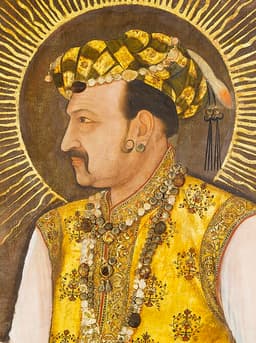
Jahangir
Emperor · Modern
52.9Total
Basic Information
Born
1793
1569
Died
1875
1627
Era
Modern
Modern
Nationality
Austria
Mughal Empire
Occupation
Emperor
Emperor
Civilization
Western
Indian
Score Comparison
Military (10%)
27.1
38.3
Political (20%)
29.3
43.7
Influence (20%)
45.5
59.0
Legacy (20%)
35.0
46.7
Leadership (15%)
45.0
74.0
Strategy (15%)
60.0
50.0
TOTAL
40.0
52.9
Ferdinand I of Austria — Complete Timeline
1835 AD
Accession to the Austrian ThronePolitical Action◆ Major
Ferdinand I became Emperor of Austria upon the death of his father Francis II. His reign was marked by his epilepsy and mental incapacity, leading to governance by a regency council dominated by Metternich.
SuccessionRegencyAustrian Empire
Impact: national
1848 AD
Revolutions of 1848 in the Austrian EmpirePolitical Action
A series of uprisings across the Austrian Empire demanded liberal reforms and national autonomy. Ferdinand I was forced to dismiss Metternich and promise a constitution, but the revolts were eventually suppressed.
RevolutionLiberal ReformsMetternich
Impact: regionaldestructive
Abdication in Favor of Franz JosephPolitical Action◆ Major
Under pressure from the court and military, Ferdinand I abdicated the throne in favor of his nephew Franz Joseph. This ended his ineffective reign and allowed a new, more capable ruler to take control.
AbdicationSuccessionFranz Joseph
Impact: national
Jahangir — Complete Timeline
1606 AD
Execution of Guru Arjan DevPolitical Action◆ Major
Jahangir ordered the execution of Guru Arjan Dev, the fifth Sikh guru, for supporting the rebellion of his son Khusrau. Guru Arjan Dev was tortured and died in Mughal custody. This event marked a turning point in Sikh-Mughal relations, leading to the militarization of the Sikh community.
ExecutionSikhismReligious Conflict
Impact: regionaldestructive
Rebellion of Prince KhusrauPolitical Action
Jahangir's eldest son, Prince Khusrau, rebelled against his father shortly after Jahangir's accession. Khusrau gathered an army and marched on Lahore. Jahangir's forces defeated the rebellion, and Khusrau was captured. He was later blinded and imprisoned, dying in 1622.
RebellionSuccessionKhusrau
Impact: nationaltragic
1611 AD
Marriage to Nur JahanPolitical Action◆ Major
Jahangir married Mehr-un-Nissa, who was given the title Nur Jahan. She became his most influential wife and effectively co-ruled the empire. Nur Jahan controlled court appointments, issued decrees, and managed the empire's finances. Her influence marked a period of significant female political power in the Mughal court.
MarriageNur JahanCourt Politics
Impact: national
1612 AD
Granting of Trade Rights to the English East India CompanyPolitical Action◆ Major
Jahangir granted the English East India Company permission to establish a trading post at Surat. This was the first formal English foothold in India. The company later expanded its influence, eventually becoming the dominant colonial power in the subcontinent.
TradeEast India CompanyColonialism
Impact: global
Expert Analysis
Origins
Ferdinand I of Austria was born in 1793 in Vienna, the eldest son of Emperor Francis II. He suffered from epilepsy and severe mental disabilities, which limited his education and capacity to rule. His upbringing was sheltered, with minimal exposure to statecraft. In contrast, Jahangir was born in 1569 in Fatehpur Sikri, the eldest son of Emperor Akbar. He received a comprehensive education in Persian, Arabic, military tactics, and administration, and was trained for leadership from a young age. His early life was marked by rebellion against his father, including a brief usurpation in 1600, but he eventually succeeded peacefully in 1605.
Rise to Power
Ferdinand I ascended the throne in 1835 upon his father's death. His reign was dominated by his chief minister, Prince Metternich, who maintained a conservative order. Ferdinand's inability to govern effectively became apparent during the Revolutions of 1848, when uprisings across the empire forced him to dismiss Metternich and promise reforms. Jahangir's rise was more direct: he became emperor in 1605 after Akbar's death, despite earlier rebellions. He consolidated power by executing rivals, including his own son Khusrau's supporters, and quickly established his authority. His reign was initially stable, but challenges emerged from rebellious nobles and his son Shah Jahan.
Leadership & Governance
Ferdinand I's leadership was passive; he relied heavily on Metternich and later on his advisors. His governance was marked by indecision and lack of initiative, leading to the collapse of the old order in 1848. He scored 45.0 in leadership, reflecting his inability to command. Jahangir, scoring 74.0 in leadership, was more hands-on but delegated significant authority to his wife Nur Jahan, who effectively co-ruled. Jahangir's governance included administrative reforms, such as improving the justice system and patronizing the arts. However, his reliance on Nur Jahan led to factionalism. Ferdinand's political score of 29.3 reflects his weakness, while Jahangir's 43.7 indicates moderate political skill.
Triumph & Tragedy
Ferdinand's greatest success was surviving the 1848 revolutions without being killed, but his abdication in favor of his nephew Franz Joseph in 1848 marked his greatest failure. He scored 27.1 in military, reflecting no significant military achievements. Jahangir's triumphs include expanding Mughal influence and securing trade rights for the English East India Company in 1612, which opened India to European trade. His tragedy was the execution of Guru Arjan Dev in 1606, which alienated the Sikh community and led to long-term conflict. Jahangir's military score of 38.3 is modest, but he maintained the empire's stability.
Character & Destiny
Ferdinand I was described as kind but mentally incapacitated, often unable to sign documents. His epilepsy and seizures made him appear weak. His character led to his abdication, as he could not handle the crisis. Jahangir was known for his love of art, opium addiction, and indecisiveness. His character led to the rise of Nur Jahan, who compensated for his weaknesses. Historians note that Jahangir's reign was a period of transition, with the empire remaining strong but facing internal challenges. Both rulers were heavily influenced by others, but Jahangir's destiny was more favorable due to the stable foundations laid by Akbar.
Legacy
Ferdinand I is remembered as a weak emperor who failed to modernize Austria. His abdication paved the way for Franz Joseph's long reign, but the empire continued to decline. His legacy score is 35.0. Jahangir's legacy is more positive: he is remembered for his patronage of art, including Mughal miniature painting, and for establishing English trade. His legacy score of 46.7 reflects his cultural contributions and the strengthening of Mughal institutions. However, his religious intolerance, particularly the execution of Guru Arjan Dev, tarnished his reputation. Jahangir's influence score of 59.0 is higher than Ferdinand's 45.5, indicating greater long-term impact.
Conclusion
Jahangir, with a total score of 52.9, clearly surpasses Ferdinand I's 40.0. Jahangir's leadership and governance, despite flaws, maintained the Mughal Empire's stability and expanded its influence. Ferdinand I's reign was a failure, marked by his inability to address the empire's crises. While both were constrained by circumstances, Jahangir's decisions had lasting consequences, including the English presence in India. Therefore, Jahangir had greater historical impact.
Rankings
🥇
JahangirLeader
Mil: 38.3Pol: 43.7Inf: 59.0
52.9
🥈
Ferdinand I of Austria
Mil: 27.1Pol: 29.3Inf: 45.5
40.0
+12.9 behind
How This Comparison Works
Algorithm
Each figure is scored on 6 dimensions (0—100 scale) based on structured historical data: Military (10%), Political (20%), Influence (20%), Legacy (20%), Leadership (15%), Strategy (15%). The weighted total produces the final ranking.
Data Sources
Scores are computed from structured sub-indicators in the database. Scale factors adjust for era (Ancient ×0.85, Modern ×1.0) and civilization size (Eastern ×1.05, Other ×0.80) to account for differences in population and military scale.
Maximum 3 Figures
Comparisons are limited to 2—3 figures to ensure readability and statistical meaningfulness.
Error Margins
±5 points per dimension — Sub-scores are derived from historical records with inherent uncertainty. Two figures within 5 points on a dimension should be considered roughly equivalent in that area.
Total Score Accuracy
±3 points overall — The weighted combination of 6 dimensions produces a total score with approximately ±3 points of uncertainty. Differences of less than 3 points are not statistically significant— the figures are effectively tied.
Known Limitations
- Historical records are incomplete and uneven across civilizations
- Figures from oral-tradition societies may be underrepresented
- Occupation labels can misclassify multi-role figures
- Scores measure capability and impact, not moral character
- Quantitative scoring is a comparison tool, not absolute truth
Capability Radar
Military (10%) — Battles & Warfare
Battles
36
45
Win Rate
38
40
Expansion
41
25
Political (20%) — Governance & Reform
Reform
10
30
Diplomacy
20
40
Economy
10
35
Influence (20%) — Cultural & Global Reach
Cultural
5
60
Global
5
35
Legacy (20%) — Historical Impact
Historical
15
50
Longevity
5
40
Leadership (15%) — Power & Stability
Tenure
30
55
Stability
5
30
Strategy (15%) — Tactics & Innovation
Strategy
48
30
Tactics
46
35
Reform
51
20
Similar Comparisons
Comments & Discussion
No comments yet. Be the first to share your thoughts!