Loading...
Ferdinand I of Aragon vs Hugh Capet
Hugh Capet leads by 10.6 pts · 2 figures compared
…
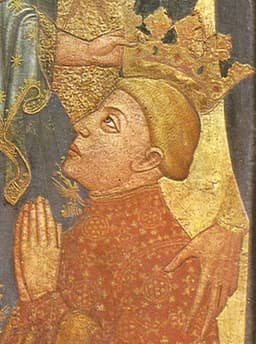
Ferdinand I of Aragon
Emperor · Medieval
54.8Total
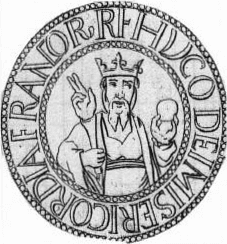
Hugh Capet
Emperor · Medieval
65.4Total
Basic Information
Born
1380
941
Died
1416
996
Era
Medieval
Medieval
Nationality
Aragon
France
Occupation
Emperor
Emperor
Civilization
Western
Western
Score Comparison
Military (10%)
40.0
50.0
Political (20%)
68.0
68.0
Influence (20%)
55.7
68.0
Legacy (20%)
45.0
82.0
Leadership (15%)
74.0
68.0
Strategy (15%)
43.3
25.0
TOTAL
54.8
65.4
Ferdinand I of Aragon — Complete Timeline
1412 AD
Compromise of CaspePolitical Action
Ferdinand I was elected King of Aragon by the Compromise of Caspe, a commission of nine representatives from Aragon, Catalonia, and Valencia. This resolved the succession crisis following the death of Martin I without a direct heir, bringing the Trastamara dynasty to the Aragonese throne.
Succession crisisTrastamara dynasty
Impact: regionalconstructive
1414 AD
Conquest of SardiniaWar◆ Major
Ferdinand I launched a military campaign to subdue the rebellious Sardinian nobles who had resisted Aragonese rule. The campaign successfully reasserted Aragonese control over the island, consolidating the Crown of Aragon's Mediterranean possessions.
Mediterranean expansionSardinia
Impact: regional
1415 AD
Reform of the Aragonese administrationReform
Ferdinand I implemented administrative reforms in the Crown of Aragon, including the reorganization of the royal council and the standardization of tax collection. These reforms strengthened royal authority and improved the efficiency of governance across the diverse territories of Aragon.
Administrative reformRoyal authority
Impact: nationalconstructive
Hugh Capet — Complete Timeline
987 AD
Election as King of the FranksPolitical Action◆ Major
Hugh Capet was elected King of the Franks by the nobility after the death of Louis V, the last Carolingian king. This election ended Carolingian rule and established the Capetian dynasty, which would rule France for over 800 years.
ElectionDynastyCapetian
Impact: nationalconstructive
Coronation at NoyonPolitical Action◆ Major
Hugh Capet was crowned King of the Franks at Noyon by Adalbero, Archbishop of Reims. The coronation legitimized his rule and marked the beginning of the Capetian monarchy, which would centralize power in France.
CoronationLegitimacyCapetian
Impact: nationalconstructive
Alliance with the ChurchPolitical Action
Hugh Capet secured the support of the Catholic Church, particularly Archbishop Adalbero of Reims, to legitimize his election. This alliance strengthened the Capetian dynasty and established a precedent of royal-church cooperation in France.
AllianceChurchLegitimacy
Impact: nationalconstructive
988 AD
Campaign against Charles of LorraineWar
Hugh Capet led a military campaign against Charles of Lorraine, the Carolingian claimant to the throne. Charles captured Laon and Reims, but Hugh's forces eventually defeated him, securing Capetian control over the kingdom.
WarCarolingianSuccession
Impact: regional
Expert Analysis
Origins
Ferdinand I of Aragon was born in 1380 as Ferdinand of Trastámara, the son of John I of Castile and Eleanor of Aragon. He grew up in the Castilian court, receiving a traditional noble education focused on military training and governance. His family, the Trastámara dynasty, had come to power in Castile after the murder of Peter the Cruel. Ferdinand's maternal lineage connected him to the Aragonese royal family, which later proved crucial for his election.
Hugh Capet was born around 939, likely in Paris, as the son of Hugh the Great, Duke of the Franks, and Hedwige of Saxony, a descendant of Charlemagne. His family, the Robertians, had been powerful magnates in West Francia for generations. Hugh grew up in a climate of political instability, where Carolingian kings held nominal power while regional dukes and counts exercised real authority. His education emphasized governance and alliances with the Church.
Rise to Power
Ferdinand I's rise began with the Compromise of Caspe in 1412. After the death of Martin I of Aragon without legitimate heirs, a commission of nine representatives from Aragon, Catalonia, and Valencia was appointed to choose the successor. Ferdinand, as the maternal grandson of Peter IV of Aragon, was selected over other claimants like James II of Urgell. This election marked a peaceful transition but also sparked conflicts with the Urgell faction, which Ferdinand suppressed militarily. His coronation in Zaragoza solidified his rule.
Hugh Capet became King of the Franks in 987 after the death of Louis V, the last Carolingian king. The nobility elected Hugh as king, largely due to his political connections and the support of Archbishop Adalbero of Reims. He was crowned at Noyon on July 3, 987. However, his legitimacy was challenged by Charles of Lorraine, the Carolingian claimant. Hugh captured Charles in 991, securing his dynasty's hold on the throne. His coronation marked the end of Carolingian rule and the beginning of the Capetian dynasty.
Leadership & Governance
Ferdinand I focused on administrative consolidation. He reorganized the royal council, standardizing tax collection and judicial procedures across Aragon, Catalonia, and Valencia. His reforms aimed to centralize power but faced resistance from local nobles. He also subdued rebellious Sardinian nobles in 1420, reasserting Aragonese control over the island. Ferdinand's leadership style was pragmatic, often using negotiation and marriage alliances to expand influence. His political score is 68.0, reflecting his effective governance, but his military score of 40.0 indicates limited martial success.
Hugh Capet governed as a king among equals, his authority limited by powerful vassals like the Duke of Normandy and the Count of Flanders. He relied heavily on alliances with the Church, especially Archbishop Adalbero, to legitimize his rule. Hugh's coronation established the principle of hereditary succession within the Capetian line, ensuring dynastic stability. His military score of 50.0 reflects moderate success in campaigns against Charles of Lorraine, but his strategic score of 25.0 shows a lack of grand military vision. His political score matches Ferdinand's at 68.0.
Triumph & Tragedy
Ferdinand I's greatest triumph was the Compromise of Caspe, which peacefully resolved a succession crisis and brought him to power. He also successfully integrated the Crown of Aragon's diverse territories through administrative reforms. However, his failure to fully subdue Sardinian nobles and ongoing tensions with the Castilian monarchy limited his achievements. His legacy score of 45.0 reflects limited long-term impact, as his dynasty's influence waned after his death in 1416.
Hugh Capet's foremost achievement was founding the Capetian dynasty, which ruled France for over 800 years. His coronation and the subsequent capture of Charles of Lorraine eliminated Carolingian opposition. However, his reign was marked by weak central authority; he could not control powerful vassals. His influence score of 68.0 and legacy score of 82.0 highlight his enduring impact, despite his military limitations.
Character & Destiny
Ferdinand I was a cautious and diplomatic ruler, preferring negotiation over warfare. His election at the Compromise of Caspe showcased his ability to navigate political factions. However, his reliance on administrative reforms rather than military expansion limited his territorial gains. His character shaped a reign of consolidation but not conquest.
Hugh Capet was politically astute, leveraging ecclesiastical support to secure his throne. His decision to have his son Robert crowned as co-king ensured smooth succession. Yet his lack of military ambition left the kingdom vulnerable to external threats. His character defined a dynasty that would eventually become the most powerful in Europe, but his own rule was modest.
Legacy
Ferdinand I's legacy is tied to the Trastámara dynasty and the administrative unification of Aragon. His reforms influenced later Aragonese governance but were overshadowed by the eventual union of Aragon with Castile. He scored 45.0 in legacy, reflecting a limited but significant role in Iberian history.
Hugh Capet's legacy is immense: the Capetian dynasty shaped France and Europe for centuries, producing kings like Philip Augustus and Louis IX. His coronation established a hereditary monarchy that evolved into the absolute monarchy of Louis XIV. With a legacy score of 82.0, Hugh's impact far exceeds Ferdinand's.
Conclusion
Hugh Capet had a greater impact on history than Ferdinand I of Aragon. While Ferdinand's administrative reforms were competent, they were confined to a short-lived dynasty in a regional context. Hugh Capet founded a dynasty that ruled France for over 800 years, shaping medieval and modern Europe. His total score of 65.4 surpasses Ferdinand's 54.8 by 10.6 points, reflecting his superior influence and legacy. The Capetian dynasty's endurance and expansion underscore Hugh's foundational role in European history.
Rankings
🥇
Hugh CapetLeader
Mil: 50.0Pol: 68.0Inf: 68.0
65.4
🥈
Ferdinand I of Aragon
Mil: 40.0Pol: 68.0Inf: 55.7
54.8
+10.6 behind
How This Comparison Works
Algorithm
Each figure is scored on 6 dimensions (0—100 scale) based on structured historical data: Military (10%), Political (20%), Influence (20%), Legacy (20%), Leadership (15%), Strategy (15%). The weighted total produces the final ranking.
Data Sources
Scores are computed from structured sub-indicators in the database. Scale factors adjust for era (Ancient ×0.85, Modern ×1.0) and civilization size (Eastern ×1.05, Other ×0.80) to account for differences in population and military scale.
Maximum 3 Figures
Comparisons are limited to 2—3 figures to ensure readability and statistical meaningfulness.
Error Margins
±5 points per dimension — Sub-scores are derived from historical records with inherent uncertainty. Two figures within 5 points on a dimension should be considered roughly equivalent in that area.
Total Score Accuracy
±3 points overall — The weighted combination of 6 dimensions produces a total score with approximately ±3 points of uncertainty. Differences of less than 3 points are not statistically significant— the figures are effectively tied.
Known Limitations
- Historical records are incomplete and uneven across civilizations
- Figures from oral-tradition societies may be underrepresented
- Occupation labels can misclassify multi-role figures
- Scores measure capability and impact, not moral character
- Quantitative scoring is a comparison tool, not absolute truth
Capability Radar
Military (10%) — Battles & Warfare
Battles
40
15
Win Rate
45
20
Expansion
50
15
Political (20%) — Governance & Reform
Reform
45
60
Diplomacy
60
65
Economy
50
50
Influence (20%) — Cultural & Global Reach
Cultural
35
60
Global
30
70
Legacy (20%) — Historical Impact
Historical
40
85
Longevity
30
90
Leadership (15%) — Power & Stability
Tenure
55
70
Stability
50
55
Strategy (15%) — Tactics & Innovation
Strategy
40
15
Tactics
35
10
Reform
30
10
Similar Comparisons
Comments & Discussion
No comments yet. Be the first to share your thoughts!