Loading...
This comparison has not been analyzed yet.
One-time AI generation (~1 minute). Scores and timeline are already available below.
Fath-Ali Shah vs Maria I of Portugal
Maria I of Portugal leads by 0.8 pts · 2 figures compared
…
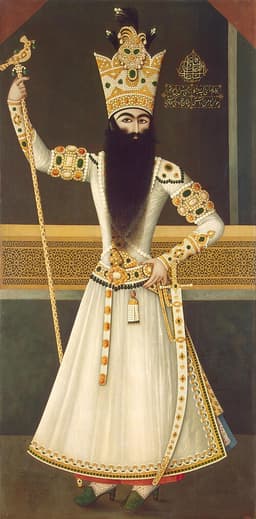
Fath-Ali Shah
Emperor · Modern
45.1Total
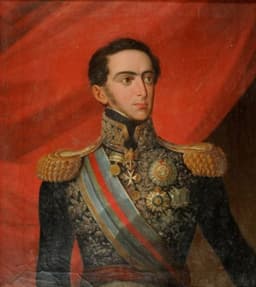
Maria I of Portugal
Emperor · Modern
45.9Total
Basic Information
Born
1772
1734
Died
1834
1816
Era
Modern
Modern
Nationality
Persia
Portugal
Occupation
Emperor
Emperor
Civilization
Middle Eastern
Western
Score Comparison
Military (10%)
35.0
10.6
Political (20%)
32.2
39.4
Influence (20%)
53.3
53.3
Legacy (20%)
41.7
43.3
Leadership (15%)
53.2
58.8
Strategy (15%)
50.0
60.0
TOTAL
45.1
45.9
Fath-Ali Shah — Complete Timeline
1800 AD
Patronized the Arts and ArchitectureCultural
Fath-Ali Shah was a major patron of Persian art, commissioning numerous paintings, manuscripts, and architectural projects. He ordered the construction of the Marble Palace (Kakh-e Marmar) in Tehran and supported the revival of Persian miniature painting, leaving a lasting cultural legacy.
PatronageArtArchitecture
Impact: nationalconstructive
1813 AD
Treaty of GulistanWar
Fath-Ali Shah signed the Treaty of Gulistan with Russia, ending the first Russo-Persian War (1804-1813). Persia ceded territories in the Caucasus, including Georgia, Dagestan, and parts of Armenia, marking a significant territorial loss and the beginning of Russian dominance in the region.
TreatyTerritorial LossRusso-Persian War
Impact: regionaltragic
1821 AD
War with the Ottoman Empire (1821-1823)War
Fath-Ali Shah launched a war against the Ottoman Empire, initially gaining victories in eastern Anatolia. However, the war ended inconclusively with the Treaty of Erzurum in 1823, which reaffirmed existing borders without significant territorial changes.
Ottoman WarTreaty of Erzurum
Impact: regional
1828 AD
Treaty of TurkmenchayWar
Fath-Ali Shah signed the Treaty of Turkmenchay with Russia, ending the second Russo-Persian War (1826-1828). Persia ceded the remaining Caucasian territories, including Yerevan and Nakhchivan, and paid a large indemnity. The treaty also granted extraterritorial rights to Russians in Persia.
TreatyTerritorial LossRusso-Persian War
Impact: regionaltragic
Maria I of Portugal — Complete Timeline
1777 AD
Accession as first undisputed queen regnant of PortugalPolitical Action◆ Major
Maria I ascended the throne upon the death of her father, King Joseph I. She became the first undisputed queen regnant of Portugal, immediately dismissing the powerful Marquis of Pombal and reversing many of his reforms, signaling a shift in policy.
SuccessionPolitical ChangeMonarchy
Impact: national
Dismissal of the Marquis of PombalPolitical Action◆ Major
One of Maria I's first acts as queen was to dismiss the powerful and controversial Marquis of Pombal. She ordered an investigation into his administration, leading to his exile and the reversal of many of his Enlightenment reforms, restoring power to the aristocracy and Church.
Political PurgeReversal of ReformsAristocracy
Impact: national
1792 AD
Onset of religious mania and mental illnessOther◆ Major
Maria I began exhibiting severe symptoms of religious mania and mental illness, including delusions and anxiety. This condition, possibly exacerbated by the French Revolution and the death of her husband and son, rendered her incapable of ruling, leading to her son John becoming regent.
Mental HealthRegencyRoyal Illness
Impact: nationaltragic
1807 AD
Transfer of the Portuguese court to BrazilPolitical Action
As Napoleon's forces invaded Portugal, the incapacitated Queen Maria I was transported with the royal family and court to Brazil under British escort. She spent the remainder of her life in Rio de Janeiro, where she died, never returning to Portugal.
Napoleonic WarsRoyal FlightExile
Impact: global
This comparison has not been analyzed yet.
One-time AI generation (~1 minute). Scores and timeline are already available below.
Rankings
🥇
Maria I of PortugalLeader
Mil: 10.6Pol: 39.4Inf: 53.3
45.9
🥈
Fath-Ali Shah
Mil: 35.0Pol: 32.2Inf: 53.3
45.1
+0.8 behind
How This Comparison Works
Algorithm
Each figure is scored on 6 dimensions (0—100 scale) based on structured historical data: Military (10%), Political (20%), Influence (20%), Legacy (20%), Leadership (15%), Strategy (15%). The weighted total produces the final ranking.
Data Sources
Scores are computed from structured sub-indicators in the database. Scale factors adjust for era (Ancient ×0.85, Modern ×1.0) and civilization size (Eastern ×1.05, Other ×0.80) to account for differences in population and military scale.
Maximum 3 Figures
Comparisons are limited to 2—3 figures to ensure readability and statistical meaningfulness.
Error Margins
±5 points per dimension — Sub-scores are derived from historical records with inherent uncertainty. Two figures within 5 points on a dimension should be considered roughly equivalent in that area.
Total Score Accuracy
±3 points overall — The weighted combination of 6 dimensions produces a total score with approximately ±3 points of uncertainty. Differences of less than 3 points are not statistically significant— the figures are effectively tied.
Known Limitations
- Historical records are incomplete and uneven across civilizations
- Figures from oral-tradition societies may be underrepresented
- Occupation labels can misclassify multi-role figures
- Scores measure capability and impact, not moral character
- Quantitative scoring is a comparison tool, not absolute truth
Capability Radar
Military (10%) — Battles & Warfare
Battles
40
37
Win Rate
20
42
Expansion
20
42
Political (20%) — Governance & Reform
Reform
20
20
Diplomacy
25
25
Economy
20
30
Influence (20%) — Cultural & Global Reach
Cultural
35
30
Global
15
20
Legacy (20%) — Historical Impact
Historical
30
35
Longevity
20
25
Leadership (15%) — Power & Stability
Tenure
70
40
Stability
30
15
Strategy (15%) — Tactics & Innovation
Strategy
25
45
Tactics
30
46
Reform
15
49
Similar Comparisons
Comments & Discussion
No comments yet. Be the first to share your thoughts!