Loading...
Maria I of Portugal vs Sarsa Dengel
Sarsa Dengel leads by 13.9 pts · 2 figures compared
…
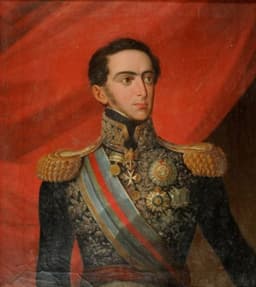
Maria I of Portugal
Emperor · Modern
45.9Total

Sarsa Dengel
Emperor · Modern
59.8Total
Basic Information
Born
1734
1550
Died
1816
1597
Era
Modern
Modern
Nationality
Portugal
Ethiopia
Occupation
Emperor
Emperor
Civilization
Western
Other
Score Comparison
Military (10%)
10.6
65.0
Political (20%)
39.4
68.0
Influence (20%)
53.3
54.9
Legacy (20%)
43.3
50.0
Leadership (15%)
58.8
72.0
Strategy (15%)
60.0
60.7
TOTAL
45.9
59.8
Maria I of Portugal — Complete Timeline
1777 AD
Accession as first undisputed queen regnant of PortugalPolitical Action◆ Major
Maria I ascended the throne upon the death of her father, King Joseph I. She became the first undisputed queen regnant of Portugal, immediately dismissing the powerful Marquis of Pombal and reversing many of his reforms, signaling a shift in policy.
SuccessionPolitical ChangeMonarchy
Impact: national
Dismissal of the Marquis of PombalPolitical Action◆ Major
One of Maria I's first acts as queen was to dismiss the powerful and controversial Marquis of Pombal. She ordered an investigation into his administration, leading to his exile and the reversal of many of his Enlightenment reforms, restoring power to the aristocracy and Church.
Political PurgeReversal of ReformsAristocracy
Impact: national
1792 AD
Onset of religious mania and mental illnessOther◆ Major
Maria I began exhibiting severe symptoms of religious mania and mental illness, including delusions and anxiety. This condition, possibly exacerbated by the French Revolution and the death of her husband and son, rendered her incapable of ruling, leading to her son John becoming regent.
Mental HealthRegencyRoyal Illness
Impact: nationaltragic
1807 AD
Transfer of the Portuguese court to BrazilPolitical Action
As Napoleon's forces invaded Portugal, the incapacitated Queen Maria I was transported with the royal family and court to Brazil under British escort. She spent the remainder of her life in Rio de Janeiro, where she died, never returning to Portugal.
Napoleonic WarsRoyal FlightExile
Impact: global
Sarsa Dengel — Complete Timeline
1570 AD
Defeat of the OromoWar◆ Major
Sarsa Dengel led a series of military campaigns against the Oromo people, who were expanding into Ethiopian territory. His victories temporarily halted Oromo migrations and preserved the empire's territorial integrity.
Military CampaignOromoTerritorial Defense
Impact: regional
1575 AD
Reorganization of the Imperial ArmyReform
Sarsa Dengel reorganized the Ethiopian imperial army, incorporating new tactics and weaponry to counter the Oromo and Ottoman threats. These reforms improved the military's effectiveness and extended the emperor's control over peripheral regions.
Military ReformArmyTactics
Impact: nationalconstructive
1580 AD
Campaign against the Ottoman-backed AdalWar◆ Major
Sarsa Dengel fought against the Sultanate of Adal, which was receiving support from the Ottoman Empire. He successfully repelled Ottoman-backed incursions, maintaining Ethiopian independence from foreign domination.
Military CampaignAdalOttoman Empire
Impact: regional
Expert Analysis
Origins
Maria I of Portugal was born on December 17, 1734, in Lisbon, the eldest daughter of King Joseph I and Queen Mariana Victoria. She received a strict religious education from the clergy, which later influenced her piety and mental instability. Her father's reign was dominated by the Marquis of Pombal, who implemented Enlightenment reforms but also centralized power.
Sarsa Dengel, born in 1550 near Shewa, Ethiopia, was the son of Emperor Menas and Empress Admas Mogasa. He was raised in the Ethiopian Orthodox tradition and trained in military tactics. His early life was marked by the threat of the Oromo expansions and Ottoman-backed incursions, shaping his later focus on military defense.
Rise to Power
Maria I ascended the throne on February 24, 1777, upon her father's death, becoming the first undisputed queen regnant of Portugal. One of her first acts was to dismiss the Marquis of Pombal, ordering an investigation into his administration. This move was popular among the nobility who resented Pombal's reforms.
Sarsa Dengel became emperor in 1563 after the death of his father Menas. He faced immediate challenges from rival nobles and external threats. His rise was solidified through military campaigns, particularly against the Oromo, who were expanding into Ethiopian highlands. By 1570, he had consolidated power through a series of victories.
Leadership & Governance
Maria I's governance was characterized by a return to conservative, religious policies after Pombal's secular reforms. She established the Inquisition more firmly and patronized the Church. However, her mental health deteriorated after 1786, leading to periods of incapacity. She scored 58.8 in leadership, reflecting her initial decisiveness but later inability to rule effectively. Her political score of 39.4 indicates limited control over state affairs.
Sarsa Dengel was a hands-on military leader who reorganized the Ethiopian army, integrating new tactics and firearms. He scored 72.0 in leadership and 68.0 in politics. He fought directly in battles and maintained control through military strength. His governance focused on defending borders and suppressing rebellions, with less emphasis on administrative reforms.
Triumph & Tragedy
Maria I's greatest triumph was the transfer of the Portuguese court to Brazil in 1807-1808, preserving the monarchy and establishing Rio de Janeiro as the capital of the Portuguese Empire. This was a strategic move that ensured the continuity of the state. Her greatest tragedy was her mental illness, which rendered her incapable of ruling from 1792 onward. She suffered from religious mania and delusions, leading to her son John VI acting as regent. Her military score of 10.6 reflects her lack of involvement in warfare.
Sarsa Dengel's triumphs include his victories over the Oromo, which temporarily halted their expansion, and his successful campaigns against the Ottoman-backed Adal Sultanate. He scored 65.0 in military and 60.0 in strategy. His tragedy was that despite his efforts, the Oromo continued to expand after his death, and his empire remained vulnerable. He died in 1597, possibly from illness, and his successors could not sustain his military gains.
Character & Destiny
Maria I was deeply religious and conscientious, but her piety spiraled into mental illness. Her character shaped her destiny: her initial reforms were undone by her incapacity, leading to a regency. Historical assessments often portray her as a tragic figure, a queen who could not fulfill her potential due to health. Her total score of 45.9 reflects low military and moderate political influence.
Sarsa Dengel was a warrior-emperor, decisive and aggressive. His character drove him to constant campaigning, which expanded but also exhausted the empire. He is remembered as a capable military leader who defended Ethiopia during a critical period. His total score of 59.8 is higher than Maria I's, primarily due to military and leadership scores.
Legacy
Maria I's legacy is tied to the transfer of the Portuguese court to Brazil, which elevated Brazil's status and eventually led to its independence. She is remembered as the first queen regnant of Portugal, but her mental illness overshadows her reign. Her influence score of 53.3 reflects this mixed legacy.
Sarsa Dengel's legacy is his role in checking Oromo expansion and defending Ethiopia from external threats. He is celebrated in Ethiopian history as a strong emperor who preserved the kingdom. His legacy score of 50.0 is moderate, as his achievements were later undone. His influence score of 54.9 is similar to Maria I's.
Conclusion
Sarsa Dengel had a greater impact on his nation's survival through military and political action. With a total score of 59.8 compared to Maria I's 45.9, he was more effective in leadership and strategy. While Maria I's court transfer to Brazil had long-term consequences, her inability to rule due to mental illness limited her direct impact. Sarsa Dengel's active defense of Ethiopia secured its independence during a precarious era. Therefore, Sarsa Dengel emerges as the more historically significant figure.
Rankings
🥇
Sarsa DengelLeader
Mil: 65.0Pol: 68.0Inf: 54.9
59.8
🥈
Maria I of Portugal
Mil: 10.6Pol: 39.4Inf: 53.3
45.9
+13.9 behind
How This Comparison Works
Algorithm
Each figure is scored on 6 dimensions (0—100 scale) based on structured historical data: Military (10%), Political (20%), Influence (20%), Legacy (20%), Leadership (15%), Strategy (15%). The weighted total produces the final ranking.
Data Sources
Scores are computed from structured sub-indicators in the database. Scale factors adjust for era (Ancient ×0.85, Modern ×1.0) and civilization size (Eastern ×1.05, Other ×0.80) to account for differences in population and military scale.
Maximum 3 Figures
Comparisons are limited to 2—3 figures to ensure readability and statistical meaningfulness.
Error Margins
±5 points per dimension — Sub-scores are derived from historical records with inherent uncertainty. Two figures within 5 points on a dimension should be considered roughly equivalent in that area.
Total Score Accuracy
±3 points overall — The weighted combination of 6 dimensions produces a total score with approximately ±3 points of uncertainty. Differences of less than 3 points are not statistically significant— the figures are effectively tied.
Known Limitations
- Historical records are incomplete and uneven across civilizations
- Figures from oral-tradition societies may be underrepresented
- Occupation labels can misclassify multi-role figures
- Scores measure capability and impact, not moral character
- Quantitative scoring is a comparison tool, not absolute truth
Capability Radar
Military (10%) — Battles & Warfare
Battles
37
65
Win Rate
42
70
Expansion
42
60
Political (20%) — Governance & Reform
Reform
20
55
Diplomacy
25
50
Economy
30
45
Influence (20%) — Cultural & Global Reach
Cultural
30
40
Global
20
30
Legacy (20%) — Historical Impact
Historical
35
55
Longevity
25
45
Leadership (15%) — Power & Stability
Tenure
40
70
Stability
15
50
Strategy (15%) — Tactics & Innovation
Strategy
45
65
Tactics
46
60
Reform
49
55
Similar Comparisons
Comments & Discussion
No comments yet. Be the first to share your thoughts!