Loading...
Maria I of Portugal vs Sultan bin Muhammad Al Qasimi
Sultan bin Muhammad Al Qasimi leads by 10.4 pts · 2 figures compared
…
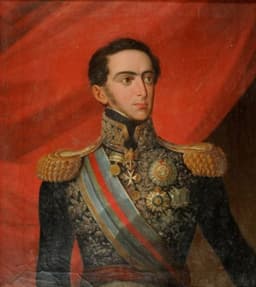
Maria I of Portugal
Emperor · Modern
45.9Total

Sultan bin Muhammad Al Qasimi
Emperor · Modern
56.3Total
Basic Information
Born
1734
1939
Died
1816
—
Era
Modern
Modern
Nationality
Portugal
UAE
Occupation
Emperor
Emperor
Civilization
Western
Middle Eastern
Score Comparison
Military (10%)
10.6
49.3
Political (20%)
39.4
60.0
Influence (20%)
53.3
59.0
Legacy (20%)
43.3
48.3
Leadership (15%)
58.8
72.0
Strategy (15%)
60.0
47.7
TOTAL
45.9
56.3
Maria I of Portugal — Complete Timeline
1777 AD
Accession as first undisputed queen regnant of PortugalPolitical Action◆ Major
Maria I ascended the throne upon the death of her father, King Joseph I. She became the first undisputed queen regnant of Portugal, immediately dismissing the powerful Marquis of Pombal and reversing many of his reforms, signaling a shift in policy.
SuccessionPolitical ChangeMonarchy
Impact: national
Dismissal of the Marquis of PombalPolitical Action◆ Major
One of Maria I's first acts as queen was to dismiss the powerful and controversial Marquis of Pombal. She ordered an investigation into his administration, leading to his exile and the reversal of many of his Enlightenment reforms, restoring power to the aristocracy and Church.
Political PurgeReversal of ReformsAristocracy
Impact: national
1792 AD
Onset of religious mania and mental illnessOther◆ Major
Maria I began exhibiting severe symptoms of religious mania and mental illness, including delusions and anxiety. This condition, possibly exacerbated by the French Revolution and the death of her husband and son, rendered her incapable of ruling, leading to her son John becoming regent.
Mental HealthRegencyRoyal Illness
Impact: nationaltragic
1807 AD
Transfer of the Portuguese court to BrazilPolitical Action
As Napoleon's forces invaded Portugal, the incapacitated Queen Maria I was transported with the royal family and court to Brazil under British escort. She spent the remainder of her life in Rio de Janeiro, where she died, never returning to Portugal.
Napoleonic WarsRoyal FlightExile
Impact: global
Sultan bin Muhammad Al Qasimi — Complete Timeline
1972 AD
Accession as Ruler of SharjahPolitical Action◆ Major
Sultan bin Muhammad Al Qasimi became the Ruler of Sharjah on January 25, 1972, after the assassination of his cousin, Khalid bin Muhammad Al Qasimi. He is the current ruler and has served as a member of the UAE Supreme Council.
SuccessionMonarchySharjah
1980 AD
Publication of Historical WorksCultural
Sultan bin Muhammad Al Qasimi, a noted historian, authored several books on Gulf history, including 'The Myth of Arab Piracy in the Gulf' (1986) and 'The Gulf in Historic Maps' (1996). His works challenged Western narratives and promoted regional historiography.
HistoryScholarshipPublication
Impact: regionalconstructive
1993 AD
Sharjah Biennial and Cultural InitiativesCultural◆ Major
Sultan bin Muhammad launched the Sharjah Biennial in 1993, an international art exhibition that became a major event in the Middle East. He also established the Sharjah Art Foundation and numerous museums, promoting Sharjah as a cultural capital.
ArtCultureExhibition
Impact: regionalconstructive
1997 AD
Establishment of the University of SharjahCultural◆ Major
Sultan bin Muhammad Al Qasimi founded the University of Sharjah in 1997, a major institution for higher education in the UAE. The university offers a wide range of programs and has become a center for academic and cultural exchange.
EducationUniversityCulture
Impact: regionalconstructive
Expert Analysis
Origins
Maria I of Portugal was born on December 17, 1734, in Lisbon, the eldest daughter of King Joseph I and Queen Mariana Victoria of Spain. Her education was typical for a royal princess, focused on religious instruction and courtly etiquette. She married her uncle, Infante Peter of Portugal, in 1760, strengthening dynastic ties. Her father's reign was dominated by the Marquis of Pombal, who implemented Enlightenment reforms but also centralized power.
Sultan bin Muhammad Al Qasimi was born on July 2, 1939, in Sharjah, then part of the British-protected Trucial States. He was the son of Muhammad bin Sultan Al Qasimi, a former ruler. He studied in Kuwait and later earned a PhD in history from the University of Exeter in 1999. His education in both traditional Islamic and modern Western institutions shaped his scholarly approach to governance.
Rise to Power
Maria I ascended the throne on February 24, 1777, upon her father's death. Her first major act was to dismiss the Marquis of Pombal, who had been her father's chief minister. This decision was widely popular, as Pombal's authoritarian methods had created many enemies. She also ordered an investigation into his administration, leading to his exile. However, her reign soon faced challenges from religious fervor and her own mental instability.
Sultan bin Muhammad Al Qasimi became Ruler of Sharjah on January 25, 1972, after the assassination of his cousin, Khalid bin Muhammad Al Qasimi. He was chosen by the family council to restore stability. His early rule focused on modernization and development, leveraging Sharjah's oil revenue to fund infrastructure and education. He also pursued a diplomatic role within the newly formed United Arab Emirates, serving as Minister of Education from 1971 to 1972.
Leadership & Governance
Maria I's leadership was marked by a shift away from Pombal's secular reforms toward a more religious and conservative approach. She reinstated the Inquisition's powers and supported the Catholic Church. Her governance was hampered by her mental illness, which began around 1786. She suffered from religious mania, delusions, and anxiety, leading to her son John acting as regent from 1792. Her reign saw economic stagnation and a decline in Portugal's global influence.
Sultan bin Muhammad Al Qasimi's leadership is characterized by a focus on culture, education, and urban development. He established the University of Sharjah in 1997, which now enrolls over 40,000 students. He launched the Sharjah Biennial in 1993, an international contemporary art exhibition that has made the emirate a cultural hub. He also authored several historical works, challenging Western narratives about piracy in the Gulf. His political score of 60.0 reflects his ability to maintain stability and promote progressive policies within a traditional context.
Triumph & Tragedy
Maria I's greatest triumph was overseeing the transfer of the Portuguese court to Brazil in 1807, fleeing Napoleon's invasion. This move preserved the Braganza dynasty and elevated Brazil to a kingdom within the United Kingdom of Portugal, Brazil, and the Algarves. However, her mental decline was a personal and political tragedy. She was declared incapacitated in 1792 and spent her final years in Brazil, isolated and delusional, dying on March 20, 1816.
Sultan bin Muhammad Al Qasimi's triumphs include the cultural renaissance of Sharjah, recognized as UNESCO World Book Capital in 2019. His historical scholarship, particularly his book 'The Myth of Arab Piracy in the Gulf' (1986), has influenced academic discourse. However, his rule has faced criticism for limited political freedoms and censorship. His military score of 49.3 reflects the UAE's reliance on federal defense rather than independent military action.
Character & Destiny
Maria I's character was shaped by deep religious piety, which evolved into pathological mania. Her decision to dismiss Pombal was decisive but her subsequent inability to govern effectively due to mental illness left Portugal vulnerable. Her destiny was tied to the collapse of Portugal's European empire and the forced exile of the court.
Sultan bin Muhammad Al Qasimi is a scholarly ruler, with a PhD in history and numerous publications. His character is marked by intellectual curiosity and a commitment to cultural development. His destiny has been to transform Sharjah from a small trading port into a cultural capital, though his authoritarian tendencies limit political participation.
Legacy
Maria I's legacy is mixed. She is remembered as the first undisputed queen regnant of Portugal, but her reign is overshadowed by her mental illness and the loss of Portugal's independence to Napoleon. The transfer of the court to Brazil laid the groundwork for Brazilian independence in 1822. Her total score of 45.9 reflects limited military and political achievements but moderate influence and legacy.
Sultan bin Muhammad Al Qasimi's legacy is more positive. He is credited with making Sharjah a center for education and the arts. The University of Sharjah and the Sharjah Biennial have lasting impacts. His historical writings have corrected misconceptions about Gulf history. His total score of 56.3, higher than Maria I's 45.9, reflects stronger political and leadership scores.
Conclusion
Sultan bin Muhammad Al Qasimi had a greater impact than Maria I of Portugal. While Maria I's reign was historically significant for the transfer of the Portuguese court to Brazil, her mental illness prevented effective governance. Sultan Al Qasimi, with a total score of 56.3 versus Maria's 45.9, demonstrated stronger leadership (72.0 vs 58.8) and political acumen (60.0 vs 39.4). His cultural initiatives have had a lasting positive effect on Sharjah and the UAE, while Maria's legacy is tainted by decline and personal tragedy. The data supports the conclusion that Sultan Al Qasimi's rule was more effective and influential.
Rankings
🥇
Sultan bin Muhammad Al QasimiLeader
Mil: 49.3Pol: 60.0Inf: 59.0
56.3
🥈
Maria I of Portugal
Mil: 10.6Pol: 39.4Inf: 53.3
45.9
+10.4 behind
How This Comparison Works
Algorithm
Each figure is scored on 6 dimensions (0—100 scale) based on structured historical data: Military (10%), Political (20%), Influence (20%), Legacy (20%), Leadership (15%), Strategy (15%). The weighted total produces the final ranking.
Data Sources
Scores are computed from structured sub-indicators in the database. Scale factors adjust for era (Ancient ×0.85, Modern ×1.0) and civilization size (Eastern ×1.05, Other ×0.80) to account for differences in population and military scale.
Maximum 3 Figures
Comparisons are limited to 2—3 figures to ensure readability and statistical meaningfulness.
Error Margins
±5 points per dimension — Sub-scores are derived from historical records with inherent uncertainty. Two figures within 5 points on a dimension should be considered roughly equivalent in that area.
Total Score Accuracy
±3 points overall — The weighted combination of 6 dimensions produces a total score with approximately ±3 points of uncertainty. Differences of less than 3 points are not statistically significant— the figures are effectively tied.
Known Limitations
- Historical records are incomplete and uneven across civilizations
- Figures from oral-tradition societies may be underrepresented
- Occupation labels can misclassify multi-role figures
- Scores measure capability and impact, not moral character
- Quantitative scoring is a comparison tool, not absolute truth
Capability Radar
Military (10%) — Battles & Warfare
Battles
37
22
Win Rate
42
27
Expansion
42
28
Political (20%) — Governance & Reform
Reform
20
65
Diplomacy
25
70
Economy
30
60
Influence (20%) — Cultural & Global Reach
Cultural
30
55
Global
20
40
Legacy (20%) — Historical Impact
Historical
35
50
Longevity
25
50
Leadership (15%) — Power & Stability
Tenure
40
60
Stability
15
65
Strategy (15%) — Tactics & Innovation
Strategy
45
32
Tactics
46
37
Reform
49
37
Similar Comparisons
Comments & Discussion
No comments yet. Be the first to share your thoughts!