Loading...
Fabius Maximus vs Miltiades the Younger
Fabius Maximus leads by 3.1 pts · 2 figures compared
…

Fabius Maximus
General · Ancient
54.6Total
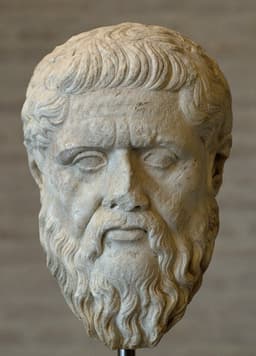
Miltiades the Younger
General · Ancient
51.5Total
Basic Information
Born
-280
-550
Died
-203
-489
Era
Ancient
Ancient
Nationality
Roman Republic
Athens
Occupation
General
General
Civilization
Western
Western
Score Comparison
Military (10%)
47.5
65.0
Political (20%)
48.0
35.0
Influence (20%)
56.7
61.0
Legacy (20%)
52.0
58.0
Leadership (15%)
48.8
30.0
Strategy (15%)
81.2
55.0
TOTAL
54.6
51.5
Fabius Maximus — Complete Timeline
230 BC
Censorship and ReformsReform
Fabius served as censor, conducting a census and revising the list of senators. He also introduced sumptuary laws to curb luxury and promote traditional Roman values, reinforcing conservative social norms.
CensorshipSocial reform
Impact: nationalconstructive
217 BC
Appointment as Dictator and Fabian StrategyWar
Fabius Maximus was appointed dictator after Roman defeats at Trebia and Lake Trasimene. He implemented a strategy of avoiding direct battle with Hannibal, instead harassing his supply lines and avoiding pitched engagements.
Second Punic WarMilitary strategy
Impact: global
216 BC
Battle of CannaeWar◆ Major
Fabius's delaying strategy was abandoned after his term ended, leading to the disastrous Battle of Cannae where Hannibal destroyed a Roman army. This defeat vindicated Fabius's cautious approach and led to its renewed adoption.
Second Punic WarBattle
Impact: globaltragic
209 BC
Recapture of TarentumWar◆ Major
Fabius, as consul, recaptured the city of Tarentum from Hannibal's forces through a combination of siege and betrayal. This victory restored Roman control over southern Italy and weakened Hannibal's position.
Second Punic WarMilitary campaign
Impact: regional
205 BC
Opposition to Scipio AfricanusPolitical Action
Fabius opposed Scipio Africanus's plan to invade Africa, arguing it was too risky. His opposition delayed the campaign but was ultimately overruled. Scipio's victory at Zama later proved Fabius's caution was excessive.
Political conflictStrategy debate
Impact: national
Miltiades the Younger — Complete Timeline
500 BC
Conquest of LemnosWar
Miltiades led an Athenian force to conquer the island of Lemnos, which was held by Pelasgians. He successfully captured the island and established an Athenian colony. This action expanded Athenian influence in the northern Aegean and secured a strategic base.
ConquestColonyAthens
Impact: regionalconstructive
490 BC
Battle of MarathonWar
Miltiades commanded the Athenian army against a larger Persian invasion force at Marathon. Using a double-envelopment tactic, the Athenians defeated the Persians, killing about 6,400 Persians while losing only 192 Athenians. This victory ended the first Persian invasion of Greece.
Persian WarsBattleAthens
Impact: globalconstructive
489 BC
Expedition to ParosWar◆ Major
After Marathon, Miltiades led an Athenian fleet to attack the island of Paros, allegedly to settle a personal grudge. The siege failed, and Miltiades was wounded. Upon returning to Athens, he was prosecuted for deceiving the people and fined 50 talents.
ExpeditionFailureTrial
Impact: regionaldestructive
Trial and Death in PrisonPolitical Action◆ Major
Miltiades was tried in the Athenian Assembly for his failed Parian expedition. Convicted of deceiving the people, he was fined 50 talents. Unable to pay, he was imprisoned, where he died from his wound. His son Cimon later paid the fine.
TrialDeathAthens
Impact: nationaltragic
Expert Analysis
Origins
**Fabius Maximus** was born around 280 BCE into the patrician Fabia gens, one of the oldest and most influential families in the Roman Republic. His full name was Quintus Fabius Maximus Verrucosus, and he received the agnomen "Cunctator" (the Delayer) for his cautious strategy. Little is known of his early life, but his family background ensured a traditional education in law, rhetoric, and military command. He likely served in the First Punic War and held various magistracies, including consul in 233 and 228 BCE. His early career was marked by respect for Roman tradition and a conservative approach to governance.
**Miltiades the Younger** was born around 550 BCE into the Philaid clan, a noble Athenian family with ties to the Thracian Chersonese. His uncle, Miltiades the Elder, had established a tyranny there. Miltiades the Younger inherited control of the Chersonese and became a vassal of the Persian Empire under Darius I. He participated in Darius's Scythian campaign, where he allegedly proposed destroying the Danube bridge to trap the Persians—a plan that failed. He later fled to Athens to escape Persian control, bringing his experience and wealth. His background as a tyrant shaped his later conflicts with Athenian democracy.
Rise to Power
**Fabius Maximus** rose to prominence through the traditional Roman cursus honorum. He served as consul twice before the Second Punic War. His defining moment came in 217 BCE after the devastating Roman defeats at Trebia and Lake Trasimene. The Roman Senate appointed him dictator—a temporary office with supreme command. He immediately implemented a strategy of avoiding pitched battles with Hannibal, instead harassing his supply lines and picking off stragglers. This "Fabian strategy" was unpopular with the Roman populace, who demanded decisive action, but Fabius persisted, earning the nickname "Cunctator." His rise was not due to a single battle but to his unwavering commitment to a cautious plan.
**Miltiades the Younger** rose to power in Athens after his return from the Chersonese. His military reputation preceded him. In 490 BCE, when the Persian fleet landed at Marathon, Miltiades was elected one of the ten Athenian generals (strategoi). He convinced the polemarch Callimachus to support his plan for an immediate attack, using a double-envelopment tactic. The victory at Marathon made him a hero. He leveraged this success to secure command of a naval expedition against the island of Paros in 489 BCE, ostensibly to punish the island for aiding Persia but possibly to settle a personal grudge.
Leadership & Governance
**Fabius Maximus** led by patience and discipline. His governance style was conservative, favoring traditional Roman values. As dictator, he maintained strict control over his army, forbidding plunder and keeping his troops in check. He introduced sumptuary laws as censor, curbing luxury among the elite. His leadership was criticized by his master of horse, Minucius Rufus, who advocated for aggressive action. Fabius’s response was to allow Minucius a separate command, but when Minucius was nearly defeated, Fabius rescued him—a display of magnanimity. Fabius’s political acumen was high (48.0 political score), as he navigated the Senate and popular assemblies to maintain his strategy.
**Miltiades the Younger** was a bold, decisive commander but a poor politician. At Marathon, he showed tactical brilliance (strategy score 55.0, military score 65.0). However, his leadership style was autocratic, reflecting his experience as a tyrant. After Marathon, he failed to manage the democratic processes of Athens. His expedition to Paros was launched without full transparency; he promised wealth but delivered failure. His political score of 35.0 reflects his inability to build consensus. He was tried for deceiving the people and convicted, a fate that starkly contrasts with Fabius's political survival.
Triumph & Tragedy
**Fabius Maximus**’s greatest triumph was the recapture of Tarentum in 209 BCE, a major city that had defected to Hannibal. Using a combination of siege and betrayal, he regained the city and restored Roman control over southern Italy. His greatest failure was the opposition to Scipio Africanus’s invasion of Africa. Fabius argued that the risk was too high, but Scipio’s campaign ended with Hannibal’s defeat at Zama. Fabius’s caution, while sound earlier, became a liability. His overall legacy score of 52.0 reflects a mixed record: he saved Rome from immediate destruction but failed to see the potential for total victory.
**Miltiades the Younger**’s triumph was the Battle of Marathon, where his double-envelopment tactic annihilated a Persian force, killing 6,400 Persians at a cost of 192 Athenians. This victory preserved Greek independence and boosted Athenian morale. His tragedy was the Parian expedition: the siege failed, he was wounded, and upon returning to Athens, he was prosecuted by Xanthippus (father of Pericles). He was fined 50 talents, unable to pay, and died in prison from his wounds. His leadership score of 30.0 reflects this catastrophic end. His military score (65.0) is higher than Fabius’s (47.5), but his overall impact was cut short.
Character & Destiny
**Fabius Maximus** was cautious, persistent, and politically savvy. His character—patient, steadfast, and respectful of tradition—shaped his destiny as the man who saved Rome by not fighting. He was nicknamed "Cunctator" initially as an insult, but it became a badge of honor. Ancient historians like Livy praise his steadiness, while Polybius notes his strategic insight. His character allowed him to endure unpopularity and maintain a long-term strategy. His total score of 54.6 reflects a balanced, if unspectacular, record.
**Miltiades the Younger** was ambitious, charismatic, but impulsive. His victory at Marathon inflated his confidence, leading to the rash Parian expedition. His character—prideful and secretive—led to his downfall. Herodotus portrays him as a capable general but a flawed leader. His political score of 35.0 and leadership score of 30.0 indicate that his personality was ill-suited for democratic Athens. His destiny was to be a martyr of hubris, remembered for one great victory but undone by a subsequent failure.
Legacy
**Fabius Maximus** left a lasting legacy in military strategy: the concept of "Fabian strategy"—avoiding pitched battles against a superior enemy to exhaust them. This influenced later commanders like George Washington. His political reforms, such as sumptuary laws, had limited long-term impact. He is remembered as a conservative hero who preserved the Republic. His influence score of 56.7 reflects his strategic concept’s endurance.
**Miltiades the Younger**’s legacy is dominated by Marathon. The battle became a symbol of Greek resistance against tyranny and inspired later generations, including the Marathon runners. His tactics were studied by later generals. However, his reputation is tarnished by the Parian disaster. His legacy score of 58.0 is slightly higher than Fabius’s 52.0 due to Marathon’s symbolic power, but his overall impact is narrower.
Conclusion
Fabius Maximus had greater overall impact. Despite Miltiades’s brilliant victory at Marathon, Fabius’s strategy preserved Rome during its darkest hour, allowing it to eventually defeat Hannibal and become a Mediterranean power. Fabius’s total score (54.6) exceeds Miltiades’s (51.5), and his influence on military thought is broader. While Marathon was a pivotal battle, Fabius’s sustained leadership over years shaped the course of Western history. Miltiades’s failure to capitalize on his success limits his legacy. Fabius Maximus, the Delayer, ultimately achieved more.
Rankings
🥇
Fabius MaximusLeader
Mil: 47.5Pol: 48.0Inf: 56.7
54.6
🥈
Miltiades the Younger
Mil: 65.0Pol: 35.0Inf: 61.0
51.5
+3.1 behind
How This Comparison Works
Algorithm
Each figure is scored on 6 dimensions (0—100 scale) based on structured historical data: Military (10%), Political (20%), Influence (20%), Legacy (20%), Leadership (15%), Strategy (15%). The weighted total produces the final ranking.
Data Sources
Scores are computed from structured sub-indicators in the database. Scale factors adjust for era (Ancient ×0.85, Modern ×1.0) and civilization size (Eastern ×1.05, Other ×0.80) to account for differences in population and military scale.
Maximum 3 Figures
Comparisons are limited to 2—3 figures to ensure readability and statistical meaningfulness.
Error Margins
±5 points per dimension — Sub-scores are derived from historical records with inherent uncertainty. Two figures within 5 points on a dimension should be considered roughly equivalent in that area.
Total Score Accuracy
±3 points overall — The weighted combination of 6 dimensions produces a total score with approximately ±3 points of uncertainty. Differences of less than 3 points are not statistically significant— the figures are effectively tied.
Known Limitations
- Historical records are incomplete and uneven across civilizations
- Figures from oral-tradition societies may be underrepresented
- Occupation labels can misclassify multi-role figures
- Scores measure capability and impact, not moral character
- Quantitative scoring is a comparison tool, not absolute truth
Capability Radar
Military (10%) — Battles & Warfare
Battles
45
55
Win Rate
40
60
Expansion
20
30
Political (20%) — Governance & Reform
Reform
55
10
Diplomacy
75
35
Economy
50
15
Influence (20%) — Cultural & Global Reach
Cultural
60
55
Global
65
60
Legacy (20%) — Historical Impact
Historical
75
70
Longevity
70
65
Leadership (15%) — Power & Stability
Tenure
65
40
Stability
80
20
Strategy (15%) — Tactics & Innovation
Strategy
90
65
Tactics
85
75
Reform
70
20
Similar Comparisons
Comments & Discussion
No comments yet. Be the first to share your thoughts!