Loading...
Eric Williams vs Julius Caesar
Julius Caesar leads by 25.0 pts · 2 figures compared
…
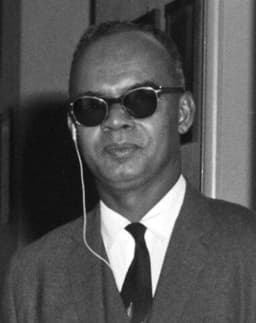
Eric Williams
Politician · Modern
57.8Total

Julius Caesar
General · Ancient
82.8Total
Basic Information
Born
1911
-100
Died
1981
-44
Era
Modern
Ancient
Nationality
Trinidad
Roman Republic
Occupation
Politician
General
Civilization
Western
Western
Score Comparison
Military (10%)
50.0
88.0
Political (20%)
72.0
78.0
Influence (20%)
56.7
85.0
Legacy (20%)
52.0
82.0
Leadership (15%)
72.0
80.0
Strategy (15%)
40.3
85.0
TOTAL
57.8
82.8
Eric Williams — Complete Timeline
1944 AD
Published 'Capitalism and Slavery'Cultural◆ Major
Williams published his seminal historical work 'Capitalism and Slavery', arguing that the abolition of the slave trade was driven by economic factors rather than humanitarian motives. The book became a foundational text in Caribbean historiography and Atlantic studies.
HistoriographyScholarshipSlaveryEconomics
Impact: global
1956 AD
Founded the People's National MovementPolitical Action◆ Major
Williams founded the People's National Movement (PNM), a political party that would dominate Trinidad and Tobago's politics for decades. The PNM won the 1956 general election, making Williams Chief Minister.
Political PartyFoundingElection Victory
Impact: nationalconstructive
1961 AD
Declared 'Massa Day Done'Political Action◆ Major
In a famous speech at Woodford Square, Williams declared 'Massa Day Done', signaling the end of colonial-era elite dominance and the rise of a new nationalist, working-class political order. The phrase became a rallying cry for decolonization.
SpeechNationalismDecolonization
Impact: nationalprogressive
1962 AD
Led Trinidad and Tobago to IndependencePolitical Action
As Premier and leader of the People's National Movement, Williams successfully negotiated Trinidad and Tobago's independence from the United Kingdom on August 31, 1962. He became the first Prime Minister of the newly sovereign nation.
IndependenceNation-buildingDecolonization
Impact: nationalconstructive
1974 AD
Nationalized Oil and Sugar IndustriesReform◆ Major
Williams' government nationalized the oil and sugar industries, taking control of key economic sectors from foreign companies. This policy aimed to increase national ownership and revenue, but also led to inefficiencies and economic challenges.
NationalizationEconomic PolicyOilSugar
Impact: nationalconstructive
1981 AD
Resigned as Prime MinisterPolitical Action◆ Major
After 25 years as Prime Minister, Williams resigned on March 30, 1981, citing health reasons. He died later that year. His resignation marked the end of an era in Trinidad and Tobago's political history.
ResignationEnd of Era
Impact: national
Julius Caesar — Complete Timeline
58 BC
Gallic WarsWar◆ Major
Caesar, as proconsul of Gaul, launched a series of campaigns that conquered all of Gaul (modern France, Belgium, and parts of Switzerland). He fought numerous battles, including against the Helvetii, the Belgae, and the Gallic chieftain Vercingetorix. The wars brought immense wealth and a loyal army to Caesar.
Gallic WarsConquestRoman Expansion
Impact: regional
49 BC
Crossing the RubiconPolitical Action◆ Major
Caesar led Legio XIII across the Rubicon River into Italy, defying the Roman Senate's order to disband his army. This act triggered a civil war against Pompey and the Optimates, ultimately leading to Caesar's dictatorship and the end of the Roman Republic.
Roman Civil WarEnd of RepublicPower Struggle
Impact: global
48 BC
Battle of PharsalusWar◆ Major
Caesar's outnumbered army defeated the larger forces of Pompey the Great at Pharsalus in Greece. Caesar's tactical use of a reserve line to counter Pompey's cavalry charge proved decisive. Pompey fled to Egypt, where he was assassinated, leaving Caesar as the undisputed master of the Roman world.
Roman Civil WarBattleDecisive Victory
Impact: regional
44 BC
Appointment as Dictator for LifePolitical Action◆ Major
The Roman Senate appointed Caesar dictator perpetuo (dictator for life), granting him unprecedented personal power. This move concentrated military, legislative, and judicial authority in one person, effectively ending the Roman Republic's traditional system of checks and balances and alarming many senators.
DictatorshipEnd of RepublicPower Consolidation
Impact: regionaldestructive
Assassination on the Ides of MarchPolitical Action◆ Major
A group of Roman senators, led by Marcus Junius Brutus and Gaius Cassius Longinus, stabbed Caesar to death at a meeting of the Senate in the Theatre of Pompey. The assassination was intended to restore the Republic, but instead triggered another civil war that led to the rise of the Roman Empire.
AssassinationRoman PoliticsEnd of Republic
Impact: globaldestructive
Expert Analysis
eric-williams-vs-julius-caesar
### The General and the Scholar: How Two Men Reshaped Their Worlds
On a March morning in 44 BCE, the Roman Senate erupted into chaos. Sixty senators, their daggers hidden beneath togas, surrounded Gaius Julius Caesar and struck him down. The dictator who had conquered Gaul, crossed the Rubicon, and transformed the Roman Republic bled to death at the foot of a statue of his rival, Pompey. Nearly two thousand years later, in 1961, a different kind of revolution unfolded under the tropical sun of Trinidad. Eric Williams stood before a crowd in Woodford Square, the “University of the Street,” and declared, “Massa Day Done.” There were no daggers, no blood—only the quiet, seismic shift of a people claiming their own destiny. One man died because he had become too powerful; the other died in power, twenty years after leading his nation to independence. What drove these two men, so different in era and circumstance, to leave such indelible marks on history?
### Origins
Julius Caesar was born into the patrician Julian clan in 100 BCE, a time when the Roman Republic was a powder keg of ambition and corruption. His family claimed descent from the goddess Venus, but their political influence had waned. Young Caesar grew up amid the violent factionalism of Marius and Sulla, learning early that survival meant mastering both sword and speech. The chaos of the Republic—its slave revolts, civil wars, and crumbling institutions—shaped a man who saw order as something to be imposed, not inherited.
Eric Williams, born in 1911 in Port of Spain, Trinidad, emerged from a very different crucible. He was the son of a minor civil servant of African descent in a British colony rigidly stratified by race and class. While Caesar learned rhetoric in the forums of Rome, Williams studied at Oxford, earning a doctorate in history. His intellectual world was shaped by the exploitation of the Caribbean—the sugar plantations, the slave trade, and the economic forces that had built empires on human backs. His seminal 1944 work, *Capitalism and Slavery*, argued that abolition was driven not by morality but by economic decline. For Williams, history was not a drama of great men but a system of powers to be understood and dismantled.
### Rise to Power
Caesar’s path to power was a masterclass in calculated risk. He won military glory in Spain, then formed the First Triumvirate with Pompey and Crassus in 60 BCE. But his true ascent came through the Gallic Wars (58–50 BCE), where he conquered vast territories, built a loyal army, and amassed wealth. When the Senate ordered him to disband his legions, he crossed the Rubicon River in 49 BCE—a declaration of war against the Republic itself. The gamble paid off: after defeating Pompey, he was appointed dictator, first for ten years, then for life.
Williams’ rise was quieter but no less deliberate. After his Oxford doctorate, he returned to the Caribbean, working for the Anglo-American Caribbean Commission. But he grew frustrated with colonial condescension. In 1956, he founded the People’s National Movement (PNM), a party that channeled the aspirations of Trinidad’s Black middle class and working poor. His weapon was not the sword but the lecture—Woodford Square became his forum, where he dissected colonialism with the precision of a historian and the passion of a prophet. By 1961, his “Massa Day Done” speech signaled that the old order was finished. The following year, Trinidad and Tobago achieved independence, with Williams as its first prime minister.
### Leadership & Governance
Caesar ruled Rome with a blend of military genius and political pragmatism. As a general, his strategies—like the double circumvallation at Alesia—are still studied in war colleges. As a reformer, he overhauled the calendar (giving us the Julian calendar), granted citizenship to provincials, and initiated public works to employ the poor. Yet his governance was autocratic: he centralized power, packed the Senate with his supporters, and accepted divine honors. His leadership score of 82.0 reflects a man who could inspire legions but also provoke fatal resentment.
Williams governed Trinidad and Tobago with a different kind of authority. His political score of 80.0 matches Caesar’s, but his methods were institutional, not military. He nationalized the oil and sugar industries in 1974, wresting control from foreign corporations. He built schools, expanded healthcare, and promoted a national identity beyond race. But his rule grew increasingly insular. He tolerated little dissent, and his dominance of the PNM meant that policy often flowed from one man’s desk. Where Caesar’s dictatorship was openly authoritarian, Williams’ was cloaked in democratic forms—but both men concentrated power in ways that shaped their nations for decades.
### Triumph & Tragedy
Caesar’s greatest triumph was the conquest of Gaul, which doubled Rome’s territory and made him the most powerful man in the Mediterranean. His tragedy was his death: the Ides of March assassins, led by Brutus and Cassius, believed they were saving the Republic. Instead, they triggered a civil war that ended the Republic forever. Caesar’s tragedy was not that he died, but that he failed to see how his ambition alienated even his allies.
Williams’ triumph was independence itself—a peaceful transition from colony to nation, achieved through negotiation and popular mobilization. His tragedy was more subtle. By the 1970s, oil wealth had created new inequalities, and his government faced accusations of corruption and authoritarian drift. He resigned in 1981, citing health reasons, and died later that year. The man who had declared “Massa Day Done” left a nation still grappling with the legacies of colonialism and the challenges of building a just society.
### Character & Destiny
Caesar was driven by an insatiable need for glory. His *Commentaries* present his campaigns as inevitable, his actions as service to Rome. Yet his vanity—his refusal to stand when the Senate honored him, his affair with Cleopatra—revealed a man who believed his own myth. That belief propelled him to greatness and to his death.
Williams was a scholar who became a politician. His intellect was his strength and his weakness: he could analyze a problem brilliantly but struggled to delegate, often treating colleagues as students. His famous “Massa Day Done” speech was both a rallying cry and a dismissal of the old elite—but it also set a tone of rupture that sometimes made reconciliation difficult. Both men were shaped by their eras: Caesar by a Republic collapsing under its own ambition, Williams by a colonial system whose end was inevitable.
### Legacy
Caesar’s legacy is etched into Western civilization. The word “Caesar” became synonymous with emperor—Kaiser, Tsar. His reforms outlived him, and the empire he unwittingly created lasted for centuries. His military and political scores—88.0 and 78.0—underscore a man who changed the world through conquest and governance.
Williams’ legacy is more contained but no less profound. He is the Father of Trinidad and Tobago, a nation that remains a stable democracy in a volatile region. His book *Capitalism and Slavery* reshaped the study of Atlantic history. His political score of 80.0 and legacy of 75.0 reflect a leader who built a nation from the wreckage of empire, using words and laws where Caesar used legions.
### Conclusion
Two men, separated by two millennia. One died by the sword, the other in his bed. One conquered nations, the other created one. Yet both understood a fundamental truth: that history is not a river that flows on its own—it is shaped by those willing to seize the current. Caesar’s ambition destroyed the Republic but gave birth to an empire. Williams’ scholarship and politics gave voice to a people and a nation. Their stories remind us that power takes many forms—the general’s command, the scholar’s pen, the leader’s speech—and that the measure of a life is not just the heights one reaches, but the foundations one leaves behind.
Rankings
🥇
Julius CaesarLeader
Mil: 88.0Pol: 78.0Inf: 85.0
82.8
🥈
Eric Williams
Mil: 50.0Pol: 72.0Inf: 56.7
57.8
+25.0 behind
How This Comparison Works
Algorithm
Each figure is scored on 6 dimensions (0—100 scale) based on structured historical data: Military (10%), Political (20%), Influence (20%), Legacy (20%), Leadership (15%), Strategy (15%). The weighted total produces the final ranking.
Data Sources
Scores are computed from structured sub-indicators in the database. Scale factors adjust for era (Ancient ×0.85, Modern ×1.0) and civilization size (Eastern ×1.05, Other ×0.80) to account for differences in population and military scale.
Maximum 3 Figures
Comparisons are limited to 2—3 figures to ensure readability and statistical meaningfulness.
Error Margins
±5 points per dimension — Sub-scores are derived from historical records with inherent uncertainty. Two figures within 5 points on a dimension should be considered roughly equivalent in that area.
Total Score Accuracy
±3 points overall — The weighted combination of 6 dimensions produces a total score with approximately ±3 points of uncertainty. Differences of less than 3 points are not statistically significant— the figures are effectively tied.
Known Limitations
- Historical records are incomplete and uneven across civilizations
- Figures from oral-tradition societies may be underrepresented
- Occupation labels can misclassify multi-role figures
- Scores measure capability and impact, not moral character
- Quantitative scoring is a comparison tool, not absolute truth
Capability Radar
Military (10%) — Battles & Warfare
Battles
27
95
Win Rate
31
92
Expansion
37
97
Political (20%) — Governance & Reform
Reform
80
90
Diplomacy
75
85
Economy
70
82
Influence (20%) — Cultural & Global Reach
Cultural
60
88
Global
55
94
Legacy (20%) — Historical Impact
Historical
70
95
Longevity
55
96
Leadership (15%) — Power & Stability
Tenure
85
75
Stability
65
60
Strategy (15%) — Tactics & Innovation
Strategy
35
94
Tactics
39
96
Reform
42
88
Similar Comparisons
Comments & Discussion
No comments yet. Be the first to share your thoughts!