Loading...
Eric of Pomerania vs Sviatoslav I
Sviatoslav I leads by 9.6 pts · 2 figures compared
…
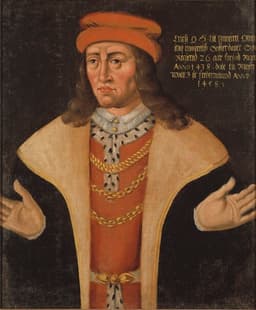
Eric of Pomerania
Emperor · Medieval
43.2Total
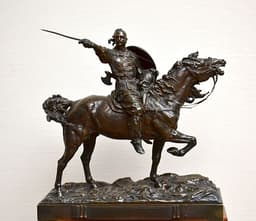
Sviatoslav I
Emperor · Medieval
52.8Total
Basic Information
Born
1381
942
Died
1459
972
Era
Medieval
Medieval
Nationality
Denmark
Kievan Rus
Occupation
Emperor
Emperor
Civilization
Western
Western
Score Comparison
Military (10%)
50.0
74.0
Political (20%)
35.1
32.2
Influence (20%)
49.4
60.0
Legacy (20%)
39.2
54.0
Leadership (15%)
48.4
41.5
Strategy (15%)
35.7
58.0
TOTAL
43.2
52.8
Eric of Pomerania — Complete Timeline
1397 AD
Crowned King of the Kalmar UnionPolitical Action◆ Major
Eric of Pomerania was crowned King of Denmark, Norway, and Sweden at the Kalmar Union meeting in 1397, under the regency of Margaret I. His coronation formalized the union of the three Scandinavian kingdoms, though Margaret retained real power until her death.
CoronationKalmar UnionScandinavia
Impact: regionalconstructive
1412 AD
Became sole ruler after Margaret I's deathPolitical Action◆ Major
After Margaret I's death, Eric of Pomerania became the sole ruler of the Kalmar Union. He attempted to centralize power and assert royal authority, but his policies often clashed with the nobility, leading to growing tensions within the union.
SuccessionKalmar UnionRule
Impact: regional
1426 AD
Fought the Dano-Hanseatic WarWar◆ Major
Eric of Pomerania engaged in a war with the Hanseatic League, a powerful trading confederation. The conflict, which lasted until 1435, resulted in Danish defeats and economic disruption, weakening the Kalmar Union's control over Baltic trade.
WarHanseatic LeagueTrade Conflict
Impact: regionaldestructive
1429 AD
Imposed the Sound DuesReform◆ Major
Eric of Pomerania introduced the Sound Dues, a toll on all ships passing through the
TaxTradeBaltic
Impact: regional
1439 AD
Deposed by the Danish and Swedish nobilityPolitical Action◆ Major
Eric of Pomerania was deposed as king of Denmark and Sweden by the nobility, who were dissatisfied with his rule and his handling of the union. He was forced into exile on the island of Gotland, and the Kalmar Union effectively collapsed.
DepositionKalmar UnionExile
Impact: regionaldestructive
Sviatoslav I — Complete Timeline
965 AD
Destruction of the Khazar KhaganateWar
Sviatoslav led a campaign against the Khazar Khaganate, capturing the fortress of Sarkel and sacking the capital, Atil. This destroyed the Khazar state, ending its dominance over the steppes and opening the Volga trade route to Rus control.
Khazar CampaignConquestSteppe Politics
Impact: regional
968 AD
Conquest of BulgariaWar◆ Major
Sviatoslav invaded the First Bulgarian Empire at the request of the Byzantine Emperor. He defeated the Bulgarian army, occupied much of the country, and established his capital at Pereyaslavets on the Danube, threatening Byzantium.
Bulgarian CampaignDanubeExpansion
Impact: regional
971 AD
Battle of DorostolonWar◆ Major
After a three-month siege by Byzantine forces under Emperor John I Tzimiskes, Sviatoslav's army was defeated at Dorostolon. He was forced to surrender, renounce claims to Bulgaria, and withdraw from the Balkans.
Byzantine-Rus WarSiegeDefeat
Impact: regionaltragic
972 AD
Death at the Dnieper RapidsWar◆ Major
Returning to Kiev, Sviatoslav was ambushed and killed by the Pechenegs at the Dnieper Rapids. The Pecheneg chief Kurya made a drinking cup from Sviatoslav's skull. His death ended his expansionist campaigns.
AssassinationPechenegsAmbush
Impact: nationaltragic
Expert Analysis
Origins
Eric of Pomerania was born in 1382 in Pomerania, a duchy on the Baltic coast. He was the son of Duke Wartislaw VII and a nephew of Queen Margaret I of Denmark. His early life was shaped by the Scandinavian court, and he was adopted by Margaret as her heir. Sviatoslav I was born around 942 in Kiev, the son of Prince Igor and Princess Olga. His father was killed by the Drevlians, and his mother ruled as regent. Sviatoslav was raised in the pagan warrior tradition, with a focus on military training rather than governance.
Rise to Power
Eric was crowned King of Denmark, Norway, and Sweden in 1397 at the Kalmar Union meeting, under Margaret's regency. He became sole ruler upon her death in 1412. His rise was orchestrated by his aunt, and he inherited a unified Scandinavian realm. Sviatoslav rose to power as the Prince of Kiev after his father's death, but his mother Olga served as regent until he came of age around 964. His first major campaign was against the Khazar Khaganate, which he destroyed in 965-966, establishing his reputation as a formidable warrior.
Leadership & Governance
Eric's leadership style was autocratic and centralizing. He imposed the Sound Dues in 1429, a toll on ships passing through the Øresund, which became a major revenue source but angered the Hanseatic League. His governance focused on strengthening royal authority but alienated nobles and merchants. Sviatoslav, by contrast, was a warrior prince who spent most of his reign on campaign. He left governance to his mother and later his sons, preferring direct military leadership. His political score of 32.2 reflects his neglect of administration, while Eric scored 35.1.
Triumph & Tragedy
Eric's greatest success was the Sound Dues, which funded the Danish crown for centuries. His tragedy was the Dano-Hanseatic War (1426-1435), which ended in defeat and led to his deposition in 1439 by the Danish and Swedish nobility. Sviatoslav's triumph was the destruction of the Khazar Khaganate, a major power in the Pontic steppe. His tragedy came at the Battle of Dorostolon in 971, where his army was defeated by the Byzantines. He was killed by Pechenegs while returning to Kiev, and his skull was made into a drinking cup.
Character & Destiny
Eric was cautious and bureaucratic, but lacked the charisma to hold the union together. His deposal shows his failure to balance power. Sviatoslav was bold and aggressive, with a military score of 74.0 versus Eric's 50.0. His character as a pagan warrior led him to constant warfare, but his death at the Dnieper Rapids was a direct result of his overconfidence.
Legacy
Eric's legacy is the Sound Dues, which lasted until 1857, and the Kalmar Union, which continued until 1523. Sviatoslav's legacy is the destruction of the Khazar Khaganate, which opened the steppe for Slavic expansion, and his role in shaping Kievan Rus as a military power. His influence score of 60.0 exceeds Eric's 49.4.
Conclusion
While Eric's fiscal innovation had lasting economic impact, Sviatoslav's military campaigns fundamentally altered the geopolitics of Eastern Europe. Sviatoslav's total score of 52.8 versus Eric's 43.2 reflects his greater strategic impact and enduring legacy as a warrior prince.
Rankings
🥇
Sviatoslav ILeader
Mil: 74.0Pol: 32.2Inf: 60.0
52.8
🥈
Eric of Pomerania
Mil: 50.0Pol: 35.1Inf: 49.4
43.2
+9.6 behind
How This Comparison Works
Algorithm
Each figure is scored on 6 dimensions (0—100 scale) based on structured historical data: Military (10%), Political (20%), Influence (20%), Legacy (20%), Leadership (15%), Strategy (15%). The weighted total produces the final ranking.
Data Sources
Scores are computed from structured sub-indicators in the database. Scale factors adjust for era (Ancient ×0.85, Modern ×1.0) and civilization size (Eastern ×1.05, Other ×0.80) to account for differences in population and military scale.
Maximum 3 Figures
Comparisons are limited to 2—3 figures to ensure readability and statistical meaningfulness.
Error Margins
±5 points per dimension — Sub-scores are derived from historical records with inherent uncertainty. Two figures within 5 points on a dimension should be considered roughly equivalent in that area.
Total Score Accuracy
±3 points overall — The weighted combination of 6 dimensions produces a total score with approximately ±3 points of uncertainty. Differences of less than 3 points are not statistically significant— the figures are effectively tied.
Known Limitations
- Historical records are incomplete and uneven across civilizations
- Figures from oral-tradition societies may be underrepresented
- Occupation labels can misclassify multi-role figures
- Scores measure capability and impact, not moral character
- Quantitative scoring is a comparison tool, not absolute truth
Capability Radar
Military (10%) — Battles & Warfare
Battles
20
78
Win Rate
25
82
Expansion
15
85
Political (20%) — Governance & Reform
Reform
30
20
Diplomacy
35
35
Economy
25
25
Influence (20%) — Cultural & Global Reach
Cultural
20
55
Global
15
45
Legacy (20%) — Historical Impact
Historical
25
65
Longevity
20
50
Leadership (15%) — Power & Stability
Tenure
40
30
Stability
20
20
Strategy (15%) — Tactics & Innovation
Strategy
20
75
Tactics
15
80
Reform
10
40
Similar Comparisons
Comments & Discussion
No comments yet. Be the first to share your thoughts!