Loading...
Eric of Pomerania vs Napoleon Bonaparte
Napoleon Bonaparte leads by 27.7 pts · 2 figures compared
…
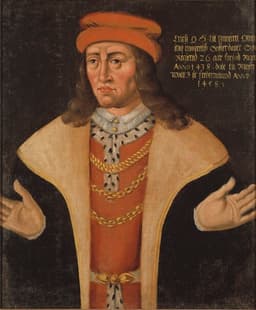
Eric of Pomerania
Emperor · Medieval
43.2Total

Napoleon Bonaparte
General · Modern
70.9Total
Basic Information
Born
1381
1769
Died
1459
1821
Era
Medieval
Modern
Nationality
Denmark
France
Occupation
Emperor
General
Civilization
Western
Western
Score Comparison
Military (10%)
50.0
94.0
Political (20%)
35.1
72.0
Influence (20%)
49.4
40.0
Legacy (20%)
39.2
80.0
Leadership (15%)
48.4
78.0
Strategy (15%)
35.7
90.0
TOTAL
43.2
70.9
Eric of Pomerania — Complete Timeline
1397 AD
Crowned King of the Kalmar UnionPolitical Action◆ Major
Eric of Pomerania was crowned King of Denmark, Norway, and Sweden at the Kalmar Union meeting in 1397, under the regency of Margaret I. His coronation formalized the union of the three Scandinavian kingdoms, though Margaret retained real power until her death.
CoronationKalmar UnionScandinavia
Impact: regionalconstructive
1412 AD
Became sole ruler after Margaret I's deathPolitical Action◆ Major
After Margaret I's death, Eric of Pomerania became the sole ruler of the Kalmar Union. He attempted to centralize power and assert royal authority, but his policies often clashed with the nobility, leading to growing tensions within the union.
SuccessionKalmar UnionRule
Impact: regional
1426 AD
Fought the Dano-Hanseatic WarWar◆ Major
Eric of Pomerania engaged in a war with the Hanseatic League, a powerful trading confederation. The conflict, which lasted until 1435, resulted in Danish defeats and economic disruption, weakening the Kalmar Union's control over Baltic trade.
WarHanseatic LeagueTrade Conflict
Impact: regionaldestructive
1429 AD
Imposed the Sound DuesReform◆ Major
Eric of Pomerania introduced the Sound Dues, a toll on all ships passing through the
TaxTradeBaltic
Impact: regional
1439 AD
Deposed by the Danish and Swedish nobilityPolitical Action◆ Major
Eric of Pomerania was deposed as king of Denmark and Sweden by the nobility, who were dissatisfied with his rule and his handling of the union. He was forced into exile on the island of Gotland, and the Kalmar Union effectively collapsed.
DepositionKalmar UnionExile
Impact: regionaldestructive
Napoleon Bonaparte — Complete Timeline
1799 AD
Coup of 18 BrumaireOther◆ Major
Napoleon Bonaparte, with support from his brother Lucien and key political figures, overthrew the Directory in a bloodless coup. He established the Consulate with himself as First Consul, effectively becoming the ruler of France. This event ended the French Revolution's most unstable period.
French RevolutionCoupRise to Power
Impact: regional
1804 AD
Promulgation of the Napoleonic CodeOther◆ Major
Napoleon enacted the Civil Code of the French, known as the Napoleonic Code, a comprehensive set of laws that replaced the fragmented feudal legal systems. The code established legal equality, protected property rights, and secularized law. It became the basis for legal systems in many European and world countries.
Legal ReformNapoleonic CodeCivil Law
Impact: globalconstructive
1805 AD
Battle of AusterlitzWar◆ Major
Napoleon's Grande Arm
Napoleonic WarsBattleDecisive Victory
Impact: global
1812 AD
Invasion of RussiaWar◆ Major
Napoleon led the Grande Arm
Napoleonic WarsInvasionDisaster
Impact: globaldestructive
1815 AD
Battle of WaterlooWar◆ Major
Napoleon's French army was defeated by the combined forces of the Duke of Wellington's Anglo-Allied army and Gebhard Leberecht von Bl
Napoleonic WarsBattleFinal Defeat
Impact: globaldestructive
Expert Analysis
eric-of-pomerania-vs-napoleon-bonaparte
# The Emperor and the King: Two Paths to Power in an Age of Upheaval
On a June morning in 1815, Napoleon Bonaparte stood on a muddy field near Waterloo, watching his Imperial Guard march into their final, futile assault. Three hundred miles north and four centuries earlier, another ruler—Eric of Pomerania—fled his own capital in 1439, chased out by nobles who had finally tired of his heavy hand. Both men wore crowns. Both dreamed of unity. But one became a legend whose shadow still falls across Europe, while the other faded into a footnote, remembered only by specialists. Why?
Origins
Napoleon Bonaparte was born in 1769 on Corsica, an island that had become French only months before his birth. His family was minor nobility, speaking Italian-accented French, outsiders in a nation that would one day worship him. This marginality forged him: he had to be better, faster, more brilliant than anyone else. The French Revolution—that great leveler—opened doors that birth alone could never have unlocked. By 1793, at age twenty-four, he was a captain; by 1796, at twenty-six, a general commanding armies.
Eric of Pomerania came from the opposite world: born in 1381 into the highest northern aristocracy, nephew of Margaret I, the architect of the Kalmar Union. He was not a striver but an inheritor. Crowned in 1397 at Kalmar, he ruled Denmark, Norway, and Sweden—a vast realm that should have been the envy of Europe. But he never had to fight for his throne, and perhaps that was his tragedy. Power came to him as a gift, not a prize.
Rise to Power
Napoleon’s ascent was a study in controlled explosion. He took command of the Army of Italy in 1796 and within months had smashed the Austrians, crossing the Alps with an audacity that stunned Europe. The Italian campaign of 1796–1797 was not merely a military triumph; it was a political education. He learned that victory on the battlefield could dictate terms at the negotiating table. By 1799, he was First Consul; by 1804, Emperor of the French. Each step was earned in blood and gunpowder.
Eric’s rise was quieter, more bureaucratic. He was crowned king of the Kalmar Union in 1397 but ruled under his aunt Margaret’s regency until her death in 1412. When she died, he inherited a machine already built—a union of three kingdoms held together by her genius. He did not create it; he merely took the keys. And he never quite knew how to drive it.
Leadership & Governance
Napoleon governed with the same energy he brought to battle. The Napoleonic Code, introduced in 1804, standardized French law across Europe, abolishing feudal privileges and establishing equality before the law—at least for men. He reformed education, built roads, centralized administration, and created a meritocracy where talent, not birth, determined advancement. His political score of 75 reflects real achievement, but also his fatal flaw: he could never stop conquering. The man who could organize a kingdom could not resist an empire.
Eric of Pomerania’s great innovation was the Sound Dues, imposed in 1429. He taxed every ship passing through the Øresund strait—a brilliant economic move that enriched the Danish crown for four centuries. Politically, he scored 73.4, nearly matching Napoleon. But his military score of 37.7 tells the rest of the story. When the Hanseatic League went to war with him in 1426, he could not crush them. He could tax, but he could not fight. His union was held together by revenue, not respect.
Triumph & Tragedy
Napoleon’s greatest moment was Austerlitz in 1805, where he destroyed a combined Russian-Austrian army with tactical perfection. His worst was the retreat from Moscow in 1812—600,000 men marched into Russia; fewer than 100,000 came back. The tragedy was not just military but psychological: he had believed his own legend, assumed that will alone could overcome winter and distance.
Eric’s triumph was the Sound Dues, which made Copenhagen wealthy. His tragedy was his deposition in 1439, when Danish and Swedish nobles finally rejected his centralizing policies. He fled to Gotland, then to Pomerania, dying in 1459 on a small estate, forgotten by the kingdoms he had once ruled. No epic retreat, no final battle—just a slow, quiet disappearance.
Character & Destiny
Napoleon was driven by an insatiable hunger—for glory, for order, for control. “Impossible is a word found only in the dictionary of fools,” he said. He could not stop because he could not imagine stopping. His total score of 82.4 reflects a man who achieved nearly everything and lost nearly everything, because he could not distinguish between ambition and wisdom.
Eric was cautious, bureaucratic, a tax-collector rather than a warrior. His strategy score of 52.0 suggests a man who could plan but could not execute under pressure. He lacked the charisma to inspire loyalty and the military skill to command respect. Where Napoleon inspired devotion unto death, Eric inspired indifference—and eventual rebellion.
Legacy
Napoleon reshaped Europe. The Napoleonic Code still underpins legal systems from France to Louisiana. His military innovations—mass conscription, corps organization, rapid movement—are studied in every war college. He is a figure of endless fascination, both hero and villain, genius and tyrant.
Eric of Pomerania left the Sound Dues, which funded Denmark until 1857. His Kalmar Union collapsed, but the idea of Scandinavian unity survived—and eventually found expression in peaceful cooperation, not conquest. He is a cautionary tale: that inheriting power is not the same as wielding it.
Conclusion
One man climbed from Corsican obscurity to rule half of Europe. Another fell from a triple crown to lonely exile. The difference was not talent—both were capable—but hunger. Napoleon burned with a fire that consumed everything in its path, including himself. Eric warmed his hands at a fire others had built, and when it died, he had no spark to relight it. History remembers the incandescent, not the merely warm.
Rankings
🥇
Napoleon BonaparteLeader
Mil: 94.0Pol: 72.0Inf: 40.0
70.9
🥈
Eric of Pomerania
Mil: 50.0Pol: 35.1Inf: 49.4
43.2
+27.7 behind
How This Comparison Works
Algorithm
Each figure is scored on 6 dimensions (0—100 scale) based on structured historical data: Military (10%), Political (20%), Influence (20%), Legacy (20%), Leadership (15%), Strategy (15%). The weighted total produces the final ranking.
Data Sources
Scores are computed from structured sub-indicators in the database. Scale factors adjust for era (Ancient ×0.85, Modern ×1.0) and civilization size (Eastern ×1.05, Other ×0.80) to account for differences in population and military scale.
Maximum 3 Figures
Comparisons are limited to 2—3 figures to ensure readability and statistical meaningfulness.
Error Margins
±5 points per dimension — Sub-scores are derived from historical records with inherent uncertainty. Two figures within 5 points on a dimension should be considered roughly equivalent in that area.
Total Score Accuracy
±3 points overall — The weighted combination of 6 dimensions produces a total score with approximately ±3 points of uncertainty. Differences of less than 3 points are not statistically significant— the figures are effectively tied.
Known Limitations
- Historical records are incomplete and uneven across civilizations
- Figures from oral-tradition societies may be underrepresented
- Occupation labels can misclassify multi-role figures
- Scores measure capability and impact, not moral character
- Quantitative scoring is a comparison tool, not absolute truth
Capability Radar
Military (10%) — Battles & Warfare
Battles
20
95
Win Rate
25
90
Expansion
15
95
Political (20%) — Governance & Reform
Reform
30
95
Diplomacy
35
80
Economy
25
85
Influence (20%) — Cultural & Global Reach
Cultural
20
85
Global
15
90
Legacy (20%) — Historical Impact
Historical
25
95
Longevity
20
90
Leadership (15%) — Power & Stability
Tenure
40
85
Stability
20
70
Strategy (15%) — Tactics & Innovation
Strategy
20
95
Tactics
15
98
Reform
10
92
Similar Comparisons
Comments & Discussion
维京战斧批判者6/17/2026
我是北欧历史的死忠粉,但埃里克就是个灾难。他统治了卡尔马联盟三十多年,却在1434年让瑞典叛军打脸,最后像个丧家犬一样逃到戈特兰岛。拿破仑至少在马伦戈战役里亲自冲锋,还在1805年重塑了欧洲大陆。埃里克?他连联盟的税务都收不上来,难怪被称作“波美拉尼亚的废物”。不是所有国王都该被记住。
DATA_DISSECTOR6/17/2026
Let’s be real: comparing Eric to Napoleon is like comparing a candle to a supernova. Napoleon’s campaigns involved 600,000 troops in Russia 1812—Eric’s entire army probably couldn’t fill a modern stadium. And that Kalmar Union? More like a contractual headache, constantly breaking apart. Data says Napoleon rewrote Europe’s map; Eric just got chased to a Baltic island. One has 40,000 books written about him; the other, maybe a footnote in a Danish textbook.
经典迷弟6/17/2026
作为古典学学者,我看这对比就是个笑话。拿破仑在耶拿战役(1806年)用三天就干翻了普鲁士军队,埃里克却在1436年连斯德哥尔摩都守不住。两人都追求“统一”,但拿破仑的法兰西帝国野心是权力和荣誉的顶峰,而埃里克的卡尔马联盟就是他阿姨给的礼物,他自己还挥霍掉了。拿破仑是史诗,埃里克只是个脚注。
REVISIONIST_REBEL6/17/2026
Look closer: both were outmaneuvered by internal enemies. Napoleon’s 1814 exile? His own marshals betrayed him. Eric’s 1439 expulsion? His nobles locked him out of Copenhagen. The real difference is Napoleon wrote his own narrative—20,000 memoirs and 500 biographies. Eric just became a forgotten Dane with a weird name. But both failed when their support cracked. The Emperor’s ego was just bigger.
PaullusTheUnbroken6/17/2026
As a military historian, I gotta say: Napoleon’s tactical genius on the battlefield—like at Austerlitz in 1805, where he crushed a Russo-Austrian army with a masterful feigned retreat—makes Eric’s 1439 flight from Stockholm look like a child’s tantrum. One commanded the Grande Armée, the other couldn’t hold a union that his aunt gifted him. Napoleon earned his legend through blood and strategy; Eric just inherited a mess.