Loading...
Eric of Pomerania vs Nyatsimba Mutota
Nyatsimba Mutota leads by 13.3 pts · 2 figures compared
…
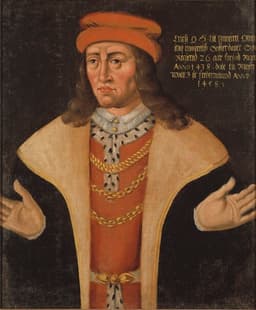
Eric of Pomerania
Emperor · Medieval
43.2Total

Nyatsimba Mutota
Emperor · Medieval
56.5Total
Basic Information
Born
1381
1400
Died
1459
1450
Era
Medieval
Medieval
Nationality
Denmark
Mozambique
Occupation
Emperor
Emperor
Civilization
Western
Other
Score Comparison
Military (10%)
50.0
72.5
Political (20%)
35.1
68.0
Influence (20%)
49.4
59.0
Legacy (20%)
39.2
50.0
Leadership (15%)
48.4
40.0
Strategy (15%)
35.7
57.5
TOTAL
43.2
56.5
Eric of Pomerania — Complete Timeline
1397 AD
Crowned King of the Kalmar UnionPolitical Action◆ Major
Eric of Pomerania was crowned King of Denmark, Norway, and Sweden at the Kalmar Union meeting in 1397, under the regency of Margaret I. His coronation formalized the union of the three Scandinavian kingdoms, though Margaret retained real power until her death.
CoronationKalmar UnionScandinavia
Impact: regionalconstructive
1412 AD
Became sole ruler after Margaret I's deathPolitical Action◆ Major
After Margaret I's death, Eric of Pomerania became the sole ruler of the Kalmar Union. He attempted to centralize power and assert royal authority, but his policies often clashed with the nobility, leading to growing tensions within the union.
SuccessionKalmar UnionRule
Impact: regional
1426 AD
Fought the Dano-Hanseatic WarWar◆ Major
Eric of Pomerania engaged in a war with the Hanseatic League, a powerful trading confederation. The conflict, which lasted until 1435, resulted in Danish defeats and economic disruption, weakening the Kalmar Union's control over Baltic trade.
WarHanseatic LeagueTrade Conflict
Impact: regionaldestructive
1429 AD
Imposed the Sound DuesReform◆ Major
Eric of Pomerania introduced the Sound Dues, a toll on all ships passing through the
TaxTradeBaltic
Impact: regional
1439 AD
Deposed by the Danish and Swedish nobilityPolitical Action◆ Major
Eric of Pomerania was deposed as king of Denmark and Sweden by the nobility, who were dissatisfied with his rule and his handling of the union. He was forced into exile on the island of Gotland, and the Kalmar Union effectively collapsed.
DepositionKalmar UnionExile
Impact: regionaldestructive
Nyatsimba Mutota — Complete Timeline
1430 AD
Founding of the Mutapa EmpirePolitical Action
Nyatsimba Mutota led a migration north from Great Zimbabwe and founded the Mutapa Empire in the Zambezi valley. He established a new capital at Zvongombe and began territorial expansion.
Impact: regionalconstructive
1440 AD
Conquest of the TavaraWar◆ Major
Nyatsimba Mutota conquered the Tavara people in the Zambezi valley, incorporating their territory into the Mutapa Empire. This victory secured control over fertile agricultural lands and trade routes.
Impact: regional
1445 AD
Establishment of the Mwenemutapa TitlePolitical Action◆ Major
Nyatsimba Mutota adopted the title Mwenemutapa, meaning 'lord of the conquered lands,' formalizing the imperial structure. This title became hereditary and defined the ruler's authority over conquered peoples.
Impact: regionalconstructive
Expert Analysis
Origins
Eric of Pomerania was born in 1382 as Bogislaw, son of Wartislaw VII, Duke of Pomerania. After his father's death, he was raised by his great-aunt Margaret I of Denmark, who orchestrated his adoption as her heir. Eric arrived in Denmark around 1389 and was groomed for kingship. In contrast, Nyatsimba Mutota emerged from the elite of Great Zimbabwe, a powerful trading state in southeastern Africa. Around 1430, Mutota led a migration northward from Great Zimbabwe into the Zambezi valley, likely driven by population pressure and the desire for new resources. His exact birth year is unknown, but he was a seasoned leader by the time of his migration.
Rise to Power
Eric's rise was engineered by Margaret I, who had already unified Denmark, Norway, and Sweden under the Kalmar Union. In 1397, at age 15, Eric was crowned King of Denmark, Norway, and Sweden at Kalmar, but Margaret retained real power until her death in 1412. After Margaret's death, Eric became sole ruler. He immediately asserted royal authority, centralizing administration and expanding the crown's revenues. Nyatsimba Mutota's rise was more organic. He left Great Zimbabwe with a following and conquered the Tavara people in the Zambezi valley around 1430. His success led to the founding of the Mutapa Empire, with its capital at Zvongombe. Mutota adopted the title Mwenemutapa, meaning 'lord of the conquered lands,' formalizing his imperial rule. His military scored 72.5 compared to Eric's 50.0, reflecting his conquest efficiency.
Leadership & Governance
Eric's governance focused on centralization and revenue extraction. He imposed the Sound Dues in 1429, taxing all ships passing through the Øresund strait. This policy generated significant income but alienated the Hanseatic League and local nobility. Eric also attempted to reduce the power of the nobility by appointing royal officials, but his heavy-handed approach led to resentment. His political score of 35.1 reflects his inability to maintain alliances. Nyatsimba Mutota, in contrast, built a decentralized empire that integrated conquered peoples. He appointed local chiefs as tributaries, allowing them autonomy in exchange for tribute and military support. His political score of 68.0 shows effective state-building. Mutota also established a hereditary succession system, which provided stability.
Triumph & Tragedy
Eric's greatest triumph was the Sound Dues, which became a lasting source of revenue for Denmark well into the 19th century. However, his greatest tragedy was his deposition in 1439 by the Danish and Swedish nobility, who were dissatisfied with his fiscal policies and military failures, particularly the Dano-Hanseatic War (1426-1435) that ended in defeat. Eric fled to Gotland and later to Pomerania, dying in exile in 1459. Nyatsimba Mutota's triumph was the foundation of the Mutapa Empire, which controlled gold and ivory trade routes and lasted until the 18th century. His tragedy was the overextension of his forces; his conquest of the Tavara was successful, but maintaining control over distant territories required constant military campaigns. Mutota died around 1450, but his empire endured.
Character & Destiny
Eric was ambitious but inflexible. His insistence on central authority and heavy taxation alienated the nobility and the Hanseatic League, leading to his downfall. Historical assessments describe him as stubborn and lacking the diplomatic finesse of Margaret I. His leadership score of 48.4 indicates average effectiveness. Nyatsimba Mutota was a pragmatic conqueror. He adapted the political structures of Great Zimbabwe to new environments and incorporated local elites. His strategy score of 57.5 reflects his ability to plan and execute expansion. Mutota's character is remembered as that of a visionary founder, but his reliance on military force limited his long-term control.
Legacy
Eric's legacy is mixed. The Sound Dues remained a cornerstone of Danish fiscal policy until 1857. However, his reign weakened the Kalmar Union, which eventually dissolved in 1523. His total score of 43.2 reflects limited lasting impact. Nyatsimba Mutota's legacy is more enduring. The Mutapa Empire became a major power in southern Africa, controlling trade and influencing later states. The Mwenemutapa title continued for centuries. His total score of 56.5, including a military score of 72.5, indicates greater success in state-building.
Conclusion
Nyatsimba Mutota had greater impact than Eric of Pomerania. Mutota founded an empire that lasted over 300 years, while Eric's union collapsed within a century. Mutota's scores in military (72.5 vs 50.0), political (68.0 vs 35.1), and total (56.5 vs 43.2) demonstrate superior effectiveness. Eric's Sound Dues were notable, but his inability to maintain power and the dissolution of the Kalmar Union diminish his legacy. Mutota's creation of a stable imperial system in the Zambezi valley had a deeper and more lasting influence on African history.
Rankings
🥇
Nyatsimba MutotaLeader
Mil: 72.5Pol: 68.0Inf: 59.0
56.5
🥈
Eric of Pomerania
Mil: 50.0Pol: 35.1Inf: 49.4
43.2
+13.3 behind
How This Comparison Works
Algorithm
Each figure is scored on 6 dimensions (0—100 scale) based on structured historical data: Military (10%), Political (20%), Influence (20%), Legacy (20%), Leadership (15%), Strategy (15%). The weighted total produces the final ranking.
Data Sources
Scores are computed from structured sub-indicators in the database. Scale factors adjust for era (Ancient ×0.85, Modern ×1.0) and civilization size (Eastern ×1.05, Other ×0.80) to account for differences in population and military scale.
Maximum 3 Figures
Comparisons are limited to 2—3 figures to ensure readability and statistical meaningfulness.
Error Margins
±5 points per dimension — Sub-scores are derived from historical records with inherent uncertainty. Two figures within 5 points on a dimension should be considered roughly equivalent in that area.
Total Score Accuracy
±3 points overall — The weighted combination of 6 dimensions produces a total score with approximately ±3 points of uncertainty. Differences of less than 3 points are not statistically significant— the figures are effectively tied.
Known Limitations
- Historical records are incomplete and uneven across civilizations
- Figures from oral-tradition societies may be underrepresented
- Occupation labels can misclassify multi-role figures
- Scores measure capability and impact, not moral character
- Quantitative scoring is a comparison tool, not absolute truth
Capability Radar
Military (10%) — Battles & Warfare
Battles
20
55
Win Rate
25
60
Expansion
15
65
Political (20%) — Governance & Reform
Reform
30
50
Diplomacy
35
55
Economy
25
50
Influence (20%) — Cultural & Global Reach
Cultural
20
45
Global
15
40
Legacy (20%) — Historical Impact
Historical
25
55
Longevity
20
50
Leadership (15%) — Power & Stability
Tenure
40
60
Stability
20
55
Strategy (15%) — Tactics & Innovation
Strategy
20
55
Tactics
15
50
Reform
10
40
Similar Comparisons
Comments & Discussion
No comments yet. Be the first to share your thoughts!