Loading...
Enrique Pena Nieto vs Julius Caesar
Julius Caesar leads by 35.0 pts · 2 figures compared
…
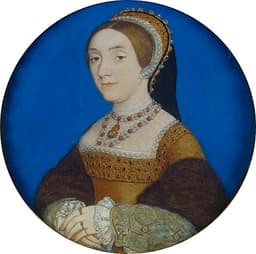
Enrique Pena Nieto
Politician · Modern
47.8Total

Julius Caesar
General · Ancient
82.8Total
Basic Information
Born
1966
-100
Died
—
-44
Era
Modern
Ancient
Nationality
Mexico
Roman Republic
Occupation
Politician
General
Civilization
Western
Western
Score Comparison
Military (10%)
50.0
88.0
Political (20%)
42.3
78.0
Influence (20%)
51.8
85.0
Legacy (20%)
38.3
82.0
Leadership (15%)
65.0
80.0
Strategy (15%)
41.5
85.0
TOTAL
47.8
82.8
Enrique Pena Nieto — Complete Timeline
2012 AD
Return of the PRI to the presidencyPolitical Action
Enrique Peña Nieto won the presidential election, returning the Institutional Revolutionary Party (PRI) to power after 12 years in opposition. His victory was seen as a restoration of the old guard, despite promises of reform.
ElectionPRIPolitical Return
Impact: national
Signing of the Pact for MexicoPolitical Action◆ Major
Peña Nieto brokered the Pact for Mexico, a cross-party agreement to pass structural reforms. The pact enabled major legislation on energy, education, and telecommunications, but later collapsed amid corruption scandals.
Political PactReformsLegislation
Impact: nationalconstructive
2013 AD
Energy reform opening oil sector to private investmentReform◆ Major
Peña Nieto pushed through a constitutional reform ending Pemex's monopoly, allowing private and foreign companies to explore and produce oil and gas. This was a historic shift in Mexico's energy policy, aimed at boosting production.
Energy ReformPrivatizationPemex
Impact: nationalconstructive
2014 AD
Ayotzinapa mass kidnapping and cover-upOther
On September 26, 2014, 43 students from the Ayotzinapa Rural Teachers' College were forcibly disappeared in Iguala, Guerrero. Pe
AyotzinapaDisappearanceHuman Rights Crisis
Impact: nationaltragic
Julius Caesar — Complete Timeline
58 BC
Gallic WarsWar◆ Major
Caesar, as proconsul of Gaul, launched a series of campaigns that conquered all of Gaul (modern France, Belgium, and parts of Switzerland). He fought numerous battles, including against the Helvetii, the Belgae, and the Gallic chieftain Vercingetorix. The wars brought immense wealth and a loyal army to Caesar.
Gallic WarsConquestRoman Expansion
Impact: regional
49 BC
Crossing the RubiconPolitical Action◆ Major
Caesar led Legio XIII across the Rubicon River into Italy, defying the Roman Senate's order to disband his army. This act triggered a civil war against Pompey and the Optimates, ultimately leading to Caesar's dictatorship and the end of the Roman Republic.
Roman Civil WarEnd of RepublicPower Struggle
Impact: global
48 BC
Battle of PharsalusWar◆ Major
Caesar's outnumbered army defeated the larger forces of Pompey the Great at Pharsalus in Greece. Caesar's tactical use of a reserve line to counter Pompey's cavalry charge proved decisive. Pompey fled to Egypt, where he was assassinated, leaving Caesar as the undisputed master of the Roman world.
Roman Civil WarBattleDecisive Victory
Impact: regional
44 BC
Appointment as Dictator for LifePolitical Action◆ Major
The Roman Senate appointed Caesar dictator perpetuo (dictator for life), granting him unprecedented personal power. This move concentrated military, legislative, and judicial authority in one person, effectively ending the Roman Republic's traditional system of checks and balances and alarming many senators.
DictatorshipEnd of RepublicPower Consolidation
Impact: regionaldestructive
Assassination on the Ides of MarchPolitical Action◆ Major
A group of Roman senators, led by Marcus Junius Brutus and Gaius Cassius Longinus, stabbed Caesar to death at a meeting of the Senate in the Theatre of Pompey. The assassination was intended to restore the Republic, but instead triggered another civil war that led to the rise of the Roman Empire.
AssassinationRoman PoliticsEnd of Republic
Impact: globaldestructive
Expert Analysis
enrique-pena-nieto-vs-julius-caesar
# Two Men at the Crossroads
On March 15, 44 BCE, Julius Caesar fell beneath twenty-three dagger blows in the Senate chamber of Rome, his blood pooling on the marble floor as his assassins—men he had pardoned, promoted, and trusted—fled into the chaos they had created. Two thousand years later, on a September evening in 2014, another leader sat in the presidential palace of Mexico, receiving reports that forty-three students had vanished in the night. Enrique Peña Nieto did not bleed that day, but the wound to his presidency was no less fatal. One man changed the course of Western history; the other became a footnote in his nation's troubled story. What separates a figure who remakes the world from one who merely occupies its stage?
Origins
Julius Caesar was born into the twilight of the Roman Republic, a world of senatorial intrigue, civil wars, and a crumbling aristocratic order. His family, the Julii, claimed descent from the goddess Venus, but their political fortunes had faded. Caesar grew up watching his uncle Gaius Marius battle the dictator Sulla, learning early that power belonged to those who seized it. His education was martial and rhetorical—he studied philosophy in Rhodes, trained as a soldier in Asia Minor, and honed the oratory that would later charm legions and senators alike.
Enrique Peña Nieto entered a very different Mexico in 1966, a nation long dominated by the Institutional Revolutionary Party (PRI), which had governed without interruption for decades. His family was connected—his father an engineer, his mother a teacher—but he was no patrician. Peña Nieto studied law and business, climbed the ranks of the PRI's state machinery in the State of Mexico, and cultivated a telegenic image. Where Caesar inherited a world of swords and speeches, Peña Nieto inherited one of microphones and backroom deals.
Rise to Power
Caesar's ascent was audacious and illegal. He formed the First Triumvirate with Pompey and Crassus, bought his way into the consulship, and then, rather than fading into retirement, demanded command of Gaul. For eight years he conquered, wrote, and enriched himself. When the Senate ordered him to disband his army, he crossed the Rubicon River in 49 BCE—an act of war against his own republic. "The die is cast," he supposedly said, and with that, he traded the rule of law for the rule of the sword.
Peña Nieto's rise was more orderly, if no less calculated. He won the presidency in 2012 by promising change while embodying the old order. His campaign sold him as a modernizer, a handsome face for a tired party. The turning point came with the Pact for Mexico, a cross-party agreement signed in December 2012 that promised structural reforms. It was a masterstroke of political engineering—for a moment, it seemed he had done what no Mexican president had done in decades: unite the fractious system.
Leadership & Governance
Caesar governed as a conqueror who never stopped conquering. He reformed the calendar, granted citizenship to provincials, initiated public works, and centralized power in his own hands. His military genius was total—at Alesia, he defeated a Gallic army three times his size through siegecraft and psychological warfare. Yet his political wisdom was flawed. He pardoned his enemies, promoted them, and assumed they would be grateful. He was wrong. His reforms were visionary, but his arrogance blinded him to the daggers sharpening in the shadows.
Peña Nieto governed as a dealmaker in a system that demanded results. His energy reform, opening Pemex to private investment after seventy-five years, was genuinely bold—constitutional amendments that ended a sacred monopoly. He passed education, telecommunications, and fiscal reforms. But he governed from a palace, not a battlefield. His strategy was negotiation, not conquest. Where Caesar commanded legions personally, Peña Nieto delegated to technocrats. The Pact for Mexico worked until it didn't—and when it collapsed, he had no legions to fall back on.
Triumph & Tragedy
Caesar's greatest triumph was Gaul—the complete subjugation of a vast territory, recorded in his own Commentaries for all time. His tragedy was that he could not see the limits of his own power. He accepted dictatorship for life, let statues of himself be erected among the gods, and dismissed omens. On the Ides of March, he fell.
Peña Nieto's greatest triumph was the energy reform—a genuinely transformative achievement that broke a state monopoly and opened Mexico to global investment. His tragedy was Ayotzinapa. On September 26, 2014, forty-three students were abducted by corrupt police and handed to a drug cartel. The government's response was denial, obfuscation, and cover-up. The students were never found. Peña Nieto's approval rating collapsed; his legacy was poisoned. Where Caesar's tragedy was his own hubris, Peña Nieto's was a system of corruption that he could not—or would not—control.
Character & Destiny
Caesar was ruthless, brilliant, and endlessly ambitious. He believed he was destined to remake Rome, and he was right. His personality—charming, calculating, and utterly convinced of his own superiority—drove him to cross the Rubicon, seize power, and then fail to secure it. He trusted his enemies because he could not imagine them succeeding. That trust killed him.
Peña Nieto was cautious, image-conscious, and institutionally loyal. He believed the system could be reformed from within, and he was wrong. His personality—polished, evasive, and risk-averse—led him to sign pacts rather than break them. He never crossed his own Rubicon because he never saw the need. Ayotzinapa revealed that he lacked the moral clarity to confront the darkness inside his own government.
Legacy
Caesar's legacy is the Roman Empire. His name became a title—Kaiser, Tsar—and his reforms outlived him. He is remembered as a genius and a tyrant, a man who destroyed a republic and built a world.
Peña Nieto's legacy is mixed and fading. The energy reform survives, but Ayotzinapa stains everything. He is remembered as the president who promised change and delivered corruption, the PRI's last gasp before a populist wave swept Mexico. His scores—a middling 57.8 overall, with military and strategy ratings barely above 35—tell the story of a politician who governed in peacetime but was unprepared for crisis.
Conclusion
Caesar and Peña Nieto lived two thousand years apart, but their stories share a common thread: power reveals character. Caesar's ambition built an empire and destroyed him. Peña Nieto's caution preserved a system and was consumed by it. One man crossed a river and changed the world; the other sat in a palace and watched it slip away. In the end, what separates them is not talent or opportunity, but the willingness to risk everything for a vision—and the courage to face the consequences. Caesar died by the sword he had lived by. Peña Nieto faded into the silence of a country that had stopped listening. History remembers both, but for very different reasons.
Rankings
🥇
Julius CaesarLeader
Mil: 88.0Pol: 78.0Inf: 85.0
82.8
🥈
Enrique Pena Nieto
Mil: 50.0Pol: 42.3Inf: 51.8
47.8
+35.0 behind
How This Comparison Works
Algorithm
Each figure is scored on 6 dimensions (0—100 scale) based on structured historical data: Military (10%), Political (20%), Influence (20%), Legacy (20%), Leadership (15%), Strategy (15%). The weighted total produces the final ranking.
Data Sources
Scores are computed from structured sub-indicators in the database. Scale factors adjust for era (Ancient ×0.85, Modern ×1.0) and civilization size (Eastern ×1.05, Other ×0.80) to account for differences in population and military scale.
Maximum 3 Figures
Comparisons are limited to 2—3 figures to ensure readability and statistical meaningfulness.
Error Margins
±5 points per dimension — Sub-scores are derived from historical records with inherent uncertainty. Two figures within 5 points on a dimension should be considered roughly equivalent in that area.
Total Score Accuracy
±3 points overall — The weighted combination of 6 dimensions produces a total score with approximately ±3 points of uncertainty. Differences of less than 3 points are not statistically significant— the figures are effectively tied.
Known Limitations
- Historical records are incomplete and uneven across civilizations
- Figures from oral-tradition societies may be underrepresented
- Occupation labels can misclassify multi-role figures
- Scores measure capability and impact, not moral character
- Quantitative scoring is a comparison tool, not absolute truth
Capability Radar
Military (10%) — Battles & Warfare
Battles
27
95
Win Rate
32
92
Expansion
37
97
Political (20%) — Governance & Reform
Reform
30
90
Diplomacy
40
85
Economy
30
82
Influence (20%) — Cultural & Global Reach
Cultural
20
88
Global
30
94
Legacy (20%) — Historical Impact
Historical
20
95
Longevity
10
96
Leadership (15%) — Power & Stability
Tenure
60
75
Stability
20
60
Strategy (15%) — Tactics & Innovation
Strategy
36
94
Tactics
40
96
Reform
44
88
Similar Comparisons
Comments & Discussion
Julius-Caesar-But-Make-It-Azte6/17/2026
Peña Nieto had the army and the budget, yet couldn’t even handle 43 missing students without triggering a national crisis. Caesar crossed the Rubicon with one legion and rewrote history. Leadership isn’t about winning elections—it’s about knowing when to break the rules. Peña played within a system; Caesar remade the whole damn board. Not the same league.
历史是面照妖镜6/17/2026
拿Peña Nieto跟凯撒比,简直是侮辱历史。凯撒征服高卢、改革历法、建立帝国,死后两千年还有人争论他的政治遗产。Peña呢?在总统府里喝咖啡,等着43个学生失踪案自己消失——结果这丑闻比他的任期长十倍。一个是帝国缔造者,一个是体制看门狗,别往脸上贴金了。
SpearCounter6/17/2026
Caesar faced 23 senators with daggers and went down fighting history’s biggest power play. Peña faced a public relations crisis and went down tweeting. The scale ain’t comparable. Even if you hate Caesar’s ambitions, you have to respect the stakes—he gambled an entire republic. Peña gambled his approval rating and lost. Not a tragic hero, just a mediocre bureaucrat.
死人比活人值钱6/17/2026
讽刺的是:凯撒死了才两千多年,历史书一翻都是他的战场、他的情妇、他的暗杀。Peña还活着呢,墨西哥人已经在问“谁还记得他?”统治一个衰落的大国不需要帝王之才,只需要别把事情搞砸——结果Peña连这点都没做到。凯撒在历史里发光,Peña只留下影子。
Rubicon-Tequila6/17/2026
Let's be real—Peña Nieto didn't even have the balls to privatize Pemex and call it a day. Caesar dismantled the Roman Republic, crossed into Gaul without permission, and provoked a civil war that ended the old order. Peña couldn't even reform energy without a congressional shouting match. The difference? One man made the people fear him; the other made them shrug. History forgets shrugs.