Loading...
This comparison has not been analyzed yet.
One-time AI generation (~1 minute). Scores and timeline are already available below.
Enrique Pena Nieto vs Fradique de Menezes
Enrique Pena Nieto leads by 0.4 pts · 2 figures compared
…
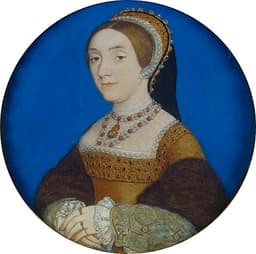
Enrique Pena Nieto
Politician · Modern
47.8Total
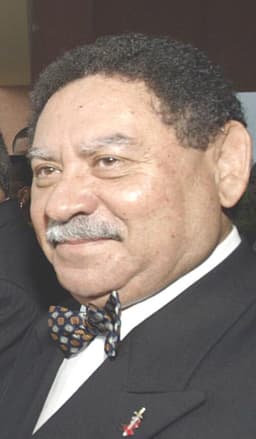
Fradique de Menezes
Politician · Modern
47.4Total
Basic Information
Born
1966
1942
Died
—
—
Era
Modern
Modern
Nationality
Mexico
Sao Tome
Occupation
Politician
Politician
Civilization
Western
Other
Score Comparison
Military (10%)
50.0
40.8
Political (20%)
42.3
45.1
Influence (20%)
51.8
49.4
Legacy (20%)
38.3
39.2
Leadership (15%)
65.0
67.0
Strategy (15%)
41.5
44.0
TOTAL
47.8
47.4
Enrique Pena Nieto — Complete Timeline
2012 AD
Return of the PRI to the presidencyPolitical Action
Enrique Peña Nieto won the presidential election, returning the Institutional Revolutionary Party (PRI) to power after 12 years in opposition. His victory was seen as a restoration of the old guard, despite promises of reform.
ElectionPRIPolitical Return
Impact: national
Signing of the Pact for MexicoPolitical Action◆ Major
Peña Nieto brokered the Pact for Mexico, a cross-party agreement to pass structural reforms. The pact enabled major legislation on energy, education, and telecommunications, but later collapsed amid corruption scandals.
Political PactReformsLegislation
Impact: nationalconstructive
2013 AD
Energy reform opening oil sector to private investmentReform◆ Major
Peña Nieto pushed through a constitutional reform ending Pemex's monopoly, allowing private and foreign companies to explore and produce oil and gas. This was a historic shift in Mexico's energy policy, aimed at boosting production.
Energy ReformPrivatizationPemex
Impact: nationalconstructive
2014 AD
Ayotzinapa mass kidnapping and cover-upOther
On September 26, 2014, 43 students from the Ayotzinapa Rural Teachers' College were forcibly disappeared in Iguala, Guerrero. Pe
AyotzinapaDisappearanceHuman Rights Crisis
Impact: nationaltragic
Fradique de Menezes — Complete Timeline
2001 AD
Elected President of São Tomé and PríncipePolitical Action◆ Major
Fradique de Menezes, a wealthy cocoa exporter, won the presidential election as an independent candidate. His victory represented a shift from traditional political elites to business interests.
ElectionPresidencySão Tomé and Príncipe
Impact: nationalconstructive
2003 AD
Survived Coup AttemptPolitical Action◆ Major
De Menezes was ousted in a bloodless coup led by military officers. He was restored to power after a week through negotiations mediated by Angola and Nigeria.
CoupPolitical CrisisSão Tomé and Príncipe
Impact: nationaldestructive
2006 AD
Re-elected PresidentPolitical Action
De Menezes won a second term in a peaceful election. His presidency focused on oil exploration and economic diversification, though oil revenues did not materialize as expected.
ElectionPresidencySão Tomé and Príncipe
Impact: national
This comparison has not been analyzed yet.
One-time AI generation (~1 minute). Scores and timeline are already available below.
Rankings
🥇
Enrique Pena NietoLeader
Mil: 50.0Pol: 42.3Inf: 51.8
47.8
🥈
Fradique de Menezes
Mil: 40.8Pol: 45.1Inf: 49.4
47.4
+0.4 behind
How This Comparison Works
Algorithm
Each figure is scored on 6 dimensions (0—100 scale) based on structured historical data: Military (10%), Political (20%), Influence (20%), Legacy (20%), Leadership (15%), Strategy (15%). The weighted total produces the final ranking.
Data Sources
Scores are computed from structured sub-indicators in the database. Scale factors adjust for era (Ancient ×0.85, Modern ×1.0) and civilization size (Eastern ×1.05, Other ×0.80) to account for differences in population and military scale.
Maximum 3 Figures
Comparisons are limited to 2—3 figures to ensure readability and statistical meaningfulness.
Error Margins
±5 points per dimension — Sub-scores are derived from historical records with inherent uncertainty. Two figures within 5 points on a dimension should be considered roughly equivalent in that area.
Total Score Accuracy
±3 points overall — The weighted combination of 6 dimensions produces a total score with approximately ±3 points of uncertainty. Differences of less than 3 points are not statistically significant— the figures are effectively tied.
Known Limitations
- Historical records are incomplete and uneven across civilizations
- Figures from oral-tradition societies may be underrepresented
- Occupation labels can misclassify multi-role figures
- Scores measure capability and impact, not moral character
- Quantitative scoring is a comparison tool, not absolute truth
Capability Radar
Military (10%) — Battles & Warfare
Battles
27
19
Win Rate
32
23
Expansion
37
30
Political (20%) — Governance & Reform
Reform
30
30
Diplomacy
40
35
Economy
30
45
Influence (20%) — Cultural & Global Reach
Cultural
20
20
Global
30
15
Legacy (20%) — Historical Impact
Historical
20
20
Longevity
10
15
Leadership (15%) — Power & Stability
Tenure
60
40
Stability
20
30
Strategy (15%) — Tactics & Innovation
Strategy
36
31
Tactics
40
33
Reform
44
34
Similar Comparisons
Comments & Discussion
No comments yet. Be the first to share your thoughts!