Loading...
Enrique Pena Nieto vs Willy Brandt
Willy Brandt leads by 14.2 pts · 2 figures compared
…
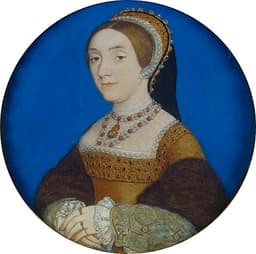
Enrique Pena Nieto
Politician · Modern
47.8Total
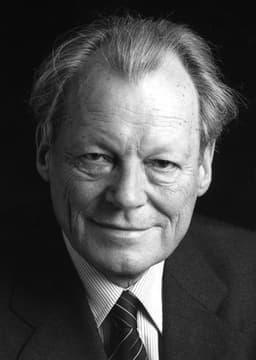
Willy Brandt
Politician · Modern
62.0Total
Basic Information
Born
1966
1913
Died
—
1992
Era
Modern
Modern
Nationality
Mexico
Germany
Occupation
Politician
Politician
Civilization
Western
Western
Score Comparison
Military (10%)
50.0
48.6
Political (20%)
42.3
62.7
Influence (20%)
51.8
72.0
Legacy (20%)
38.3
55.0
Leadership (15%)
65.0
78.0
Strategy (15%)
41.5
43.2
TOTAL
47.8
62.0
Enrique Pena Nieto — Complete Timeline
2012 AD
Return of the PRI to the presidencyPolitical Action
Enrique Peña Nieto won the presidential election, returning the Institutional Revolutionary Party (PRI) to power after 12 years in opposition. His victory was seen as a restoration of the old guard, despite promises of reform.
ElectionPRIPolitical Return
Impact: national
Signing of the Pact for MexicoPolitical Action◆ Major
Peña Nieto brokered the Pact for Mexico, a cross-party agreement to pass structural reforms. The pact enabled major legislation on energy, education, and telecommunications, but later collapsed amid corruption scandals.
Political PactReformsLegislation
Impact: nationalconstructive
2013 AD
Energy reform opening oil sector to private investmentReform◆ Major
Peña Nieto pushed through a constitutional reform ending Pemex's monopoly, allowing private and foreign companies to explore and produce oil and gas. This was a historic shift in Mexico's energy policy, aimed at boosting production.
Energy ReformPrivatizationPemex
Impact: nationalconstructive
2014 AD
Ayotzinapa mass kidnapping and cover-upOther
On September 26, 2014, 43 students from the Ayotzinapa Rural Teachers' College were forcibly disappeared in Iguala, Guerrero. Pe
AyotzinapaDisappearanceHuman Rights Crisis
Impact: nationaltragic
Willy Brandt — Complete Timeline
1969 AD
Became Chancellor of West GermanyPolitical Action◆ Major
Brandt was elected chancellor after the Social Democratic Party (SPD) formed a coalition with the Free Democratic Party (FDP). His government marked the first time the SPD led the government since the 1930s, signaling a shift in West German politics.
ElectionSPDCoalition
Impact: nationalconstructive
1970 AD
Initiated Ostpolitik (Eastern Policy)Political Action
Brandt pursued a policy of d
Cold WarDétenteEastern Europe
Impact: globalconstructive
Signed the Moscow Treaty with the Soviet UnionPolitical Action◆ Major
Brandt signed the Treaty of Moscow, in which West Germany and the Soviet Union recognized the inviolability of post-World War II borders, including the Oder-Neisse line. This normalized relations and opened the way for further Ostpolitik agreements.
OstpolitikSoviet UnionBorders
Impact: regionalconstructive
Knelt at the Warsaw Ghetto MemorialCultural◆ Major
During a visit to Poland, Brandt spontaneously knelt before the monument to the Warsaw Ghetto Uprising. This gesture of humility and remorse for Nazi crimes was widely seen as a powerful act of reconciliation and was praised internationally.
ReconciliationHolocaustSymbolism
Impact: globalprogressive
1974 AD
Resigned as Chancellor after a spy scandalPolitical Action◆ Major
Brandt resigned after it was revealed that one of his close aides, G
ScandalResignationSpy
Impact: nationaltragic
Expert Analysis
Origins
Enrique Peña Nieto was born on July 20, 1966, in Atlacomulco, Mexico, into a politically connected family. He studied law at the Panamerican University and later earned an MBA from the Monterrey Institute of Technology. His early career included roles in the State of Mexico government, where he served as governor from 2005 to 2011, focusing on infrastructure and social programs.
Willy Brandt was born Herbert Ernst Karl Frahm on December 18, 1913, in Lübeck, Germany. He fled to Norway and Sweden during the Nazi era, working as a journalist. After World War II, he returned to West Germany and joined the Social Democratic Party (SPD). He served as mayor of West Berlin from 1957 to 1966, gaining prominence during the Berlin Crisis.
Rise to Power
Peña Nieto rose through the Institutional Revolutionary Party (PRI) ranks. As governor of the State of Mexico, he built a reputation for efficient administration and visible projects. His marriage to actress Angélica Rivera boosted his media appeal. In 2012, he won the presidency with 38% of the vote, ending the National Action Party's 12-year rule. Key allies included the powerful teachers' union and business elites.
Brandt's rise was unconventional. Exiled during the war, he became a journalist and later a politician. As mayor of West Berlin (1957-1966), he handled the construction of the Berlin Wall with calm resolve. In 1969, he became chancellor after the SPD formed a coalition with the Free Democratic Party. His election marked the first SPD-led government since 1930.
Leadership & Governance
Peña Nieto's leadership centered on structural reforms. He negotiated the Pact for Mexico (2012), a cross-party agreement that passed 11 constitutional reforms. These included opening the energy sector to private investment, ending Pemex's monopoly, and overhauling education with teacher evaluations. However, his administration faced corruption scandals and rising violence. His political score of 42.3 reflects weak governance outcomes.
Brandt's leadership was defined by Ostpolitik, a policy of reconciliation with Eastern Europe. He signed treaties with the Soviet Union, Poland, and East Germany, recognizing post-war borders and establishing diplomatic relations. His governance style emphasized openness and social welfare. Brandt's leadership score of 78.0 is among the highest, reflecting his ability to navigate Cold War tensions.
Triumph & Tragedy
Peña Nieto's greatest success was the energy reform, which ended Pemex's monopoly and attracted foreign investment. The education reform aimed to improve school quality. However, his presidency was marred by the Ayotzinapa mass kidnapping in 2014, where 43 students disappeared in Guerrero. His government's response was widely criticized, and investigations revealed military involvement. His legacy score of 38.3 reflects these failures.
Brandt's triumph was Ostpolitik, which reduced Cold War tensions and earned him the Nobel Peace Prize in 1971. His kneeling at the Warsaw Ghetto Memorial in 1970 became a powerful symbol of German remorse. His tragedy was the Guillaume spy scandal in 1974, leading to his resignation. An East German agent had infiltrated his staff, undermining his authority. His influence score of 72.0 remains high.
Character & Destiny
Peña Nieto was seen as a polished technocrat but indecisive in crises. His handling of Ayotzinapa damaged his credibility. He prioritized reforms over human rights, leading to protests. His character reflected the PRI's old-style politics, with a focus on image over substance.
Brandt was charismatic and idealistic, driven by his anti-Nazi past. His Ostpolitik required political courage, as it faced opposition from conservatives. His decision to kneel at Warsaw was spontaneous, showing emotional depth. The spy scandal exploited his trust in aides, leading to his downfall. His strategy score of 43.2 suggests he was less adept at internal security.
Legacy
Peña Nieto's reforms dismantled state monopolies but failed to boost economic growth significantly. The energy reform opened the sector, but corruption persisted. His legacy is mixed: structural changes exist, but the PRI's return to power ended with his successor's defeat. His total score of 47.8 reflects limited positive impact.
Brandt's legacy is enduring. Ostpolitik laid the groundwork for German reunification in 1990. His policy of détente influenced European integration. The Warsaw knee remains iconic. His total score of 62.0 reflects substantial historical influence.
Conclusion
Willy Brandt had greater impact than Enrique Peña Nieto. Brandt's Ostpolitik reshaped European geopolitics, leading to the end of Cold War divisions. His moral authority, symbolized by the Warsaw gesture, set a standard for political humility. Peña Nieto's reforms were significant but undermined by corruption and human rights failures. Brandt's total score of 62.0 versus Peña Nieto's 47.8 reflects this difference. Brandt's leadership (78.0) and influence (72.0) far exceed Peña Nieto's political (42.3) and legacy (38.3) scores. While both faced scandals, Brandt's achievements transformed international relations, whereas Peña Nieto's changes were largely domestic and incomplete.
Rankings
🥇
Willy BrandtLeader
Mil: 48.6Pol: 62.7Inf: 72.0
62.0
🥈
Enrique Pena Nieto
Mil: 50.0Pol: 42.3Inf: 51.8
47.8
+14.2 behind
How This Comparison Works
Algorithm
Each figure is scored on 6 dimensions (0—100 scale) based on structured historical data: Military (10%), Political (20%), Influence (20%), Legacy (20%), Leadership (15%), Strategy (15%). The weighted total produces the final ranking.
Data Sources
Scores are computed from structured sub-indicators in the database. Scale factors adjust for era (Ancient ×0.85, Modern ×1.0) and civilization size (Eastern ×1.05, Other ×0.80) to account for differences in population and military scale.
Maximum 3 Figures
Comparisons are limited to 2—3 figures to ensure readability and statistical meaningfulness.
Error Margins
±5 points per dimension — Sub-scores are derived from historical records with inherent uncertainty. Two figures within 5 points on a dimension should be considered roughly equivalent in that area.
Total Score Accuracy
±3 points overall — The weighted combination of 6 dimensions produces a total score with approximately ±3 points of uncertainty. Differences of less than 3 points are not statistically significant— the figures are effectively tied.
Known Limitations
- Historical records are incomplete and uneven across civilizations
- Figures from oral-tradition societies may be underrepresented
- Occupation labels can misclassify multi-role figures
- Scores measure capability and impact, not moral character
- Quantitative scoring is a comparison tool, not absolute truth
Capability Radar
Military (10%) — Battles & Warfare
Battles
27
27
Win Rate
32
34
Expansion
37
36
Political (20%) — Governance & Reform
Reform
30
80
Diplomacy
40
90
Economy
30
65
Influence (20%) — Cultural & Global Reach
Cultural
20
55
Global
30
70
Legacy (20%) — Historical Impact
Historical
20
75
Longevity
10
60
Leadership (15%) — Power & Stability
Tenure
60
70
Stability
20
70
Strategy (15%) — Tactics & Innovation
Strategy
36
40
Tactics
40
43
Reform
44
42
Similar Comparisons
Comments & Discussion
No comments yet. Be the first to share your thoughts!