Loading...
Fradique de Menezes vs Napoleon Bonaparte
Napoleon Bonaparte leads by 23.5 pts · 2 figures compared
…
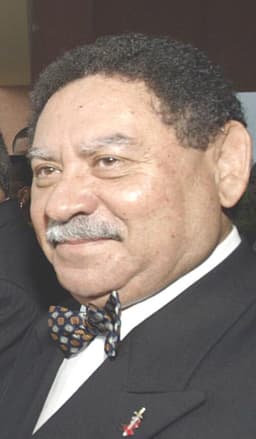
Fradique de Menezes
Politician · Modern
47.4Total

Napoleon Bonaparte
General · Modern
70.9Total
Basic Information
Born
1942
1769
Died
—
1821
Era
Modern
Modern
Nationality
Sao Tome
France
Occupation
Politician
General
Civilization
Other
Western
Score Comparison
Military (10%)
40.8
94.0
Political (20%)
45.1
72.0
Influence (20%)
49.4
40.0
Legacy (20%)
39.2
80.0
Leadership (15%)
67.0
78.0
Strategy (15%)
44.0
90.0
TOTAL
47.4
70.9
Fradique de Menezes — Complete Timeline
2001 AD
Elected President of São Tomé and PríncipePolitical Action◆ Major
Fradique de Menezes, a wealthy cocoa exporter, won the presidential election as an independent candidate. His victory represented a shift from traditional political elites to business interests.
ElectionPresidencySão Tomé and Príncipe
Impact: nationalconstructive
2003 AD
Survived Coup AttemptPolitical Action◆ Major
De Menezes was ousted in a bloodless coup led by military officers. He was restored to power after a week through negotiations mediated by Angola and Nigeria.
CoupPolitical CrisisSão Tomé and Príncipe
Impact: nationaldestructive
2006 AD
Re-elected PresidentPolitical Action
De Menezes won a second term in a peaceful election. His presidency focused on oil exploration and economic diversification, though oil revenues did not materialize as expected.
ElectionPresidencySão Tomé and Príncipe
Impact: national
Napoleon Bonaparte — Complete Timeline
1799 AD
Coup of 18 BrumaireOther◆ Major
Napoleon Bonaparte, with support from his brother Lucien and key political figures, overthrew the Directory in a bloodless coup. He established the Consulate with himself as First Consul, effectively becoming the ruler of France. This event ended the French Revolution's most unstable period.
French RevolutionCoupRise to Power
Impact: regional
1804 AD
Promulgation of the Napoleonic CodeOther◆ Major
Napoleon enacted the Civil Code of the French, known as the Napoleonic Code, a comprehensive set of laws that replaced the fragmented feudal legal systems. The code established legal equality, protected property rights, and secularized law. It became the basis for legal systems in many European and world countries.
Legal ReformNapoleonic CodeCivil Law
Impact: globalconstructive
1805 AD
Battle of AusterlitzWar◆ Major
Napoleon's Grande Arm
Napoleonic WarsBattleDecisive Victory
Impact: global
1812 AD
Invasion of RussiaWar◆ Major
Napoleon led the Grande Arm
Napoleonic WarsInvasionDisaster
Impact: globaldestructive
1815 AD
Battle of WaterlooWar◆ Major
Napoleon's French army was defeated by the combined forces of the Duke of Wellington's Anglo-Allied army and Gebhard Leberecht von Bl
Napoleonic WarsBattleFinal Defeat
Impact: globaldestructive
Expert Analysis
Origins
Fradique de Menezes was born in 1942 in São Tomé and Príncipe, a small island nation off West Africa. He came from a wealthy family involved in cocoa production, the country's primary export. He studied in Lisbon and later became a successful cocoa exporter, amassing a fortune. His background was in business, not politics, and he entered the political arena relatively late in life.
Napoleon Bonaparte was born in 1769 in Corsica, shortly after its annexation by France. He came from a modest noble family and studied at military schools in mainland France. He trained as an artillery officer, excelling in mathematics and strategy. His early career was shaped by the French Revolution, which opened opportunities for talented officers regardless of birth.
Rise to Power
Fradique de Menezes entered politics as an independent candidate in the 2001 presidential election. He won with 55.2% of the vote, defeating the incumbent and representing a break from the traditional political parties. His victory was seen as a mandate for economic reform, particularly in oil exploration. However, his rule was challenged early: in July 2003, he was ousted in a bloodless coup led by military officers. After negotiations mediated by Angola and Nigeria, he was restored to power within a week. This event highlighted both his vulnerability and his ability to return through diplomacy.
Napoleon's rise was meteoric. He gained fame after his victory at the Siege of Toulon in 1793, where he was promoted to brigadier general at age 24. He then led the Italian campaign (1796-1797), defeating larger Austrian armies and establishing himself as a military genius. In 1799, he returned from Egypt to stage the Coup of 18 Brumaire, overthrowing the Directory and becoming First Consul. By 1804, he crowned himself Emperor of the French, consolidating power through military success and political maneuvering.
Leadership & Governance
De Menezes governed as a pragmatic leader focused on economic development. He prioritized oil exploration, signing agreements with international companies to exploit offshore reserves. However, oil revenues did not dramatically improve living standards due to corruption and mismanagement. His leadership score of 67.0 reflects a moderate ability to maintain stability, but his political score of 45.1 indicates limited influence beyond his small nation. He was re-elected in 2006, serving until 2011, but his legacy is tied more to the promise of oil than to transformative governance.
Napoleon reorganized French governance through the Napoleonic Code, a legal framework that influenced many countries. He centralized administration, reformed education, and established the Bank of France. His leadership score of 78.0 and political score of 72.0 reflect his ability to command and reshape institutions. However, his governance was authoritarian, suppressing dissent and curtailing freedoms. His military score of 94.0 and strategy score of 90.0 underscore his dominance in warfare, but his political achievements were often overshadowed by his ambition and eventual downfall.
Triumph & Tragedy
De Menezes's greatest triumph was surviving the 2003 coup and returning to power, demonstrating resilience. He also oversaw peaceful elections in 2006, a sign of democratic progress. His tragedy lies in the unfulfilled potential of oil wealth; despite high hopes, poverty persisted. His influence score of 49.4 and legacy score of 39.2 indicate limited lasting impact beyond his small nation.
Napoleon's triumphs include the Battle of Austerlitz in 1805, where he crushed the Russo-Austrian army, and the Napoleonic Code, which modernized legal systems. His tragedies are the disastrous Invasion of Russia in 1812, where he lost over 400,000 men, and his final defeat at Waterloo in 1815. He died in exile on Saint Helena. His legacy score of 80.0 reflects his profound impact on Europe, but his military score of 94.0 is tempered by strategic overreach.
Character & Destiny
De Menezes was a pragmatic businessman, not a visionary leader. His character—cautious and focused on stability—helped him survive political turmoil but limited his ambition. His destiny was to lead a small, peaceful nation, never to alter global history.
Napoleon was driven by ambition and a belief in his own destiny. His decisive, strategic mind made him a military genius, but his arrogance led to fatal errors. He once said, "Power is my mistress," and his pursuit of power ultimately led to his downfall. His character shaped his fate: he rose through brilliance and fell through hubris.
Legacy
De Menezes's legacy is modest. He is remembered as a transitional figure who brought stability but not transformation to São Tomé. His impact is limited to his country, and his scores (total 47.4) reflect a minor historical footprint.
Napoleon's legacy is vast. He reshaped Europe through conquest and legal reform, inspiring nationalism and military strategy for centuries. His total score of 70.9 places him among history's most influential figures. Despite his defeats, his impact on governance, law, and warfare endures.
Conclusion
Napoleon Bonaparte had significantly greater impact than Fradique de Menezes. With a total score of 70.9 versus 47.4, Napoleon's military conquests, legal reforms, and influence on European history dwarf de Menezes's local achievements. While de Menezes provided stable leadership for a small nation, Napoleon changed the course of continents. The 23.5-point gap reflects their vastly different scales of influence. Napoleon's legacy is global; de Menezes's is regional. In the contest of historical significance, Napoleon stands far above.
Rankings
🥇
Napoleon BonaparteLeader
Mil: 94.0Pol: 72.0Inf: 40.0
70.9
🥈
Fradique de Menezes
Mil: 40.8Pol: 45.1Inf: 49.4
47.4
+23.5 behind
How This Comparison Works
Algorithm
Each figure is scored on 6 dimensions (0—100 scale) based on structured historical data: Military (10%), Political (20%), Influence (20%), Legacy (20%), Leadership (15%), Strategy (15%). The weighted total produces the final ranking.
Data Sources
Scores are computed from structured sub-indicators in the database. Scale factors adjust for era (Ancient ×0.85, Modern ×1.0) and civilization size (Eastern ×1.05, Other ×0.80) to account for differences in population and military scale.
Maximum 3 Figures
Comparisons are limited to 2—3 figures to ensure readability and statistical meaningfulness.
Error Margins
±5 points per dimension — Sub-scores are derived from historical records with inherent uncertainty. Two figures within 5 points on a dimension should be considered roughly equivalent in that area.
Total Score Accuracy
±3 points overall — The weighted combination of 6 dimensions produces a total score with approximately ±3 points of uncertainty. Differences of less than 3 points are not statistically significant— the figures are effectively tied.
Known Limitations
- Historical records are incomplete and uneven across civilizations
- Figures from oral-tradition societies may be underrepresented
- Occupation labels can misclassify multi-role figures
- Scores measure capability and impact, not moral character
- Quantitative scoring is a comparison tool, not absolute truth
Capability Radar
Military (10%) — Battles & Warfare
Battles
19
95
Win Rate
23
90
Expansion
30
95
Political (20%) — Governance & Reform
Reform
30
95
Diplomacy
35
80
Economy
45
85
Influence (20%) — Cultural & Global Reach
Cultural
20
85
Global
15
90
Legacy (20%) — Historical Impact
Historical
20
95
Longevity
15
90
Leadership (15%) — Power & Stability
Tenure
40
85
Stability
30
70
Strategy (15%) — Tactics & Innovation
Strategy
31
95
Tactics
33
98
Reform
34
92
Similar Comparisons
Comments & Discussion
No comments yet. Be the first to share your thoughts!