Loading...
This comparison has not been analyzed yet.
One-time AI generation (~1 minute). Scores and timeline are already available below.
Enheduanna vs Hammurabi
Hammurabi leads by 11.9 pts · 2 figures compared
…

Enheduanna
Emperor · Ancient
57.5Total
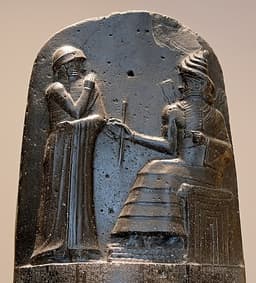
Hammurabi
Emperor · Ancient
69.4Total
Basic Information
Born
-2285
-1810
Died
-2250
-1750
Era
Ancient
Ancient
Nationality
Akkadian Empire
Babylon
Occupation
Emperor
Emperor
Civilization
Middle Eastern
Middle Eastern
Score Comparison
Military (10%)
43.6
60.0
Political (20%)
33.6
62.7
Influence (20%)
72.0
68.0
Legacy (20%)
65.0
80.0
Leadership (15%)
55.3
80.0
Strategy (15%)
55.2
50.0
TOTAL
57.5
69.4
Enheduanna — Complete Timeline
2285 BC
Composition of the Temple HymnsCultural
Enheduanna, high priestess of the moon god Nanna at Ur, composed a collection of 42 temple hymns dedicated to the major temples of Sumer and Akkad. These hymns are the earliest known works of literature attributed to a named author, establishing her as the world's first known author.
LiteratureHymnsFirst Author
Impact: globalconstructive
Appointment as High Priestess by SargonPolitical Action◆ Major
Sargon of Akkad appointed his daughter Enheduanna as high priestess of the moon god Nanna at Ur. This appointment was a political move to consolidate Akkadian control over Sumer by placing a royal family member in a key religious position. Enheduanna served in this role for decades.
Religious AppointmentSargonUr
Impact: regionalconstructive
2280 BC
Composition of the Exaltation of InannaCultural◆ Major
Enheduanna wrote the 'Exaltation of Inanna', a long poem praising the goddess Inanna and describing her own exile from Ur. The poem is a personal and political work, reflecting her struggles and her devotion to Inanna. It is one of the earliest known works of poetry.
PoetryInannaExile
Impact: global
Hammurabi — Complete Timeline
1763 BC
Conquest of MesopotamiaWar◆ Major
Hammurabi conquered the city-states of Larsa, Mari, and Eshnunna, uniting most of Mesopotamia under Babylonian rule. This created the Babylonian Empire and made Babylon the dominant power in the region.
ConquestEmpireBabylon
Impact: regional
1754 BC
Promulgation of the Code of HammurabiCultural
Hammurabi issued a comprehensive legal code inscribed on a stele, containing 282 laws covering trade, property, family, and crime. The code established the principle of lex talionis (eye for an eye) and influenced later legal systems.
LawCodeMesopotamia
Impact: globalconstructive
1750 BC
Construction of Babylon's fortificationsOther
Hammurabi ordered the construction of extensive city walls, canals, and temples in Babylon. These projects strengthened the city's defenses and infrastructure, solidifying its status as a major urban center.
ConstructionInfrastructureBabylon
constructive
This comparison has not been analyzed yet.
One-time AI generation (~1 minute). Scores and timeline are already available below.
Rankings
🥇
HammurabiLeader
Mil: 60.0Pol: 62.7Inf: 68.0
69.4
🥈
Enheduanna
Mil: 43.6Pol: 33.6Inf: 72.0
57.5
+11.9 behind
How This Comparison Works
Algorithm
Each figure is scored on 6 dimensions (0—100 scale) based on structured historical data: Military (10%), Political (20%), Influence (20%), Legacy (20%), Leadership (15%), Strategy (15%). The weighted total produces the final ranking.
Data Sources
Scores are computed from structured sub-indicators in the database. Scale factors adjust for era (Ancient ×0.85, Modern ×1.0) and civilization size (Eastern ×1.05, Other ×0.80) to account for differences in population and military scale.
Maximum 3 Figures
Comparisons are limited to 2—3 figures to ensure readability and statistical meaningfulness.
Error Margins
±5 points per dimension — Sub-scores are derived from historical records with inherent uncertainty. Two figures within 5 points on a dimension should be considered roughly equivalent in that area.
Total Score Accuracy
±3 points overall — The weighted combination of 6 dimensions produces a total score with approximately ±3 points of uncertainty. Differences of less than 3 points are not statistically significant— the figures are effectively tied.
Known Limitations
- Historical records are incomplete and uneven across civilizations
- Figures from oral-tradition societies may be underrepresented
- Occupation labels can misclassify multi-role figures
- Scores measure capability and impact, not moral character
- Quantitative scoring is a comparison tool, not absolute truth
Capability Radar
Military (10%) — Battles & Warfare
Battles
39
65
Win Rate
42
70
Expansion
45
65
Political (20%) — Governance & Reform
Reform
30
90
Diplomacy
35
75
Economy
20
70
Influence (20%) — Cultural & Global Reach
Cultural
85
85
Global
70
80
Legacy (20%) — Historical Impact
Historical
90
90
Longevity
95
95
Leadership (15%) — Power & Stability
Tenure
40
80
Stability
30
75
Strategy (15%) — Tactics & Innovation
Strategy
47
60
Tactics
47
55
Reform
56
50
Similar Comparisons
Comments & Discussion
No comments yet. Be the first to share your thoughts!