Loading...
This comparison has not been analyzed yet.
One-time AI generation (~1 minute). Scores and timeline are already available below.
Engelbert Dollfuss vs Thorbjorn Jagland
Thorbjorn Jagland leads by 6.5 pts · 2 figures compared
…
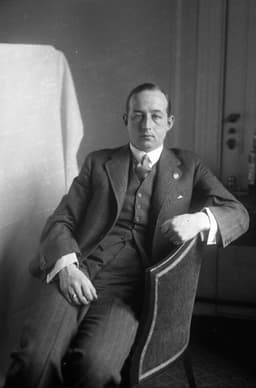
Engelbert Dollfuss
Politician · Modern
47.6Total

Thorbjorn Jagland
Politician · Modern
54.1Total
Basic Information
Born
1892
1950
Died
1934
—
Era
Modern
Modern
Nationality
Austria
Norway
Occupation
Politician
Politician
Civilization
Western
Western
Score Comparison
Military (10%)
49.3
49.5
Political (20%)
45.1
68.0
Influence (20%)
51.0
54.9
Legacy (20%)
41.7
42.5
Leadership (15%)
55.3
68.0
Strategy (15%)
44.1
43.7
TOTAL
47.6
54.1
Engelbert Dollfuss — Complete Timeline
1933 AD
Establishment of the Austrofascist regimePolitical Action◆ Major
In March 1933, Dollfuss used a parliamentary procedural crisis to suspend the National Council and rule by emergency decree. He banned the Communist Party, the Nazi Party, and eventually the Social Democratic Party, establishing a one-party authoritarian state known as the Austrofascist regime.
AustrofascismAuthoritarianismDemocracy Suspended
Impact: nationaldestructive
1934 AD
Austrian Civil WarWar◆ Major
In February 1934, Dollfuss ordered the military and police to attack Social Democratic Party strongholds in Vienna and other cities. The conflict lasted several days, resulting in hundreds of deaths and the outlawing of the Social Democratic Party and its paramilitary organization, the Republikanischer Schutzbund.
Civil WarSocial DemocratsRepression
Impact: nationaldestructive
Assassination in the July PutschPolitical Action
On July 25, 1934, Austrian Nazis, with support from Germany, stormed the Federal Chancellery in Vienna. Dollfuss was shot and died from his wounds. The coup attempt failed to seize power, but Dollfuss's death marked a major escalation in Nazi pressure on Austria.
AssassinationNazi CoupAnschluss Prelude
Impact: nationaltragic
Thorbjorn Jagland — Complete Timeline
1996 AD
Appointed Prime Minister of NorwayPolitical Action◆ Major
Jagland became Prime Minister in October 1996, succeeding Gro Harlem Brundtland. He led a Labour Party minority government until 1997.
Norwegian PoliticsGovernment Formation
Impact: national
2000 AD
Chair of the Norwegian Nobel CommitteePolitical Action
Jagland chaired the Norwegian Nobel Committee from 2000 to 2009. He oversaw the awarding of the Nobel Peace Prize, including to the IPCC and Al Gore in 2007.
Nobel PrizePeace
Impact: global
2009 AD
Secretary-General of the Council of EuropePolitical Action◆ Major
Jagland became Secretary-General of the Council of Europe in October 2009. He served two terms until 2019, focusing on human rights and democratic governance.
Council of EuropeHuman Rights
Impact: regional
This comparison has not been analyzed yet.
One-time AI generation (~1 minute). Scores and timeline are already available below.
Rankings
🥇
Thorbjorn JaglandLeader
Mil: 49.5Pol: 68.0Inf: 54.9
54.1
🥈
Engelbert Dollfuss
Mil: 49.3Pol: 45.1Inf: 51.0
47.6
+6.5 behind
How This Comparison Works
Algorithm
Each figure is scored on 6 dimensions (0—100 scale) based on structured historical data: Military (10%), Political (20%), Influence (20%), Legacy (20%), Leadership (15%), Strategy (15%). The weighted total produces the final ranking.
Data Sources
Scores are computed from structured sub-indicators in the database. Scale factors adjust for era (Ancient ×0.85, Modern ×1.0) and civilization size (Eastern ×1.05, Other ×0.80) to account for differences in population and military scale.
Maximum 3 Figures
Comparisons are limited to 2—3 figures to ensure readability and statistical meaningfulness.
Error Margins
±5 points per dimension — Sub-scores are derived from historical records with inherent uncertainty. Two figures within 5 points on a dimension should be considered roughly equivalent in that area.
Total Score Accuracy
±3 points overall — The weighted combination of 6 dimensions produces a total score with approximately ±3 points of uncertainty. Differences of less than 3 points are not statistically significant— the figures are effectively tied.
Known Limitations
- Historical records are incomplete and uneven across civilizations
- Figures from oral-tradition societies may be underrepresented
- Occupation labels can misclassify multi-role figures
- Scores measure capability and impact, not moral character
- Quantitative scoring is a comparison tool, not absolute truth
Capability Radar
Military (10%) — Battles & Warfare
Battles
27
26
Win Rate
33
35
Expansion
36
36
Political (20%) — Governance & Reform
Reform
45
40
Diplomacy
30
60
Economy
35
45
Influence (20%) — Cultural & Global Reach
Cultural
15
20
Global
20
40
Legacy (20%) — Historical Impact
Historical
30
30
Longevity
20
25
Leadership (15%) — Power & Stability
Tenure
40
55
Stability
10
50
Strategy (15%) — Tactics & Innovation
Strategy
40
38
Tactics
41
43
Reform
46
44
Similar Comparisons
Comments & Discussion
No comments yet. Be the first to share your thoughts!