Loading...
Engelbert Dollfuss vs Julius Caesar
Julius Caesar leads by 35.2 pts · 2 figures compared
…
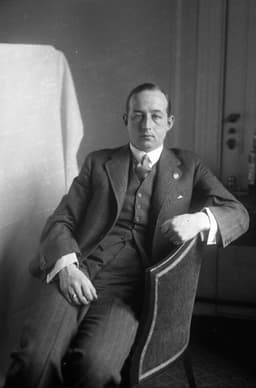
Engelbert Dollfuss
Politician · Modern
47.6Total

Julius Caesar
General · Ancient
82.8Total
Basic Information
Born
1892
-100
Died
1934
-44
Era
Modern
Ancient
Nationality
Austria
Roman Republic
Occupation
Politician
General
Civilization
Western
Western
Score Comparison
Military (10%)
49.3
88.0
Political (20%)
45.1
78.0
Influence (20%)
51.0
85.0
Legacy (20%)
41.7
82.0
Leadership (15%)
55.3
80.0
Strategy (15%)
44.1
85.0
TOTAL
47.6
82.8
Engelbert Dollfuss — Complete Timeline
1933 AD
Establishment of the Austrofascist regimePolitical Action◆ Major
In March 1933, Dollfuss used a parliamentary procedural crisis to suspend the National Council and rule by emergency decree. He banned the Communist Party, the Nazi Party, and eventually the Social Democratic Party, establishing a one-party authoritarian state known as the Austrofascist regime.
AustrofascismAuthoritarianismDemocracy Suspended
Impact: nationaldestructive
1934 AD
Austrian Civil WarWar◆ Major
In February 1934, Dollfuss ordered the military and police to attack Social Democratic Party strongholds in Vienna and other cities. The conflict lasted several days, resulting in hundreds of deaths and the outlawing of the Social Democratic Party and its paramilitary organization, the Republikanischer Schutzbund.
Civil WarSocial DemocratsRepression
Impact: nationaldestructive
Assassination in the July PutschPolitical Action
On July 25, 1934, Austrian Nazis, with support from Germany, stormed the Federal Chancellery in Vienna. Dollfuss was shot and died from his wounds. The coup attempt failed to seize power, but Dollfuss's death marked a major escalation in Nazi pressure on Austria.
AssassinationNazi CoupAnschluss Prelude
Impact: nationaltragic
Julius Caesar — Complete Timeline
58 BC
Gallic WarsWar◆ Major
Caesar, as proconsul of Gaul, launched a series of campaigns that conquered all of Gaul (modern France, Belgium, and parts of Switzerland). He fought numerous battles, including against the Helvetii, the Belgae, and the Gallic chieftain Vercingetorix. The wars brought immense wealth and a loyal army to Caesar.
Gallic WarsConquestRoman Expansion
Impact: regional
49 BC
Crossing the RubiconPolitical Action◆ Major
Caesar led Legio XIII across the Rubicon River into Italy, defying the Roman Senate's order to disband his army. This act triggered a civil war against Pompey and the Optimates, ultimately leading to Caesar's dictatorship and the end of the Roman Republic.
Roman Civil WarEnd of RepublicPower Struggle
Impact: global
48 BC
Battle of PharsalusWar◆ Major
Caesar's outnumbered army defeated the larger forces of Pompey the Great at Pharsalus in Greece. Caesar's tactical use of a reserve line to counter Pompey's cavalry charge proved decisive. Pompey fled to Egypt, where he was assassinated, leaving Caesar as the undisputed master of the Roman world.
Roman Civil WarBattleDecisive Victory
Impact: regional
44 BC
Appointment as Dictator for LifePolitical Action◆ Major
The Roman Senate appointed Caesar dictator perpetuo (dictator for life), granting him unprecedented personal power. This move concentrated military, legislative, and judicial authority in one person, effectively ending the Roman Republic's traditional system of checks and balances and alarming many senators.
DictatorshipEnd of RepublicPower Consolidation
Impact: regionaldestructive
Assassination on the Ides of MarchPolitical Action◆ Major
A group of Roman senators, led by Marcus Junius Brutus and Gaius Cassius Longinus, stabbed Caesar to death at a meeting of the Senate in the Theatre of Pompey. The assassination was intended to restore the Republic, but instead triggered another civil war that led to the rise of the Roman Empire.
AssassinationRoman PoliticsEnd of Republic
Impact: globaldestructive
Expert Analysis
engelbert-dollfuss-vs-julius-caesar
### The Dictator and the Dwarf: Two Paths to Ruin in the Western Tradition
On the Ides of March, 44 BCE, a man who had reshaped the world fell bleeding at the foot of a statue of his great rival, Pompey. His assassins believed they had saved the Republic. In Vienna, on a sweltering July afternoon in 1934, another dictator—barely five feet tall, known to his enemies as "Millimetternich"—was shot in his office, his blood pooling on the carpet as his killers demanded his resignation. One death launched a thousand years of empire. The other sealed a small nation’s doom. Both men seized power through crisis, ruled by decree, and died by conspiracy. But their differences reveal why some leaders become legends while others become footnotes.
### Origins
Julius Caesar was born into the twilight of the Roman Republic, a world of senatorial ambition and civil war. His family, the Julii, claimed descent from the goddess Venus, but they were patricians in name only—politically marginalized, financially strained. The young Caesar learned early that in Rome, glory and gold mattered more than bloodlines. He watched his uncle Marius purge political enemies, then saw Sulla return to butcher his uncle’s allies. Survival required cunning, charisma, and a willingness to break every rule.
Engelbert Dollfuss came from a different kind of poverty. Born in 1892 to a peasant family in Lower Austria, he was a devout Catholic who rose through the ranks of the Christian Social Party. His world was the shattered Habsburg Empire—a rump state of six million people wedged between Germany and Italy, its economy wrecked by war reparations and hyperinflation. Where Caesar grew up amid marble forums and legionary camps, Dollfuss grew up in a landscape of ruined dynasties and bitter ideological trenches.
### Rise to Power
Caesar’s ascent was a masterpiece of calculated risk. He borrowed enormous sums to secure the office of Pontifex Maximus, then used his governorship of Gaul to build a personal army. His Commentaries made him a literary star and a military hero. When the Senate ordered him to disband his legions, he chose civil war over submission. Crossing the Rubicon in 49 BCE was not a desperate gamble—it was the logical next step for a man who had spent twenty years positioning himself for exactly this moment.
Dollfuss became chancellor in 1932, at age forty, by accident of parliamentary gridlock. Austria was bleeding: a third of its workforce unemployed, its banks collapsing, its streets a battleground between socialist militias and Nazi brownshirts. In March 1933, when a procedural vote on railway wages ended in chaos, Dollfuss seized the moment. He declared parliament “self-eliminated” and began ruling by emergency decree. There was no grand strategy, no long game—only a panicked attempt to hold a failing state together by crushing its enemies.
### Leadership & Governance
Caesar governed as he conquered: with audacity and pragmatism. As dictator, he reformed the calendar, granted citizenship to Gauls, launched public works, and pardoned former enemies. His military genius was inseparable from his political vision—the Gallic Wars were a campaign of conquest, but also a project of integration. He built bridges, literally and figuratively, between Rome and its provinces. His rule was autocratic, but it was also modernizing, expansive, and remarkably merciful by Roman standards.
Dollfuss governed by fear and foreign dependence. His Austrofascist regime banned all political parties except his own Fatherland Front, abolished free speech, and created a secret police modeled on Mussolini’s. In February 1934, when Social Democrats called a general strike, he ordered the army to shell working-class housing in Vienna. The Austrian Civil War lasted four days and left over a thousand dead. Dollfuss won the battle but lost the trust of half his country. His only triumph was diplomatic: he secured Mussolini’s guarantee to defend Austrian independence against Hitler.
### Triumph & Tragedy
Caesar’s greatest moment was also his most tragic. In 46 BCE, he returned to Rome after defeating his last Republican opponents and was appointed dictator for ten years, then dictator for life. He had conquered the known world, but he could not conquer the suspicion of his peers. The Ides of March was not a failure of power but a failure of persuasion. Caesar believed his clemency would buy loyalty. Instead, it bought daggers.
Dollfuss’s tragedy was smaller but more complete. His triumph was surviving Hitler’s pressure for two years. His failure was the July Putsch of 1934, when Austrian Nazis, armed and funded by Berlin, stormed his chancellery. He could have escaped—his guards begged him to flee through a back corridor. Instead, he refused to run, and was shot at point-blank range. He bled to death slowly, denied medical treatment by his captors. The coup failed, but Dollfuss’s Austria died with him. Within four years, Hitler would march into Vienna unopposed.
### Character & Destiny
Caesar was a gambler who understood odds. He knew that crossing the Rubicon meant war, and that war meant dictatorship, and that dictatorship meant assassination. He accepted the risk because he believed his legacy would outlast his enemies. He was right. His name became a title: Kaiser, Tsar, Caesar.
Dollfuss was a gambler who understood only desperation. He crushed the socialists, alienated the Nazis, and trusted Mussolini—three errors that made his position unsustainable. His personality was rigid, pious, and small-minded. He saw enemies everywhere and allies nowhere. When the Nazis came for him, he had no army loyal enough to save him, no people behind him, and no plan beyond clinging to power.
### Legacy
Caesar’s legacy is the Roman Empire—the administrative, legal, and cultural framework that shaped Europe for two millennia. His reforms outlived him; his assassins’ Republic died with them. He is remembered as a genius, a tyrant, a martyr, and a warning.
Dollfuss’s legacy is a cautionary tale. In Austria, he is a contested figure: some see a patriot who resisted Hitler; others, a fascist who destroyed democracy from within. His regime was too weak to survive him, too brutal to inspire loyalty, and too small to matter beyond his borders. He is remembered, if at all, as a footnote to the catastrophe that followed.
### Conclusion
We remember Caesar because he changed the world. We remember Dollfuss because he failed to change it. Both were dictators who died by violence. Both believed that crisis justified absolute power. But Caesar built something that lasted—a structure of governance that could survive his own ambition. Dollfuss built only walls, and they crumbled the moment he fell. In the end, the difference between the legend and the footnote is not the size of their ambitions, but the depth of their foundations. One man conquered the future. The other was crushed by it.
Rankings
🥇
Julius CaesarLeader
Mil: 88.0Pol: 78.0Inf: 85.0
82.8
🥈
Engelbert Dollfuss
Mil: 49.3Pol: 45.1Inf: 51.0
47.6
+35.2 behind
How This Comparison Works
Algorithm
Each figure is scored on 6 dimensions (0—100 scale) based on structured historical data: Military (10%), Political (20%), Influence (20%), Legacy (20%), Leadership (15%), Strategy (15%). The weighted total produces the final ranking.
Data Sources
Scores are computed from structured sub-indicators in the database. Scale factors adjust for era (Ancient ×0.85, Modern ×1.0) and civilization size (Eastern ×1.05, Other ×0.80) to account for differences in population and military scale.
Maximum 3 Figures
Comparisons are limited to 2—3 figures to ensure readability and statistical meaningfulness.
Error Margins
±5 points per dimension — Sub-scores are derived from historical records with inherent uncertainty. Two figures within 5 points on a dimension should be considered roughly equivalent in that area.
Total Score Accuracy
±3 points overall — The weighted combination of 6 dimensions produces a total score with approximately ±3 points of uncertainty. Differences of less than 3 points are not statistically significant— the figures are effectively tied.
Known Limitations
- Historical records are incomplete and uneven across civilizations
- Figures from oral-tradition societies may be underrepresented
- Occupation labels can misclassify multi-role figures
- Scores measure capability and impact, not moral character
- Quantitative scoring is a comparison tool, not absolute truth
Capability Radar
Military (10%) — Battles & Warfare
Battles
27
95
Win Rate
33
92
Expansion
36
97
Political (20%) — Governance & Reform
Reform
45
90
Diplomacy
30
85
Economy
35
82
Influence (20%) — Cultural & Global Reach
Cultural
15
88
Global
20
94
Legacy (20%) — Historical Impact
Historical
30
95
Longevity
20
96
Leadership (15%) — Power & Stability
Tenure
40
75
Stability
10
60
Strategy (15%) — Tactics & Innovation
Strategy
40
94
Tactics
41
96
Reform
46
88
Similar Comparisons
Comments & Discussion
No comments yet. Be the first to share your thoughts!