Loading...
Engelbert Dollfuss vs Leni Robredo
Leni Robredo leads by 4.4 pts · 2 figures compared
…
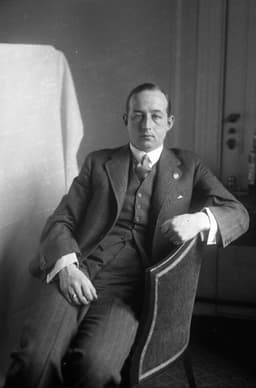
Engelbert Dollfuss
Politician · Modern
47.6Total

Leni Robredo
Politician · Modern
52.0Total
Basic Information
Born
1892
1965
Died
1934
—
Era
Modern
Modern
Nationality
Austria
Philippines
Occupation
Politician
Politician
Civilization
Western
Eastern
Score Comparison
Military (10%)
49.3
12.9
Political (20%)
45.1
68.0
Influence (20%)
51.0
57.2
Legacy (20%)
41.7
45.8
Leadership (15%)
55.3
74.0
Strategy (15%)
44.1
37.1
TOTAL
47.6
52.0
Engelbert Dollfuss — Complete Timeline
1933 AD
Establishment of the Austrofascist regimePolitical Action◆ Major
In March 1933, Dollfuss used a parliamentary procedural crisis to suspend the National Council and rule by emergency decree. He banned the Communist Party, the Nazi Party, and eventually the Social Democratic Party, establishing a one-party authoritarian state known as the Austrofascist regime.
AustrofascismAuthoritarianismDemocracy Suspended
Impact: nationaldestructive
1934 AD
Austrian Civil WarWar◆ Major
In February 1934, Dollfuss ordered the military and police to attack Social Democratic Party strongholds in Vienna and other cities. The conflict lasted several days, resulting in hundreds of deaths and the outlawing of the Social Democratic Party and its paramilitary organization, the Republikanischer Schutzbund.
Civil WarSocial DemocratsRepression
Impact: nationaldestructive
Assassination in the July PutschPolitical Action
On July 25, 1934, Austrian Nazis, with support from Germany, stormed the Federal Chancellery in Vienna. Dollfuss was shot and died from his wounds. The coup attempt failed to seize power, but Dollfuss's death marked a major escalation in Nazi pressure on Austria.
AssassinationNazi CoupAnschluss Prelude
Impact: nationaltragic
Leni Robredo — Complete Timeline
2016 AD
Elected Vice President of the PhilippinesPolitical Action◆ Major
Robredo was elected vice president under the Liberal Party ticket, running alongside Mar Roxas. She defeated Bongbong Marcos by a narrow margin of 263,000 votes. The election result was later challenged by Marcos in the Supreme Court.
ElectionVice PresidencyMarcos
Impact: nationalconstructive
Appointed Chair of the Housing and Urban Development Coordinating CouncilPolitical Action
President Rodrigo Duterte appointed Robredo as chair of the HUDCC. She launched the 'Pabahay' program to provide housing for informal settlers. However, she was later removed from the position in 2017 after criticizing Duterte's war on drugs.
HousingDuterteCabinet
Impact: nationalconstructive
2017 AD
Became the leader of the opposition against DutertePolitical Action◆ Major
After being removed from the cabinet, Robredo emerged as the most prominent critic of the Duterte administration. She condemned the drug war killings, human rights abuses, and authoritarian tendencies. She led the opposition coalition in the 2019 and 2022 elections.
OppositionHuman RightsDuterte
Impact: nationalconstructive
2022 AD
Ran for President in 2022Political Action◆ Major
Robredo ran for president as the standard-bearer of the opposition. She campaigned on good governance and unity but lost to Bongbong Marcos by a landslide, receiving only 28% of the vote. She conceded and returned to private life.
ElectionDefeatMarcos
Impact: nationaltragic
Expert Analysis
Origins
Engelbert Dollfuss was born on October 4, 1892, in Texing, Austria-Hungary, into a peasant family. He studied law at the University of Vienna and later became a farmer and secretary of the Lower Austrian Farmers' Association. His background shaped his conservative, Catholic worldview. Leni Robredo was born on April 23, 1965, in Naga City, Philippines, into a middle-class family. She studied economics at the University of the Philippines and later earned a law degree from the same university. She worked as a lawyer and social activist before entering politics.
Rise to Power
Dollfuss rose to prominence as a Christian Social Party politician, becoming Chancellor of Austria on May 20, 1932, at age 39. In March 1933, he exploited a parliamentary procedural crisis to suspend the National Council, ruling by emergency decree. He banned the Communist Party and the Nazi Party, consolidating power. Robredo entered politics after her husband, Jesse Robredo, a popular interior secretary, died in a plane crash in 2012. She ran for Congress in 2013 and won. In 2016, she was elected Vice President of the Philippines under the Liberal Party, defeating Bongbong Marcos by 263,473 votes. She became the first female vice president from Bicol Region.
Leadership & Governance
Dollfuss established the Austrofascist regime (Ständestaat) in 1933-1934, abolishing democracy and ruling by decree. He aligned with Mussolini's Italy and suppressed all opposition, including the Social Democrats in the Austrian Civil War of February 1934, where military and police attacked workers' housing, resulting in hundreds of deaths. Robredo, as vice president, was appointed by President Duterte as Chair of the Housing and Urban Development Coordinating Council (HUDCC). She launched the 'Pabahay' program for informal settlers. However, she was removed from the cabinet in 2017 after criticizing Duterte's war on drugs. She then became the leader of the opposition, advocating for human rights and democratic institutions.
Triumph & Tragedy
Dollfuss's greatest success was maintaining Austrian independence from Nazi Germany temporarily, but at the cost of democracy. His greatest failure was the brutal suppression of socialists and the establishment of a dictatorship that ultimately failed to prevent the Anschluss in 1938. He was assassinated on July 25, 1934, during the July Putsch by Austrian Nazis. Robredo's greatest success was her election as vice president despite a tight margin and her role as a unifying opposition figure. Her greatest failure was her loss in the 2022 presidential election to Bongbong Marcos, receiving 15.9 million votes (27.9%) against 31.6 million (58.8%). She also faced criticism for ineffective housing programs due to limited funding and political obstruction.
Character & Destiny
Dollfuss was a determined but authoritarian leader, willing to use force to preserve his vision of a Catholic, independent Austria. His decision to rule by decree and suppress dissent alienated many, leading to his assassination. Robredo is known for her integrity, resilience, and commitment to democratic values. Her character as a consensus-builder and her refusal to engage in negative campaigning contributed to her popularity but also to her electoral defeat against a well-funded and organized opponent. Historical assessments rate Dollfuss's political score at 45.1 and leadership at 55.3, while Robredo scores 68.0 in political and 74.0 in leadership, reflecting her strengths in democratic governance.
Legacy
Dollfuss's legacy is mixed: he is remembered as a dictator who destroyed Austrian democracy, but also as a martyr who resisted Nazism. His Austrofascist regime was short-lived, and his policies were reversed after the Anschluss. Robredo's legacy is still unfolding, but she is viewed as a symbol of democratic resistance in the Philippines. Her advocacy for good governance, human rights, and transparency has inspired a movement, though the political system remains dominated by dynasties and populism. Dollfuss's total score is 47.6, while Robredo's is 52.0, indicating a slight edge in overall impact.
Conclusion
Leni Robredo had a greater impact than Engelbert Dollfuss, despite the latter's dramatic role in interwar Europe. Robredo's scores in political (68.0 vs 45.1) and leadership (74.0 vs 55.3) significantly outweigh Dollfuss's. While Dollfuss's actions shaped Austria's path to the Anschluss, his regime was a regression to authoritarianism. Robredo, though not achieving the presidency, has been a force for democratic values and accountability in a fragile democracy. Her legacy as an opposition leader fighting against authoritarianism is more enduring and positive than Dollfuss's brief, violent rule.
Rankings
🥇
Leni RobredoLeader
Mil: 12.9Pol: 68.0Inf: 57.2
52.0
🥈
Engelbert Dollfuss
Mil: 49.3Pol: 45.1Inf: 51.0
47.6
+4.4 behind
How This Comparison Works
Algorithm
Each figure is scored on 6 dimensions (0—100 scale) based on structured historical data: Military (10%), Political (20%), Influence (20%), Legacy (20%), Leadership (15%), Strategy (15%). The weighted total produces the final ranking.
Data Sources
Scores are computed from structured sub-indicators in the database. Scale factors adjust for era (Ancient ×0.85, Modern ×1.0) and civilization size (Eastern ×1.05, Other ×0.80) to account for differences in population and military scale.
Maximum 3 Figures
Comparisons are limited to 2—3 figures to ensure readability and statistical meaningfulness.
Error Margins
±5 points per dimension — Sub-scores are derived from historical records with inherent uncertainty. Two figures within 5 points on a dimension should be considered roughly equivalent in that area.
Total Score Accuracy
±3 points overall — The weighted combination of 6 dimensions produces a total score with approximately ±3 points of uncertainty. Differences of less than 3 points are not statistically significant— the figures are effectively tied.
Known Limitations
- Historical records are incomplete and uneven across civilizations
- Figures from oral-tradition societies may be underrepresented
- Occupation labels can misclassify multi-role figures
- Scores measure capability and impact, not moral character
- Quantitative scoring is a comparison tool, not absolute truth
Capability Radar
Military (10%) — Battles & Warfare
Battles
27
15
Win Rate
33
17
Expansion
36
20
Political (20%) — Governance & Reform
Reform
45
55
Diplomacy
30
60
Economy
35
45
Influence (20%) — Cultural & Global Reach
Cultural
15
45
Global
20
40
Legacy (20%) — Historical Impact
Historical
30
40
Longevity
20
35
Leadership (15%) — Power & Stability
Tenure
40
40
Stability
10
50
Strategy (15%) — Tactics & Innovation
Strategy
40
23
Tactics
41
26
Reform
46
26
Similar Comparisons
Comments & Discussion
No comments yet. Be the first to share your thoughts!