Loading...
Engelbert Dollfuss vs Jenny Shipley
Jenny Shipley leads by 3.3 pts · 2 figures compared
…
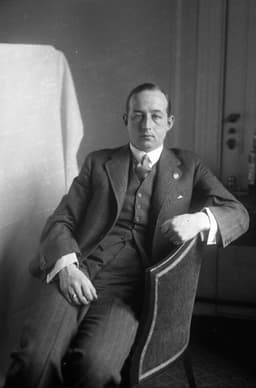
Engelbert Dollfuss
Politician · Modern
47.6Total

Jenny Shipley
Politician · Modern
50.9Total
Basic Information
Born
1892
1952
Died
1934
—
Era
Modern
Modern
Nationality
Austria
New Zealand
Occupation
Politician
Politician
Civilization
Western
Western
Score Comparison
Military (10%)
49.3
10.6
Political (20%)
45.1
68.0
Influence (20%)
51.0
55.7
Legacy (20%)
41.7
45.8
Leadership (15%)
55.3
65.7
Strategy (15%)
44.1
43.7
TOTAL
47.6
50.9
Engelbert Dollfuss — Complete Timeline
1933 AD
Establishment of the Austrofascist regimePolitical Action◆ Major
In March 1933, Dollfuss used a parliamentary procedural crisis to suspend the National Council and rule by emergency decree. He banned the Communist Party, the Nazi Party, and eventually the Social Democratic Party, establishing a one-party authoritarian state known as the Austrofascist regime.
AustrofascismAuthoritarianismDemocracy Suspended
Impact: nationaldestructive
1934 AD
Austrian Civil WarWar◆ Major
In February 1934, Dollfuss ordered the military and police to attack Social Democratic Party strongholds in Vienna and other cities. The conflict lasted several days, resulting in hundreds of deaths and the outlawing of the Social Democratic Party and its paramilitary organization, the Republikanischer Schutzbund.
Civil WarSocial DemocratsRepression
Impact: nationaldestructive
Assassination in the July PutschPolitical Action
On July 25, 1934, Austrian Nazis, with support from Germany, stormed the Federal Chancellery in Vienna. Dollfuss was shot and died from his wounds. The coup attempt failed to seize power, but Dollfuss's death marked a major escalation in Nazi pressure on Austria.
AssassinationNazi CoupAnschluss Prelude
Impact: nationaltragic
Jenny Shipley — Complete Timeline
1997 AD
1997 Appointment as Prime MinisterPolitical Action◆ Major
Shipley succeeded Jim Bolger as Prime Minister after a National Party leadership challenge. She became New Zealand's first female Prime Minister, serving until 1999.
First Female PMLeadershipNational Party
Impact: nationalconstructive
1998 AD
1998 Coalition BreakdownPolitical Action
Shipley's coalition with New Zealand First collapsed after disagreements over the sale of Wellington Airport. This led to a minority government and political instability.
CoalitionPolitical CrisisMinority Government
Impact: nationaldestructive
1999 AD
1999 Introduction of the Employment Relations ActReform
Shipley's government passed the Employment Relations Act, replacing the Employment Contracts Act. The new law promoted collective bargaining and union rights, reversing some earlier labour market deregulation.
Labour LawEmploymentUnion Rights
Impact: nationalconstructive
1999 General Election DefeatPolitical Action◆ Major
Shipley's National government lost the general election to Labour's Helen Clark. National won only 39 seats to Labour's 49, ending Shipley's tenure as Prime Minister.
Election DefeatLabour VictoryGovernment Change
Impact: national
Expert Analysis
Origins
Engelbert Dollfuss was born on October 4, 1892, in Texing, Austria, into a peasant family. He studied law at the University of Vienna and later served in World War I, where he was wounded. After the war, he became a farmer and joined the Christian Social Party, rising through agricultural organizations. Jenny Shipley was born on February 4, 1952, in Gore, New Zealand, to a Presbyterian minister and a teacher. She studied at the University of Canterbury, earning a teaching diploma, and worked as a teacher before entering politics. Her early political career was in the National Party, where she focused on social policy.
Rise to Power
Dollfuss became Chancellor of Austria in May 1932, leading a coalition government during the Great Depression. He exploited a parliamentary procedural crisis in March 1933 to rule by emergency decree, effectively suspending democracy. He banned the Communist Party and the Nazi Party, and in February 1934, he ordered the military to crush the Social Democrats in the Austrian Civil War, killing hundreds. Shipley entered Parliament in 1987 and held several ministerial portfolios, including Health and Social Welfare. In December 1997, she successfully challenged Prime Minister Jim Bolger for the National Party leadership, becoming New Zealand's first female Prime Minister. Her rise was marked by internal party maneuvering and a focus on economic reform.
Leadership & Governance
Dollfuss established the Austrofascist regime, modeled after Italian Fascism, with a single-party state and suppression of opposition. He abolished civil liberties, controlled the press, and aligned Austria with Mussolini's Italy. His governance was authoritarian and centralized, aiming to maintain Austrian independence from Nazi Germany. Shipley led a centre-right government that continued neoliberal economic reforms, including privatization and deregulation. She promoted a 'social investment' approach to welfare and passed the Employment Relations Act in 1999, which strengthened collective bargaining. Her leadership style was pragmatic and consensus-seeking, but she faced a fractious coalition with New Zealand First.
Triumph & Tragedy
Dollfuss's greatest success was maintaining Austrian sovereignty in the face of Nazi aggression, but his methods destroyed democracy. His assassination in the July Putsch of 1934, when Austrian Nazis stormed the Chancellery and shot him, became a symbol of his failure to secure long-term stability. Shipley's triumph was breaking the gender barrier as New Zealand's first female PM and passing significant labor reforms. Her tragedy was the collapse of her coalition in 1998 and her decisive loss to Helen Clark in the 1999 election, where National won only 39 seats to Labour's 49. Shipley scored 68.0 in political leadership, while Dollfuss scored 45.1.
Character & Destiny
Dollfuss was authoritarian and determined, willing to use force to achieve his goals. His small stature and combative nature earned him the nickname 'Millimetternich.' He underestimated the threat from within, particularly from the Nazis, leading to his assassination. Shipley was pragmatic and resilient, able to navigate party politics but struggled with coalition management. Her character was shaped by her rural upbringing and teaching background, which informed her focus on social policy. Historians note her as a transitional figure in New Zealand politics, paving the way for later female leaders.
Legacy
Dollfuss's legacy is deeply controversial: he is seen as a dictator who crushed Austrian democracy and paved the way for the Anschluss. His regime's authoritarianism discredited conservatism in Austria for decades. Shipley's legacy is more positive: she broke gender barriers, advanced labor rights, and continued neoliberal reforms. She is remembered as a competent but not transformative leader. In terms of scores, Shipley's total is 50.9, while Dollfuss's is 47.6, a gap of 3.3 points. Shipley's political and leadership scores are higher, while Dollfuss has a slight edge in military and strategy.
Conclusion
While both leaders faced crises, Shipley's impact on New Zealand was more constructive and lasting. She advanced democratic institutions and gender equality, whereas Dollfuss dismantled democracy and left a legacy of repression. Shipley's higher total score of 50.9 reflects her greater effectiveness in governance and political longevity, despite her electoral defeat. Dollfuss's authoritarianism and assassination limit his positive legacy. Therefore, Jenny Shipley had the greater impact on her nation's development.
Rankings
🥇
Jenny ShipleyLeader
Mil: 10.6Pol: 68.0Inf: 55.7
50.9
🥈
Engelbert Dollfuss
Mil: 49.3Pol: 45.1Inf: 51.0
47.6
+3.3 behind
How This Comparison Works
Algorithm
Each figure is scored on 6 dimensions (0—100 scale) based on structured historical data: Military (10%), Political (20%), Influence (20%), Legacy (20%), Leadership (15%), Strategy (15%). The weighted total produces the final ranking.
Data Sources
Scores are computed from structured sub-indicators in the database. Scale factors adjust for era (Ancient ×0.85, Modern ×1.0) and civilization size (Eastern ×1.05, Other ×0.80) to account for differences in population and military scale.
Maximum 3 Figures
Comparisons are limited to 2—3 figures to ensure readability and statistical meaningfulness.
Error Margins
±5 points per dimension — Sub-scores are derived from historical records with inherent uncertainty. Two figures within 5 points on a dimension should be considered roughly equivalent in that area.
Total Score Accuracy
±3 points overall — The weighted combination of 6 dimensions produces a total score with approximately ±3 points of uncertainty. Differences of less than 3 points are not statistically significant— the figures are effectively tied.
Known Limitations
- Historical records are incomplete and uneven across civilizations
- Figures from oral-tradition societies may be underrepresented
- Occupation labels can misclassify multi-role figures
- Scores measure capability and impact, not moral character
- Quantitative scoring is a comparison tool, not absolute truth
Capability Radar
Military (10%) — Battles & Warfare
Battles
27
24
Win Rate
33
24
Expansion
36
27
Political (20%) — Governance & Reform
Reform
45
50
Diplomacy
30
45
Economy
35
40
Influence (20%) — Cultural & Global Reach
Cultural
15
40
Global
20
35
Legacy (20%) — Historical Impact
Historical
30
45
Longevity
20
30
Leadership (15%) — Power & Stability
Tenure
40
30
Stability
10
35
Strategy (15%) — Tactics & Innovation
Strategy
40
29
Tactics
41
35
Reform
46
36
Similar Comparisons
Comments & Discussion
No comments yet. Be the first to share your thoughts!