Loading...
This comparison has not been analyzed yet.
One-time AI generation (~1 minute). Scores and timeline are already available below.
Engelbert Dollfuss vs Glafcos Clerides
Glafcos Clerides leads by 7.4 pts · 2 figures compared
…
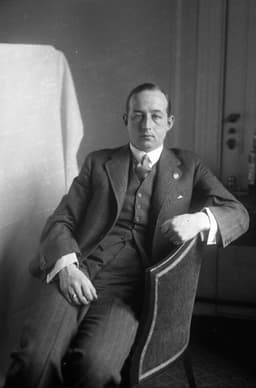
Engelbert Dollfuss
Politician · Modern
47.6Total

Glafcos Clerides
Politician · Modern
55.0Total
Basic Information
Born
1892
1919
Died
1934
2013
Era
Modern
Modern
Nationality
Austria
Cyprus
Occupation
Politician
Politician
Civilization
Western
Western
Score Comparison
Military (10%)
49.3
50.0
Political (20%)
45.1
65.0
Influence (20%)
51.0
55.7
Legacy (20%)
41.7
45.0
Leadership (15%)
55.3
72.0
Strategy (15%)
44.1
42.8
TOTAL
47.6
55.0
Engelbert Dollfuss — Complete Timeline
1933 AD
Establishment of the Austrofascist regimePolitical Action◆ Major
In March 1933, Dollfuss used a parliamentary procedural crisis to suspend the National Council and rule by emergency decree. He banned the Communist Party, the Nazi Party, and eventually the Social Democratic Party, establishing a one-party authoritarian state known as the Austrofascist regime.
AustrofascismAuthoritarianismDemocracy Suspended
Impact: nationaldestructive
1934 AD
Austrian Civil WarWar◆ Major
In February 1934, Dollfuss ordered the military and police to attack Social Democratic Party strongholds in Vienna and other cities. The conflict lasted several days, resulting in hundreds of deaths and the outlawing of the Social Democratic Party and its paramilitary organization, the Republikanischer Schutzbund.
Civil WarSocial DemocratsRepression
Impact: nationaldestructive
Assassination in the July PutschPolitical Action
On July 25, 1934, Austrian Nazis, with support from Germany, stormed the Federal Chancellery in Vienna. Dollfuss was shot and died from his wounds. The coup attempt failed to seize power, but Dollfuss's death marked a major escalation in Nazi pressure on Austria.
AssassinationNazi CoupAnschluss Prelude
Impact: nationaltragic
Glafcos Clerides — Complete Timeline
1993 AD
Elected President of CyprusPolitical Action◆ Major
Glafcos Clerides was elected President of Cyprus, defeating incumbent George Vassiliou. His election marked a shift in Cypriot politics, with Clerides focusing on reunification talks and European Union accession.
ElectionLeadershipCyprus
Impact: nationalconstructive
1998 AD
Initiated EU accession negotiationsPolitical Action◆ Major
Clerides' government formally began accession negotiations with the European Union, a key goal of his presidency. The process aimed to integrate Cyprus into the EU, providing economic benefits and a framework for reunification.
EU AccessionDiplomacyCyprus
Impact: regionalconstructive
2002 AD
Participated in UN-led reunification talksPolitical Action◆ Major
Clerides engaged in UN-sponsored negotiations with Turkish Cypriot leader Rauf Denkta
ReunificationUNAnnan Plan
Impact: nationalconstructive
2003 AD
Signed Cyprus's EU accession treatyPolitical Action
Clerides signed the Treaty of Accession to the European Union in Athens, securing Cyprus's entry into the EU. The treaty was signed on behalf of the entire island, though the Turkish Cypriot north was not under his control.
EU AccessionTreatyCyprus
Impact: regionalconstructive
Lost re-election bidPolitical Action◆ Major
Clerides was defeated in the presidential election by Tassos Papadopoulos, who opposed the Annan Plan. His loss ended his presidency, but he remained active in politics as a elder statesman until his death in 2013.
ElectionTransitionCyprus
Impact: national
This comparison has not been analyzed yet.
One-time AI generation (~1 minute). Scores and timeline are already available below.
Rankings
🥇
Glafcos CleridesLeader
Mil: 50.0Pol: 65.0Inf: 55.7
55.0
🥈
Engelbert Dollfuss
Mil: 49.3Pol: 45.1Inf: 51.0
47.6
+7.4 behind
How This Comparison Works
Algorithm
Each figure is scored on 6 dimensions (0—100 scale) based on structured historical data: Military (10%), Political (20%), Influence (20%), Legacy (20%), Leadership (15%), Strategy (15%). The weighted total produces the final ranking.
Data Sources
Scores are computed from structured sub-indicators in the database. Scale factors adjust for era (Ancient ×0.85, Modern ×1.0) and civilization size (Eastern ×1.05, Other ×0.80) to account for differences in population and military scale.
Maximum 3 Figures
Comparisons are limited to 2—3 figures to ensure readability and statistical meaningfulness.
Error Margins
±5 points per dimension — Sub-scores are derived from historical records with inherent uncertainty. Two figures within 5 points on a dimension should be considered roughly equivalent in that area.
Total Score Accuracy
±3 points overall — The weighted combination of 6 dimensions produces a total score with approximately ±3 points of uncertainty. Differences of less than 3 points are not statistically significant— the figures are effectively tied.
Known Limitations
- Historical records are incomplete and uneven across civilizations
- Figures from oral-tradition societies may be underrepresented
- Occupation labels can misclassify multi-role figures
- Scores measure capability and impact, not moral character
- Quantitative scoring is a comparison tool, not absolute truth
Capability Radar
Military (10%) — Battles & Warfare
Battles
27
27
Win Rate
33
29
Expansion
36
32
Political (20%) — Governance & Reform
Reform
45
60
Diplomacy
30
75
Economy
35
70
Influence (20%) — Cultural & Global Reach
Cultural
15
30
Global
20
45
Legacy (20%) — Historical Impact
Historical
30
40
Longevity
20
30
Leadership (15%) — Power & Stability
Tenure
40
65
Stability
10
55
Strategy (15%) — Tactics & Innovation
Strategy
40
39
Tactics
41
41
Reform
46
44
Similar Comparisons
Comments & Discussion
No comments yet. Be the first to share your thoughts!