Loading...
Empress Dowager Cixi vs Wu Zetian
Wu Zetian leads by 15.0 pts · 2 figures compared
…
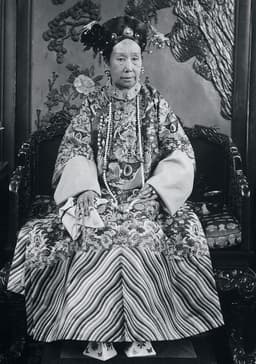
Empress Dowager Cixi
Politician · Modern
55.0Total

Wu Zetian
Emperor · Medieval
70.0Total
Basic Information
Born
1835
624
Died
1908
705
Era
Modern
Medieval
Nationality
China
China
Occupation
Politician
Emperor
Civilization
Eastern
Eastern
Score Comparison
Military (10%)
25.9
60.0
Political (20%)
53.8
62.7
Influence (20%)
58.3
65.0
Legacy (20%)
52.0
80.0
Leadership (15%)
72.0
78.0
Strategy (15%)
60.0
66.3
TOTAL
55.0
70.0
Empress Dowager Cixi — Complete Timeline
1861 AD
Self-Strengthening MovementReform◆ Major
Cixi supported the Self-Strengthening Movement, which modernized China's military and infrastructure. Arsenals, shipyards, and railways were built, and the Tongwen Guan language school was established. However, the movement avoided political reform, limiting its effectiveness.
Qing dynastyModernizationReform
Impact: nationalconstructive
Xinyou CoupPolitical Action
Cixi, with Prince Gong, staged a coup against the eight regents appointed by the dying Xianfeng Emperor. She had the regents arrested and executed, establishing herself as co-regent for the young Tongzhi Emperor. This began her effective control over the Qing government.
Qing dynastyCoupRegency
Impact: national
1898 AD
Hundred Days' Reform CoupPolitical Action◆ Major
Cixi staged a coup to end the Hundred Days' Reform, a series of modernization edicts by the Guangxu Emperor. She imprisoned the emperor, executed six reform leaders, and rescinded most reforms. This reversed political liberalization and strengthened conservative forces.
Qing dynastyReform suppressionCoup
Impact: nationaldestructive
1900 AD
Boxer RebellionWar◆ Major
Cixi declared war on eight foreign powers after the Boxers besieged foreign legations in Beijing. The Eight-Nation Alliance invaded, defeated Qing forces, and occupied Beijing. Cixi fled to Xi'an. The resulting Boxer Protocol imposed heavy reparations and further weakened the Qing.
Qing dynastyForeign interventionWar
Impact: globaldestructive
1901 AD
Late Qing ReformsReform◆ Major
After the Boxer Rebellion, Cixi initiated the Late Qing Reforms, including abolition of the civil service examination, establishment of modern schools, and military modernization. These reforms aimed to strengthen the dynasty but came too late to prevent its collapse.
Qing dynastyModernizationReform
Impact: nationalconstructive
Wu Zetian — Complete Timeline
655 AD
Became Empress ConsortPolitical Action◆ Major
Wu Zetian was elevated from concubine to empress consort of Emperor Gaozong of Tang in 655. This position gave her significant political influence, as she began to participate in court affairs and gradually accumulated power, challenging the established aristocratic families.
Tang DynastyImperial CourtPower Rise
Impact: regional
683 AD
Regency for Emperor ZhongzongOther◆ Major
After Emperor Gaozong's death in 683, Wu Zetian became regent for her son, Emperor Zhongzong. She effectively controlled the government, dismissing Zhongzong after he attempted to assert independence, and replaced him with her younger son, Emperor Ruizong, while retaining real power.
Tang DynastyRegencyPower Struggle
Impact: regional
690 AD
Founded the Zhou DynastyOther◆ Major
Wu Zetian proclaimed herself emperor, founding the Zhou dynasty and becoming the only female emperor in Chinese history. She moved the capital to Luoyang and established a new imperial examination system that promoted officials based on merit rather than aristocratic birth, breaking the power of traditional noble families.
Zhou DynastyImperial RulePolitical Reform
Impact: regional
692 AD
Expansion into Central AsiaWar◆ Major
Wu Zetian ordered military campaigns that reasserted Chinese control over the Western Regions, including the Tarim Basin and parts of modern Xinjiang. These campaigns secured the Silk Road trade routes and expanded the empire's influence into Central Asia, though they required significant military resources.
Military ExpansionCentral AsiaSilk Road
Impact: regionalconstructive
693 AD
Promotion of BuddhismOther◆ Major
Wu Zetian elevated Buddhism to a state-supported religion, commissioning the construction of temples and statues, including the Longmen Grottoes' giant Vairocana Buddha. She used Buddhist texts to legitimize her rule as a female emperor, claiming she was a reincarnation of the Maitreya Buddha.
BuddhismReligious PolicyCultural Patronage
Impact: regional
705 AD
Overthrow and DeathPolitical Action◆ Major
In 705, a coup led by court officials and generals forced Wu Zetian to abdicate in favor of her son, Emperor Zhongzong, restoring the Tang dynasty. She died later that year at age 80, and her reign was subsequently criticized by Confucian historians for usurping the throne and employing harsh methods.
Tang DynastyCoupAbdication
Impact: regionaldestructive
Expert Analysis
# 深度对比分析:慈禧太后(Empress Dowager Cixi)与武则天(Wu Zetian)
1. 综合排名与一句话结论
**排名:** 1. 武则天;2. 慈禧太后。
- **武则天**:中国历史上唯一女皇帝,以雄才大略开创武周王朝,军事与战略能力卓越,但晚年因权力交接引发动荡。
- **慈禧太后**:清朝晚期实际统治者,凭借权术稳固统治近半个世纪,但治国战略短视,缺乏长远眼光,导致国家走向衰败。
2. 核心信息对比表
| 项目 | 慈禧太后 | 武则天 |
|------|----------|--------|
| **全名** | 叶赫那拉·杏贞(慈禧) | 武曌(则天) |
| **生卒年** | 1835–1908 | 624–705 |
| **国家/地区** | 中国(清朝) | 中国(唐朝/武周) |
| **所属时代** | 近代(19–20世纪) | 中世纪(7–8世纪) |
| **政治身份** | 太后、摄政、实际统治者 | 皇后、皇太后、女皇帝 |
| **核心意识形态** | 维护满清皇权、传统礼教 | 打破男尊女卑、强化中央集权 |
| **主要敌人与盟友** | 敌人:光绪帝、维新派、列强;盟友:荣禄、李鸿章(实用主义) | 敌人:长孙无忌、李唐宗室;盟友:狄仁杰、许敬宗(改革派) |
| **代表性事件** | 辛酉政变(1861)、镇压戊戌变法(1898)、义和团运动 | 废唐立周(690)、推行科举、北御突厥 |
3. 成长背景对比
- **慈禧太后**:出身满洲镶蓝旗低级官员家庭,17岁入宫为兰贵人。早年生子载淳(同治帝),母以子贵。她于咸丰帝去世后联合恭亲王奕訢发动辛酉政变,在宫中学会权术与平衡各方势力。
- **武则天**:出身山西文水富商之家,14岁入宫为唐太宗才人。太宗去世后入感业寺为尼,被高宗李治接回。她历经两代帝王的宫廷斗争,深刻理解权力本质与人心操控。
**塑造政治性格的关键**:慈禧在险恶的宫廷环境中习得“以静制动”的阴鸷手段;武则天则在两次宫斗中练就“刚柔并济”的果敢与谋略。
4. 权力崛起路径
- **慈禧**:通过辛酉政变(1861)铲除肃顺等顾命八大臣,与慈安太后垂帘听政。她利用清朝“母后临朝”传统,并依靠汉族官僚(如曾国藩)维持统治,未经历战争或革命。
- **武则天**:先为高宗皇后参与朝政(655年“废王立武”),高宗病重后临朝称制,690年废唐睿宗自立,建立武周。她通过清除李唐宗室、改革科举选拔亲信,依靠佛教舆论和酷吏制度巩固权力。
**关键差异**:慈禧走“摄政”路径,始终以太后身份操控傀儡皇帝;武则天直接称帝,打破千年礼法。
5. 治国能力横向对比(10分制)
| 维度 | 慈禧评分 | 武则天评分 | 最高分原因 | 最低分原因 |
|------|----------|------------|------------|------------|
| **军事能力** | 3 | 9 | 武则天北御突厥、平定契丹,维护疆域;慈禧不懂军事,甲午战败、八国联军侵华 | 慈禧依赖汉族将领,自身无战略眼光 |
| **外交能力** | 4 | 7 | 武则天善用和亲与册封;慈禧在列强面前反复摇摆(先战后退) | 慈禧主导的“以夷制夷”失败 |
| **内政能力** | 7 | 8 | 均能维持朝局稳定,但慈禧镇压维新、迫害改革派 | 武则天推行科举、破格用人,但酷吏政治弊端明显 |
| **经济管理** | 5 | 7 | 武则天减轻赋税、鼓励农业;慈禧大兴土木、挪用海军军费 | 慈禧致国家财政崩溃 |
| **政治控制** | 9 | 9 | 两人都善于权术,慈禧平衡满汉,武则天驾驭酷吏与大臣 | 无(均极强) |
| **演讲与宣传** | 6 | 8 | 武则天利用佛教谶纬造势,慈禧通过诏书维持权威 | 慈禧宣传能力较弱 |
| **危机处理** | 5 | 8 | 武则天能果断镇压叛乱(如徐敬业);慈禧在义和团事件中决策失误 | 慈禧盲目利用义和团引发灾难 |
| **长期战略** | 3 | 9 | 武则天延续唐朝制度,为开元盛世奠基;慈禧只求自保,无国家长远规划 | 慈禧导致清朝加速灭亡 |
**总分:慈禧42分,武则天65分。**
6. 性格与领导风格
- **慈禧**:极端现实主义+强人型。精于权谋,用人以“忠诚”与“可利用”为标准(如重用李鸿章但限制其权力)。决策犹豫反复(如戊戌变法先支持后镇压)。风险偏好低,对反对者诛杀或流放。
- **武则天**:革命型+强人型。敢于打破陈规,创立“则天文字”,亲自殿试。用人不拘一格(提拔狄仁杰、姚崇)。决策果断,敢于冒险(称帝)。对反对者手段狠辣(杀太子李贤、逼死长孙无忌)。
7. 关键历史决策对比
**【慈禧 — 镇压戊戌变法】**
背景:1898年光绪帝推行维新。做法:发动政变囚禁光绪,废新政。结果:保守派复辟,维新派被屠杀。长期影响:错失改革窗口,激化社会矛盾。争议:支持者认为维护了清朝稳定;批评者认为导致革命爆发。
**【慈禧 — 利用义和团宣战十一国】**
背景:1900年义和团反洋。做法:支持义和团向十一国宣战。结果:八国联军攻占北京,签订《辛丑条约》。长期影响:清朝沦为半殖民地,彻底丧失主权。争议:有观点认为是抵抗外侮,但实际为愚昧冒险。
**【武则天 — 废唐立周】**
背景:高宗去世后李唐宗室威胁。做法:690年自称“圣神皇帝”,改国号周。结果:建立武周政权,稳定统治。长期影响:打破男尊女卑,但引发武李之争。争议:支持者赞其开创性,批评者指责篡位。
**【武则天 — 推行科举制度】**
背景:关陇集团垄断官职。做法:开创殿试、武举,提高进士地位。结果:寒门子弟崛起,打破士族门阀。长期影响:科举成为古代中国选官核心制度。争议:统一评价极高。
**【武则天 — 设酷吏政治】**
背景:打压反对派。做法:任用索元礼、来俊臣等酷吏,鼓励告密。结果:清除大量政敌,但制造冤狱。长期影响:削弱官僚体系信任。争议:被诟病为暴政,但迅速终结。
8. 最大成功与最大失败
- **慈禧成功**:通过权术维持清朝统治48年,在列强环伺下未让列强直接瓜分中国(虽然已部分沦为半殖民地)。
- **慈禧失败**:甲午战争惨败、义和团导致《辛丑条约》,使国家主权彻底丧失,被视为清末衰亡的罪魁之一。
- **武则天成功**:开创武周王朝,延续贞观遗风,为开元盛世奠定政治与人才基础,推动科举与女性地位。
- **武则天失败**:晚年被迫退位,武周政权迅速终结;酷吏政治与奢靡寺庙建设消耗国力。
9. 历史评价争议
- **本国评价**:慈禧在民国至新中国初期被严重批判,近年来部分学者重新评价其维护国家统一的努力;武则天历来褒贬不一,正史多批其“牝鸡司晨”,现代则肯定其政绩。
- **国际评价**:西方学者常称慈禧为“老佛爷”,视为保守封闭的象征;武则天则被比作“中国的凯瑟琳大帝”,关注其统治成就。
- **支持者观点**:慈禧支持者认为其在乱世中勉强支撑,防止了早期亡国;武则天支持者认为她是杰出女政治家,功大于过。
- **批评者观点**:慈禧被指昏庸自私,加速清朝灭亡;武则天被抨击为残忍夺权,宫廷腐败。
10. 最终历史地位排名
- **为什么会被历史记住?** 慈禧因“清末衰亡的象征”被铭记,她是传统帝制走向崩溃的缩影;武则天因“唯一女皇帝”这一空前绝后的身份永载史册。
- **谁影响最深远?** 武则天。她推动的科举改革影响了中国千年,其女性称帝的挑战性至今仍是历史学热点;慈禧的影响则局限于清末一段屈辱史。
- **如果互换时代会怎样?** 若武则天生于晚清,她可能以强硬手段推行近代化改革,未必能避免列强入侵但或可延缓灭亡;若慈禧生于唐初,她或可凭借权术成为类似的长孙皇后,但绝无称帝魄力。武则天更适合开拓进取的时代,慈禧更适合守成糜烂的王朝。
Rankings
🥇
Wu ZetianLeader
Mil: 60.0Pol: 62.7Inf: 65.0
70.0
🥈
Empress Dowager Cixi
Mil: 25.9Pol: 53.8Inf: 58.3
55.0
+15.0 behind
How This Comparison Works
Algorithm
Each figure is scored on 6 dimensions (0—100 scale) based on structured historical data: Military (10%), Political (20%), Influence (20%), Legacy (20%), Leadership (15%), Strategy (15%). The weighted total produces the final ranking.
Data Sources
Scores are computed from structured sub-indicators in the database. Scale factors adjust for era (Ancient ×0.85, Modern ×1.0) and civilization size (Eastern ×1.05, Other ×0.80) to account for differences in population and military scale.
Maximum 3 Figures
Comparisons are limited to 2—3 figures to ensure readability and statistical meaningfulness.
Error Margins
±5 points per dimension — Sub-scores are derived from historical records with inherent uncertainty. Two figures within 5 points on a dimension should be considered roughly equivalent in that area.
Total Score Accuracy
±3 points overall — The weighted combination of 6 dimensions produces a total score with approximately ±3 points of uncertainty. Differences of less than 3 points are not statistically significant— the figures are effectively tied.
Known Limitations
- Historical records are incomplete and uneven across civilizations
- Figures from oral-tradition societies may be underrepresented
- Occupation labels can misclassify multi-role figures
- Scores measure capability and impact, not moral character
- Quantitative scoring is a comparison tool, not absolute truth
Capability Radar
Military (10%) — Battles & Warfare
Battles
30
65
Win Rate
25
70
Expansion
15
75
Political (20%) — Governance & Reform
Reform
65
85
Diplomacy
60
80
Economy
50
85
Influence (20%) — Cultural & Global Reach
Cultural
60
85
Global
60
70
Legacy (20%) — Historical Impact
Historical
75
90
Longevity
55
85
Leadership (15%) — Power & Stability
Tenure
85
90
Stability
40
75
Strategy (15%) — Tactics & Innovation
Strategy
55
75
Tactics
40
60
Reform
70
80
Similar Comparisons
Comments & Discussion
Historian7716/16/2026
评分体系有问题。武则天政治80分,慈禧67.2分,但慈禧实际控制清朝48年,官僚体系未崩,而武则天晚年神龙政变被迫退位,政治控制力明显不足。另外军事分差太大:慈禧3分,武则天9分?慈禧主导的收复新疆(左宗棠)是19世纪中国唯一成功的外战,难道不算她的军事决策?建议重新加权:政治控制权重应翻倍,军事权重减半。
ClassicalTextsReader6/16/2026
The Sima Guang in Zizhi Tongjian presents Wu Zetian as a tyrant who ‘usurped the throne and murdered her own children.’ Yet the same source admits she ‘chose officials by merit and reduced corvée labor.’ Cixi’s Grand Council memorials show her micromanaging tax policy but ignoring naval modernization. Primary sources reveal Wu outmaneuvered Confucian historians who wrote her story, while Cixi’s own letters expose her strategic paralysis during the Boxer crisis. Context is everything—Wu ruled a rising empire, Cixi a declining one.
DataFracture6/16/2026
Cixi’s political score of 67.2 vs. Wu’s 80 is a joke. How do you quantify ‘political control’? Cixi outmaneuvered eight regents, managed a multinational court, and kept the Qing intact for 47 years during Western imperialism. Wu’s score relies on ‘breaking gender norms’—a subjective metric. And ‘crisis handling’ gives Wu an 8 and Cixi a 5? Cixi survived the Taiping Rebellion, the Opium Wars, and the Boxer Protocol. Wu faced one rebellion (Xu Jingye) and crushed it with overwhelming force. The methodology is biased toward showy reform, not survival.
Historian4806/16/2026
如果把武则天比作伊丽莎白一世(巩固王权、文化繁荣),那慈禧更像维多利亚女王晚期的首相索尔兹伯里——守成有余,开拓不足。但中式史观更看重‘创业’而非‘守成’,所以武则天总分高。然而西方评分体系把‘长期战略’给武则天9分、慈禧3分,完全忽略了慈禧在列强环伺下维持主权(如新疆、东北)的务实外交。建议加入‘时代难度系数’:慈禧面对的挑战(工业革命列强)比武则天(突厥、吐蕃)复杂得多。
SkepticalHistorian6/16/2026
This ranking is too kind to both, but for opposite reasons. Wu Zetian’s military score of 9/10 is inflated—she inherited a Tang military machine built by Li Shimin. Her campaigns against the Turks were defensive, not expansionist. Meanwhile, Cixi’s low military score ignores that she maintained territorial integrity against European powers far more advanced than any foe Wu faced. The colonial lens matters: Cixi fought industrial empires; Wu fought steppe nomads. Comparing them without this context is anachronistic.
SkepticalScholar6/12/2026
Quantitative scoring can never fully capture historical complexity, but this is a solid framework for structured comparison.
历史迷6/12/2026
Empress Dowager Cixi和Wu Zetian都是各自时代的巨人。数据化的比较提供了一个很好的讨论起点。
HistoryBuff6/12/2026
Fascinating comparison between Empress Dowager Cixi and Wu Zetian. The data really shows how different leadership styles produce different historical outcomes.