Loading...
Abraham Lincoln vs Wu Zetian
Abraham Lincoln leads by 7.5 pts · 2 figures compared
…
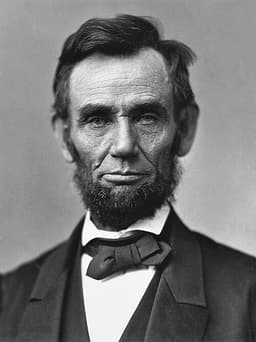
Abraham Lincoln
Politician · Modern
77.5Total

Wu Zetian
Emperor · Medieval
70.0Total
Basic Information
Born
1809
624
Died
1865
705
Era
Modern
Medieval
Nationality
United States
China
Occupation
Politician
Emperor
Civilization
Western
Eastern
Score Comparison
Military (10%)
50.0
60.0
Political (20%)
88.0
62.7
Influence (20%)
80.0
65.0
Legacy (20%)
82.0
80.0
Leadership (15%)
85.0
78.0
Strategy (15%)
60.0
66.3
TOTAL
77.5
70.0
Abraham Lincoln — Complete Timeline
1861 AD
Suspension of Habeas CorpusPolitical Action◆ Major
Lincoln suspended the writ of habeas corpus in parts of the Union, allowing the military to arrest and detain suspected Confederate sympathizers without trial. This action was controversial and challenged civil liberties during wartime.
Habeas CorpusCivil LibertiesCivil War
Impact: nationaldestructive
1862 AD
Signing of the Homestead ActPolitical Action◆ Major
Lincoln signed the Homestead Act, granting 160 acres of public land to settlers for a small fee. This encouraged westward expansion and agricultural development, but also displaced Native American tribes.
Homestead ActWestward ExpansionLand Policy
Impact: nationalconstructive
1863 AD
Emancipation ProclamationPolitical Action
Lincoln issued the Emancipation Proclamation, declaring slaves in Confederate states free. This shifted the Civil War's focus to ending slavery and allowed African Americans to join the Union Army.
EmancipationCivil WarSlavery
Impact: globalprogressive
Gettysburg AddressCultural◆ Major
Lincoln delivered the Gettysburg Address at the dedication of the Soldiers' National Cemetery. The speech redefined the Civil War as a struggle for national unity and equality, and became one of the most famous speeches in US history.
Gettysburg AddressCivil WarOratory
Impact: nationalconstructive
1865 AD
Assassination by John Wilkes BoothOther
Lincoln was shot by John Wilkes Booth at Ford's Theatre in Washington, D.C., and died the next day. His assassination occurred just days after the Civil War ended, plunging the nation into mourning and affecting Reconstruction.
AssassinationCivil WarReconstruction
Impact: nationaltragic
Wu Zetian — Complete Timeline
655 AD
Became Empress ConsortPolitical Action◆ Major
Wu Zetian was elevated from concubine to empress consort of Emperor Gaozong of Tang in 655. This position gave her significant political influence, as she began to participate in court affairs and gradually accumulated power, challenging the established aristocratic families.
Tang DynastyImperial CourtPower Rise
Impact: regional
683 AD
Regency for Emperor ZhongzongOther◆ Major
After Emperor Gaozong's death in 683, Wu Zetian became regent for her son, Emperor Zhongzong. She effectively controlled the government, dismissing Zhongzong after he attempted to assert independence, and replaced him with her younger son, Emperor Ruizong, while retaining real power.
Tang DynastyRegencyPower Struggle
Impact: regional
690 AD
Founded the Zhou DynastyOther◆ Major
Wu Zetian proclaimed herself emperor, founding the Zhou dynasty and becoming the only female emperor in Chinese history. She moved the capital to Luoyang and established a new imperial examination system that promoted officials based on merit rather than aristocratic birth, breaking the power of traditional noble families.
Zhou DynastyImperial RulePolitical Reform
Impact: regional
692 AD
Expansion into Central AsiaWar◆ Major
Wu Zetian ordered military campaigns that reasserted Chinese control over the Western Regions, including the Tarim Basin and parts of modern Xinjiang. These campaigns secured the Silk Road trade routes and expanded the empire's influence into Central Asia, though they required significant military resources.
Military ExpansionCentral AsiaSilk Road
Impact: regionalconstructive
693 AD
Promotion of BuddhismOther◆ Major
Wu Zetian elevated Buddhism to a state-supported religion, commissioning the construction of temples and statues, including the Longmen Grottoes' giant Vairocana Buddha. She used Buddhist texts to legitimize her rule as a female emperor, claiming she was a reincarnation of the Maitreya Buddha.
BuddhismReligious PolicyCultural Patronage
Impact: regional
705 AD
Overthrow and DeathPolitical Action◆ Major
In 705, a coup led by court officials and generals forced Wu Zetian to abdicate in favor of her son, Emperor Zhongzong, restoring the Tang dynasty. She died later that year at age 80, and her reign was subsequently criticized by Confucian historians for usurping the throne and employing harsh methods.
Tang DynastyCoupAbdication
Impact: regionaldestructive
Expert Analysis
Wu Zetian vs Abraham Lincoln
# The Throne and the Constitution
On a winter morning in 1863, Abraham Lincoln stood on a battlefield in Pennsylvania and spoke for three minutes. The crowd barely applauded. That speech, the Gettysburg Address, would redefine a nation’s purpose. A thousand years earlier and half a world away, Wu Zetian sat on the Dragon Throne in Luoyang, the only woman in four millennia of Chinese imperial history to rule as emperor in her own name. One preserved a union; the other created a dynasty. Both shattered every expectation of their age—yet their paths, their methods, and their fates could not have been more different. Why?
Origins
Wu Zetian was born in 624, the daughter of a timber merchant who had risen to minor official rank. In Tang Dynasty China, a woman’s fate was marriage. At fourteen, she entered the imperial harem as a low-ranking concubine of Emperor Taizong. She learned early that survival required cunning, patience, and an unflinching willingness to act. Her world was one of rigid hierarchy, Confucian propriety, and the constant threat of execution for a misplaced word.
Abraham Lincoln was born in 1809 in a one-room log cabin in Kentucky. His mother died when he was nine. He educated himself by firelight with borrowed books. His world was the American frontier—democratic, chaotic, and obsessed with the idea that a man could rise by his own effort. Where Wu Zetian learned to read the shifting moods of emperors, Lincoln learned to read Blackstone’s Commentaries and the Bible. One mastered a court; the other mastered a jury.
Rise to Power
Wu Zetian’s ascent was a masterpiece of calculated risk. After Taizong’s death in 649, she was sent to a Buddhist convent—the traditional fate for childless imperial widows. But she had cultivated a secret relationship with his son, the new Emperor Gaozong. He brought her back. Within years, she had eliminated her rivals, including the empress, and by 660 she was ruling through her increasingly ill husband. In 690, after decades of maneuvering, she declared herself emperor, founding her own Zhou dynasty. She had murdered her own infant daughter to frame the empress, historians record—though the truth remains contested. What is certain is that she stopped at nothing.
Lincoln’s rise was public, legal, and shaped by the ballot box. He served in the Illinois legislature, then one term in Congress, then lost two Senate races. His 1858 debates with Stephen Douglas made him a national figure, not through palace intrigue but through arguments about slavery and the Constitution. In 1860, he won the presidency with less than forty percent of the popular vote—a fractured opposition handed him the office. His path was not cunning but endurance, not manipulation but persuasion.
Leadership & Governance
As emperor, Wu Zetian governed with an iron hand and a shrewd eye. She expanded the civil service examination system, promoting scholars from common families over hereditary aristocrats. She patronized Buddhism to legitimize her rule, commissioning vast cave temples at Longmen. She conquered new territories in Central Asia and Korea, pushing the Tang frontier to its greatest extent. But she also created a secret police network that tortured and executed thousands of perceived enemies. Her political score of 80.0 reflects both her institutional reforms and her ruthless consolidation of power.
Lincoln governed during the greatest crisis in American history. His political genius lay not in eliminating enemies but in holding together a coalition of warring factions. He appointed rivals to his cabinet—Seward, Chase, Stanton—men who had run against him. When he suspended habeas corpus in 1861, he did so as a wartime necessity, not a permanent restructuring of power. His Emancipation Proclamation in 1863 was a military measure that became a moral watershed. His leadership score of 85.0 matches Wu Zetian’s 82.5, but they earned it in opposite ways: she through fear, he through persuasion.
Triumph & Tragedy
Wu Zetian’s greatest triumph was her longevity. She ruled for fifteen years as emperor, nearly fifty as the power behind the throne. She died in her bed at age eighty—a remarkable feat in a world where deposed rulers were routinely strangled. Her tragedy was that her dynasty died with her. Within months of her death in 705, a coup restored the Tang dynasty. Her son, Emperor Zhongzong, took the throne. Everything she had built was erased.
Lincoln’s triumph was the preservation of the Union and the abolition of slavery. In April 1865, the Civil War ended. He had won. His tragedy came five days later, when John Wilkes Booth’s bullet found him in Ford’s Theatre. He died on April 15, 1865, at age fifty-six, never seeing the Reconstruction he had planned. His assassination made him a martyr; Wu Zetian’s natural death made her a footnote.
Character & Destiny
Wu Zetian’s character was forged in a system that offered women only two paths: submission or manipulation. She chose manipulation, and it worked. She was paranoid, brilliant, and utterly unsentimental. She once executed her own nephew for plotting against her. Her destiny was to rule alone, because in her world, a woman could not share power—she could only seize it.
Lincoln’s character was forged in a system that demanded persuasion. He was melancholic, self-deprecating, and deeply moral. He told stories to make his points. He wrote his own speeches. His destiny was to lead a divided nation, because in his world, a leader had to convince, not command. “I am not bound to win,” he once said, “but I am bound to be true.”
Legacy
Wu Zetian’s legacy is complex. She is remembered as a tyrant, a feminist icon, a brilliant administrator, and a monster. Her legacy score of 85.0 reflects the enduring fascination she holds—and the discomfort. No Chinese woman has ever ruled as emperor again. She proved it was possible, but her methods made it unthinkable.
Lincoln’s legacy is simpler and more monumental. He is the savior of the Union, the Great Emancipator, the martyred president on the penny and the five-dollar bill. His legacy score of 80.0 is lower than hers by the numbers, but in the American imagination, he is almost a secular saint. His words are carved into marble in Washington. His face stares out from Mount Rushmore.
Conclusion
Wu Zetian and Lincoln never met, never could have met. One ruled by fear, the other by hope. One built a dynasty that collapsed, the other preserved a union that endures. Their scores are nearly identical—75.6 to 76.7—but their meanings could not be more different. What drives the difference? Not talent, not ambition, but the worlds they inhabited. Wu Zetian’s China demanded ruthlessness; Lincoln’s America demanded faith in something larger than oneself. In the end, both were prisoners of their time—and both transcended it. That is what makes them unforgettable.
Rankings
🥇
Abraham LincolnLeader
Mil: 50.0Pol: 88.0Inf: 80.0
77.5
🥈
Wu Zetian
Mil: 60.0Pol: 62.7Inf: 65.0
70.0
+7.5 behind
How This Comparison Works
Algorithm
Each figure is scored on 6 dimensions (0—100 scale) based on structured historical data: Military (10%), Political (20%), Influence (20%), Legacy (20%), Leadership (15%), Strategy (15%). The weighted total produces the final ranking.
Data Sources
Scores are computed from structured sub-indicators in the database. Scale factors adjust for era (Ancient ×0.85, Modern ×1.0) and civilization size (Eastern ×1.05, Other ×0.80) to account for differences in population and military scale.
Maximum 3 Figures
Comparisons are limited to 2—3 figures to ensure readability and statistical meaningfulness.
Error Margins
±5 points per dimension — Sub-scores are derived from historical records with inherent uncertainty. Two figures within 5 points on a dimension should be considered roughly equivalent in that area.
Total Score Accuracy
±3 points overall — The weighted combination of 6 dimensions produces a total score with approximately ±3 points of uncertainty. Differences of less than 3 points are not statistically significant— the figures are effectively tied.
Known Limitations
- Historical records are incomplete and uneven across civilizations
- Figures from oral-tradition societies may be underrepresented
- Occupation labels can misclassify multi-role figures
- Scores measure capability and impact, not moral character
- Quantitative scoring is a comparison tool, not absolute truth
Capability Radar
Military (10%) — Battles & Warfare
Battles
15
65
Win Rate
20
70
Expansion
0
75
Political (20%) — Governance & Reform
Reform
95
85
Diplomacy
80
80
Economy
70
85
Influence (20%) — Cultural & Global Reach
Cultural
85
85
Global
85
70
Legacy (20%) — Historical Impact
Historical
95
90
Longevity
90
85
Leadership (15%) — Power & Stability
Tenure
65
90
Stability
55
75
Strategy (15%) — Tactics & Innovation
Strategy
55
75
Tactics
10
60
Reform
60
80
Similar Comparisons
Comments & Discussion
EmpressOfThorns6/16/2026
The comparison is forced: Wu Zetian built a meritocratic spy state that purged aristocrats by the thousands, while Lincoln clung to a fragile legal fiction of union. She didn’t "create a dynasty"—her Zhou dynasty collapsed within years of her death, leaving behind a cultural stigma against female rulers that lasted centuries. Lincoln’s Emancipation Proclamation actually changed property relations. She was a brilliant survivor; he was a revolutionary. Different leagues.
白发魔女论史6/16/2026
数据呢?比较历史人物不能只讲情怀。林肯在1860年大选只获40%普选票,全靠选举人团制度赢的;武则天67岁登基时,朝中已无有力反对派,因为前十年她已清洗了长孙无忌、褚遂良等政敌。两人都是极端权力动物,但说吴则天“打破了每个预期”——她丈夫唐高宗活着时她就干政了,哪来的“打破”?这叫步步为营。
GatekeeperOfGettysburg6/16/2026
The Gettysburg Address wasn’t just redefining purpose—it was Lincoln’s political gamble to revive a failing war effort by staking the Union’s soul on emancipation. Wu Zetian never had a "nation" to preserve in that sense; she had a syncretic empire where Buddhism, Daoism, and Confucianism coexisted uneasily. Her support for Buddhism was a shrewd move to sideline Confucian male elites. Lincoln’s religion was the Declaration of Independence. Apples, oranges, and a dragon throne.
铁血长安6/16/2026
两人最本质区别:林肯的合法性来自一套成文宪法,他终其一生都在其框架内运作,哪怕暂时违反人身保护令也找国会背书。武则天呢?她的《臣轨》是写给臣下的教科书,强调绝对服从,她自己却篡位改朝,合法性全凭枪杆子和文字狱。一个靠制度,一个毁制度。说“相同”都是对林肯的侮辱。
SilkAndSawdust6/16/2026
What gets lost is how both weaponized their upbringings: Wu Zetian’s merchant father taught her that everything—including imperial succession—was transactional. Lincoln’s frontier legal practice taught him to argue cases with folksy parables that disarmed elites. She commanded legions of eunuch spies; he negotiated with Cabinet rivals who openly despised him. Neither was “beloved” in their time; both were feared and resented. That’s the real common ground.