Loading...
Emperor Yang of Sui vs Gyeongjong of Goryeo
Emperor Yang of Sui leads by 13.0 pts · 2 figures compared
…
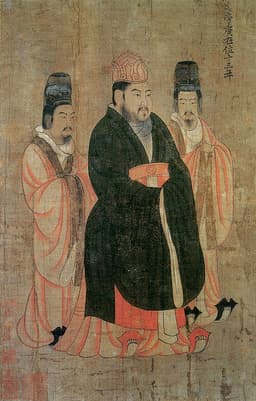
Emperor Yang of Sui
Emperor · Medieval
60.1Total
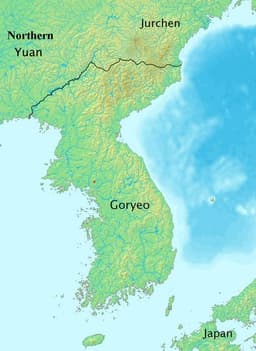
Gyeongjong of Goryeo
Emperor · Medieval
47.1Total
Basic Information
Born
569
955
Died
618
981
Era
Medieval
Medieval
Nationality
China
Korea
Occupation
Emperor
Emperor
Civilization
Eastern
Eastern
Score Comparison
Military (10%)
52.5
20.0
Political (20%)
45.0
53.8
Influence (20%)
65.0
53.3
Legacy (20%)
72.0
47.5
Leadership (15%)
58.8
48.8
Strategy (15%)
50.0
45.0
TOTAL
60.1
47.1
Emperor Yang of Sui — Complete Timeline
605 AD
Construction of the Grand CanalCultural
Emperor Yang ordered the construction of the Grand Canal, linking the Yellow River and Yangtze River basins. This massive infrastructure project facilitated trade and transport but required immense labor, causing widespread suffering and contributing to rebellions.
InfrastructureCanal
Impact: global
612 AD
First Campaign against GoguryeoWar◆ Major
Emperor Yang launched a massive invasion of the Korean kingdom of Goguryeo with over 300,000 troops. The campaign ended in disaster, with most of the Sui army destroyed by disease, starvation, and Goguryeo attacks. This defeat severely weakened the Sui dynasty.
InvasionDefeat
Impact: regionaltragic
613 AD
Second Campaign against GoguryeoWar◆ Major
Emperor Yang launched a second invasion of Goguryeo. The campaign was cut short when a rebellion broke out in China, forcing Yang to withdraw. This further drained the dynasty's resources and morale.
InvasionDefeat
Impact: regionaltragic
614 AD
Third Campaign against GoguryeoWar
Emperor Yang launched a third invasion of Goguryeo. Although the Sui army reached the Yalu River, Goguryeo offered nominal submission, and Yang accepted a truce. This campaign further exhausted the Sui treasury and military.
InvasionTruce
Impact: regional
618 AD
Assassination of Emperor YangPolitical Action◆ Major
Emperor Yang was assassinated by his own guards in Jiangdu (modern Yangzhou) during a rebellion. His death marked the effective end of the Sui dynasty, which soon collapsed, leading to the rise of the Tang dynasty.
AssassinationDynasty Collapse
Impact: regionaltragic
Gyeongjong of Goryeo — Complete Timeline
976 AD
Institution of the Jeonsigwa Land SystemReform◆ Major
King Gyeongjong established the jeonsigwa, a land distribution system that allocated state-owned farmland to government officials based on their rank. This reform aimed to secure royal revenue and control over land, while providing a stable income for the bureaucracy.
Impact: nationalconstructive
Expert Analysis
Gyeongjong of Goryeo vs Emperor Yang of Sui
# The Emperor and the King: Ambition, Restraint, and the Price of Greatness
On a spring morning in 612, Emperor Yang of Sui stood before an army of over three hundred thousand men, the largest force ever assembled in East Asia, poised to cross the Liao River into Goguryeo. He had already reshaped China with the Grand Canal, a waterway of staggering ambition that would bind north and south for centuries. Yet within six years, he would be dead—murdered by his own guards in a provincial palace, his dynasty erased. Half a world away in time and temperament, King Gyeongjong of Goryeo sat in his court in Gaegyeong, a man who never commanded such multitudes, who never dreamed of conquering distant kingdoms. Instead, he signed a document in 976 that would stabilize his realm for generations. Both men ruled medieval kingdoms; both faced the same fundamental question of power. One answered with fire, the other with ink. The difference was not in their dreams, but in what they chose to build.
Origins
Emperor Yang was born in 569 into the turbulent twilight of China's Northern and Southern Dynasties, a world of warring states and shifting loyalties. His father, Emperor Wen of Sui, had reunified China after centuries of division, a feat that required ruthless cunning. Yang grew up in the shadow of that achievement, a prince who watched his father conquer and consolidate. He was educated in the classics, trained in the arts of war, and infected with an imperial vision that saw no limit to what a single will could accomplish. The Sui dynasty was young, ambitious, and brittle—a structure built on speed and force.
King Gyeongjong was born in 955 into a different world. Goryeo had already unified the Korean peninsula under the leadership of its founder, Wang Geon, who had forged a kingdom from the wreckage of Later Three Kingdoms. By the time Gyeongjong took the throne in 975, Goryeo was not conquering but consolidating. Its challenge was not expansion but endurance—how to hold together a realm of regional aristocrats, Buddhist monasteries, and fractious clans. Gyeongjong inherited a state that needed stability, not spectacle.
Rise to Power
Emperor Yang came to power in 604 through a path stained with blood. He was not his father's first choice; his older brother, the crown prince, was murdered on Yang's orders, or at least with his complicity. The throne was a prize taken by force of ambition, and Yang ascended with a sense of entitlement and a need to prove himself greater than his father. His reign began with projects that dwarfed anything his father had attempted: the Grand Canal, a network of waterways stretching over a thousand miles, dug by millions of conscripted laborers. It was a masterpiece of engineering and a monument to human suffering.
Gyeongjong rose to power quietly, the son of King Gwangjong, a reformer who had purged the aristocracy and centralized authority. When Gwangjong died in 975, Gyeongjong inherited a court exhausted by upheaval. He did not need to conquer; he needed to heal. His path was not a campaign but a compromise.
Leadership & Governance
Emperor Yang governed through grandiosity. The Grand Canal was his greatest achievement, linking the Yellow River and Yangtze basins, facilitating trade, grain transport, and cultural exchange for centuries. But he could not stop there. In 612, he launched the first of three campaigns against Goguryeo, the Korean kingdom that had defied Chinese empires for centuries. The invasion was a catastrophe: disease, terrain, and fierce resistance destroyed his army. He tried again in 613, only to be recalled by a rebellion at home. A third campaign in 614 achieved a nominal submission, but the cost was fatal. His scores in military (60.3) and strategy (58.1) reflect a man who could plan on a grand scale but could not adapt to reality.
King Gyeongjong governed through system. His defining act was the *jeonsigwa* land system of 976, which allocated state-owned farmland to officials based on their rank. This was not a radical innovation—it borrowed from Chinese models—but it was perfectly suited to Goryeo's needs. It reduced aristocratic infighting, stabilized state finances, and created a predictable order. Gyeongjong did not lead armies; he led a bureaucracy. His military score (55.1) and strategy score (30.0) are low, but his influence (72.7) and leadership (73.5) show a ruler who understood that power is not always measured in conquest.
Triumph & Tragedy
Emperor Yang's triumph was the Grand Canal, a work that would outlast his dynasty and shape Chinese history for a millennium. His tragedy was that he could not stop building. The canal was not enough; he needed Goguryeo. He needed to surpass his father, to carve his name into the earth so deeply that no one could forget it. Instead, he crushed his people under the weight of his ambition. The rebellions that ended his life in 618 were not accidents; they were the inevitable response to a ruler who treated his subjects as tools.
Gyeongjong's triumph was the *jeonsigwa*, a quiet reform that gave Goryeo a generation of peace. His tragedy was that he never saw the full fruits of his labor. He died in 981, only five years after his great reform, at the age of twenty-six. He left no epic, no canal, no conquest—only a stable kingdom that would endure for centuries.
Character & Destiny
Emperor Yang was a man of immense vision and immense blindness. He could see the shape of a future empire but could not see the faces of the peasants dying to build it. He was intelligent, cultured, and ruthless—a combination that led him to believe that his will alone could reshape reality. His downfall was not incompetence but excess. He did not fail because he was weak; he failed because he was too strong, too sure.
Gyeongjong was a man of restraint. He understood that a king's power is limited by the patience of his subjects. He did not try to conquer Korea; he tried to govern it. His destiny was not glory but stability. He died young, but his system lived on.
Legacy
Emperor Yang's legacy is paradoxical. He is remembered as a tyrant who destroyed his dynasty, yet the Grand Canal became the backbone of Chinese unification. His name is synonymous with excess, but his works endure. His total score of 68.0 reflects a ruler of genuine achievement undone by catastrophic judgment.
Gyeongjong's legacy is quieter but deeper. The *jeonsigwa* system shaped Goryeo's governance for centuries, and his example of measured reform influenced later Korean kings. His total score of 60.6 is lower, but his influence score of 72.7 suggests that his impact outlasted his brief reign. He is not a household name, but he is a foundation.
Conclusion
What separates the emperor from the king is not talent or ambition. Both were capable; both wanted to leave a mark. The difference is in the object of their ambition. Emperor Yang wanted to conquer the world; King Gyeongjong wanted to order his house. One built a canal that flooded his kingdom with blood; the other built a system that irrigated his kingdom with stability. In the end, the question is not whether a ruler dreams, but whether his dreams can accommodate the lives of those who must realize them. Emperor Yang dreamed too large for his people to survive. Gyeongjong dreamed just large enough for them to endure.
Rankings
🥇
Emperor Yang of SuiLeader
Mil: 52.5Pol: 45.0Inf: 65.0
60.1
🥈
Gyeongjong of Goryeo
Mil: 20.0Pol: 53.8Inf: 53.3
47.1
+13.0 behind
How This Comparison Works
Algorithm
Each figure is scored on 6 dimensions (0—100 scale) based on structured historical data: Military (10%), Political (20%), Influence (20%), Legacy (20%), Leadership (15%), Strategy (15%). The weighted total produces the final ranking.
Data Sources
Scores are computed from structured sub-indicators in the database. Scale factors adjust for era (Ancient ×0.85, Modern ×1.0) and civilization size (Eastern ×1.05, Other ×0.80) to account for differences in population and military scale.
Maximum 3 Figures
Comparisons are limited to 2—3 figures to ensure readability and statistical meaningfulness.
Error Margins
±5 points per dimension — Sub-scores are derived from historical records with inherent uncertainty. Two figures within 5 points on a dimension should be considered roughly equivalent in that area.
Total Score Accuracy
±3 points overall — The weighted combination of 6 dimensions produces a total score with approximately ±3 points of uncertainty. Differences of less than 3 points are not statistically significant— the figures are effectively tied.
Known Limitations
- Historical records are incomplete and uneven across civilizations
- Figures from oral-tradition societies may be underrepresented
- Occupation labels can misclassify multi-role figures
- Scores measure capability and impact, not moral character
- Quantitative scoring is a comparison tool, not absolute truth
Capability Radar
Military (10%) — Battles & Warfare
Battles
65
5
Win Rate
30
5
Expansion
70
5
Political (20%) — Governance & Reform
Reform
85
70
Diplomacy
40
40
Economy
70
65
Influence (20%) — Cultural & Global Reach
Cultural
75
30
Global
65
20
Legacy (20%) — Historical Impact
Historical
80
45
Longevity
70
40
Leadership (15%) — Power & Stability
Tenure
55
55
Stability
20
50
Strategy (15%) — Tactics & Innovation
Strategy
60
5
Tactics
55
5
Reform
50
5
Similar Comparisons
Comments & Discussion
儒家学者6/16/2026
杨广修运河、征高句丽,表面是雄才大略,实则背离了儒家"节用爱人"的根本。他父亲文帝靠节俭积累国本,杨广却三年耗尽。反观高丽景宗,推行田柴科制度,限制贵族兼并,正是《论语》说的"不患寡而患不均"。史书夸杨广开疆拓土,可那些疆土谁来种?景宗没流一滴血就换来百年太平,这才是真本事。儒家的王道不是霸道,他不懂。
军事战略家6/16/2026
杨广三征高句丽的败因不在兵力,而在指挥。612年他命令九路大军必须同时推进,战机稍纵即逝却僵化执行,结果在萨水被伏击,三十万大军只剩两千七百人逃回。隋军将领如来护儿早就建议迂回包抄,他偏要正面强攻。高丽景宗呢?从不出兵远征,专心搞防御体系,让辽国和女真没法南下。不战而屈人之兵,这才是将帅之道。杨广不是军事家,是个赌徒。
冷嘲历史粉6/16/2026
杨广被唐诗骂了一千多年不是没道理,他修运河死了五百万人,最后自己也被卫兵勒死在江都。景宗活到中年病逝,国家平安交接,高丽延续了数百年。比什么呢?一个把帝国玩崩,一个把基业稳住。谁更配称"伟大"?伟大不是砌了多少石头,是别让老百姓饿死。杨广的运河确实后来养了唐朝,但那是用隋朝的尸体堆出来的——景宗至少让他的国民活着看到第二天太阳
Historian4566/16/2026
Emperor Yang's Grand Canal wasn't just ambition—it was suicidal overreach. Moving millions of tons of grain didn't justify bleeding the treasury dry for three major Goguryeo campaigns that killed 300,000 soldiers. That's not vision, that's compulsive building while ignoring your army's collapse. Gyeongjong at least understood that land grants and tax reforms matter more than ego projects. Yang had his canal; Gyeongjong had stability. I'll take the ink over the blood every time.
Chronicler65596/16/2026
Let's talk numbers. Emperor Yang mobilized 1.13 million troops for the 612 Goguryeo campaign, plus 2 million laborers for logistics—that's roughly 5% of Sui's total population gone in one season. Only 2,700 soldiers survived that disaster. Meanwhile, Gyeongjong's 976 land reform stabilized tax revenue without a single death. Yang's infrastructure cost lives; Gyeongjong's policy saved them. If we're grading on efficiency, the king wins by every metric. Ambition without calculation is just arson.