Loading...
Emperor Xiaowen of Northern Wei vs Mentuhotep II
Emperor Xiaowen of Northern Wei leads by 1.0 pts · 2 figures compared
…
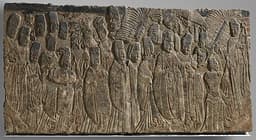
Emperor Xiaowen of Northern Wei
Emperor · Ancient
59.4Total

Mentuhotep II
Emperor · Ancient
58.4Total
Basic Information
Born
467
-2061
Died
499
-2010
Era
Ancient
Ancient
Nationality
China
Egypt
Occupation
Emperor
Emperor
Civilization
Eastern
Middle Eastern
Score Comparison
Military (10%)
55.0
76.0
Political (20%)
72.0
55.0
Influence (20%)
56.7
56.7
Legacy (20%)
52.0
40.0
Leadership (15%)
66.0
78.0
Strategy (15%)
60.0
66.3
TOTAL
59.4
58.4
Emperor Xiaowen of Northern Wei — Complete Timeline
485 AD
Land Equalization SystemReform◆ Major
Emperor Xiaowen implemented the Land Equalization System, which allocated land to peasant households based on the number of able-bodied men. This reform aimed to increase agricultural productivity and tax revenue, and it became a model for later Chinese dynasties.
Land ReformEconomic Policy
Impact: regionalconstructive
490 AD
Implementation of Sinicization ReformsReform◆ Major
Emperor Xiaowen enacted a series of reforms to adopt Chinese culture, including banning Xianbei clothing and language at court, promoting intermarriage between Xianbei and Chinese elites, and adopting Chinese surnames. These reforms aimed to strengthen the dynasty but also caused resentment among some Xianbei nobles.
Cultural ReformSinicization
Impact: regionalconstructive
494 AD
Move of Capital to LuoyangPolitical Action
Emperor Xiaowen moved the Northern Wei capital from Pingcheng (modern Datong) to Luoyang, a traditional Chinese capital. This move was part of his Sinicization reforms, aimed at integrating the Xianbei elite into Chinese culture and administration.
Capital MoveSinicization
Impact: regionalconstructive
496 AD
Adoption of Chinese SurnamesReform
Emperor Xiaowen ordered Xianbei nobles to adopt Chinese surnames, with the imperial family taking the surname Yuan. This was a key part of his Sinicization policy, intended to erase ethnic distinctions and integrate the Xianbei into Chinese society.
Cultural ReformSinicization
Impact: nationalconstructive
Mentuhotep II — Complete Timeline
2040 BC
Reunification of EgyptWar
Mentuhotep II, a Theban ruler, conquered the rival Heracleopolitan kingdom, reunifying Upper and Lower Egypt. This victory ended the First Intermediate Period and established the Middle Kingdom, with Mentuhotep II as its first pharaoh.
UnificationMiddle KingdomThebes
Impact: regionalconstructive
2030 BC
Construction of the Mortuary Temple at Deir el-BahriCultural◆ Major
Mentuhotep II built a terraced mortuary temple at Deir el-Bahri, blending rock-cut and free-standing architecture. The temple, with its colonnades and pyramid, became a model for later New Kingdom structures and symbolized his reunification.
TempleArchitectureDeir el-Bahri
Impact: regionalconstructive
Expert Analysis
Origins
Emperor Xiaowen of Northern Wei (born 467 CE, personal name Tuoba Hong) was the son of Emperor Xianwen and grew up in the Xianbei-ruled Northern Wei dynasty. His early education was heavily influenced by Chinese Confucian tutors, exposing him to Han Chinese culture and governance. He ascended the throne at age four, with his grandmother Empress Dowager Feng acting as regent until her death in 490 CE.
Mentuhotep II (reigned c. 2061–2010 BCE) was a Theban ruler of the 11th Dynasty during the First Intermediate Period, a time of political fragmentation in Egypt. His name means "Montu is satisfied," referencing the war god Montu. He inherited the throne from his father Intef III, ruling over a region centered on Thebes, while a rival dynasty (the 10th) controlled the north from Heracleopolis.
Rise to Power
Xiaowen began ruling personally after 490 CE, immediately pushing forward Sinicization policies. His first major act was moving the capital from Pingcheng (modern Datong) to Luoyang in 493 CE, a decision that faced strong opposition from Xianbei nobles but was executed decisively. This move physically and symbolically shifted the dynasty toward Chinese traditions.
Mentuhotep II rose by military conquest. In his 14th year (c. 2047 BCE), he launched a campaign against the Heracleopolitan kingdom, capturing the key fortress of Thinis. By his 39th year, he had fully reunified Egypt, ending the First Intermediate Period. His military score of 76.0 reflects his successful campaigns; Xiaowen's military score of 55.0 indicates a less martial focus.
Leadership & Governance
Xiaowen's leadership score of 66.0 is driven by his sweeping reforms. He banned Xianbei clothing and language at court, forcing nobles to adopt Chinese surnames (the imperial family took Yuan). He implemented the Land Equalization System, distributing state-owned land to peasants based on able-bodied men per household, which stabilized agriculture and tax revenues. He also promoted intermarriage between Xianbei and Chinese elites.
Mentuhotep II's leadership score of 78.0 reflects his ability to reunify and stabilize Egypt. He reestablished central authority, appointed loyal officials, and launched building projects. His mortuary temple at Deir el-Bahri, with its terraced design and colonnades, blended rock-cut and free-standing architecture, showcasing his patronage of art and religion.
Triumph & Tragedy
Xiaowen's greatest success was the Sinicization of Northern Wei, which integrated Xianbei into Chinese civilization and laid the groundwork for the later Sui and Tang dynasties. However, his reforms alienated the Xianbei military elite, leading to internal strife after his death. The Northern Wei split into Eastern and Western Wei in 534 CE, partly due to unresolved ethnic tensions.
Mentuhotep II's triumph was reunifying Egypt, ending a century of division. He established the Middle Kingdom, a period of stability and cultural revival. However, his legacy score of 40.0 is lower because his dynasty was short-lived; the 12th Dynasty, which followed, is often credited with consolidating his gains.
Character & Destiny
Xiaowen was a determined reformer, willing to impose unpopular policies for long-term integration. His political score of 72.0 reflects his strategic acumen, but his inflexibility contributed to posthumous fragmentation. Mentuhotep II was a pragmatic warrior-king, balancing military force with diplomatic consolidation. His strategic score of 66.3 aligns with his methodical reunification.
Legacy
Xiaowen's reforms had a profound influence on Chinese history: the Land Equalization System persisted for centuries, and his Sinicization policies accelerated the assimilation of nomadic peoples into Chinese culture. His total score of 59.4 edges out Mentuhotep II's 58.4.
Mentuhotep II is remembered as the founder of the Middle Kingdom, a golden age of Egyptian literature and art. His reunification set the stage for later pharaohs like Amenemhat I.
Conclusion
While Mentuhotep II's military reunification was a remarkable achievement, Emperor Xiaowen's transformative social and political reforms had a more lasting impact on a larger civilization. Xiaowen's Sinicization not only preserved the Northern Wei but also shaped the trajectory of Chinese imperial governance. Therefore, Emperor Xiaowen's overall impact is greater.
Rankings
🥇
Emperor Xiaowen of Northern WeiLeader
Mil: 55.0Pol: 72.0Inf: 56.7
59.4
🥈
Mentuhotep II
Mil: 76.0Pol: 55.0Inf: 56.7
58.4
+1.0 behind
How This Comparison Works
Algorithm
Each figure is scored on 6 dimensions (0—100 scale) based on structured historical data: Military (10%), Political (20%), Influence (20%), Legacy (20%), Leadership (15%), Strategy (15%). The weighted total produces the final ranking.
Data Sources
Scores are computed from structured sub-indicators in the database. Scale factors adjust for era (Ancient ×0.85, Modern ×1.0) and civilization size (Eastern ×1.05, Other ×0.80) to account for differences in population and military scale.
Maximum 3 Figures
Comparisons are limited to 2—3 figures to ensure readability and statistical meaningfulness.
Error Margins
±5 points per dimension — Sub-scores are derived from historical records with inherent uncertainty. Two figures within 5 points on a dimension should be considered roughly equivalent in that area.
Total Score Accuracy
±3 points overall — The weighted combination of 6 dimensions produces a total score with approximately ±3 points of uncertainty. Differences of less than 3 points are not statistically significant— the figures are effectively tied.
Known Limitations
- Historical records are incomplete and uneven across civilizations
- Figures from oral-tradition societies may be underrepresented
- Occupation labels can misclassify multi-role figures
- Scores measure capability and impact, not moral character
- Quantitative scoring is a comparison tool, not absolute truth
Capability Radar
Military (10%) — Battles & Warfare
Battles
30
75
Win Rate
30
85
Expansion
20
70
Political (20%) — Governance & Reform
Reform
95
75
Diplomacy
75
70
Economy
70
70
Influence (20%) — Cultural & Global Reach
Cultural
85
75
Global
60
70
Legacy (20%) — Historical Impact
Historical
80
80
Longevity
75
85
Leadership (15%) — Power & Stability
Tenure
70
80
Stability
65
80
Strategy (15%) — Tactics & Innovation
Strategy
40
80
Tactics
25
70
Reform
60
65
Similar Comparisons
Comments & Discussion
No comments yet. Be the first to share your thoughts!