Loading...
Emperor Xiaowen of Northern Wei vs Napoleon Bonaparte
Napoleon Bonaparte leads by 11.5 pts · 2 figures compared
…
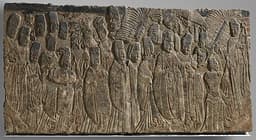
Emperor Xiaowen of Northern Wei
Emperor · Ancient
59.4Total

Napoleon Bonaparte
General · Modern
70.9Total
Basic Information
Born
467
1769
Died
499
1821
Era
Ancient
Modern
Nationality
China
France
Occupation
Emperor
General
Civilization
Eastern
Western
Score Comparison
Military (10%)
55.0
94.0
Political (20%)
72.0
72.0
Influence (20%)
56.7
40.0
Legacy (20%)
52.0
80.0
Leadership (15%)
66.0
78.0
Strategy (15%)
60.0
90.0
TOTAL
59.4
70.9
Emperor Xiaowen of Northern Wei — Complete Timeline
485 AD
Land Equalization SystemReform◆ Major
Emperor Xiaowen implemented the Land Equalization System, which allocated land to peasant households based on the number of able-bodied men. This reform aimed to increase agricultural productivity and tax revenue, and it became a model for later Chinese dynasties.
Land ReformEconomic Policy
Impact: regionalconstructive
490 AD
Implementation of Sinicization ReformsReform◆ Major
Emperor Xiaowen enacted a series of reforms to adopt Chinese culture, including banning Xianbei clothing and language at court, promoting intermarriage between Xianbei and Chinese elites, and adopting Chinese surnames. These reforms aimed to strengthen the dynasty but also caused resentment among some Xianbei nobles.
Cultural ReformSinicization
Impact: regionalconstructive
494 AD
Move of Capital to LuoyangPolitical Action
Emperor Xiaowen moved the Northern Wei capital from Pingcheng (modern Datong) to Luoyang, a traditional Chinese capital. This move was part of his Sinicization reforms, aimed at integrating the Xianbei elite into Chinese culture and administration.
Capital MoveSinicization
Impact: regionalconstructive
496 AD
Adoption of Chinese SurnamesReform
Emperor Xiaowen ordered Xianbei nobles to adopt Chinese surnames, with the imperial family taking the surname Yuan. This was a key part of his Sinicization policy, intended to erase ethnic distinctions and integrate the Xianbei into Chinese society.
Cultural ReformSinicization
Impact: nationalconstructive
Napoleon Bonaparte — Complete Timeline
1799 AD
Coup of 18 BrumaireOther◆ Major
Napoleon Bonaparte, with support from his brother Lucien and key political figures, overthrew the Directory in a bloodless coup. He established the Consulate with himself as First Consul, effectively becoming the ruler of France. This event ended the French Revolution's most unstable period.
French RevolutionCoupRise to Power
Impact: regional
1804 AD
Promulgation of the Napoleonic CodeOther◆ Major
Napoleon enacted the Civil Code of the French, known as the Napoleonic Code, a comprehensive set of laws that replaced the fragmented feudal legal systems. The code established legal equality, protected property rights, and secularized law. It became the basis for legal systems in many European and world countries.
Legal ReformNapoleonic CodeCivil Law
Impact: globalconstructive
1805 AD
Battle of AusterlitzWar◆ Major
Napoleon's Grande Arm
Napoleonic WarsBattleDecisive Victory
Impact: global
1812 AD
Invasion of RussiaWar◆ Major
Napoleon led the Grande Arm
Napoleonic WarsInvasionDisaster
Impact: globaldestructive
1815 AD
Battle of WaterlooWar◆ Major
Napoleon's French army was defeated by the combined forces of the Duke of Wellington's Anglo-Allied army and Gebhard Leberecht von Bl
Napoleonic WarsBattleFinal Defeat
Impact: globaldestructive
Expert Analysis
emperor-xiaowen-of-northern-wei-vs-napoleon-bonaparte
# The Conqueror and the Reformer
In 1815, a French emperor in a gray overcoat watched his dreams dissolve in the mud of Waterloo, while a Chinese emperor who had died thirteen centuries earlier lay in a tomb near Luoyang, his reforms still reshaping a civilization. One conquered nations, the other transformed a people. Both were young men who seized history by the throat, yet their paths could not have diverged more sharply. Why did Napoleon’s empire crumble into exile while Xiaowen’s legacy endured for millennia? The answer lies not in the scale of their ambitions, but in the nature of their revolutions.
Origins
Napoleon Bonaparte was born in 1769 on the island of Corsica, a place that had only become French the year before. His family belonged to the minor nobility, but they were poor, and young Napoleon spoke French with a thick Italian accent that would mark him as an outsider for years. The French Revolution, erupting when he was twenty, shattered the old order and created opportunities for talented men of humble birth. Corsica’s rugged independence and the revolution’s chaos forged a mind that saw the world as a chessboard to be mastered.
Emperor Xiaowen of Northern Wei, born in 467, was the opposite: a child of the imperial palace, a Xianbei prince raised in a nomadic warrior culture that had conquered northern China. His people, the Tuoba Xianbei, had swept down from the steppes and established the Northern Wei dynasty, ruling over a vast population of Chinese farmers and scholars. But young Xiaowen grew up speaking both Xianbei and Chinese, wearing both leather and silk. He understood that his people were conquerors in a land they did not fully possess—and that possession meant transformation.
Rise to Power
Napoleon’s ascent was a cannon shot across history. In 1793, at twenty-four, he drove the British out of Toulon and became a brigadier general overnight. By 1796, he commanded the Army of Italy, where his lightning campaigns forced Austria to sue for peace. The Directory, France’s corrupt ruling body, sent him to Egypt in 1798 to disrupt British trade routes, but Napoleon had other plans. He returned in 1799, staged a coup d’état, and made himself First Consul. By 1804, he crowned himself Emperor in Notre Dame, taking the crown from the Pope’s hands and placing it on his own head.
Xiaowen’s path was slower, more deliberate. He ascended the throne in 471 at age four, with his grandmother, Empress Dowager Feng, ruling as regent. She was a Chinese woman who had married into the Xianbei court, and she educated the boy emperor in Confucian classics, Chinese history, and the art of bureaucratic governance. When she died in 490, Xiaowen was twenty-three and ready. He did not seize power through a coup; he inherited it, then used it with a patience that Napoleon never possessed.
Leadership & Governance
Napoleon ruled through sheer force of personality and military genius. His strategic mind—scored at 93 out of 100—was unmatched in his era. He could read a battlefield like a map of human weakness, and his Grande Armée swept from Madrid to Moscow. But his political wisdom, scored at 75, was more brittle. He created the Napoleonic Code, a legal framework that abolished feudalism and established equality before the law—a reform that survives in much of Europe today. Yet he also placed his brothers on thrones, married an Austrian princess, and treated conquered peoples as subjects, not partners.
Xiaowen governed through transformation. His military score of 38.5 reflects a leader who never led armies into battle; instead, he waged war on identity itself. In 485, he implemented the Land Equalization System, distributing farmland to peasant households based on the number of able-bodied workers. This reform stabilized agriculture, curbed the power of great landowners, and ensured the state had a tax base. In 490, he launched the Sinicization Reforms: Xianbei nobles were forbidden to wear their traditional clothing or speak their native language at court. In 494, he moved the capital from Pingcheng—the Xianbei heartland—to Luoyang, the ancient Chinese capital. In 496, he ordered Xianbei nobles to adopt Chinese surnames; the imperial family became Yuan. These were not mere policies—they were a declaration that the Xianbei would become Chinese.
Triumph & Tragedy
Napoleon’s greatest triumph was Austerlitz in 1805, where he crushed the combined armies of Austria and Russia in a single day. His greatest tragedy was the invasion of Russia in 1812, where 600,000 men marched east and fewer than 100,000 returned. The Russian winter, the scorched-earth tactics, and Napoleon’s refusal to compromise destroyed his army and his legend. Exiled to Elba in 1814, he escaped in 1815, raised another army, and met his final defeat at Waterloo. He died in 1821 on Saint Helena, a prisoner of the British, dictating memoirs that would burnish his myth.
Xiaowen’s triumph was subtler. By 499, he had transformed a nomadic warrior state into a Chinese-style empire. The Xianbei nobility, now bearing Chinese names, intermarried with Chinese families and adopted Chinese culture. His tragedy was that he died young—at thirty-two, in 499, likely from exhaustion or illness. His son was a child, and the Northern Wei soon fractured into civil war. Yet the reforms endured. The Land Equalization System influenced Chinese land policy for centuries, and the Sinicization of the Xianbei ensured that they would not be remembered as foreign conquerors but as part of the Chinese story.
Character & Destiny
Napoleon was driven by ambition that knew no limits. “Impossible is a word to be found only in the dictionary of fools,” he once said. He believed he could shape the world with his will alone, and for a time, he did. But his refusal to compromise, his belief that victory was always one more battle away, led him to overreach. He could not share power, could not build lasting alliances, could not see that empires require consent as well as conquest.
Xiaowen was driven by vision. He understood that the Xianbei could not rule China forever by force alone. They had to become Chinese—not through conquest, but through absorption. His reforms were painful for his own people; many Xianbei nobles resented abandoning their language and dress. But Xiaowen persisted, using his imperial authority to push through changes that would outlive him. His character was not that of a warrior but of a transformer.
Legacy
Napoleon is remembered as a military genius whose campaigns are still studied in war colleges. His Napoleonic Code shaped legal systems across Europe and the Americas. But his empire lasted only a decade, and his final legacy is one of ambition that consumed itself. He scored 82 in influence and 78 in legacy—a towering figure, but one whose greatest achievements were matched by his failures.
Xiaowen is less known in the West but is revered in China as a unifier. His Sinicization reforms ensured that the Xianbei did not vanish but merged into the Chinese people. The Tang dynasty, which followed the Northern Wei, would become China’s golden age—and it was built on the foundations that Xiaowen laid. His legacy score of 71.6 understates his impact, for he did not just change a dynasty; he changed what it meant to be Chinese.
Conclusion
Napoleon and Xiaowen both sought to reshape the world, but they chose opposite tools. Napoleon relied on the sword, Xiaowen on the brush. One conquered nations, the other conquered identity. Napoleon’s empire was a flash of lightning that illuminated the sky and vanished; Xiaowen’s reform was a river that carved a new channel for a civilization. In the end, the question is not who was greater, but what endures. Napoleon’s battles are maps in history books; Xiaowen’s reforms are still woven into the fabric of a billion lives. Perhaps that is the deepest lesson: the conqueror builds his monument in stone, but the reformer builds his in blood and language, and that monument never falls.
Rankings
🥇
Napoleon BonaparteLeader
Mil: 94.0Pol: 72.0Inf: 40.0
70.9
🥈
Emperor Xiaowen of Northern Wei
Mil: 55.0Pol: 72.0Inf: 56.7
59.4
+11.5 behind
How This Comparison Works
Algorithm
Each figure is scored on 6 dimensions (0—100 scale) based on structured historical data: Military (10%), Political (20%), Influence (20%), Legacy (20%), Leadership (15%), Strategy (15%). The weighted total produces the final ranking.
Data Sources
Scores are computed from structured sub-indicators in the database. Scale factors adjust for era (Ancient ×0.85, Modern ×1.0) and civilization size (Eastern ×1.05, Other ×0.80) to account for differences in population and military scale.
Maximum 3 Figures
Comparisons are limited to 2—3 figures to ensure readability and statistical meaningfulness.
Error Margins
±5 points per dimension — Sub-scores are derived from historical records with inherent uncertainty. Two figures within 5 points on a dimension should be considered roughly equivalent in that area.
Total Score Accuracy
±3 points overall — The weighted combination of 6 dimensions produces a total score with approximately ±3 points of uncertainty. Differences of less than 3 points are not statistically significant— the figures are effectively tied.
Known Limitations
- Historical records are incomplete and uneven across civilizations
- Figures from oral-tradition societies may be underrepresented
- Occupation labels can misclassify multi-role figures
- Scores measure capability and impact, not moral character
- Quantitative scoring is a comparison tool, not absolute truth
Capability Radar
Military (10%) — Battles & Warfare
Battles
30
95
Win Rate
30
90
Expansion
20
95
Political (20%) — Governance & Reform
Reform
95
95
Diplomacy
75
80
Economy
70
85
Influence (20%) — Cultural & Global Reach
Cultural
85
85
Global
60
90
Legacy (20%) — Historical Impact
Historical
80
95
Longevity
75
90
Leadership (15%) — Power & Stability
Tenure
70
85
Stability
65
70
Strategy (15%) — Tactics & Innovation
Strategy
40
95
Tactics
25
98
Reform
60
92
Similar Comparisons
Comments & Discussion
TuobaSpartacus6/17/2026
Napoleon was a tactical genius who lost because he couldn't stop conquering. Xiaowen won by knowing when to stop. The guy literally banned his own people's language and forced them to wear Chinese robes—that's not reform, that's cultural suicide. Napoleon at least died French. Xiaowen died a traitor to his own Xianbei blood. His reforms lasted? Sure, because he killed the soul of his people first.
数据解剖师6/17/2026
数据上拿破仑影响了整个欧洲,但死亡人数超300万;孝文帝改革影响人口数千万,暴力冲突几乎为零。效率比?孝文帝把北魏从一个部落联盟改造成帝国,土地改革、均田制、科举雏形,这些都是可量化的社会工程。拿破仑的战役经济让法国负了巨债,孝文帝的制度改革让北魏GDP翻了几番。谁的ROI高,一目了然。
GallicEagle6/17/2026
Waterloo wasn't the end. Napoleon's Civil Code still governs half the world's legal systems. What does Xiaowen have? A bunch of Buddhist caves and some poetry. The man literally forced his own soldiers to farm—you call that reform, I call it emasculation. Napoleon gave Europe nationalism; Xiaowen gave his people an identity crisis. I'll take the artilleryman over the plow-pusher any day.
竹简匠人6/17/2026
你们拿火炮和法典比,却忘了一个关键事实:孝文帝改革时,他面对的是一个多元帝国,语言、习俗、宗教全不同。他做的不是征服,是融合——这是更高维度的政治智慧。拿破仑用剑削平欧洲,孝文帝用文化软化矛盾。前者留下的是仇恨和民族主义,后者留下的是多民族共存的范式。谁更聪明?看谁的影响活着,谁的死了。
Chronicler47986/17/2026
Both were usurpers of destiny, but Napoleon was a meteor while Xiaowen was a glacier. One burns bright and vanishes, the other moves slow and reshapes continents. Napoleon's reforms died with his throne; Xiaowen's sinicization outlived his dynasty by centuries. The real test of power isn't how many battles you win—it's whether your enemies adopt your customs after you're gone. By that metric, the Xianbei prince crushed the Corsican corporal.