Loading...
Emperor Xiaowen of Northern Wei vs Julius Caesar
Julius Caesar leads by 23.4 pts · 2 figures compared
…
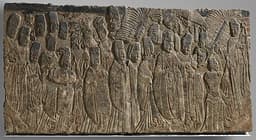
Emperor Xiaowen of Northern Wei
Emperor · Ancient
59.4Total

Julius Caesar
General · Ancient
82.8Total
Basic Information
Born
467
-100
Died
499
-44
Era
Ancient
Ancient
Nationality
China
Roman Republic
Occupation
Emperor
General
Civilization
Eastern
Western
Score Comparison
Military (10%)
55.0
88.0
Political (20%)
72.0
78.0
Influence (20%)
56.7
85.0
Legacy (20%)
52.0
82.0
Leadership (15%)
66.0
80.0
Strategy (15%)
60.0
85.0
TOTAL
59.4
82.8
Emperor Xiaowen of Northern Wei — Complete Timeline
485 AD
Land Equalization SystemReform◆ Major
Emperor Xiaowen implemented the Land Equalization System, which allocated land to peasant households based on the number of able-bodied men. This reform aimed to increase agricultural productivity and tax revenue, and it became a model for later Chinese dynasties.
Land ReformEconomic Policy
Impact: regionalconstructive
490 AD
Implementation of Sinicization ReformsReform◆ Major
Emperor Xiaowen enacted a series of reforms to adopt Chinese culture, including banning Xianbei clothing and language at court, promoting intermarriage between Xianbei and Chinese elites, and adopting Chinese surnames. These reforms aimed to strengthen the dynasty but also caused resentment among some Xianbei nobles.
Cultural ReformSinicization
Impact: regionalconstructive
494 AD
Move of Capital to LuoyangPolitical Action
Emperor Xiaowen moved the Northern Wei capital from Pingcheng (modern Datong) to Luoyang, a traditional Chinese capital. This move was part of his Sinicization reforms, aimed at integrating the Xianbei elite into Chinese culture and administration.
Capital MoveSinicization
Impact: regionalconstructive
496 AD
Adoption of Chinese SurnamesReform
Emperor Xiaowen ordered Xianbei nobles to adopt Chinese surnames, with the imperial family taking the surname Yuan. This was a key part of his Sinicization policy, intended to erase ethnic distinctions and integrate the Xianbei into Chinese society.
Cultural ReformSinicization
Impact: nationalconstructive
Julius Caesar — Complete Timeline
58 BC
Gallic WarsWar◆ Major
Caesar, as proconsul of Gaul, launched a series of campaigns that conquered all of Gaul (modern France, Belgium, and parts of Switzerland). He fought numerous battles, including against the Helvetii, the Belgae, and the Gallic chieftain Vercingetorix. The wars brought immense wealth and a loyal army to Caesar.
Gallic WarsConquestRoman Expansion
Impact: regional
49 BC
Crossing the RubiconPolitical Action◆ Major
Caesar led Legio XIII across the Rubicon River into Italy, defying the Roman Senate's order to disband his army. This act triggered a civil war against Pompey and the Optimates, ultimately leading to Caesar's dictatorship and the end of the Roman Republic.
Roman Civil WarEnd of RepublicPower Struggle
Impact: global
48 BC
Battle of PharsalusWar◆ Major
Caesar's outnumbered army defeated the larger forces of Pompey the Great at Pharsalus in Greece. Caesar's tactical use of a reserve line to counter Pompey's cavalry charge proved decisive. Pompey fled to Egypt, where he was assassinated, leaving Caesar as the undisputed master of the Roman world.
Roman Civil WarBattleDecisive Victory
Impact: regional
44 BC
Appointment as Dictator for LifePolitical Action◆ Major
The Roman Senate appointed Caesar dictator perpetuo (dictator for life), granting him unprecedented personal power. This move concentrated military, legislative, and judicial authority in one person, effectively ending the Roman Republic's traditional system of checks and balances and alarming many senators.
DictatorshipEnd of RepublicPower Consolidation
Impact: regionaldestructive
Assassination on the Ides of MarchPolitical Action◆ Major
A group of Roman senators, led by Marcus Junius Brutus and Gaius Cassius Longinus, stabbed Caesar to death at a meeting of the Senate in the Theatre of Pompey. The assassination was intended to restore the Republic, but instead triggered another civil war that led to the rise of the Roman Empire.
AssassinationRoman PoliticsEnd of Republic
Impact: globaldestructive
Expert Analysis
emperor-xiaowen-of-northern-wei-vs-julius-caesar
# The General and the Emperor: Two Paths to Transform an Age
On a winter morning in 49 BCE, a Roman general stood at the banks of a small, muddy river in northern Italy. The Rubicon was a provincial boundary, but it was also a line no commander could cross with his army without declaring war on the Republic itself. Julius Caesar hesitated, then spoke: *"The die is cast."* He crossed, and the ancient world shattered.
Half a world away and five centuries later, in 494 CE, a teenage emperor led a procession of Xianbei nobles south through the Yellow River valley toward Luoyang. Emperor Xiaowen of Northern Wei was not crossing a forbidden line—he was erasing one. He ordered his people to abandon their nomadic language, their leather clothing, their very names, and become Chinese. Two rulers, two civilizations, one question: What does it cost to remake the world?
Origins
Caesar was born into the chaos of the late Roman Republic, a world of senatorial backstabbing, slave revolts, and civil wars. His family, the Julii, claimed descent from the goddess Venus, but they were political outsiders. His father died when Caesar was sixteen, leaving him to navigate a brutal system where survival meant alliances, debts, and ambition. The Republic rewarded ruthlessness, and Caesar learned early.
Xiaowen was born in 467 CE, a child of the Northern Wei dynasty, founded by the Tuoba clan of Xianbei nomads who had conquered northern China. His father died when he was four, and his grandmother, Empress Dowager Feng, ruled as regent. She was a Chinese woman from the conquered north, and she raised Xiaowen on Confucian classics, not horseback archery. While Caesar learned to read men, Xiaowen learned to read books.
Rise to Power
Caesar’s path was a ladder of military commands, bribes, and political marriages. He served as governor in Spain, then formed the First Triumvirate with Pompey and Crassus—an alliance of ambition disguised as friendship. His real breakthrough came in Gaul, where from 58 to 50 BCE he conquered a territory larger than Italy itself, killing a million people and enslaving another million. The Gallic Wars made him rich, feared, and adored by his legions. When the Senate ordered him to disband his army, he knew his only choices were exile or empire.
Xiaowen’s rise was quieter but no less decisive. At age sixteen, after his grandmother’s death in 490, he took personal control of the Northern Wei. He was already a student of Chinese history, convinced that the Xianbei could not rule China without becoming Chinese. His first major act was the Land Equalization System of 485, a reform that gave every peasant family a plot of land in exchange for taxes and military service. It was a stroke of genius: it stabilized the economy, weakened the old nomadic aristocracy, and tied the people directly to the throne.
Leadership & Governance
Caesar ruled through speed and fear. As dictator, he reformed the calendar (giving us the Julian calendar still used in the Eastern Orthodox Church), granted citizenship to Gauls and Spaniards, and launched massive public works. But his governance was a tightrope: he pardoned his enemies, but they never forgave him. He centralized power, but he never built institutions to replace the old Republic. When he declared himself dictator for life in 44 BCE, he sealed his fate. His reforms were brilliant improvisations, not a system.
Xiaowen ruled through patience and symbolism. The move to Luoyang in 494 was not just a capital relocation—it was a declaration. Luoyang was the ancient seat of Chinese civilization, the city of the Zhou and Han dynasties. By settling there, Xiaowen told his people: we are no longer invaders. He banned Xianbei dress and language at court, forced nobles to marry Chinese families, and in 496 ordered them to adopt Chinese surnames—his own family became Yuan, meaning "original." His reforms were systematic, almost surgical. He did not conquer China; he dissolved his own people into it.
Triumph & Tragedy
Caesar’s greatest moment was his swift victory in the civil war: within five years of crossing the Rubicon, he had defeated Pompey in Greece, crushed the remnants of the senatorial forces in Africa and Spain, and returned to Rome as undisputed master of the Mediterranean. His tragedy was that he could not imagine his own death. On the Ides of March, 44 BCE, sixty senators stabbed him to death in the Senate chamber. He fell at the foot of a statue of Pompey, his old rival.
Xiaowen’s triumph was subtler: he completed the Sinicization of the Northern Wei almost entirely within his lifetime, creating a hybrid court that would rule northern China for another century. His tragedy was that his reforms worked too well. The Xianbei warrior elite, stripped of their identity, grew soft and corrupt. Within thirty years of his death in 499, the Northern Wei collapsed into rebellion and civil war. The dynasty he saved by assimilation was destroyed by it.
Character & Destiny
Caesar was a gambler. He staked everything on speed, on the idea that a bold move could break any deadlock. He wrote his own commentaries to control his image, forgave enemies to appear merciful, and took risks that would have killed lesser men. His confidence was his genius and his blind spot: he assumed that if he won, history would forgive him. It did—but not before his friends killed him.
Xiaowen was a convert. He believed in Chinese civilization with the fervor of a man who chose it, not one born into it. His reforms were acts of faith, not pragmatism. He did not gamble; he planned. But his faith had a cost: he erased his own culture to save his dynasty, and in doing so, he created a world where his descendants no longer remembered how to fight.
Legacy
Caesar’s name became a title: *Kaiser* in German, *Tsar* in Russian. His adopted heir, Octavian, became Augustus, the first Roman emperor, and the Republic he destroyed never returned. Every European ruler who claimed divine right, every general who marched on his capital, walked in Caesar’s shadow. He is remembered as the man who ended one world and began another.
Xiaowen is less famous in the West, but his legacy is equally profound. The Northern Wei’s Sinicization set the pattern for every subsequent conquest dynasty in China—the Mongols, the Manchus—who all faced the same choice: assimilate or perish. Xiaowen chose assimilation, and in doing so, he helped define what "China" meant. The Land Equalization System influenced land reforms for centuries. He is remembered as a reformer who sacrificed his own people for a larger idea.
Conclusion
Caesar and Xiaowen both tried to solve the same problem: how to rule a vast, diverse empire. Caesar answered with force and personality; Xiaowen answered with culture and law. Caesar’s empire lasted five centuries; Xiaowen’s dynasty collapsed in fifty years. Yet both succeeded in ways they could not have imagined. Caesar destroyed the Republic but created the template for European empire. Xiaowen destroyed the Xianbei but preserved Chinese civilization from fragmentation.
The difference between them is not talent or ambition—both had abundance. It is the difference between a man who believed he was the center of the world and a man who believed the world was larger than himself. Caesar crossed the Rubicon for Julius Caesar. Xiaowen crossed the Yellow River for China. History remembers both, but it honors only one.
Rankings
🥇
Julius CaesarLeader
Mil: 88.0Pol: 78.0Inf: 85.0
82.8
🥈
Emperor Xiaowen of Northern Wei
Mil: 55.0Pol: 72.0Inf: 56.7
59.4
+23.4 behind
How This Comparison Works
Algorithm
Each figure is scored on 6 dimensions (0—100 scale) based on structured historical data: Military (10%), Political (20%), Influence (20%), Legacy (20%), Leadership (15%), Strategy (15%). The weighted total produces the final ranking.
Data Sources
Scores are computed from structured sub-indicators in the database. Scale factors adjust for era (Ancient ×0.85, Modern ×1.0) and civilization size (Eastern ×1.05, Other ×0.80) to account for differences in population and military scale.
Maximum 3 Figures
Comparisons are limited to 2—3 figures to ensure readability and statistical meaningfulness.
Error Margins
±5 points per dimension — Sub-scores are derived from historical records with inherent uncertainty. Two figures within 5 points on a dimension should be considered roughly equivalent in that area.
Total Score Accuracy
±3 points overall — The weighted combination of 6 dimensions produces a total score with approximately ±3 points of uncertainty. Differences of less than 3 points are not statistically significant— the figures are effectively tied.
Known Limitations
- Historical records are incomplete and uneven across civilizations
- Figures from oral-tradition societies may be underrepresented
- Occupation labels can misclassify multi-role figures
- Scores measure capability and impact, not moral character
- Quantitative scoring is a comparison tool, not absolute truth
Capability Radar
Military (10%) — Battles & Warfare
Battles
30
95
Win Rate
30
92
Expansion
20
97
Political (20%) — Governance & Reform
Reform
95
90
Diplomacy
75
85
Economy
70
82
Influence (20%) — Cultural & Global Reach
Cultural
85
88
Global
60
94
Legacy (20%) — Historical Impact
Historical
80
95
Longevity
75
96
Leadership (15%) — Power & Stability
Tenure
70
75
Stability
65
60
Strategy (15%) — Tactics & Innovation
Strategy
40
94
Tactics
25
96
Reform
60
88
Similar Comparisons
Comments & Discussion
CRASSUS' GHOST6/17/2026
Caesar crossing the Rubicon wasn't bold—it was a desperate gambler's last roll. Compare that to Xiaowen, who at 17 convinced an entire warrior aristocracy to swap their bows for bureaucrat's robes. That's not rebellion; that's long-game statecraft. One man crashed a system; the other rebuilt one from the ground up. I'd rather have Xiaowen's legacy than Caesar's corpse-stained glory.
墨守成规6/17/2026
有些“汉化深坑”论者把孝文帝捧为文化融合的神,但别忘了,迁都洛阳后不过三十年,六镇起义就把北魏撕成了两半。他强制说汉语、改汉姓,结果呢?鲜卑武士没了根,汉人士族又瞧不起他们。罗马的恺撒至少知道尊重高卢人的习俗来稳住边疆,孝文帝倒好,一把火把自家草原烧了。这不是远见,是文化自杀。
THE LATINIST6/17/2026
You military types always obsess over battles, but language and lineage tell the real story. Caesar wrote elegant Latin prose and let Gauls into the Senate; Xiaowen banned Xianbei entirely in court and made every aristocrat adopt Chinese surnames. Caesar's empire hybridized; Xiaowen's empire homogenized. Which one seems more sustainable? Check the history books: the Western Roman Empire fell, but Latin survived. Who speaks Xianbei today?
数字考古6/17/2026
数据不会撒谎。孝文帝改革后,北魏户籍人口从约3000万飙升至5000万,但六镇起义爆发时,中央军力锐减70%以上。对比恺撒时期,高卢战争造成百万死亡,但罗马公民税基反而膨胀。一个靠文化同化换表面繁荣,一个靠战争掠夺换实际权力。哪个更“成功”?得看你算的是GDP还是死亡率。
FRONTIER PHILOSOPHER6/17/2026
What strikes me is the symbolism of their acts. Caesar crossed a river—a natural boundary—and declared war on an existing order. Xiaowen made his people cross a cultural river, abandoning their ancestral dress and tongue. Both understood you don't change the world by staying put. But Xiaowen's river had no return. Caesar could've been pardoned; Xiaowen's Xianbei could never go back to the steppe. That's the greater courage, or the greater folly.