Loading...
Arcadius vs Emperor Xiaowen of Northern Wei
Emperor Xiaowen of Northern Wei leads by 18.0 pts · 2 figures compared
…

Arcadius
Emperor · Ancient
41.4Total
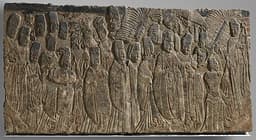
Emperor Xiaowen of Northern Wei
Emperor · Ancient
59.4Total
Basic Information
Born
377
467
Died
408
499
Era
Ancient
Ancient
Nationality
Byzantine Empire
China
Occupation
Emperor
Emperor
Civilization
Western
Eastern
Score Comparison
Military (10%)
10.2
55.0
Political (20%)
29.3
72.0
Influence (20%)
48.6
56.7
Legacy (20%)
40.0
52.0
Leadership (15%)
62.2
66.0
Strategy (15%)
45.0
60.0
TOTAL
41.4
59.4
Arcadius — Complete Timeline
395 AD
Accession as Eastern Roman EmperorPolitical Action◆ Major
Arcadius became the first Eastern Roman emperor following the permanent division of the Roman Empire after the death of Theodosius I. He ruled the East while his brother Honorius ruled the West, establishing the Byzantine Empire.
Imperial DivisionByzantine EmpireSuccession
Impact: global
Fall of the Praetorian Prefect RufinusPolitical Action
Rufinus, the powerful Praetorian Prefect and regent for Arcadius, was murdered by Gothic soldiers loyal to the general Stilicho. This event marked the beginning of the influence of court eunuchs and ministers over Arcadius's reign.
Court IntrigueAssassinationStilicho
Impact: nationaltragic
399 AD
Revolt of GainasWar
The Gothic general Gainas, who had risen to power in Constantinople, rebelled against Arcadius. Gainas occupied the capital but was eventually defeated and killed by the Roman general Fravitta, ending the threat.
Gothic RevoltConstantinopleMilitary
Impact: nationaldestructive
Emperor Xiaowen of Northern Wei — Complete Timeline
485 AD
Land Equalization SystemReform◆ Major
Emperor Xiaowen implemented the Land Equalization System, which allocated land to peasant households based on the number of able-bodied men. This reform aimed to increase agricultural productivity and tax revenue, and it became a model for later Chinese dynasties.
Land ReformEconomic Policy
Impact: regionalconstructive
490 AD
Implementation of Sinicization ReformsReform◆ Major
Emperor Xiaowen enacted a series of reforms to adopt Chinese culture, including banning Xianbei clothing and language at court, promoting intermarriage between Xianbei and Chinese elites, and adopting Chinese surnames. These reforms aimed to strengthen the dynasty but also caused resentment among some Xianbei nobles.
Cultural ReformSinicization
Impact: regionalconstructive
494 AD
Move of Capital to LuoyangPolitical Action
Emperor Xiaowen moved the Northern Wei capital from Pingcheng (modern Datong) to Luoyang, a traditional Chinese capital. This move was part of his Sinicization reforms, aimed at integrating the Xianbei elite into Chinese culture and administration.
Capital MoveSinicization
Impact: regionalconstructive
496 AD
Adoption of Chinese SurnamesReform
Emperor Xiaowen ordered Xianbei nobles to adopt Chinese surnames, with the imperial family taking the surname Yuan. This was a key part of his Sinicization policy, intended to erase ethnic distinctions and integrate the Xianbei into Chinese society.
Cultural ReformSinicization
Impact: nationalconstructive
Expert Analysis
Origins
Arcadius was born around 377 AD in Hispania, the eldest son of Emperor Theodosius I and his first wife Aelia Flaccilla. He received a classical education under the tutelage of the rhetorician Themistius and the Christian monk Arsenius. His upbringing was sheltered, focused on courtly rituals and Christian piety, preparing him for a ceremonial role rather than active leadership. In 383 AD, at age six, he was proclaimed co-emperor with his younger brother Honorius, signaling Theodosius's intention to divide the empire.
Emperor Xiaowen of Northern Wei was born in 467 AD as Tuoba Hong, a member of the Xianbei Tuoba clan. His father, Emperor Xianwen, abdicated when Xiaowen was only five, placing him on the throne under the regency of his grandmother, Empress Dowager Feng. Xiaowen was steeped in Chinese classical learning, studying Confucian texts and Chinese history, which profoundly shaped his worldview. The Xianbei were nomadic conquerors of northern China, and Xiaowen's early exposure to Chinese culture set the stage for his later reforms.
Rise to Power
Arcadius became sole Eastern Roman emperor in 395 AD upon the death of Theodosius I, who had permanently divided the Roman Empire between his two sons. Arcadius was 18 years old but lacked experience and assertiveness. Power quickly fell into the hands of his regent, the Praetorian Prefect Rufinus, who dominated the court. Rufinus's rivalry with the Western general Stilicho led to his murder in 395 by Gothic soldiers, after which the eunuch Eutropius became the power behind the throne. Arcadius remained a passive figure, allowing court factions to rule in his name.
Emperor Xiaowen ascended the throne at age five in 471 AD, but real power was held by his grandmother, Empress Dowager Feng, until her death in 490 AD. Feng was a capable regent who implemented early reforms and educated Xiaowen in Chinese governance. After her death, Xiaowen, then 23, took full control. He immediately began a series of radical reforms aimed at transforming the Xianbei state into a Chinese-style dynasty. His move of the capital from Pingcheng to Luoyang in 493 AD was a decisive break with Xianbei traditions and a statement of his commitment to Sinicization.
Leadership & Governance
Arcadius's leadership was largely passive and reactive. He relied on a series of regents and ministers—Rufinus, Eutropius, and later the Empress Aelia Eudoxia—who governed in his name. He made few independent decisions. His reign saw the revolt of the Gothic general Gainas in 399-400 AD, who occupied Constantinople but was eventually defeated by the Gothic leader Fravitta. Arcadius's governance was marked by court intrigue, religious disputes (including the conflict between John Chrysostom and the empress), and a weakening of imperial authority. His military score of 10.2 reflects his lack of direct involvement in military affairs.
Emperor Xiaowen was an active and visionary ruler. He personally oversaw the implementation of the Sinicization reforms, which included banning Xianbei clothing and language at court, promoting intermarriage between Xianbei and Chinese elites, and adopting Chinese surnames (the imperial family became Yuan). He implemented the Land Equalization System (均田制) in 485 AD, which allocated land to peasant households based on the number of able-bodied men, ensuring tax revenue and social stability. He also moved the capital to Luoyang, a symbolic and practical shift that integrated the Northern Wei into Chinese civilization. His political score of 72.0 and leadership score of 66.0 reflect his proactive governance.
Triumph & Tragedy
Arcadia's greatest success was maintaining the stability of the Eastern Roman Empire during a period of barbarian pressure and internal strife. The defeat of Gainas preserved the capital. However, his reign was marred by the loss of effective control over the Western Roman Empire, which fell into decline. His greatest failure was his inability to assert authority, leaving the empire to be run by corrupt officials and ambitious courtiers. The massacre of Gothic civilians in Constantinople in 400 AD, ordered by the empress, damaged relations with the Goths.
Emperor Xiaowen's greatest triumph was the successful Sinicization of the Northern Wei, which transformed a Xianbei tribal confederation into a Chinese-style dynasty that ruled northern China for decades. The Land Equalization System increased agricultural productivity and tax revenues. However, his reforms created resentment among Xianbei traditionalists, leading to rebellions after his death. His move to Luoyang also alienated the Xianbei military aristocracy, weakening the state's military capacity. His military score of 55.0 reflects moderate success in campaigns against the Southern Qi and Rouran.
Character & Destiny
Arcadius was described as timid, pious, and easily manipulated. He was more interested in religious matters than governance, often deferring to his wife and ministers. His character led to a weak and faction-ridden court, setting a precedent for future Eastern Roman emperors who struggled with internal divisions. His destiny was to be a placeholder ruler, remembered as the first emperor of the Byzantine Empire but not as a shaper of its destiny.
Emperor Xiaowen was determined, intelligent, and culturally ambitious. He was a devoted student of Chinese history and philosophy, and he saw himself as a Chinese emperor rather than a Xianbei chieftain. His strong will drove the Sinicization reforms despite opposition. However, his single-mindedness may have contributed to the eventual decline of the Northern Wei, as the reforms alienated the Xianbei military base. His destiny was to be a reformer who transformed his state but sowed seeds of future conflict.
Legacy
Arcadius's legacy is mixed. He is often overshadowed by his father Theodosius and his son Theodosius II. His reign marked the beginning of the Byzantine Empire as a distinct entity, but his lack of leadership contributed to the erosion of imperial power. The Eastern Roman Empire survived largely due to its administrative structure and geographic position, not due to Arcadius's actions. He scored 40.0 in legacy.
Emperor Xiaowen's legacy is profound. His Sinicization reforms permanently changed the trajectory of the Northern Wei and influenced subsequent Chinese dynasties. The Land Equalization System was adopted by later dynasties, including the Sui and Tang. The adoption of Chinese surnames and culture by the Xianbei facilitated their integration into Chinese society. However, his reforms also contributed to the decline of the Northern Wei, which split into Eastern and Western Wei after his death. His legacy score is 52.0, reflecting his lasting impact on Chinese history.
Conclusion
Emperor Xiaowen of Northern Wei had a greater impact than Arcadius. Xiaowen's total score of 59.4 significantly exceeds Arcadius's 41.4. While Arcadius presided over the Eastern Roman Empire during its formative years, his passive rule did little to shape its destiny. In contrast, Xiaowen actively transformed his state through far-reaching reforms that influenced Chinese governance for centuries. His Sinicization policies were a deliberate and successful attempt to adopt a more advanced civilization, whereas Arcadius failed to address the challenges facing his empire. Xiaowen's leadership, political acumen, and strategic vision mark him as a more consequential ruler.
Rankings
🥇
Emperor Xiaowen of Northern WeiLeader
Mil: 55.0Pol: 72.0Inf: 56.7
59.4
🥈
Arcadius
Mil: 10.2Pol: 29.3Inf: 48.6
41.4
+18.0 behind
How This Comparison Works
Algorithm
Each figure is scored on 6 dimensions (0—100 scale) based on structured historical data: Military (10%), Political (20%), Influence (20%), Legacy (20%), Leadership (15%), Strategy (15%). The weighted total produces the final ranking.
Data Sources
Scores are computed from structured sub-indicators in the database. Scale factors adjust for era (Ancient ×0.85, Modern ×1.0) and civilization size (Eastern ×1.05, Other ×0.80) to account for differences in population and military scale.
Maximum 3 Figures
Comparisons are limited to 2—3 figures to ensure readability and statistical meaningfulness.
Error Margins
±5 points per dimension — Sub-scores are derived from historical records with inherent uncertainty. Two figures within 5 points on a dimension should be considered roughly equivalent in that area.
Total Score Accuracy
±3 points overall — The weighted combination of 6 dimensions produces a total score with approximately ±3 points of uncertainty. Differences of less than 3 points are not statistically significant— the figures are effectively tied.
Known Limitations
- Historical records are incomplete and uneven across civilizations
- Figures from oral-tradition societies may be underrepresented
- Occupation labels can misclassify multi-role figures
- Scores measure capability and impact, not moral character
- Quantitative scoring is a comparison tool, not absolute truth
Capability Radar
Military (10%) — Battles & Warfare
Battles
5
30
Win Rate
5
30
Expansion
5
20
Political (20%) — Governance & Reform
Reform
20
95
Diplomacy
30
75
Economy
20
70
Influence (20%) — Cultural & Global Reach
Cultural
15
85
Global
15
60
Legacy (20%) — Historical Impact
Historical
30
80
Longevity
20
75
Leadership (15%) — Power & Stability
Tenure
60
70
Stability
20
65
Strategy (15%) — Tactics & Innovation
Strategy
5
40
Tactics
5
25
Reform
5
60
Similar Comparisons
Comments & Discussion
No comments yet. Be the first to share your thoughts!