Loading...
Emperor Uda vs Xiao Xi
Emperor Uda leads by 7.8 pts · 2 figures compared
…
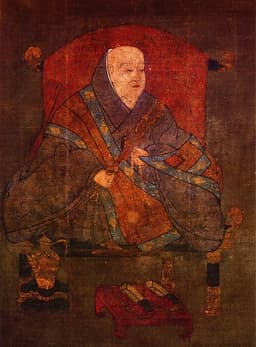
Emperor Uda
Emperor · Medieval
47.2Total

Xiao Xi
Emperor · Medieval
39.4Total
Basic Information
Born
867
583
Died
931
621
Era
Medieval
Medieval
Nationality
Japan
China
Occupation
Emperor
Emperor
Civilization
Eastern
Eastern
Score Comparison
Military (10%)
52.0
20.0
Political (20%)
37.9
39.4
Influence (20%)
50.2
45.5
Legacy (20%)
42.5
35.0
Leadership (15%)
41.5
49.9
Strategy (15%)
68.9
38.6
TOTAL
47.2
39.4
Emperor Uda — Complete Timeline
887 AD
Attempt to Counter Fujiwara DominancePolitical Action◆ Major
Emperor Uda attempted to rule without a Fujiwara regent after his abdication. He appointed his own advisors and promoted scholarship. His efforts to reduce Fujiwara influence were partially successful but ultimately temporary.
FujiwaraImperial PowerResistance
Impact: national
Promotion of Sugawara no MichizanePolitical Action◆ Major
Emperor Uda elevated the scholar Sugawara no Michizane to high court rank, bypassing the Fujiwara. Michizane became a key advisor and was appointed to the Council of State. This move was part of Uda's strategy to counter Fujiwara power.
Sugawara no MichizaneAdvisorFaction
Impact: nationalconstructive
897 AD
Abdication and Cloistered RulePolitical Action◆ Major
Emperor Uda abdicated and became a Buddhist monk, but continued to exert influence as a retired emperor (daijo tenno). This system of cloistered rule allowed him to govern from behind the scenes, a practice that later emperors would emulate.
Cloistered RuleAbdicationInsei
Impact: national
Xiao Xi — Complete Timeline
618 AD
Proclamation as Emperor of LiangPolitical Action◆ Major
Xiao Xi declared himself emperor of the Liang dynasty in Jiangling, claiming legitimacy as a successor to the Southern Liang. He established a court and ruled over a small territory in the south.
ProclamationLiang DynastySui-Tang Transition
Impact: regional
621 AD
Defeat by Li XiaogongWar◆ Major
Xiao Xi's Liang forces were defeated by the Tang general Li Xiaogong. The defeat led to the collapse of the Liang dynasty and Xiao Xi's capture.
BattleTang UnificationDefeat
Impact: regionaltragic
Execution by TangPolitical Action◆ Major
Xiao Xi was executed by the Tang dynasty after his capture. His death ended the Liang pretender state and furthered Tang consolidation of the south.
ExecutionTang Unification
Impact: regionaltragic
Expert Analysis
Origins
Emperor Uda (born 867, reigned 887–897) was the son of Emperor Kōkō and a member of the Yamato line. His early life was shaped by the declining authority of the imperial house under the Fujiwara regency. Uda was educated in Confucian classics and poetry, and his upbringing emphasized restoring imperial prestige. His father's brief reign (884–887) ended with Fujiwara Mototsune's influence, setting the stage for Uda's later struggles.
Xiao Xi (birth year uncertain, died 621) was a member of the Liang imperial clan, a grandson of Emperor Xuan of Western Liang. He grew up during the Sui dynasty's collapse and the rise of the Tang. His family had a legacy of ruling southern China, but by his time, the Liang dynasty was a memory. Xiao Xi's early life was marked by the chaos of the Sui-Tang transition, and he saw an opportunity to revive Liang legitimacy.
Rise to Power
Emperor Uda ascended the throne in 887 at age 20, but his reign was overshadowed by Fujiwara Mototsune, who served as regent (kampaku) and later chancellor. Uda's key turning point came after Mototsune's death in 891. Without a Fujiwara regent, Uda began appointing non-Fujiwara officials, most notably Sugawara no Michizane, a scholar of humble origin. In 894, Uda elevated Michizane to the rank of sangi (councillor), bypassing the Fujiwara. This move was a direct challenge to Fujiwara dominance, but it also provoked backlash.
Xiao Xi rose to power in 618 during the collapse of the Sui dynasty. He declared himself Emperor of Liang in Jiangling (modern Hubei), claiming legitimacy as a successor to the Southern Liang (502–557). He established a court and gathered support from local elites. His position was precarious, as the Tang dynasty under Li Yuan was rapidly consolidating control. Xiao Xi's proclamation was a bold move, but he lacked the military strength to challenge the Tang effectively.
Leadership & Governance
Emperor Uda's leadership was characterized by indirect rule. After abdicating in 897, he became a Buddhist monk but continued to exert influence as a retired emperor (daijo tenno). This system of cloistered rule allowed him to bypass the Fujiwara regent and issue decrees from his monastic retreat. Uda promoted scholarship and culture, founding the Kangaku-in academy and sponsoring literary projects. His governance style was subtle, relying on patronage and alliances with non-Fujiwara nobles. However, his political score of 37.9 reflects limited direct control.
Xiao Xi's governance was short-lived and focused on establishing legitimacy. He copied Tang administrative structures but failed to build a strong military. His leadership score of 49.9 indicates some competence, but his strategy score of 38.6 reveals poor planning. He relied on the support of local clans, but his court was divided. His only major action was to resist the Tang advance, which ended in defeat.
Triumph & Tragedy
Emperor Uda's greatest success was the establishment of cloistered rule, which became a precedent for later retired emperors to wield power. His promotion of Sugawara no Michizane elevated a talented scholar, but this backfired: after Uda's death, the Fujiwara engineered Michizane's exile, leading to his posthumous deification as a vengeful spirit. Uda's failure was his inability to permanently weaken the Fujiwara. His political score of 37.9 reflects this limited impact.
Xiao Xi's triumph was briefly reviving the Liang name. He ruled a small state for about three years (618–621). His tragedy was his defeat by Tang general Li Xiaogong. Captured and executed in 621, his death ended the Liang pretender state. His legacy score of 35.0 underscores his obscurity.
Character & Destiny
Emperor Uda was cautious and intellectual. He preferred indirect action over confrontation. His decision to abdicate early allowed him to operate behind the scenes, but it also ceded the throne to his son, who was more easily controlled by the Fujiwara. Uda's character shaped his fate: his subtlety preserved his influence but prevented lasting change. Historical assessments note his intelligence and cultural contributions but see his political reforms as limited.
Xiao Xi was ambitious but unrealistic. He overestimated his support and underestimated the Tang. His execution was a direct consequence of his failed rebellion. He is remembered as a minor figure in the Tang unification, a footnote in Chinese history.
Legacy
Emperor Uda's legacy is mixed. He is remembered for his cultural patronage and the precedent of cloistered rule, which later emperors like Shirakawa used to great effect. However, his efforts to counter the Fujiwara were largely undone. His influence score of 50.2 reflects moderate impact on Japanese political structures.
Xiao Xi's legacy is negligible. He is a historical curiosity, mentioned in Tang annals as a rebel. His total score of 39.4 places him among the weaker historical figures. The Tang consolidation proceeded without him.
Conclusion
Emperor Uda had a greater impact than Xiao Xi. Uda's total score of 47.2 versus Xiao Xi's 39.4 reflects this. Uda's innovations in cloistered rule influenced Japanese politics for centuries, while Xiao Xi's rebellion was a brief failure. Although neither achieved their primary goals, Uda's cultural and political legacy outshines Xiao Xi's. Emperor Uda is the more significant figure.
Rankings
🥇
Emperor UdaLeader
Mil: 52.0Pol: 37.9Inf: 50.2
47.2
🥈
Xiao Xi
Mil: 20.0Pol: 39.4Inf: 45.5
39.4
+7.8 behind
How This Comparison Works
Algorithm
Each figure is scored on 6 dimensions (0—100 scale) based on structured historical data: Military (10%), Political (20%), Influence (20%), Legacy (20%), Leadership (15%), Strategy (15%). The weighted total produces the final ranking.
Data Sources
Scores are computed from structured sub-indicators in the database. Scale factors adjust for era (Ancient ×0.85, Modern ×1.0) and civilization size (Eastern ×1.05, Other ×0.80) to account for differences in population and military scale.
Maximum 3 Figures
Comparisons are limited to 2—3 figures to ensure readability and statistical meaningfulness.
Error Margins
±5 points per dimension — Sub-scores are derived from historical records with inherent uncertainty. Two figures within 5 points on a dimension should be considered roughly equivalent in that area.
Total Score Accuracy
±3 points overall — The weighted combination of 6 dimensions produces a total score with approximately ±3 points of uncertainty. Differences of less than 3 points are not statistically significant— the figures are effectively tied.
Known Limitations
- Historical records are incomplete and uneven across civilizations
- Figures from oral-tradition societies may be underrepresented
- Occupation labels can misclassify multi-role figures
- Scores measure capability and impact, not moral character
- Quantitative scoring is a comparison tool, not absolute truth
Capability Radar
Military (10%) — Battles & Warfare
Battles
43
5
Win Rate
49
5
Expansion
50
5
Political (20%) — Governance & Reform
Reform
40
0
Diplomacy
35
5
Economy
25
0
Influence (20%) — Cultural & Global Reach
Cultural
30
5
Global
10
5
Legacy (20%) — Historical Impact
Historical
35
5
Longevity
20
5
Leadership (15%) — Power & Stability
Tenure
30
10
Stability
20
5
Strategy (15%) — Tactics & Innovation
Strategy
55
5
Tactics
57
5
Reform
61
0
Similar Comparisons
Comments & Discussion
No comments yet. Be the first to share your thoughts!