Loading...
Emperor Uda vs Napoleon Bonaparte
Napoleon Bonaparte leads by 23.7 pts · 2 figures compared
…
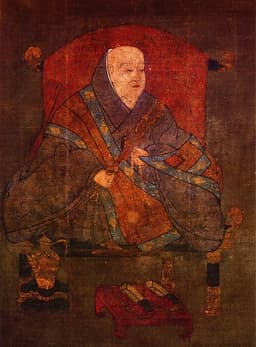
Emperor Uda
Emperor · Medieval
47.2Total

Napoleon Bonaparte
General · Modern
70.9Total
Basic Information
Born
867
1769
Died
931
1821
Era
Medieval
Modern
Nationality
Japan
France
Occupation
Emperor
General
Civilization
Eastern
Western
Score Comparison
Military (10%)
52.0
94.0
Political (20%)
37.9
72.0
Influence (20%)
50.2
40.0
Legacy (20%)
42.5
80.0
Leadership (15%)
41.5
78.0
Strategy (15%)
68.9
90.0
TOTAL
47.2
70.9
Emperor Uda — Complete Timeline
887 AD
Attempt to Counter Fujiwara DominancePolitical Action◆ Major
Emperor Uda attempted to rule without a Fujiwara regent after his abdication. He appointed his own advisors and promoted scholarship. His efforts to reduce Fujiwara influence were partially successful but ultimately temporary.
FujiwaraImperial PowerResistance
Impact: national
Promotion of Sugawara no MichizanePolitical Action◆ Major
Emperor Uda elevated the scholar Sugawara no Michizane to high court rank, bypassing the Fujiwara. Michizane became a key advisor and was appointed to the Council of State. This move was part of Uda's strategy to counter Fujiwara power.
Sugawara no MichizaneAdvisorFaction
Impact: nationalconstructive
897 AD
Abdication and Cloistered RulePolitical Action◆ Major
Emperor Uda abdicated and became a Buddhist monk, but continued to exert influence as a retired emperor (daijo tenno). This system of cloistered rule allowed him to govern from behind the scenes, a practice that later emperors would emulate.
Cloistered RuleAbdicationInsei
Impact: national
Napoleon Bonaparte — Complete Timeline
1799 AD
Coup of 18 BrumaireOther◆ Major
Napoleon Bonaparte, with support from his brother Lucien and key political figures, overthrew the Directory in a bloodless coup. He established the Consulate with himself as First Consul, effectively becoming the ruler of France. This event ended the French Revolution's most unstable period.
French RevolutionCoupRise to Power
Impact: regional
1804 AD
Promulgation of the Napoleonic CodeOther◆ Major
Napoleon enacted the Civil Code of the French, known as the Napoleonic Code, a comprehensive set of laws that replaced the fragmented feudal legal systems. The code established legal equality, protected property rights, and secularized law. It became the basis for legal systems in many European and world countries.
Legal ReformNapoleonic CodeCivil Law
Impact: globalconstructive
1805 AD
Battle of AusterlitzWar◆ Major
Napoleon's Grande Arm
Napoleonic WarsBattleDecisive Victory
Impact: global
1812 AD
Invasion of RussiaWar◆ Major
Napoleon led the Grande Arm
Napoleonic WarsInvasionDisaster
Impact: globaldestructive
1815 AD
Battle of WaterlooWar◆ Major
Napoleon's French army was defeated by the combined forces of the Duke of Wellington's Anglo-Allied army and Gebhard Leberecht von Bl
Napoleonic WarsBattleFinal Defeat
Impact: globaldestructive
Expert Analysis
Origins
Emperor Uda was born in 867 CE in Heian-kyo (modern Kyoto), Japan, as the son of Emperor Koko. He ascended the throne in 887 at age 20. His family, the Yamato line, had ruled for centuries but faced increasing dominance by the Fujiwara clan, who controlled regency positions. Uda received a traditional Confucian education and was deeply influenced by Chinese scholarship. He was not trained in military affairs; his power base rested on court politics and religious authority.
Napoleon Bonaparte was born in 1769 in Ajaccio, Corsica, into a minor noble family. He studied at military academies in Brienne and Paris, graduating as an artillery officer in 1785. The French Revolution opened opportunities; he rose quickly through the ranks. His formative experiences included the siege of Toulon (1793) and the Italian campaign (1796-1797), where he demonstrated tactical brilliance.
Rise to Power
Emperor Uda became emperor in 887 after his father's abdication. He immediately faced the Fujiwara regent, Fujiwara no Mototsune. In 891, Mototsune died, and Uda attempted to rule without appointing a Fujiwara regent. He promoted scholars like Sugawara no Michizane, elevating him to high court ranks (from junior third rank to senior second rank by 899). Uda also bypassed Fujiwara candidates for key posts, appointing his own allies. However, his power was limited; the Fujiwara controlled land revenues and military forces. In 897, Uda abdicated in favor of his son, Emperor Daigo, but continued to exert influence from a Buddhist monastery, initiating the system of cloistered rule (insei).
Napoleon rose through the military. In 1795, he suppressed a royalist uprising in Paris (13 Vendémiaire), gaining political favor. In 1796, he married Josephine de Beauharnais and took command of the Army of Italy. His Italian campaign (1796-1797) defeated the Austrians and established his reputation. In 1798, he led an expedition to Egypt, which failed strategically but boosted his fame. He returned to France in 1799 and staged the Coup of 18 Brumaire (November 9-10, 1799), overthrowing the Directory. He became First Consul, then Consul for Life (1802), and Emperor in 1804.
Leadership & Governance
Uda's leadership was characterized by indirect influence. As emperor, he had ceremonial authority but limited executive power. After abdication, he used the title of daijo tenno (retired emperor) to issue decrees and oversee appointments. He promoted cultural and scholarly activities, commissioning the compilation of the Kokin Wakashu poetry anthology. His governance relied on patronage and alliances with non-Fujiwara nobles. However, his reforms were fragile; after his death, the Fujiwara reasserted control.
Napoleon centralized power in France. He enacted the Napoleonic Code (1804), which standardized laws across France and influenced civil law globally. He reformed education through the University of France, established the Bank of France, and improved infrastructure. His governance was authoritarian; he suppressed dissent and manipulated elections. He created a meritocratic system for military and civil service, but also restored nobility. His military leadership was aggressive: he fought over 60 battles, winning most, but his strategic overreach led to disaster in Russia (1812).
Triumph & Tragedy
Uda's greatest success was establishing cloistered rule, which allowed retired emperors to wield power for centuries. He temporarily reduced Fujiwara influence and promoted Sugawara no Michizane, though Michizane later fell from favor after Uda's abdication. His tragedy was that his efforts were short-lived; the Fujiwara regained dominance under Emperor Daigo. His political score of 72.0 reflects moderate success, but his military score of 53.9 indicates no martial achievements.
Napoleon's triumphs include the Battle of Austerlitz (1805), where he defeated a larger Austro-Russian army, and the Napoleonic Code, which remains foundational. His tragedy was the invasion of Russia (1812): the Grande Armée of over 600,000 men was destroyed by winter and scorched-earth tactics, with only about 100,000 surviving. He was exiled to Elba in 1814, returned for 100 days, and was finally defeated at Waterloo (1815). His military score of 94.0 and strategy of 93.0 show dominance, but his political score of 75.0 reflects eventual failure to consolidate power.
Character & Destiny
Uda was cautious and scholarly. He sought to rule through influence rather than force, which limited his impact. His decision to abdicate early may have preserved his family's long-term influence but ceded immediate power. He was pious, becoming a Buddhist monk, and his legacy is tied to cultural patronage. Historians view him as a transitional figure who attempted to revive imperial authority.
Napoleon was ambitious, charismatic, and ruthless. His confidence led to brilliant victories but also fatal overreach. He micromanaged campaigns and expected total loyalty. His personality drove him to conquer Europe, but his inability to compromise led to his downfall. Historians rate him as one of history's greatest military commanders, but his legacy is mixed due to his authoritarianism and wars that caused millions of deaths.
Legacy
Uda's legacy is the cloistered rule system, which allowed emperors to influence politics from retirement. This system persisted until the 12th century. He also promoted Sugawara no Michizane, who became a revered scholar and later deified as Tenjin. Uda's cultural contributions include the Kokin Wakashu. His legacy score is 57.5, reflecting limited but enduring impact in Japanese history.
Napoleon's legacy is vast. The Napoleonic Code influenced legal systems in Europe, the Americas, and beyond. He redrew the map of Europe, ending the Holy Roman Empire and spreading nationalism. His military tactics are studied in academies worldwide. However, his wars caused about 3.5 million deaths. He is remembered as a brilliant strategist but also a tyrant. His legacy score of 78.0 indicates profound global impact.
Conclusion
Napoleon Bonaparte had greater impact than Emperor Uda. Napoleon scored 82.4 overall versus Uda's 65.2. Napoleon transformed Europe through law, warfare, and administration; his influence persists in legal codes, military doctrine, and national boundaries. Uda's reforms were confined to Japan and temporary. While Uda's cloistered rule was innovative, it did not reshape the world. Napoleon's military and political achievements, despite his failures, changed the course of history on a global scale. Uda's score of 68.3 in influence and 57.5 in legacy cannot match Napoleon's 82.0 and 78.0. The data supports that Napoleon's reach and lasting effects were far greater.
Rankings
🥇
Napoleon BonaparteLeader
Mil: 94.0Pol: 72.0Inf: 40.0
70.9
🥈
Emperor Uda
Mil: 52.0Pol: 37.9Inf: 50.2
47.2
+23.7 behind
How This Comparison Works
Algorithm
Each figure is scored on 6 dimensions (0—100 scale) based on structured historical data: Military (10%), Political (20%), Influence (20%), Legacy (20%), Leadership (15%), Strategy (15%). The weighted total produces the final ranking.
Data Sources
Scores are computed from structured sub-indicators in the database. Scale factors adjust for era (Ancient ×0.85, Modern ×1.0) and civilization size (Eastern ×1.05, Other ×0.80) to account for differences in population and military scale.
Maximum 3 Figures
Comparisons are limited to 2—3 figures to ensure readability and statistical meaningfulness.
Error Margins
±5 points per dimension — Sub-scores are derived from historical records with inherent uncertainty. Two figures within 5 points on a dimension should be considered roughly equivalent in that area.
Total Score Accuracy
±3 points overall — The weighted combination of 6 dimensions produces a total score with approximately ±3 points of uncertainty. Differences of less than 3 points are not statistically significant— the figures are effectively tied.
Known Limitations
- Historical records are incomplete and uneven across civilizations
- Figures from oral-tradition societies may be underrepresented
- Occupation labels can misclassify multi-role figures
- Scores measure capability and impact, not moral character
- Quantitative scoring is a comparison tool, not absolute truth
Capability Radar
Military (10%) — Battles & Warfare
Battles
43
95
Win Rate
49
90
Expansion
50
95
Political (20%) — Governance & Reform
Reform
40
95
Diplomacy
35
80
Economy
25
85
Influence (20%) — Cultural & Global Reach
Cultural
30
85
Global
10
90
Legacy (20%) — Historical Impact
Historical
35
95
Longevity
20
90
Leadership (15%) — Power & Stability
Tenure
30
85
Stability
20
70
Strategy (15%) — Tactics & Innovation
Strategy
55
95
Tactics
57
98
Reform
61
92
Similar Comparisons
Comments & Discussion
No comments yet. Be the first to share your thoughts!