Loading...
Emperor Uda vs Sundiata Keita
Sundiata Keita leads by 18.3 pts · 2 figures compared
…
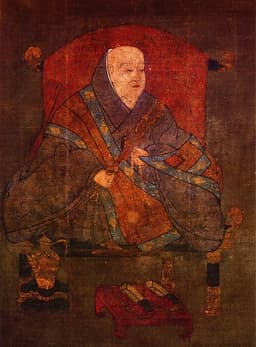
Emperor Uda
Emperor · Medieval
47.2Total
Sundiata Keita
Emperor · Medieval
65.5Total
Basic Information
Born
867
1217
Died
931
1255
Era
Medieval
Medieval
Nationality
Japan
Mali Empire
Occupation
Emperor
Emperor
Civilization
Eastern
Other
Score Comparison
Military (10%)
52.0
72.0
Political (20%)
37.9
70.0
Influence (20%)
50.2
40.0
Legacy (20%)
42.5
80.0
Leadership (15%)
41.5
72.0
Strategy (15%)
68.9
70.0
TOTAL
47.2
65.5
Emperor Uda — Complete Timeline
887 AD
Attempt to Counter Fujiwara DominancePolitical Action◆ Major
Emperor Uda attempted to rule without a Fujiwara regent after his abdication. He appointed his own advisors and promoted scholarship. His efforts to reduce Fujiwara influence were partially successful but ultimately temporary.
FujiwaraImperial PowerResistance
Impact: national
Promotion of Sugawara no MichizanePolitical Action◆ Major
Emperor Uda elevated the scholar Sugawara no Michizane to high court rank, bypassing the Fujiwara. Michizane became a key advisor and was appointed to the Council of State. This move was part of Uda's strategy to counter Fujiwara power.
Sugawara no MichizaneAdvisorFaction
Impact: nationalconstructive
897 AD
Abdication and Cloistered RulePolitical Action◆ Major
Emperor Uda abdicated and became a Buddhist monk, but continued to exert influence as a retired emperor (daijo tenno). This system of cloistered rule allowed him to govern from behind the scenes, a practice that later emperors would emulate.
Cloistered RuleAbdicationInsei
Impact: national
Sundiata Keita — Complete Timeline
1235 AD
Battle of KirinaWar
Sundiata Keita led the Mandinka coalition against Soumaoro Kant
BattleMali EmpireSosso
Impact: regional
Proclamation as MansaPolitical Action◆ Major
After the Battle of Kirina, Sundiata was proclaimed Mansa (emperor) of the Mali Empire at the Kouroukan Fouga assembly. He established a constitution and divided the empire into provinces, laying the administrative foundation of Mali.
CoronationConstitutionAdministration
Impact: regionalconstructive
1240 AD
Conquest of GhanaWar◆ Major
Sundiata conquered the remnants of the Ghana Empire, incorporating its territory into Mali. This gave Mali control over the trans-Saharan gold trade routes, significantly increasing its wealth and power.
ConquestGhana EmpireGold Trade
Impact: regional
Establishment of Niani as CapitalPolitical Action
Sundiata established Niani as the capital of the Mali Empire. The city became a center of trade and governance, located near gold fields and on trade routes, facilitating the empire's economic growth.
CapitalNianiTrade Center
Impact: regionalconstructive
1245 AD
Introduction of Cotton CultivationReform
Sundiata promoted the cultivation of cotton and the weaving of cloth, which became a major industry in Mali. This economic reform diversified the empire's economy and increased its self-sufficiency.
AgricultureCottonEconomic Reform
Impact: regionalconstructive
Expert Analysis
Origins
Emperor Uda (born 867) was the 59th emperor of Japan, ascending the throne in 887. He was the son of Emperor Kōkō and came from the Yamato line. His early life was marked by the dominance of the Fujiwara clan, who controlled the regency and limited imperial power. Uda received a classical education and was deeply influenced by Confucian and Buddhist thought, which shaped his desire to restore imperial authority.
Sundiata Keita (c. 1217–1255) was born in the Mandinka region of West Africa. According to oral tradition, he was the son of Nare Maghann Konaté, a minor king, and Sogolon Conde, a hunchbacked woman. Sundiata was reportedly crippled in childhood but later regained his strength. His family was exiled after his father's death, and he grew up in exile in the court of the Mema Kingdom, learning military skills and statecraft.
Rise to Power
Emperor Uda ascended the throne in 887 after the death of his father. He initially relied on Fujiwara no Mototsune as regent, but after Mototsune's death in 891, Uda attempted to rule without appointing a new Fujiwara regent. He promoted scholars like Sugawara no Michizane to high positions, bypassing the Fujiwara. In 897, he abdicated in favor of his son Daigo, but continued to exert influence as a retired emperor (daijo tenno), establishing the system of cloistered rule. His political score of 37.9 reflects his limited success in curbing Fujiwara power.
Sundiata Keita returned from exile after the Sosso Empire under Soumaoro Kanté conquered the Mandinka lands. He united the Mandinka clans and led a rebellion. In 1235, at the Battle of Kirina, Sundiata's forces defeated Soumaoro, a victory that marked the turning point. Following this, at the Kouroukan Fouga assembly, Sundiata was proclaimed Mansa (emperor) of the Mali Empire. He then conquered the remnants of the Ghana Empire, securing control over the trans-Saharan gold trade. His military score of 72.0 and political score of 70.0 reflect his decisive rise.
Leadership & Governance
Emperor Uda's leadership was characterized by indirect influence through cloistered rule. After abdication, he became a Buddhist monk but continued to issue directives from his temple, appointing loyalists and promoting culture. He sponsored literary works and supported the compilation of poetry anthologies. However, his governance score of 41.5 indicates his limited ability to enact lasting structural changes. The Fujiwara clan eventually regained dominance after his death.
Sundiata Keita established a centralized empire with a constitution at Kouroukan Fouga. He divided the empire into provinces, appointed governors, and created a standing army. He promoted economic reforms such as introducing cotton cultivation and weaving, which diversified the economy. He also established Niani as the capital, which became a hub for trade and culture. His leadership score of 72.0 reflects his effective governance and institution-building.
Triumph & Tragedy
Emperor Uda's greatest success was establishing the precedent of cloistered rule, which later emperors used to exert influence from behind the scenes. His promotion of Sugawara no Michizane temporarily weakened Fujiwara control. However, his efforts ultimately failed; after his death, the Fujiwara reasserted control, and Michizane was exiled in a political purge. Uda's legacy score of 42.5 reflects this mixed outcome.
Sundiata Keita's triumph was founding the Mali Empire, which became one of the largest and wealthiest empires in West Africa. His conquest of Ghana gave Mali control over gold trade routes. However, his early death (c. 1255) left the empire to his successors, who faced internal conflicts. The empire reached its peak under Mansa Musa, but Sundiata's foundation was crucial. His legacy score of 80.0 reflects his lasting impact.
Character & Destiny
Emperor Uda was a cultured and determined ruler, but his indirect approach could not overcome the entrenched power of the Fujiwara. His decision to abdicate and rule from the shadows was innovative but ultimately insufficient. His strategic score of 68.9 shows his cleverness, but his political score of 37.9 reveals his inability to translate strategy into lasting power.
Sundiata Keita was a charismatic and decisive leader, rallying diverse clans against a common enemy. His personal journey from cripple to conqueror mirrors his empire's rise. His military and political scores (72.0 and 70.0) indicate a balanced and effective ruler. He is remembered as the 'Lion King' and a unifier of the Mandinka people.
Legacy
Emperor Uda's cloistered rule system was used by later emperors, but his immediate impact was limited. He is a minor figure in Japanese history, often overshadowed by the Fujiwara. His total score of 47.2 places him below average among historical figures.
Sundiata Keita is revered as the founder of the Mali Empire, which shaped West African history for centuries. His constitution and economic policies influenced subsequent rulers. His total score of 65.5 is significantly higher, reflecting his greater impact.
Conclusion
Sundiata Keita had a greater impact than Emperor Uda. With a total score of 65.5 versus Uda's 47.2, Sundiata's military conquests, political unification, and economic reforms created a lasting empire. Uda's attempts to counter Fujiwara dominance, while strategically interesting, did not produce enduring change. Sundiata's legacy as the founder of Mali and his influence on West African civilization clearly outweighs Uda's limited achievements.
Rankings
🥇
Sundiata KeitaLeader
Mil: 72.0Pol: 70.0Inf: 40.0
65.5
🥈
Emperor Uda
Mil: 52.0Pol: 37.9Inf: 50.2
47.2
+18.3 behind
How This Comparison Works
Algorithm
Each figure is scored on 6 dimensions (0—100 scale) based on structured historical data: Military (10%), Political (20%), Influence (20%), Legacy (20%), Leadership (15%), Strategy (15%). The weighted total produces the final ranking.
Data Sources
Scores are computed from structured sub-indicators in the database. Scale factors adjust for era (Ancient ×0.85, Modern ×1.0) and civilization size (Eastern ×1.05, Other ×0.80) to account for differences in population and military scale.
Maximum 3 Figures
Comparisons are limited to 2—3 figures to ensure readability and statistical meaningfulness.
Error Margins
±5 points per dimension — Sub-scores are derived from historical records with inherent uncertainty. Two figures within 5 points on a dimension should be considered roughly equivalent in that area.
Total Score Accuracy
±3 points overall — The weighted combination of 6 dimensions produces a total score with approximately ±3 points of uncertainty. Differences of less than 3 points are not statistically significant— the figures are effectively tied.
Known Limitations
- Historical records are incomplete and uneven across civilizations
- Figures from oral-tradition societies may be underrepresented
- Occupation labels can misclassify multi-role figures
- Scores measure capability and impact, not moral character
- Quantitative scoring is a comparison tool, not absolute truth
Capability Radar
Military (10%) — Battles & Warfare
Battles
43
75
Win Rate
49
85
Expansion
50
90
Political (20%) — Governance & Reform
Reform
40
80
Diplomacy
35
75
Economy
25
80
Influence (20%) — Cultural & Global Reach
Cultural
30
85
Global
10
80
Legacy (20%) — Historical Impact
Historical
35
90
Longevity
20
85
Leadership (15%) — Power & Stability
Tenure
30
70
Stability
20
75
Strategy (15%) — Tactics & Innovation
Strategy
55
85
Tactics
57
80
Reform
61
70
Similar Comparisons
Comments & Discussion
No comments yet. Be the first to share your thoughts!