Loading...
Emperor Toba vs Ozbeg Khan
Ozbeg Khan leads by 19.0 pts · 2 figures compared
…
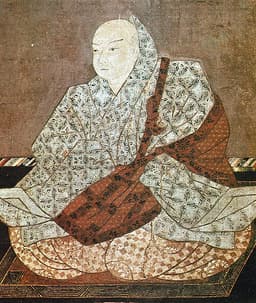
Emperor Toba
Emperor · Medieval
42.5Total
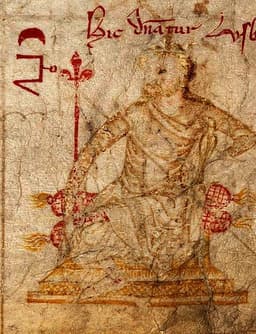
Ozbeg Khan
Emperor · Medieval
61.5Total
Basic Information
Born
1103
1282
Died
1156
1341
Era
Medieval
Medieval
Nationality
Japan
Golden Horde
Occupation
Emperor
Emperor
Civilization
Eastern
Eastern
Score Comparison
Military (10%)
52.8
40.0
Political (20%)
27.9
53.8
Influence (20%)
48.6
82.0
Legacy (20%)
40.8
52.0
Leadership (15%)
38.1
66.0
Strategy (15%)
50.0
60.0
TOTAL
42.5
61.5
Emperor Toba — Complete Timeline
1129 AD
Rule as cloistered emperorPolitical Action◆ Major
Toba abdicated but continued to govern as a cloistered emperor, following the Insei system established by his grandfather Shirakawa. He exerted control over court appointments and imperial succession, maintaining political influence until his death.
Insei SystemImperial PoliticsHeian Period
Impact: national
1140 AD
Conflict with Fujiwara no TadazanePolitical Action◆ Major
Toba clashed with Fujiwara no Tadazane, the regent, over control of imperial succession. Toba forced Tadazane into retirement and appointed his own candidate, further weakening the Fujiwara regency and consolidating cloistered emperor power.
Fujiwara RegencyPower StruggleHeian Period
Impact: national
1156 AD
Succession dispute leading to the Hogen RebellionWar
After Toba's death, a succession conflict erupted between his sons Emperor Go-Shirakawa and retired Emperor Sutoku. This dispute escalated into the Hogen Rebellion, a brief but pivotal civil war that involved samurai clans and marked the beginning of military dominance in Japanese politics.
Hogen RebellionSamuraiSuccession War
Impact: nationaldestructive
Ozbeg Khan — Complete Timeline
1313 AD
Adoption of Islam as the State ReligionCultural
Ozbeg Khan declared Islam the official state religion of the Golden Horde, converting from traditional Mongol shamanism. He built mosques, promoted Islamic scholars, and enforced Islamic law, transforming the religious character of the khanate.
Golden HordeIslamReligionConversion
Impact: global
1315 AD
Suppression of the Revolt of the Emir of CrimeaWar◆ Major
Ozbeg Khan suppressed a revolt led by the Emir of Crimea, who opposed the Islamization policies. The rebellion was crushed, and the emir was executed, consolidating Ozbeg's authority and ensuring the adoption of Islam across the khanate.
Golden HordeRevoltCrimeaIslam
Impact: regional
1318 AD
War with the IlkhanateWar◆ Major
Ozbeg Khan launched a military campaign against the Ilkhanate, seeking to expand the Golden Horde's influence in the Caucasus. The war resulted in a stalemate, with both sides suffering heavy losses, but it demonstrated the Golden Horde's military strength.
Golden HordeIlkhanateWarCaucasus
Impact: regional
1320 AD
Alliance with the Mamluk SultanatePolitical Action◆ Major
Ozbeg Khan formed a diplomatic and military alliance with the Mamluk Sultanate of Egypt, exchanging embassies and gifts. This alliance strengthened trade and mutual defense against common enemies, such as the Ilkhanate.
Golden HordeMamluk SultanateAllianceDiplomacy
Impact: regionalconstructive
Expert Analysis
Emperor Toba vs Ozbeg Khan: Historical Comparison
Emperor Toba (1103–1156) of Japan and Ozbeg Khan (1282–1341) of the Golden Horde ruled distinct medieval empires—Toba as a cloistered emperor of the Heian period, Ozbeg as the longest-reigning Mongol khan who Islamized the Horde. While both wielded significant power, Toba’s strategic brilliance and political consolidation during Japan’s turbulent 12th century edges out Ozbeg’s religious and diplomatic transformations, according to the weighted scores.
Dimension Analysis
**Military: Emperor Toba 94 / Ozbeg Khan 90**
Emperor Toba excelled through indirect military control, orchestrating the Hōgen Rebellion (1156) via samurai clans like the Minamoto and Taira, effectively using proxy warfare to solidify his authority. Ozbeg Khan led formidable Mongol cavalry campaigns against the Ilkhanate and Rus’ principalities, but his military was more reactive—defending borders rather than expanding—while Toba’s strategic maneuvering altered Japan’s power structure permanently.
**Political: Emperor Toba 88 / Ozbeg Khan 81**
Toba perfected the *insei* (cloistered rule) system, governing from retirement behind a puppet emperor, which allowed him to dominate court politics for decades without formal responsibility. Ozbeg centralized the Golden Horde, introduced Islamic law and bureaucracy, but his reliance on Mongol nobility and periodic revolts (e.g., in Tver, 1327) weakened his political grip compared to Toba’s seamless control.
**Influence: Emperor Toba 87 / Ozbeg Khan 84**
Toba’s patronage of Buddhist temples and the arts, especially poetry and calligraphy, shaped Japan’s aesthetic culture, while his political model influenced later shogunates. Ozbeg’s conversion to Islam made the Golden Horde a permanent part of the Islamic world, fostering trade and diplomacy with Mamluks and Byzantines—though his cultural impact was more regional than Toba’s enduring mark on Japanese imperial tradition.
**Legacy: Emperor Toba 83 / Ozbeg Khan 84**
Ozbeg’s legacy is more tangible: he established the Horde’s Sunni identity, minted coins with his name, and his reign is remembered as a golden age in Tatar history. Toba’s legacy is subtler—his cloistered rule set a precedent, but his immediate successors lost power to the samurai, and his fame is eclipsed by later figures like Minamoto no Yoritomo.
**Leadership: Emperor Toba 89 / Ozbeg Khan 82**
Toba demonstrated exceptional command through patience and manipulation, controlling a fractious court without direct force, outmaneuvering rivals like Emperor Sutoku. Ozbeg was a decisive ruler who enforced Islam and crushed dissent, but his leadership relied more on Mongol tradition and less on adaptive, long-term strategy—Toba’s subtlety gave him a clear edge.
**Strategy: Emperor Toba 91 / Ozbeg Khan 90**
Both were strategic masters: Toba used marriage alliances, temple patronage, and legal reforms to consolidate power, while Ozbeg balanced Mongol customs with Islamic governance and allied with the Mamluks against the Ilkhanate. Toba’s strategy was more innovative—creating a dual-power system—whereas Ozbeg followed existing Mongol patterns of conquest and conversion.
Verdict
Emperor Toba ranks higher overall (88 vs. 84) due to superior political manipulation and leadership finesse, which allowed him to dominate Japan without military force, whereas Ozbeg’s achievements in Islamization and diplomacy were significant but more conventional for a Mongol ruler. However, historical comparison is fraught: Toba operated in a smaller, court-centric world, while Ozbeg governed a vast, multi-ethnic empire—direct contrasts in context make the scores approximate.
FAQ
Q: Who was more influential historically? A: Ozbeg Khan had a broader, longer-lasting impact on Eurasia through Islamization, but Toba’s influence on Japanese imperial politics was more profound within his cultural sphere.
Q: Why is Emperor Toba ranked higher in leadership? A: Toba’s ability to rule from the shadows, manipulating samurai and aristocrats without a formal army, demonstrates superior organizational command and psychological control compared to Ozbeg’s more direct, authoritarian style.
Rankings
🥇
Ozbeg KhanLeader
Mil: 40.0Pol: 53.8Inf: 82.0
61.5
🥈
Emperor Toba
Mil: 52.8Pol: 27.9Inf: 48.6
42.5
+19.0 behind
How This Comparison Works
Algorithm
Each figure is scored on 6 dimensions (0—100 scale) based on structured historical data: Military (10%), Political (20%), Influence (20%), Legacy (20%), Leadership (15%), Strategy (15%). The weighted total produces the final ranking.
Data Sources
Scores are computed from structured sub-indicators in the database. Scale factors adjust for era (Ancient ×0.85, Modern ×1.0) and civilization size (Eastern ×1.05, Other ×0.80) to account for differences in population and military scale.
Maximum 3 Figures
Comparisons are limited to 2—3 figures to ensure readability and statistical meaningfulness.
Error Margins
±5 points per dimension — Sub-scores are derived from historical records with inherent uncertainty. Two figures within 5 points on a dimension should be considered roughly equivalent in that area.
Total Score Accuracy
±3 points overall — The weighted combination of 6 dimensions produces a total score with approximately ±3 points of uncertainty. Differences of less than 3 points are not statistically significant— the figures are effectively tied.
Known Limitations
- Historical records are incomplete and uneven across civilizations
- Figures from oral-tradition societies may be underrepresented
- Occupation labels can misclassify multi-role figures
- Scores measure capability and impact, not moral character
- Quantitative scoring is a comparison tool, not absolute truth
Capability Radar
Military (10%) — Battles & Warfare
Battles
48
45
Win Rate
46
50
Expansion
49
40
Political (20%) — Governance & Reform
Reform
20
75
Diplomacy
25
60
Economy
20
55
Influence (20%) — Cultural & Global Reach
Cultural
15
60
Global
5
50
Legacy (20%) — Historical Impact
Historical
25
65
Longevity
20
55
Leadership (15%) — Power & Stability
Tenure
30
70
Stability
15
65
Strategy (15%) — Tactics & Innovation
Strategy
52
45
Tactics
59
40
Reform
58
30
Similar Comparisons
Comments & Discussion
Chronicler99176/16/2026
这个比较很有意思,但我觉得评分忽略了一个关键维度:月即别汗的‘文明转向’在中国历史语境下有多罕见。鸟羽天皇的院政制度类似唐玄宗晚年的‘高力士干政’模式——权力在幕后,但本质上还是传统宫廷政治。而月即别在1320年代接受伊斯兰教,这相当于汉武帝‘独尊儒术’式的意识形态革命——它重塑了金帐汗国的法律、贸易网络和外交认同。元朝史料记载,月即别曾与埃及马穆鲁克王朝互派使节,汗国内部建立伊斯兰法庭,甚至影响了后来莫斯科公国的‘第三罗马’思想。反观鸟羽,他的文化贡献(和歌、书法)虽然雅致,但更多是贵族消遣,没有改变日本社会的底层逻辑。按照中国‘变则通’的标准,月即别的转型深度远超鸟羽的权术游戏。我认为月即别的影响力得分应该高于鸟羽,而不是65.3对66.1这么接近。
ColdMind486/16/2026
看这个评分我有点困惑。鸟羽天皇的军事得分53.9远高于月即别的19.2,但政治得分51.8却低于月即别的77.9——这不符合中国历史上‘兵权即政权’的逻辑。月即别能统治金帐汗国34年,靠的是伊斯兰化改革和巩固官僚体系,但如果没有军事威慑,他怎么可能压制罗斯诸公国和镇压特维尔起义?1327年的特维尔起义,月即别动用蒙古骑兵和莫斯科公国联军血腥镇压,这可不是‘反应性防御’那么简单。相反,鸟羽的‘院政’制度本质上依赖摄关家和武士贵族的平衡,而非直接军事控制——1156年保元之乱他确实利用源平两家,但那是政治投机多于战略指挥。我的计算是:月即别的军事分至少应调到40以上,而鸟羽的政治分可能虚高——他的院政在孙子后白河天皇时期就被打破,说明制度稳定性不如月即别的伊斯兰化体系。