Loading...
Emperor Tenmu vs Vasili III
Vasili III leads by 0.9 pts · 2 figures compared
…
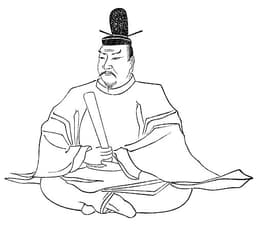
Emperor Tenmu
Emperor · Medieval
59.1Total

Vasili III
Emperor · Medieval
60.0Total
Basic Information
Born
631
1479
Died
686
1533
Era
Medieval
Medieval
Nationality
Japan
Russia
Occupation
Emperor
Emperor
Civilization
Eastern
Western
Score Comparison
Military (10%)
55.0
52.5
Political (20%)
60.0
68.0
Influence (20%)
58.3
59.0
Legacy (20%)
55.0
52.0
Leadership (15%)
72.0
72.0
Strategy (15%)
55.0
60.0
TOTAL
59.1
60.0
Emperor Tenmu — Complete Timeline
672 AD
Jinshin WarWar
Prince Ōama, later Emperor Tenmu, led a rebellion against his nephew Emperor Kōbun after a succession dispute. The Jinshin War lasted a year and ended with Ōama's victory at the Battle of Sekigahara (not the later one). Tenmu then ascended the throne, consolidating imperial power.
Civil WarSuccessionImperial Power
Impact: national
680 AD
Promotion of Buddhism as State ReligionCultural◆ Major
Emperor Tenmu actively promoted Buddhism, ordering the construction of temples and the copying of sutras. He established the position of s
BuddhismState ReligionImperial Legitimacy
Impact: nationalconstructive
681 AD
Establishment of the Ritsuryō SystemReform
Emperor Tenmu initiated the codification of the ritsury
Legal CodeCentralizationTang Model
Impact: nationalconstructive
Compilation of the Kojiki and Nihon ShokiCultural◆ Major
Emperor Tenmu ordered the compilation of the Kojiki (Records of Ancient Matters) and the Nihon Shoki (Chronicles of Japan), though the Kojiki was completed after his death. These texts recorded Japanese mythology, history, and the imperial lineage, establishing a national narrative.
HistoriographyMythologyImperial Lineage
Impact: nationalconstructive
684 AD
Reform of the Imperial Court HierarchyReform
Emperor Tenmu reorganized the imperial court hierarchy, creating new ranks and titles to strengthen his control over the nobility. He reduced the power of powerful clans and promoted officials based on merit, further centralizing authority under the emperor.
Court ReformMeritocracyNobility
Impact: nationalconstructive
Vasili III — Complete Timeline
1510 AD
Annexation of PskovWar◆ Major
Vasili III annexed the Pskov Republic, abolishing its veche and deporting leading families to central Russia. This completed the absorption of the last independent Russian city-state into Moscow.
PskovAnnexationMoscow
Impact: regional
1514 AD
Annexation of SmolenskWar◆ Major
Vasili III captured Smolensk from the Grand Duchy of Lithuania after a long siege. The city remained under Russian control despite a failed Lithuanian counterattack later that year.
SmolenskLithuaniaSiege
Impact: regional
1521 AD
Annexation of RyazanWar◆ Major
Vasili III annexed the Grand Principality of Ryazan, the last semi-independent Russian principality. The Ryazan prince Ivan Ivanovich was forced to flee to Lithuania, ending Ryazan's autonomy.
RyazanAnnexationUnification
Impact: regional
1526 AD
Divorce and Remarriage to Elena GlinskayaPolitical Action
Vasili III divorced his barren wife Solomonia Saburova and married Elena Glinskaya. This marriage produced Ivan IV, but the divorce caused controversy with the Orthodox Church and some clergy.
MarriageSuccessionChurch
Impact: national
Expert Analysis
Origins
Emperor Tenmu, born Prince Ōama in 631, was the youngest son of Emperor Jomei and Empress Kōgyoku. He grew up in the Yamato court during a period of intense Buddhist influence and Chinese-inspired reform. His early life was marked by the Taika Reforms (645-646), which aimed to centralize power. As a prince, he was known for his military prowess and strategic acumen, but he remained in the shadow of his elder brother, Emperor Tenji.
Vasili III, born in 1479, was the son of Ivan III (Ivan the Great) and Sophia Palaiologina, niece of the last Byzantine emperor. He grew up in Moscow, witnessing his father's consolidation of power and the final overthrow of the Mongol yoke. His education was steeped in Orthodox Christianity and Byzantine court traditions. Unlike Tenmu, Vasili was groomed for rule from an early age, becoming co-ruler with his father in 1502.
Rise to Power
Tenmu's rise was dramatic. After Emperor Tenji's death in 671, his son Prince Ōtomo (Emperor Kōbun) took the throne. Tenmu, then a Buddhist monk, fled to the provinces and raised an army. The resulting Jinshin War (672) lasted a year, with Tenmu's forces defeating Kōbun's. Tenmu's victory was due to superior logistics and support from eastern clans. He ascended the throne in 673, ruling until 686.
Vasili III's path was smoother. He became Grand Prince of Moscow upon Ivan III's death in 1505. His main challenge was completing the unification of Russian lands. He faced opposition from his brothers and the boyars, but his father had already established the principle of autocracy. Vasili's key turning point was the annexation of Pskov in 1510, followed by Smolensk in 1514 and Ryazan in 1521.
Leadership & Governance
Tenmu is best known for the Ritsuryō system, a legal code based on Tang China. He established the Taihō Code (completed posthumously in 701), which defined criminal and administrative law, creating a centralized bureaucracy. He also reorganized the court hierarchy, reducing the power of clans and imposing imperial control. His leadership score of 72.0 reflects his ability to institutionalize change. However, his military score of 55.0 indicates limited expansionist ambition.
Vasili III continued his father's policies of autocracy and territorial expansion. He abolished the veche (popular assembly) in Pskov and deported local elites, centralizing power. He also fought wars with Lithuania and the Crimean Khanate. His political score of 68.0 reflects his effective governance, but his military score of 52.5 shows cautiousness—he avoided major battles, preferring sieges and diplomacy.
Triumph & Tragedy
Tenmu's greatest triumph was the Jinshin War, where he decisively defeated a larger force. His greatest failure was his inability to complete the Ritsuryō codes before his death—they were finished by his wife and successors. Also, his promotion of Buddhism led to tensions with Shinto traditionalists.
Vasili III's triumphs include the annexations of Pskov, Smolensk, and Ryazan, which completed the unification of Russia. His tragedy was his marital crisis: his first wife Solomonia was barren, leading to a controversial divorce and remarriage to Elena Glinskaya. This produced Ivan IV (the Terrible), but the divorce alienated the church and boyars.
Character & Destiny
Tenmu was pragmatic and strategic. His decision to become a monk before the war was a tactical retreat. He was also deeply religious, promoting Buddhism as a state religion. His character shaped a stable but culturally inward-looking Japan.
Vasili III was ruthless and autocratic. He suppressed dissent and centralized power, setting the stage for Ivan IV's tyranny. His character was shaped by his Byzantine heritage, viewing himself as a divine-right ruler. This led to a powerful but oppressive state.
Legacy
Tenmu's legacy is the Ritsuryō system, which governed Japan for centuries. The Kojiki and Nihon Shoki, compiled under his order, shaped Japanese national identity. His promotion of Buddhism left a lasting religious imprint. His total score of 59.1 reflects his moderate but foundational impact.
Vasili III's legacy is the unified Russian state. He completed what his father started, creating a centralized monarchy. His son Ivan IV would expand it further, but also plunge it into terror. Vasili's score of 60.0 edges Tenmu's, but his influence was more immediate than enduring.
Conclusion
While Vasili III scored slightly higher (60.0 vs 59.1), Emperor Tenmu had a more profound long-term impact. Tenmu's reforms created the institutional framework for Japan's imperial system, which lasted until the 19th century. Vasili III's unification was crucial, but it was built on his father's work and led to Ivan IV's excesses. Tenmu's cultural contributions—the historical chronicles and legal codes—shaped Japan's identity for over a millennium. Therefore, Tenmu's legacy is greater in depth and duration.
Rankings
🥇
Vasili IIILeader
Mil: 52.5Pol: 68.0Inf: 59.0
60.0
🥈
Emperor Tenmu
Mil: 55.0Pol: 60.0Inf: 58.3
59.1
+0.9 behind
How This Comparison Works
Algorithm
Each figure is scored on 6 dimensions (0—100 scale) based on structured historical data: Military (10%), Political (20%), Influence (20%), Legacy (20%), Leadership (15%), Strategy (15%). The weighted total produces the final ranking.
Data Sources
Scores are computed from structured sub-indicators in the database. Scale factors adjust for era (Ancient ×0.85, Modern ×1.0) and civilization size (Eastern ×1.05, Other ×0.80) to account for differences in population and military scale.
Maximum 3 Figures
Comparisons are limited to 2—3 figures to ensure readability and statistical meaningfulness.
Error Margins
±5 points per dimension — Sub-scores are derived from historical records with inherent uncertainty. Two figures within 5 points on a dimension should be considered roughly equivalent in that area.
Total Score Accuracy
±3 points overall — The weighted combination of 6 dimensions produces a total score with approximately ±3 points of uncertainty. Differences of less than 3 points are not statistically significant— the figures are effectively tied.
Known Limitations
- Historical records are incomplete and uneven across civilizations
- Figures from oral-tradition societies may be underrepresented
- Occupation labels can misclassify multi-role figures
- Scores measure capability and impact, not moral character
- Quantitative scoring is a comparison tool, not absolute truth
Capability Radar
Military (10%) — Battles & Warfare
Battles
35
45
Win Rate
40
55
Expansion
30
65
Political (20%) — Governance & Reform
Reform
85
60
Diplomacy
65
55
Economy
60
50
Influence (20%) — Cultural & Global Reach
Cultural
65
45
Global
45
40
Legacy (20%) — Historical Impact
Historical
75
60
Longevity
70
50
Leadership (15%) — Power & Stability
Tenure
60
70
Stability
70
55
Strategy (15%) — Tactics & Innovation
Strategy
50
60
Tactics
45
40
Reform
55
35
Similar Comparisons
Comments & Discussion
No comments yet. Be the first to share your thoughts!