Loading...
Emperor Tenmu vs Napoleon Bonaparte
Napoleon Bonaparte leads by 11.8 pts · 2 figures compared
…
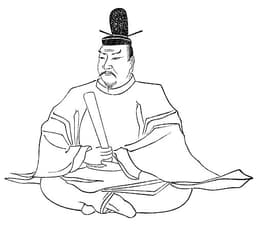
Emperor Tenmu
Emperor · Medieval
59.1Total

Napoleon Bonaparte
General · Modern
70.9Total
Basic Information
Born
631
1769
Died
686
1821
Era
Medieval
Modern
Nationality
Japan
France
Occupation
Emperor
General
Civilization
Eastern
Western
Score Comparison
Military (10%)
55.0
94.0
Political (20%)
60.0
72.0
Influence (20%)
58.3
40.0
Legacy (20%)
55.0
80.0
Leadership (15%)
72.0
78.0
Strategy (15%)
55.0
90.0
TOTAL
59.1
70.9
Emperor Tenmu — Complete Timeline
672 AD
Jinshin WarWar
Prince Ōama, later Emperor Tenmu, led a rebellion against his nephew Emperor Kōbun after a succession dispute. The Jinshin War lasted a year and ended with Ōama's victory at the Battle of Sekigahara (not the later one). Tenmu then ascended the throne, consolidating imperial power.
Civil WarSuccessionImperial Power
Impact: national
680 AD
Promotion of Buddhism as State ReligionCultural◆ Major
Emperor Tenmu actively promoted Buddhism, ordering the construction of temples and the copying of sutras. He established the position of s
BuddhismState ReligionImperial Legitimacy
Impact: nationalconstructive
681 AD
Establishment of the Ritsuryō SystemReform
Emperor Tenmu initiated the codification of the ritsury
Legal CodeCentralizationTang Model
Impact: nationalconstructive
Compilation of the Kojiki and Nihon ShokiCultural◆ Major
Emperor Tenmu ordered the compilation of the Kojiki (Records of Ancient Matters) and the Nihon Shoki (Chronicles of Japan), though the Kojiki was completed after his death. These texts recorded Japanese mythology, history, and the imperial lineage, establishing a national narrative.
HistoriographyMythologyImperial Lineage
Impact: nationalconstructive
684 AD
Reform of the Imperial Court HierarchyReform
Emperor Tenmu reorganized the imperial court hierarchy, creating new ranks and titles to strengthen his control over the nobility. He reduced the power of powerful clans and promoted officials based on merit, further centralizing authority under the emperor.
Court ReformMeritocracyNobility
Impact: nationalconstructive
Napoleon Bonaparte — Complete Timeline
1799 AD
Coup of 18 BrumaireOther◆ Major
Napoleon Bonaparte, with support from his brother Lucien and key political figures, overthrew the Directory in a bloodless coup. He established the Consulate with himself as First Consul, effectively becoming the ruler of France. This event ended the French Revolution's most unstable period.
French RevolutionCoupRise to Power
Impact: regional
1804 AD
Promulgation of the Napoleonic CodeOther◆ Major
Napoleon enacted the Civil Code of the French, known as the Napoleonic Code, a comprehensive set of laws that replaced the fragmented feudal legal systems. The code established legal equality, protected property rights, and secularized law. It became the basis for legal systems in many European and world countries.
Legal ReformNapoleonic CodeCivil Law
Impact: globalconstructive
1805 AD
Battle of AusterlitzWar◆ Major
Napoleon's Grande Arm
Napoleonic WarsBattleDecisive Victory
Impact: global
1812 AD
Invasion of RussiaWar◆ Major
Napoleon led the Grande Arm
Napoleonic WarsInvasionDisaster
Impact: globaldestructive
1815 AD
Battle of WaterlooWar◆ Major
Napoleon's French army was defeated by the combined forces of the Duke of Wellington's Anglo-Allied army and Gebhard Leberecht von Bl
Napoleonic WarsBattleFinal Defeat
Impact: globaldestructive
Expert Analysis
Origins
Emperor Tenmu, born Prince Ōama in 631 AD, was a son of Emperor Jomei and Empress Kōgyoku. His early life was marked by the Soga clan's dominance; he studied Buddhism and Chinese classics, preparing for a scholarly role rather than the throne. His older brother, Emperor Tenji, ruled before him, and Tenmu initially lived as a prince without direct political power.
Napoleon Bonaparte was born in 1769 on Corsica, shortly after France annexed the island. He came from a minor noble family and received a military education in mainland France. His early career was shaped by the French Revolution, which opened advancement opportunities for talented officers. He rose quickly through the ranks, demonstrating skill in artillery tactics.
Rise to Power
Tenmu gained power through the Jinshin War (672 AD). After Emperor Tenji's death, his son Kōbun ascended, but Tenmu challenged the succession, gathering eastern clans. The war lasted a year, ending with Tenmu's victory at the Battle of Sekigahara (though actually at Lake Biwa). He became emperor in 673 AD, consolidating authority by eliminating rivals.
Napoleon's rise was meteoric. He became a general after the Siege of Toulon (1793) and later commanded the Italian campaign (1796-1797), defeating Austria. The Coup of 18 Brumaire (1799) made him First Consul, effectively dictator. He crowned himself Emperor in 1804, expanding French dominance across Europe.
Leadership & Governance
Tenmu centralized Japan's government, modeling it on Tang China. He established the Ritsuryō system, codifying laws that defined criminal and administrative codes. He reorganized court ranks, reducing noble power, and promoted Buddhism as a state religion, building temples and copying sutras. His governance aimed at unifying Japan under imperial authority, scoring 72.0 in leadership.
Napoleon's leadership was pragmatic and ambitious. He enacted the Napoleonic Code (1804), a civil law system that influenced many nations. He centralized administration, created the Bank of France, and reformed education. However, his authoritarian rule suppressed dissent and reinstated slavery in colonies. His political score is 72.0, reflecting effective but autocratic governance.
Triumph & Tragedy
Tenmu's greatest success was the consolidation of Japan's imperial system and the creation of foundational legal codes. The Kojiki and Nihon Shoki, compiled under his order, established a national history. However, his reign was short (673-686), and some reforms faced resistance from powerful clans. His legacy scored 55.0.
Napoleon's triumphs include the Battle of Austerlitz (1805), a masterpiece of military strategy, and the spread of the Napoleonic Code. His tragedy was the disastrous Invasion of Russia (1812), where over 400,000 soldiers died. He was exiled to Elba, returned, but was finally defeated at Waterloo (1815). His military score of 94.0 contrasts with his influence score of 40.0, reflecting his ultimate failure to sustain his empire.
Character & Destiny
Tenmu was cautious and methodical, using marriage alliances and religious patronage to secure power. His character was shaped by Buddhist piety and administrative discipline. He died naturally in 686, leaving a stable dynasty.
Napoleon was ambitious, charismatic, and relentless. His overconfidence led to strategic errors, like the Russian campaign. He was eventually captured and exiled to Saint Helena, where he died in 1821. His destiny was shaped by his inability to compromise, leading to his downfall.
Legacy
Tenmu's legacy is foundational for Japan: the Ritsuryō system lasted for centuries, and the imperial line continued unbroken. His promotion of Buddhism shaped Japanese culture. The historical records he ordered remain primary sources.
Napoleon's legacy is global: the Napoleonic Code influenced civil law in Europe and beyond. He invented modern warfare with mass conscription and the Grande Armée. However, his conquests caused millions of deaths and destabilized Europe.
Conclusion
Napoleon had a greater immediate impact on world history, with military and legal reforms that reshaped continents. His total score of 70.9 surpasses Tenmu's 59.1. However, Tenmu's long-term influence on Japan's stability and culture is profound. While Napoleon's legacy is mixed, his innovations in law and warfare were transformative. Tenmu's consolidation of imperial power created a durable system, but Napoleon's reach was wider. Therefore, Napoleon Bonaparte holds greater historical significance due to his broader impact and lasting legal reforms.
Rankings
🥇
Napoleon BonaparteLeader
Mil: 94.0Pol: 72.0Inf: 40.0
70.9
🥈
Emperor Tenmu
Mil: 55.0Pol: 60.0Inf: 58.3
59.1
+11.8 behind
How This Comparison Works
Algorithm
Each figure is scored on 6 dimensions (0—100 scale) based on structured historical data: Military (10%), Political (20%), Influence (20%), Legacy (20%), Leadership (15%), Strategy (15%). The weighted total produces the final ranking.
Data Sources
Scores are computed from structured sub-indicators in the database. Scale factors adjust for era (Ancient ×0.85, Modern ×1.0) and civilization size (Eastern ×1.05, Other ×0.80) to account for differences in population and military scale.
Maximum 3 Figures
Comparisons are limited to 2—3 figures to ensure readability and statistical meaningfulness.
Error Margins
±5 points per dimension — Sub-scores are derived from historical records with inherent uncertainty. Two figures within 5 points on a dimension should be considered roughly equivalent in that area.
Total Score Accuracy
±3 points overall — The weighted combination of 6 dimensions produces a total score with approximately ±3 points of uncertainty. Differences of less than 3 points are not statistically significant— the figures are effectively tied.
Known Limitations
- Historical records are incomplete and uneven across civilizations
- Figures from oral-tradition societies may be underrepresented
- Occupation labels can misclassify multi-role figures
- Scores measure capability and impact, not moral character
- Quantitative scoring is a comparison tool, not absolute truth
Capability Radar
Military (10%) — Battles & Warfare
Battles
35
95
Win Rate
40
90
Expansion
30
95
Political (20%) — Governance & Reform
Reform
85
95
Diplomacy
65
80
Economy
60
85
Influence (20%) — Cultural & Global Reach
Cultural
65
85
Global
45
90
Legacy (20%) — Historical Impact
Historical
75
95
Longevity
70
90
Leadership (15%) — Power & Stability
Tenure
60
85
Stability
70
70
Strategy (15%) — Tactics & Innovation
Strategy
50
95
Tactics
45
98
Reform
55
92
Similar Comparisons
Comments & Discussion
No comments yet. Be the first to share your thoughts!