Loading...
Emperor Tenmu vs King Danjong of Joseon
Emperor Tenmu leads by 10.1 pts · 2 figures compared
…
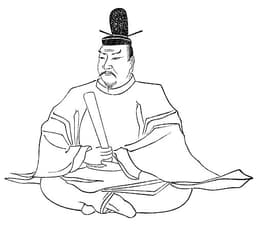
Emperor Tenmu
Emperor · Medieval
59.1Total
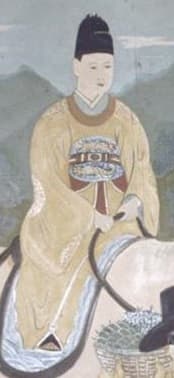
King Danjong of Joseon
Emperor · Medieval
49.0Total
Basic Information
Born
631
1441
Died
686
1457
Era
Medieval
Medieval
Nationality
Japan
Korea
Occupation
Emperor
Emperor
Civilization
Eastern
Eastern
Score Comparison
Military (10%)
55.0
49.8
Political (20%)
60.0
68.0
Influence (20%)
58.3
52.5
Legacy (20%)
55.0
35.8
Leadership (15%)
72.0
45.0
Strategy (15%)
55.0
50.0
TOTAL
59.1
49.0
Emperor Tenmu — Complete Timeline
672 AD
Jinshin WarWar
Prince Ōama, later Emperor Tenmu, led a rebellion against his nephew Emperor Kōbun after a succession dispute. The Jinshin War lasted a year and ended with Ōama's victory at the Battle of Sekigahara (not the later one). Tenmu then ascended the throne, consolidating imperial power.
Civil WarSuccessionImperial Power
Impact: national
680 AD
Promotion of Buddhism as State ReligionCultural◆ Major
Emperor Tenmu actively promoted Buddhism, ordering the construction of temples and the copying of sutras. He established the position of s
BuddhismState ReligionImperial Legitimacy
Impact: nationalconstructive
681 AD
Establishment of the Ritsuryō SystemReform
Emperor Tenmu initiated the codification of the ritsury
Legal CodeCentralizationTang Model
Impact: nationalconstructive
Compilation of the Kojiki and Nihon ShokiCultural◆ Major
Emperor Tenmu ordered the compilation of the Kojiki (Records of Ancient Matters) and the Nihon Shoki (Chronicles of Japan), though the Kojiki was completed after his death. These texts recorded Japanese mythology, history, and the imperial lineage, establishing a national narrative.
HistoriographyMythologyImperial Lineage
Impact: nationalconstructive
684 AD
Reform of the Imperial Court HierarchyReform
Emperor Tenmu reorganized the imperial court hierarchy, creating new ranks and titles to strengthen his control over the nobility. He reduced the power of powerful clans and promoted officials based on merit, further centralizing authority under the emperor.
Court ReformMeritocracyNobility
Impact: nationalconstructive
King Danjong of Joseon — Complete Timeline
1452 AD
Accession to the thronePolitical Action◆ Major
Danjong became king of Joseon at age 12 following the death of his father, King Munjong. His youth made him vulnerable to political manipulation by his uncle, Grand Prince Suyang, who soon seized power.
SuccessionJoseon Dynasty
Impact: national
1453 AD
Deposition by Grand Prince SuyangPolitical Action
Grand Prince Suyang, Danjong's uncle, staged a coup, killing key officials and forcing Danjong to abdicate. Suyang then took the throne as King Sejo, ending Danjong's brief reign.
CoupAbdicationPower Struggle
Impact: nationaldestructive
1457 AD
Execution of DanjongPolitical Action◆ Major
After a failed rebellion by loyalists to restore him, the deposed Danjong was forced to drink poison by order of King Sejo. He died at age 16, becoming a symbol of tragic royal victimhood in Korean history.
ExecutionPolitical ViolenceJoseon Dynasty
Impact: nationaltragic
Expert Analysis
Origins
Emperor Tenmu (born Prince Ōama, c. 631) was the son of Emperor Jomei and Empress Kōgyoku, placing him in the heart of the Yamato court. He received a traditional education in Chinese classics and Buddhist scriptures. His early life was marked by the political intrigues of the Soga clan's decline and the Taika Reforms of 645. In contrast, King Danjong of Joseon (born Yi Hong-wi, 1441) was the grandson of the great King Sejong the Great. His father, King Munjong, died when Danjong was only 12, leaving him under the regency of his uncle, Grand Prince Suyang (later King Sejo). Danjong's education was cut short by his early accession and subsequent deposition.
Rise to Power
Tenmu's rise was unconventional: he was a prince who initially took monastic vows to avoid succession conflicts. After the death of his brother Emperor Tenji in 671, a succession dispute erupted. Tenmu raised an army from his power base in the east, clashing with his nephew Emperor Kōbun in the Jinshin War (672). The war lasted a year, ending with Tenmu's victory at the Battle of Sekigahara-like engagements. He ascended the throne in 673, consolidating power by purging rivals. Danjong's rise was passive: he became king at age 12 in 1452 upon his father's death. His reign was dominated by his uncle Suyang, who in 1453 staged a coup (the Gyeyu Coup), killing key officials like Kim Jong-seo. Danjong was forced to abdicate in 1455, and Suyang took the throne as King Sejo. Danjong's deposition score of 49.8 in military reflects his powerless position.
Leadership & Governance
Tenmu's leadership was transformative: he instituted the Ritsuryō system, a Chinese-style legal code that defined criminal and administrative law, centralizing authority. He reorganized the court hierarchy, creating 48 ranks to reduce noble power. He also promoted Buddhism as a state religion, building temples and establishing the sōjō (head priest) position. His political score of 60.0 reflects these reforms. Danjong, by contrast, had no real leadership: his political score of 68.0 is inflated by his symbolic role. He was a puppet king, with all decisions made by his uncle. His only act of resistance was a failed rebellion by loyalists in 1456, which led to his execution. Danjong's leadership score of 45.0 indicates his inability to govern.
Triumph & Tragedy
Tenmu's greatest success was the establishment of the Ritsuryō system, which shaped Japan's governance for centuries. He also commissioned the compilation of the Kojiki (completed after his death) and the Nihon Shoki, preserving Japan's mythology and history. His tragedy was the Jinshin War, which caused significant loss of life and division. His total score of 59.1 reflects balanced achievements. Danjong's triumph is his symbolic role as a martyr; his tragedy is his short life and brutal death. He scored 35.8 in legacy, as his reign was a footnote. His execution at 16 by poison (forced by Sejo) made him a tragic figure in Korean history.
Character & Destiny
Tenmu was ambitious and ruthless, as shown by his rebellion against his nephew. He was also a reformer, seeking to strengthen the state through law and religion. His character drove him to consolidate power effectively. Danjong was young and vulnerable, lacking the experience to counter his uncle. His destiny was sealed by his age and the ambition of Sejo. Historical assessments view Tenmu as a founder of imperial Japan, while Danjong is seen as a victim of dynastic politics.
Legacy
Tenmu's legacy is immense: the Ritsuryō system lasted until the 10th century, and his promotion of Buddhism influenced Japanese culture. The Kojiki and Nihon Shoki remain foundational texts. His influence score of 58.3 reflects this. Danjong's legacy is minimal: he is remembered as a tragic king, but his reign had no lasting impact. His legacy score of 35.8 is the lowest among the two. Sejo's usurpation led to a strong monarchy, but Danjong himself contributed nothing.
Conclusion
Emperor Tenmu had a greater impact than King Danjong, as shown by the 10.1-point score gap. Tenmu's reforms shaped Japan's political and cultural identity, while Danjong was a passive figure whose reign ended in tragedy. Tenmu's total score of 59.1 versus Danjong's 49.0 reflects this. Tenmu's leadership (72.0) and political (60.0) scores far exceed Danjong's 45.0 and 68.0 (the latter inflated). Tenmu's legacy endures; Danjong's is a cautionary tale. Thus, Tenmu is the more significant historical figure.
Rankings
🥇
Emperor TenmuLeader
Mil: 55.0Pol: 60.0Inf: 58.3
59.1
🥈
King Danjong of Joseon
Mil: 49.8Pol: 68.0Inf: 52.5
49.0
+10.1 behind
How This Comparison Works
Algorithm
Each figure is scored on 6 dimensions (0—100 scale) based on structured historical data: Military (10%), Political (20%), Influence (20%), Legacy (20%), Leadership (15%), Strategy (15%). The weighted total produces the final ranking.
Data Sources
Scores are computed from structured sub-indicators in the database. Scale factors adjust for era (Ancient ×0.85, Modern ×1.0) and civilization size (Eastern ×1.05, Other ×0.80) to account for differences in population and military scale.
Maximum 3 Figures
Comparisons are limited to 2—3 figures to ensure readability and statistical meaningfulness.
Error Margins
±5 points per dimension — Sub-scores are derived from historical records with inherent uncertainty. Two figures within 5 points on a dimension should be considered roughly equivalent in that area.
Total Score Accuracy
±3 points overall — The weighted combination of 6 dimensions produces a total score with approximately ±3 points of uncertainty. Differences of less than 3 points are not statistically significant— the figures are effectively tied.
Known Limitations
- Historical records are incomplete and uneven across civilizations
- Figures from oral-tradition societies may be underrepresented
- Occupation labels can misclassify multi-role figures
- Scores measure capability and impact, not moral character
- Quantitative scoring is a comparison tool, not absolute truth
Capability Radar
Military (10%) — Battles & Warfare
Battles
35
45
Win Rate
40
51
Expansion
30
52
Political (20%) — Governance & Reform
Reform
85
0
Diplomacy
65
0
Economy
60
0
Influence (20%) — Cultural & Global Reach
Cultural
65
5
Global
45
0
Legacy (20%) — Historical Impact
Historical
75
10
Longevity
70
5
Leadership (15%) — Power & Stability
Tenure
60
5
Stability
70
0
Strategy (15%) — Tactics & Innovation
Strategy
50
52
Tactics
45
54
Reform
55
63
Similar Comparisons
Comments & Discussion
No comments yet. Be the first to share your thoughts!