Loading...
Emperor Tenmu vs Peter III of Aragon
Peter III of Aragon leads by 0.3 pts · 2 figures compared
…
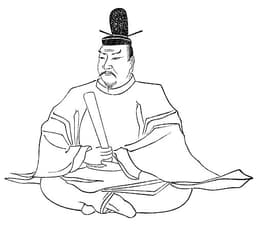
Emperor Tenmu
Emperor · Medieval
59.1Total
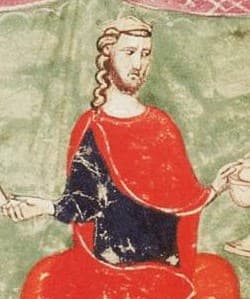
Peter III of Aragon
Emperor · Medieval
59.4Total
Basic Information
Born
631
1239
Died
686
1285
Era
Medieval
Medieval
Nationality
Japan
Aragon
Occupation
Emperor
Emperor
Civilization
Eastern
Western
Score Comparison
Military (10%)
55.0
61.7
Political (20%)
60.0
68.0
Influence (20%)
58.3
57.2
Legacy (20%)
55.0
49.2
Leadership (15%)
72.0
65.0
Strategy (15%)
55.0
66.3
TOTAL
59.1
59.4
Emperor Tenmu — Complete Timeline
672 AD
Jinshin WarWar
Prince Ōama, later Emperor Tenmu, led a rebellion against his nephew Emperor Kōbun after a succession dispute. The Jinshin War lasted a year and ended with Ōama's victory at the Battle of Sekigahara (not the later one). Tenmu then ascended the throne, consolidating imperial power.
Civil WarSuccessionImperial Power
Impact: national
680 AD
Promotion of Buddhism as State ReligionCultural◆ Major
Emperor Tenmu actively promoted Buddhism, ordering the construction of temples and the copying of sutras. He established the position of s
BuddhismState ReligionImperial Legitimacy
Impact: nationalconstructive
681 AD
Establishment of the Ritsuryō SystemReform
Emperor Tenmu initiated the codification of the ritsury
Legal CodeCentralizationTang Model
Impact: nationalconstructive
Compilation of the Kojiki and Nihon ShokiCultural◆ Major
Emperor Tenmu ordered the compilation of the Kojiki (Records of Ancient Matters) and the Nihon Shoki (Chronicles of Japan), though the Kojiki was completed after his death. These texts recorded Japanese mythology, history, and the imperial lineage, establishing a national narrative.
HistoriographyMythologyImperial Lineage
Impact: nationalconstructive
684 AD
Reform of the Imperial Court HierarchyReform
Emperor Tenmu reorganized the imperial court hierarchy, creating new ranks and titles to strengthen his control over the nobility. He reduced the power of powerful clans and promoted officials based on merit, further centralizing authority under the emperor.
Court ReformMeritocracyNobility
Impact: nationalconstructive
Peter III of Aragon — Complete Timeline
1282 AD
Conquest of Sicily after the Sicilian VespersWar◆ Major
Following the Sicilian Vespers rebellion against Angevin rule, Peter III invaded Sicily and was crowned king in Palermo. This conquest established Aragonese rule in Sicily and triggered a long conflict with the Angevin dynasty and the Papacy.
ConquestSicilyAragon
Impact: regionalconstructive
Conquest of the Kingdom of SicilyWar◆ Major
Peter III landed at Trapani and quickly conquered the island of Sicily, defeating the Angevin forces of Charles I. He was crowned King of Sicily in Palermo, establishing the Aragonese Sicilian dynasty.
ConquestSicilyAragon
Impact: regionalconstructive
1283 AD
Excommunication by Pope Martin IVPolitical Action◆ Major
Pope Martin IV excommunicated Peter III for invading Sicily, a papal fief, and declared a crusade against him. The excommunication isolated Aragon diplomatically and led to a French invasion of Catalonia.
ExcommunicationPapacyConflict
Impact: regionaldestructive
1285 AD
Defense against the French CrusadeWar◆ Major
Peter III successfully defended the Crown of Aragon against a French crusade led by Philip III of France. The French army was defeated at the Battle of the Col de Panissars and forced to retreat, securing Aragonese independence.
WarDefenseAragon
Impact: regionalconstructive
Expert Analysis
Origins
Emperor Tenmu, born Prince Ōama in 631, was a son of Emperor Jomei and Empress Kōgyoku. He was raised in the Yamato court, where he received a traditional education in Chinese classics and Buddhism. His older brother, Emperor Tenji, initially favored him, but after Tenji's death, a succession dispute arose. Tenmu's early life was marked by his role as a prince during a period of centralization, but he lived in relative obscurity until the crisis.
Peter III of Aragon, born in 1240, was the eldest son of James I of Aragon and Violant of Hungary. He grew up in the Aragonese court, inheriting a powerful Mediterranean kingdom. His father had expanded Aragon's territory, and Peter was trained in chivalry and statecraft. He married Constance of Sicily, daughter of Manfred of Hohenstaufen, which later gave him a claim to Sicily.
Rise to Power
Tenmu's rise came through the Jinshin War (672-673). After Emperor Tenji died, his son Prince Ōtomo (Emperor Kōbun) ascended. Tenmu, as Tenji's brother, raised an army in the eastern provinces, claiming Ōtomo was illegitimate. The war lasted a year, ending with Tenmu's victory at the Battle of Seta. He became emperor in 673, consolidating power by purging rivals.
Peter III inherited the Crown of Aragon in 1276 upon his father's death. His major turning point came in 1282 when the Sicilian Vespers rebellion broke out against Charles of Anjou. Peter, as Constance's husband, pressed his claim. He landed at Trapani in August 1282 and was crowned King of Sicily in Palermo. This sparked a war with the Angevin dynasty and the Papacy.
Leadership & Governance
Tenmu's governance focused on institutionalizing imperial authority. He initiated the ritsuryō system, based on Tang Chinese models, which codified criminal and administrative law. He reorganized the court hierarchy, creating new ranks (e.g., the "Eight Ministries") and reducing noble power. He also promoted Buddhism, establishing the sōjō (chief priest) position. His reforms centralized power, but he relied on clan support, scoring 60.0 in political skill.
Peter III governed as a feudal monarch, balancing noble privileges with royal authority. He strengthened the Aragonese navy and expanded trade. In Sicily, he replaced Angevin officials with loyal Aragonese. However, his excommunication by Pope Martin IV in 1283 isolated him diplomatically. He defended against a French crusade (1285), defeating Philip III at the Battle of the Col de Panissars. His political score is 68.0, reflecting pragmatic alliances.
Triumph & Tragedy
Tenmu's greatest success was the Jinshin War victory, which secured his throne and allowed reforms. He ordered compilation of the Kojiki and Nihon Shoki, preserving Japanese mythology and history. His promotion of Buddhism led to temple construction (e.g., Yakushi-ji). However, his reforms were incomplete; the ritsuryō system weakened after his death. He also faced rebellions from local clans, scoring 55.0 in military.
Peter III's triumph was the conquest of Sicily, establishing Aragonese rule for centuries. His defense against the French crusade was a strategic victory. But his excommunication and war with the Papacy strained resources. He died in 1285, leaving unfinished conflicts. His military score is 61.7, reflecting successes but also high costs.
Character & Destiny
Tenmu was pragmatic and methodical, using legal reforms to secure his legacy. He was a skilled strategist in the Jinshin War but avoided direct confrontation. His character shaped a centralized Japan, but his reliance on Chinese models limited adaptability. Historians view him as a consolidator, not an innovator.
Peter III was ambitious and chivalric, driven by dynastic claims. He took risks, like invading Sicily while excommunicated. His stubbornness led to isolation, but his boldness secured Sicily. Medieval chroniclers praised his courage but criticized his defiance of the Church.
Legacy
Tenmu's legacy is the ritsuryō system, which influenced Japanese governance for centuries. The Kojiki and Nihon Shoki became foundational texts. His promotion of Buddhism shaped religious culture. However, his reforms were later overshadowed by the Heian period. His influence score is 58.3.
Peter III's legacy is the Aragonese Empire in the Mediterranean. Sicily remained under Aragonese rule until the 18th century. His defiance of the Pope set a precedent for secular power. But his reign was short, and his successors faced revolts. His legacy score is 49.2.
Conclusion
Peter III of Aragon had a slightly higher total score (59.4 vs 59.1), but Tenmu's institutional impact was more enduring. Tenmu's ritsuryō system and historical compilations shaped Japan's identity for over a millennium. Peter III's conquests, while significant, were territorial and less transformative. Therefore, Emperor Tenmu had greater long-term impact through legal and cultural foundations that outlasted his dynasty.
Rankings
🥇
Peter III of AragonLeader
Mil: 61.7Pol: 68.0Inf: 57.2
59.4
🥈
Emperor Tenmu
Mil: 55.0Pol: 60.0Inf: 58.3
59.1
+0.3 behind
How This Comparison Works
Algorithm
Each figure is scored on 6 dimensions (0—100 scale) based on structured historical data: Military (10%), Political (20%), Influence (20%), Legacy (20%), Leadership (15%), Strategy (15%). The weighted total produces the final ranking.
Data Sources
Scores are computed from structured sub-indicators in the database. Scale factors adjust for era (Ancient ×0.85, Modern ×1.0) and civilization size (Eastern ×1.05, Other ×0.80) to account for differences in population and military scale.
Maximum 3 Figures
Comparisons are limited to 2—3 figures to ensure readability and statistical meaningfulness.
Error Margins
±5 points per dimension — Sub-scores are derived from historical records with inherent uncertainty. Two figures within 5 points on a dimension should be considered roughly equivalent in that area.
Total Score Accuracy
±3 points overall — The weighted combination of 6 dimensions produces a total score with approximately ±3 points of uncertainty. Differences of less than 3 points are not statistically significant— the figures are effectively tied.
Known Limitations
- Historical records are incomplete and uneven across civilizations
- Figures from oral-tradition societies may be underrepresented
- Occupation labels can misclassify multi-role figures
- Scores measure capability and impact, not moral character
- Quantitative scoring is a comparison tool, not absolute truth
Capability Radar
Military (10%) — Battles & Warfare
Battles
35
65
Win Rate
40
70
Expansion
30
70
Political (20%) — Governance & Reform
Reform
85
50
Diplomacy
65
65
Economy
60
50
Influence (20%) — Cultural & Global Reach
Cultural
65
40
Global
45
45
Legacy (20%) — Historical Impact
Historical
75
55
Longevity
70
40
Leadership (15%) — Power & Stability
Tenure
60
55
Stability
70
45
Strategy (15%) — Tactics & Innovation
Strategy
50
75
Tactics
45
60
Reform
55
40
Similar Comparisons
Comments & Discussion
No comments yet. Be the first to share your thoughts!