Loading...
Emperor Tenmu vs Robert II the Pious
Emperor Tenmu leads by 14.2 pts · 2 figures compared
…
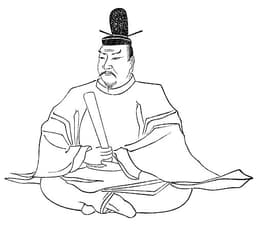
Emperor Tenmu
Emperor · Medieval
59.1Total
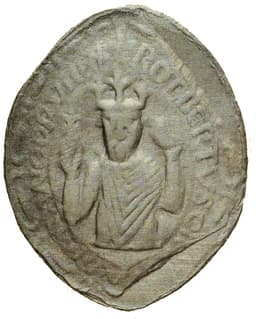
Robert II the Pious
Emperor · Medieval
44.9Total
Basic Information
Born
631
972
Died
686
1031
Era
Medieval
Medieval
Nationality
Japan
France
Occupation
Emperor
Emperor
Civilization
Eastern
Western
Score Comparison
Military (10%)
55.0
20.0
Political (20%)
60.0
37.9
Influence (20%)
58.3
50.2
Legacy (20%)
55.0
41.7
Leadership (15%)
72.0
65.0
Strategy (15%)
55.0
45.0
TOTAL
59.1
44.9
Emperor Tenmu — Complete Timeline
672 AD
Jinshin WarWar
Prince Ōama, later Emperor Tenmu, led a rebellion against his nephew Emperor Kōbun after a succession dispute. The Jinshin War lasted a year and ended with Ōama's victory at the Battle of Sekigahara (not the later one). Tenmu then ascended the throne, consolidating imperial power.
Civil WarSuccessionImperial Power
Impact: national
680 AD
Promotion of Buddhism as State ReligionCultural◆ Major
Emperor Tenmu actively promoted Buddhism, ordering the construction of temples and the copying of sutras. He established the position of s
BuddhismState ReligionImperial Legitimacy
Impact: nationalconstructive
681 AD
Establishment of the Ritsuryō SystemReform
Emperor Tenmu initiated the codification of the ritsury
Legal CodeCentralizationTang Model
Impact: nationalconstructive
Compilation of the Kojiki and Nihon ShokiCultural◆ Major
Emperor Tenmu ordered the compilation of the Kojiki (Records of Ancient Matters) and the Nihon Shoki (Chronicles of Japan), though the Kojiki was completed after his death. These texts recorded Japanese mythology, history, and the imperial lineage, establishing a national narrative.
HistoriographyMythologyImperial Lineage
Impact: nationalconstructive
684 AD
Reform of the Imperial Court HierarchyReform
Emperor Tenmu reorganized the imperial court hierarchy, creating new ranks and titles to strengthen his control over the nobility. He reduced the power of powerful clans and promoted officials based on merit, further centralizing authority under the emperor.
Court ReformMeritocracyNobility
Impact: nationalconstructive
Robert II the Pious — Complete Timeline
996 AD
Reign as King of the FranksPolitical Action◆ Major
Robert II succeeded his father Hugh Capet as King of the Franks. His reign was marked by efforts to consolidate royal power, but he faced challenges from powerful nobles and the Church, limiting his authority.
KingshipCapetianReign
Impact: national
998 AD
Excommunication for Marriage to Bertha of BurgundyPolitical Action◆ Major
Robert II was excommunicated by Pope Gregory V for marrying Bertha of Burgundy, his cousin, without papal dispensation. The excommunication was lifted after Robert repudiated Bertha, but it damaged his reputation and strained relations with the Church.
ExcommunicationMarriageChurch Conflict
Impact: nationaltragic
1000 AD
Patronage of the Cluniac ReformsCultural
Robert II supported the Cluniac monastic reforms, which aimed to purify the Church and reduce secular influence. His patronage strengthened the Cluniac movement and enhanced the Church's moral authority in France.
Church ReformClunyPatronage
Impact: regionalconstructive
1002 AD
Conflict with the Duchy of BurgundyWar
Robert II attempted to assert control over the Duchy of Burgundy after the death of Duke Henry I. The conflict lasted several years and resulted in limited success, as Burgundy remained largely independent under its own dukes.
WarBurgundyTerritorial Conflict
Impact: regional
Expert Analysis
Origins
Emperor Tenmu was born Prince Ōama in 631 AD, the son of Emperor Jomei and Empress Kōgyoku. He grew up in the Yamato court, immersed in the politics of the Asuka period. As a young prince, he studied Chinese classics and Buddhism, shaping his worldview. In contrast, Robert II the Pious was born in 972 AD in Orléans, the son of Hugh Capet, founder of the Capetian dynasty. He was raised in a Christian environment, educated by the scholar Gerbert of Aurillac (later Pope Sylvester II). His upbringing emphasized piety and Latin learning, fitting for a medieval French king.
Rise to Power
Tenmu's path to power was violent. In 672, after the death of Emperor Tenji, a succession dispute erupted. Tenji's son, Prince Ōtomo (Emperor Kōbun), assumed the throne. Tenmu, then a monk, raised an army from his base in Yoshino. The Jinshin War lasted a year, culminating in Tenmu's victory at the Battle of Seta. He became emperor in 673. Robert II's rise was smoother. He was crowned as co-king in 987 alongside his father, ensuring succession. Upon Hugh's death in 996, Robert became sole ruler. His reign was challenged by rebellious nobles, but he maintained the throne through negotiation and church support.
Leadership & Governance
Tenmu's governance was transformative. He centralized power by reorganizing the court hierarchy into 48 ranks, reducing noble influence. He initiated the Ritsuryō system, a legal code based on Tang China, which defined criminal and administrative law. This system, completed after his death as the Taihō Code, structured Japan for centuries. He also promoted Buddhism as a state religion, building temples like Yakushi-ji and creating the position of sōjō (head priest). Robert II, by contrast, struggled to exert authority. His governance relied on church alliances and personal piety. He supported the Cluniac reforms, which sought to purify the church and reduce lay interference. However, his military score of 20.0 reflects his inability to subdue powerful vassals like the Duke of Burgundy. Where Tenmu built institutions, Robert relied on faith.
Triumph & Tragedy
Tenmu's greatest triumph was the Jinshin War victory, securing his rule and enabling his reforms. He also ordered the compilation of the Kojiki and Nihon Shoki, foundational Japanese historical texts. His tragedy lies in his early death in 686, leaving the Ritsuryō system incomplete. His wife, Empress Jitō, finished the codes. Robert's triumph was his longevity (reigned 996-1031) and his role in consolidating Capetian rule. His patronage of Cluny strengthened the church. However, his excommunication by Pope Gregory V in 998 for marrying his cousin Bertha of Burgundy was a major setback. He was forced to divorce her, undermining his prestige. His military failures, like the Burgundian conflict, showed his limits.
Character & Destiny
Tenmu was pragmatic and decisive, as shown in his swift rebellion. He was a strategist (score 55.0) but more a political reformer (60.0). His character shaped Japan's legal and religious landscape. Robert II was devout but passive, earning the epithet 'the Pious.' His piety often trumped political acumen, leading to conflicts with the papacy and nobles. His leadership score of 65.0 reflects personal integrity, but his overall score of 44.9 indicates limited impact. Tenmu's destiny was to forge a centralized state; Robert's was to survive as a king in a fragmented kingdom.
Legacy
Tenmu's legacy is monumental. The Ritsuryō system endured until the 10th century, influencing later samurai law. The Kojiki and Nihon Shoki remain primary sources for ancient Japan. Buddhism's state support under him shaped Japanese culture. Robert's legacy is more modest. He strengthened the Capetian dynasty, but his reforms were overshadowed by later kings like Philip Augustus. The Cluniac reforms continued, but his personal excommunication damaged his reputation. In scores, Tenmu leads in all categories except leadership (72.0 vs 65.0). His total score of 59.1 surpasses Robert's 44.9 by 14.2 points.
Conclusion
Emperor Tenmu had a greater impact. His institutional reforms created a legal and religious framework that defined Japan for centuries. Robert II, while pious and a stabilizer for the Capetians, lacked the transformative power of Tenmu. The data supports this: Tenmu's political score of 60.0 and influence of 58.3 dwarf Robert's 37.9 and 50.2. Tenmu changed the course of a nation; Robert managed a kingdom. The 14.2-point gap reflects a clear verdict: Tenmu was the more consequential ruler.
Rankings
🥇
Emperor TenmuLeader
Mil: 55.0Pol: 60.0Inf: 58.3
59.1
🥈
Robert II the Pious
Mil: 20.0Pol: 37.9Inf: 50.2
44.9
+14.2 behind
How This Comparison Works
Algorithm
Each figure is scored on 6 dimensions (0—100 scale) based on structured historical data: Military (10%), Political (20%), Influence (20%), Legacy (20%), Leadership (15%), Strategy (15%). The weighted total produces the final ranking.
Data Sources
Scores are computed from structured sub-indicators in the database. Scale factors adjust for era (Ancient ×0.85, Modern ×1.0) and civilization size (Eastern ×1.05, Other ×0.80) to account for differences in population and military scale.
Maximum 3 Figures
Comparisons are limited to 2—3 figures to ensure readability and statistical meaningfulness.
Error Margins
±5 points per dimension — Sub-scores are derived from historical records with inherent uncertainty. Two figures within 5 points on a dimension should be considered roughly equivalent in that area.
Total Score Accuracy
±3 points overall — The weighted combination of 6 dimensions produces a total score with approximately ±3 points of uncertainty. Differences of less than 3 points are not statistically significant— the figures are effectively tied.
Known Limitations
- Historical records are incomplete and uneven across civilizations
- Figures from oral-tradition societies may be underrepresented
- Occupation labels can misclassify multi-role figures
- Scores measure capability and impact, not moral character
- Quantitative scoring is a comparison tool, not absolute truth
Capability Radar
Military (10%) — Battles & Warfare
Battles
35
5
Win Rate
40
5
Expansion
30
5
Political (20%) — Governance & Reform
Reform
85
40
Diplomacy
65
30
Economy
60
30
Influence (20%) — Cultural & Global Reach
Cultural
65
30
Global
45
10
Legacy (20%) — Historical Impact
Historical
75
30
Longevity
70
20
Leadership (15%) — Power & Stability
Tenure
60
60
Stability
70
40
Strategy (15%) — Tactics & Innovation
Strategy
50
5
Tactics
45
5
Reform
55
5
Similar Comparisons
Comments & Discussion
No comments yet. Be the first to share your thoughts!