Loading...
Emperor Taizu of Song vs Yuwen Yong
Emperor Taizu of Song leads by 4.7 pts · 2 figures compared
…
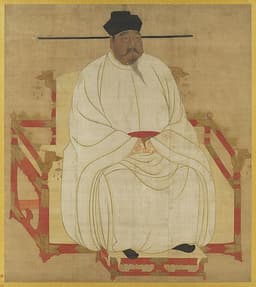
Emperor Taizu of Song
Emperor · Medieval
71.9Total
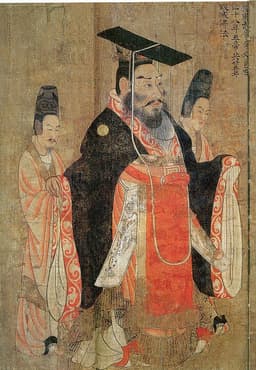
Yuwen Yong
Emperor · Medieval
67.2Total
Basic Information
Born
927
543
Died
976
578
Era
Medieval
Medieval
Nationality
China
China
Occupation
Emperor
Emperor
Civilization
Eastern
Eastern
Score Comparison
Military (10%)
80.0
78.0
Political (20%)
78.0
78.0
Influence (20%)
68.0
58.0
Legacy (20%)
65.0
54.0
Leadership (15%)
78.0
85.0
Strategy (15%)
72.0
69.1
TOTAL
71.9
67.2
Emperor Taizu of Song — Complete Timeline
960 AD
Chenqiao MutinyPolitical Action
Zhao Kuangyin, a general of the Later Zhou dynasty, was proclaimed emperor by his troops at Chenqiao. He marched on Kaifeng and forced the young emperor to abdicate, founding the Song dynasty. This coup established a new ruling house without major bloodshed.
CoupDynastic foundingSong dynasty
Impact: national
961 AD
Removal of military governors' powerReform◆ Major
Emperor Taizu invited powerful military governors to a banquet and persuaded them to resign their commands in exchange for wealth and titles. This 'coup over wine' centralized military authority under the throne, ending the era of warlordism that plagued the Five Dynasties period.
Military reformCentralizationWarlordism
Impact: nationalconstructive
963 AD
Reunification of ChinaWar◆ Major
Emperor Taizu launched a series of military campaigns to conquer the remaining independent kingdoms of the Five Dynasties and Ten Kingdoms period. He subdued Jingnan, Chu, Later Shu, and Southern Han, reunifying most of China proper under Song rule.
ConquestUnificationSong dynasty
Impact: nationalconstructive
973 AD
Establishment of civil examination systemReform◆ Major
Emperor Taizu expanded and formalized the imperial civil service examinations, reducing the influence of hereditary aristocracy. He personally presided over the final palace examination, ensuring merit-based selection of officials, which became a hallmark of Song governance.
Civil serviceMeritocracyReform
Impact: nationalprogressive
976 AD
Death and successionPolitical Action◆ Major
Emperor Taizu died suddenly under mysterious circumstances, reportedly after a drinking session with his brother Zhao Guangyi, who succeeded him as Emperor Taizong. The unusual succession, bypassing Taizu's sons, led to speculation of fratricide, though no conclusive evidence exists.
SuccessionMysterySong dynasty
Impact: nationaltragic
Yuwen Yong — Complete Timeline
574 AD
Suppression of Buddhism in Northern ZhouReform◆ Major
Emperor Wu of Northern Zhou (Yuwen Yong) ordered the suppression of Buddhism, confiscating monastic lands, forcing monks and nuns to return to lay life, and destroying temples. He aimed to increase state revenue and military manpower, strengthening the state.
Northern ZhouBuddhist PersecutionReform
Impact: nationaldestructive
577 AD
Conquest of Northern QiWar
Emperor Wu led a successful campaign against the rival Northern Qi dynasty, conquering its territory and unifying northern China under Northern Zhou. This victory ended the division of the north and set the stage for the Sui dynasty's unification of all China.
Northern ZhouUnificationNorthern Qi
Impact: regionalconstructive
578 AD
Death during campaign against the TurksWar◆ Major
Emperor Wu died of illness while leading a campaign against the G
Northern ZhouMilitary CampaignDeath
Impact: regionaltragic
Expert Analysis
Yuwen Yong vs Emperor Taizu of Song
# The Emperor Who Chose Peace and the Emperor Who Chose War
On a spring evening in 976, the most powerful man in China raised a cup of wine to his brother. By morning, Zhao Kuangyin, the Emperor Taizu of Song, was dead—mysteriously, conveniently, and with no one to question the succession. A thousand miles to the north and two centuries earlier, another emperor, Yuwen Yong of Northern Zhou, had died in his saddle, struck down by illness while chasing the Göktürks across the steppe. Both men reunified fractured Chinese kingdoms. Both died too young, with grand ambitions unfinished. But the paths they chose—and the civilizations they built—could not have been more different.
Origins
Zhao Kuangyin was born in 927 into a world of warlords and shifting alliances. The Five Dynasties period had turned China into a chessboard of short-lived regimes, where generals made emperors and emperors feared their generals. His father served as a military officer, but young Zhao grew up watching men rise and fall on the edge of a sword. He learned that power was fragile, that loyalty was a currency that could be devalued overnight.
Yuwen Yong, born in 543, came from the Xianbei tribal aristocracy that had carved out Northern Wei and its successor states. His people were steppe warriors who had settled into Chinese bureaucracy but never forgotten the thrill of the hunt or the discipline of the cavalry charge. He was raised in a court where Buddhism had become so powerful that monasteries owned vast estates and monks answered to no earthly authority. For Yuwen Yong, the problem was not too many warlords—it was too many temples.
Rise to Power
Zhao Kuangyin rose through merit. As a young officer in the Later Zhou dynasty, he distinguished himself in battle against the Northern Han and the Khitan. His soldiers respected him; his superiors trusted him. Then came the Chenqiao Mutiny of 960. His army, stationed north of Kaifeng, declared him emperor, draping him in a yellow robe that no one had asked him to wear. The story is almost too perfect—the reluctant general, the loyal troops, the bloodless coup. Whether Zhao orchestrated it or simply accepted destiny, he understood the lesson immediately: if an army could make an emperor, an army could unmake one.
Yuwen Yong’s path was more brutal. He became Emperor Wu of Northern Zhou in 560 after his cousin, the previous emperor, was poisoned by a regent. For years, Yuwen Yong played the role of a passive ruler while the powerful Yuwen Hu controlled the court. Then, in 572, he struck. During a routine audience, the emperor killed Yuwen Hu with a single blow from a ceremonial jade tablet. The court watched in stunned silence as the young emperor wiped blood from his hands and declared himself the true ruler.
Leadership & Governance
Here the two emperors diverged like branches from a single trunk. Zhao Kuangyin’s genius was political, not military. His military score of 66.5 is surprisingly modest for a dynasty founder, but his leadership score of 86.9 reveals his true strength: the art of persuasion. In 961, he invited the most powerful military governors to a banquet, plied them with wine, and convinced them to resign their commands in exchange for comfortable retirement. No bloodshed. No purges. Just a gentle, irresistible pressure. He then divided the army into smaller units, rotated commanders, and placed civil officials in charge of military logistics. No general could ever again challenge the throne.
Yuwen Yong, by contrast, was a warrior emperor. His military score of 74.6 and strategy score of 81.8 reflect a man who led from the front. In 577, he crushed the Northern Qi dynasty, unifying northern China under a single Xianbei-Chinese state. His governance was harsh and direct: he suppressed Buddhism in 574, confiscating monastic lands, forcing monks and nuns back into secular life, and redirecting wealth to the state treasury. Where Zhao built institutions, Yuwen Yong built armies.
Triumph & Tragedy
Zhao Kuangyin’s greatest triumph was the reunification of China itself. Between 963 and 976, he conquered the kingdoms of Shu, Southern Han, and Southern Tang, bringing most of the old Tang empire under Song control. But his strategy was cautious—he preferred diplomacy to war, bribery to battle. When he died, the northern frontier remained vulnerable to the Khitan Liao dynasty. The Song would never fully recover its lost northern territories.
Yuwen Yong’s triumph was the conquest of Northern Qi in 577, which made him the master of the north. His tragedy came the following year. While leading a campaign against the Göktürks, he fell ill and died at just 35. His son, a child emperor, was soon overthrown by a general named Yang Jian, who went on to found the Sui dynasty and reunify all of China. Yuwen Yong’s empire vanished within a generation.
Character & Destiny
Zhao Kuangyin was a man who understood the fragility of power. He once said, “A military man who does not want to be emperor is like a man who does not want to be rich—possible in theory, but rare in practice.” His entire reign was an attempt to institutionalize loyalty, to replace personal ambition with bureaucratic procedure. He promoted the civil examination system in 973, ensuring that future officials would be scholars, not warriors. His sudden death—possibly at the hands of his brother, who succeeded him—was the final irony: even the emperor who tried to tame power could not escape its violence.
Yuwen Yong was a man of action, not reflection. He saw the world as a battlefield and the state as a weapon. His suppression of Buddhism was not anti-religious but anti-competitive: he wanted no authority above the emperor. His death on campaign was almost poetic—a warrior emperor dying as he lived, in the saddle, chasing enemies beyond the frontier.
Legacy
The Song dynasty that Zhao Kuangyin founded would last 300 years, producing some of China’s greatest poets, philosophers, and inventors. But its military weakness would plague it forever. The Northern Song fell to the Jurchens in 1127; the Southern Song fell to the Mongols in 1279. Zhao’s decision to prioritize civil over military power made China prosperous, but vulnerable.
Yuwen Yong’s legacy is more ambiguous. He is remembered as a capable conqueror whose work was undone by his early death. The Sui and Tang dynasties that followed would borrow his institutions but reject his anti-Buddhist policies. He remains a footnote in Chinese history—a brilliant emperor who built an empire that lasted just long enough to be inherited by someone else.
Conclusion
Two emperors, two visions of power. Zhao Kuangyin believed that the greatest threat to the state came from within—from ambitious generals and unchecked military force. He built a system to contain that threat, and it worked for centuries, at the cost of military strength. Yuwen Yong believed the greatest threat came from without—from rival kingdoms and barbarian tribes. He built an army to meet that threat, and it worked for a decade, at the cost of political stability.
Perhaps the question is not which emperor was greater, but which problem was more dangerous. In the end, both men were prisoners of their times. Zhao could not afford to trust his generals; Yuwen could not afford to trust his neighbors. And both died before they could see their work completed—one in his bed, one in his saddle, neither at peace.
Rankings
🥇
Emperor Taizu of SongLeader
Mil: 80.0Pol: 78.0Inf: 68.0
71.9
🥈
Yuwen Yong
Mil: 78.0Pol: 78.0Inf: 58.0
67.2
+4.7 behind
How This Comparison Works
Algorithm
Each figure is scored on 6 dimensions (0—100 scale) based on structured historical data: Military (10%), Political (20%), Influence (20%), Legacy (20%), Leadership (15%), Strategy (15%). The weighted total produces the final ranking.
Data Sources
Scores are computed from structured sub-indicators in the database. Scale factors adjust for era (Ancient ×0.85, Modern ×1.0) and civilization size (Eastern ×1.05, Other ×0.80) to account for differences in population and military scale.
Maximum 3 Figures
Comparisons are limited to 2—3 figures to ensure readability and statistical meaningfulness.
Error Margins
±5 points per dimension — Sub-scores are derived from historical records with inherent uncertainty. Two figures within 5 points on a dimension should be considered roughly equivalent in that area.
Total Score Accuracy
±3 points overall — The weighted combination of 6 dimensions produces a total score with approximately ±3 points of uncertainty. Differences of less than 3 points are not statistically significant— the figures are effectively tied.
Known Limitations
- Historical records are incomplete and uneven across civilizations
- Figures from oral-tradition societies may be underrepresented
- Occupation labels can misclassify multi-role figures
- Scores measure capability and impact, not moral character
- Quantitative scoring is a comparison tool, not absolute truth
Capability Radar
Military (10%) — Battles & Warfare
Battles
75
75
Win Rate
80
80
Expansion
75
80
Political (20%) — Governance & Reform
Reform
95
85
Diplomacy
80
70
Economy
85
75
Influence (20%) — Cultural & Global Reach
Cultural
75
40
Global
70
40
Legacy (20%) — Historical Impact
Historical
85
65
Longevity
80
50
Leadership (15%) — Power & Stability
Tenure
70
60
Stability
90
70
Strategy (15%) — Tactics & Innovation
Strategy
85
75
Tactics
70
70
Reform
95
85
Similar Comparisons
Comments & Discussion
No comments yet. Be the first to share your thoughts!