Loading...
Emperor Taizu of Jin vs Rudolf of Habsburg
Emperor Taizu of Jin leads by 3.3 pts · 2 figures compared
…
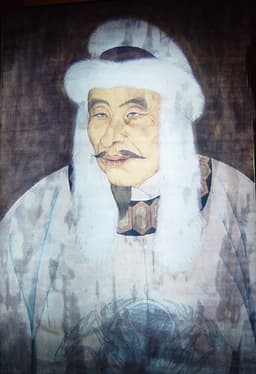
Emperor Taizu of Jin
Emperor · Medieval
63.5Total
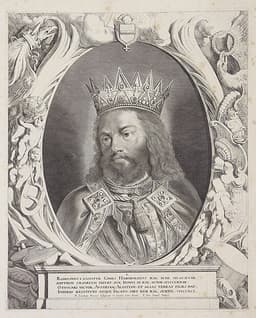
Rudolf of Habsburg
Emperor · Medieval
60.2Total
Basic Information
Born
1068
1218
Died
1123
1291
Era
Medieval
Medieval
Nationality
China
Holy Roman Empire
Occupation
Emperor
Emperor
Civilization
Eastern
Western
Score Comparison
Military (10%)
82.0
47.5
Political (20%)
65.0
68.0
Influence (20%)
55.0
61.0
Legacy (20%)
55.0
55.0
Leadership (15%)
72.0
68.0
Strategy (15%)
72.0
60.0
TOTAL
63.5
60.2
Emperor Taizu of Jin — Complete Timeline
1114 AD
Unification of the Jurchen tribesWar◆ Major
Wanyan Aguda led the Jurchen tribes in a rebellion against the Khitan-led Liao dynasty. He unified the Jurchen clans under his leadership, establishing a confederation that would form the basis of the Jin dynasty.
Jurchen unificationRebellionLiao dynasty
Impact: regionalconstructive
1115 AD
Battle of Hubu RiverWar◆ Major
Aguda's Jin forces defeated a Liao army at the Hubu River. This victory secured Jin control over the Liao's eastern territories and demonstrated the military effectiveness of the Jurchen cavalry against the Khitan.
BattleLiao-Jin WarMilitary victory
Impact: regional
Proclamation of the Jin dynastyPolitical Action◆ Major
Wanyan Aguda declared himself emperor, founding the Jin dynasty. He adopted the Chinese-style reign name Shouguo and established a centralized administration, marking the formal beginning of the Jin state.
Dynasty foundingImperial proclamationJin dynasty
Impact: regionalconstructive
1120 AD
Capture of the Liao Supreme CapitalWar◆ Major
Jin forces under Aguda captured the Liao dynasty's Supreme Capital (Shangjing). This conquest crippled the Liao state and forced the Liao emperor Tianzuo to flee, effectively ending Liao resistance in the region.
Capital captureLiao-Jin WarConquest
Impact: regional
Alliance with the Song dynastyPolitical Action◆ Major
Aguda negotiated the Alliance of the Sea with the Song dynasty, agreeing to jointly attack the Liao dynasty. The Song would receive the Sixteen Prefectures, while Jin would take the rest of Liao territory.
Diplomatic allianceSong-Jin relationsLiao partition
Impact: regional
Rudolf of Habsburg — Complete Timeline
1273 AD
Elected King of GermanyPolitical Action
Rudolf of Habsburg was elected King of Germany by the prince-electors, ending the Great Interregnum. His election was supported by the Papacy and marked the beginning of the Habsburg dynasty's rise to power in the Holy Roman Empire.
ElectionGreat InterregnumHabsburg Dynasty
Impact: regionalconstructive
Crowned Holy Roman EmperorPolitical Action◆ Major
Rudolf of Habsburg was crowned Holy Roman Emperor in Aachen. His coronation marked the end of the Great Interregnum and the restoration of imperial authority, though his power was limited to his dynastic lands.
CoronationHoly Roman EmpireGreat Interregnum
Impact: regional
1278 AD
Defeated Ottokar II of Bohemia at the Battle of MarchfeldWar
Rudolf of Habsburg defeated King Ottokar II of Bohemia at the Battle of Marchfeld. This victory secured the Habsburg control over Austria, Styria, and Carniola, which became the core territories of the Habsburg dynasty.
BattleHabsburgAustria
Impact: regional
1282 AD
Invested His Sons with Austria and StyriaPolitical Action◆ Major
Rudolf of Habsburg invested his sons Albert and Rudolf with the duchies of Austria and Styria. This act established the Habsburg dynasty's hereditary claim to these territories, laying the foundation for their future power in Central Europe.
Territorial GrantHabsburgAustria
Impact: regionalconstructive
Expert Analysis
Origins
Emperor Taizu of Jin, born Wanyan Aguda in 1068, was a chieftain of the Wanyan clan among the Jurchen tribes in Manchuria. The Jurchen were vassals of the Khitan-led Liao dynasty. Aguda grew up in a warrior culture, learning horsemanship and archery. His father, Helibo, was a leader who unified several tribes, but it was Aguda who would forge a nation. In contrast, Rudolf of Habsburg was born in 1218 into the Habsburg family, counts in what is now Switzerland. His father, Albert IV, held lands in the Alsace region. Rudolf was raised in the Holy Roman Empire's political landscape, inheriting small territories. Unlike Aguda's militaristic upbringing, Rudolf was educated in governance and diplomacy, preparing him for the complex feudal politics of Central Europe.
Rise to Power
Aguda rose by leading a rebellion against the Liao in 1114. He united the Jurchen tribes under his leadership, using the grievance of Liao oppression. In 1115, he declared himself emperor, founding the Jin dynasty with the reign name Shouguo. His military prowess was evident at the Battle of Hubu River (1115), where his forces defeated a larger Liao army. By 1120, he captured the Liao Supreme Capital, crippling the Liao state. He also formed the Alliance of the Sea with the Song dynasty in 1120, agreeing to jointly attack the Liao. Rudolf's rise was political. After the Great Interregnum (1254-1273), the prince-electors sought a king to restore order. Rudolf, a minor count, was elected King of Germany in 1273 due to his perceived weakness and the support of the Papacy. His turning point came in 1278 at the Battle of Marchfeld, where he defeated King Ottokar II of Bohemia, securing Austria, Styria, and Carniola. This victory transformed him from a minor noble to a major power.
Leadership & Governance
Aguda ruled as a military leader, centralizing the Jurchen state. He adopted Chinese administrative practices, establishing a bureaucracy and a legal code. He promoted agriculture and trade, integrating conquered territories. His leadership was direct; he led armies personally and rewarded loyalty with land and titles. Rudolf governed through feudal arrangements, relying on alliances and marriages. He invested his sons with Austria and Styria in 1282, establishing Habsburg hereditary rule. He also sought to strengthen imperial authority by restoring peace and order, but his power remained limited by the electors. Rudolf's style was diplomatic and cautious, contrasting with Aguda's aggressive expansion.
Triumph & Tragedy
Aguda's greatest triumph was founding the Jin dynasty and destroying the Liao, which scored 82.0 in military and 72.0 in leadership. His tragedy was his early death in 1123, just as the Jin began their conquest of the Song. He never saw the complete subjugation of northern China. Rudolf's triumph was ending the interregnum and securing Habsburg lands, earning a political score of 68.0. His tragedy was his failure to be crowned Holy Roman Emperor until 1273, and even then, his authority was contested. He died in 1291, leaving a legacy of dynastic ambition but limited imperial power.
Character & Destiny
Aguda was decisive, ruthless, and charismatic, traits that unified the Jurchen but also led to conflict with the Song. His destiny was to create a dynasty that would rule for a century. Rudolf was patient, pragmatic, and family-focused. His destiny was to lay the foundation for the Habsburgs, who would dominate Europe for centuries. Aguda's military prowess (82.0 vs Rudolf's 47.5) drove his success, while Rudolf's political acumen (68.0 vs Aguda's 65.0) secured his legacy.
Legacy
Aguda's Jin dynasty controlled northern China until 1234, influencing the region's culture and administration. The Jurchen identity merged into Chinese society. Rudolf's Habsburg dynasty became one of Europe's most powerful, ruling the Holy Roman Empire until 1806. His acquisition of Austria shaped Central European history. Both scored 55.0 in legacy, but Aguda's impact was more immediate and transformative in East Asia, while Rudolf's was long-term in Europe.
Conclusion
Emperor Taizu of Jin had greater impact in his era, as he founded a dynasty that conquered a major empire and reshaped East Asian geopolitics. His total score of 63.5 surpasses Rudolf's 60.2. While Rudolf's legacy endured longer, Aguda's achievements in military conquest and state-building were more decisive. He changed the balance of power in Asia, whereas Rudolf restored an existing system. Thus, Aguda emerges as the more consequential figure.
Rankings
🥇
Emperor Taizu of JinLeader
Mil: 82.0Pol: 65.0Inf: 55.0
63.5
🥈
Rudolf of Habsburg
Mil: 47.5Pol: 68.0Inf: 61.0
60.2
+3.3 behind
How This Comparison Works
Algorithm
Each figure is scored on 6 dimensions (0—100 scale) based on structured historical data: Military (10%), Political (20%), Influence (20%), Legacy (20%), Leadership (15%), Strategy (15%). The weighted total produces the final ranking.
Data Sources
Scores are computed from structured sub-indicators in the database. Scale factors adjust for era (Ancient ×0.85, Modern ×1.0) and civilization size (Eastern ×1.05, Other ×0.80) to account for differences in population and military scale.
Maximum 3 Figures
Comparisons are limited to 2—3 figures to ensure readability and statistical meaningfulness.
Error Margins
±5 points per dimension — Sub-scores are derived from historical records with inherent uncertainty. Two figures within 5 points on a dimension should be considered roughly equivalent in that area.
Total Score Accuracy
±3 points overall — The weighted combination of 6 dimensions produces a total score with approximately ±3 points of uncertainty. Differences of less than 3 points are not statistically significant— the figures are effectively tied.
Known Limitations
- Historical records are incomplete and uneven across civilizations
- Figures from oral-tradition societies may be underrepresented
- Occupation labels can misclassify multi-role figures
- Scores measure capability and impact, not moral character
- Quantitative scoring is a comparison tool, not absolute truth
Capability Radar
Military (10%) — Battles & Warfare
Battles
85
45
Win Rate
90
50
Expansion
85
60
Political (20%) — Governance & Reform
Reform
75
55
Diplomacy
80
70
Economy
65
50
Influence (20%) — Cultural & Global Reach
Cultural
55
40
Global
50
55
Legacy (20%) — Historical Impact
Historical
70
70
Longevity
60
75
Leadership (15%) — Power & Stability
Tenure
70
65
Stability
60
60
Strategy (15%) — Tactics & Innovation
Strategy
85
55
Tactics
88
40
Reform
75
30
Similar Comparisons
Comments & Discussion
No comments yet. Be the first to share your thoughts!