Loading...
Emperor Taizu of Jin vs Qin Shi Huang
Qin Shi Huang leads by 21.7 pts · 2 figures compared
…
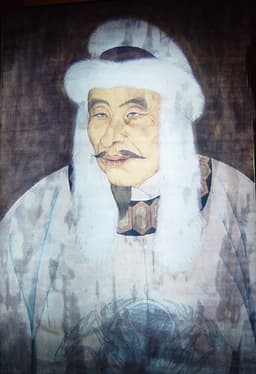
Emperor Taizu of Jin
Emperor · Medieval
63.5Total
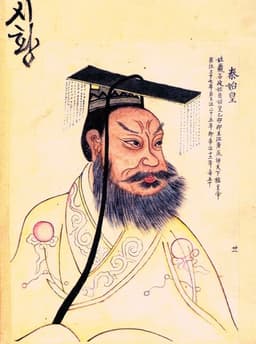
Qin Shi Huang
Emperor · Ancient
85.2Total
Basic Information
Born
1068
-259
Died
1123
-210
Era
Medieval
Ancient
Nationality
China
China
Occupation
Emperor
Emperor
Civilization
Eastern
Eastern
Score Comparison
Military (10%)
82.0
80.0
Political (20%)
65.0
90.0
Influence (20%)
55.0
85.0
Legacy (20%)
55.0
90.0
Leadership (15%)
72.0
78.0
Strategy (15%)
72.0
82.0
TOTAL
63.5
85.2
Emperor Taizu of Jin — Complete Timeline
1114 AD
Unification of the Jurchen tribesWar◆ Major
Wanyan Aguda led the Jurchen tribes in a rebellion against the Khitan-led Liao dynasty. He unified the Jurchen clans under his leadership, establishing a confederation that would form the basis of the Jin dynasty.
Jurchen unificationRebellionLiao dynasty
Impact: regionalconstructive
1115 AD
Battle of Hubu RiverWar◆ Major
Aguda's Jin forces defeated a Liao army at the Hubu River. This victory secured Jin control over the Liao's eastern territories and demonstrated the military effectiveness of the Jurchen cavalry against the Khitan.
BattleLiao-Jin WarMilitary victory
Impact: regional
Proclamation of the Jin dynastyPolitical Action◆ Major
Wanyan Aguda declared himself emperor, founding the Jin dynasty. He adopted the Chinese-style reign name Shouguo and established a centralized administration, marking the formal beginning of the Jin state.
Dynasty foundingImperial proclamationJin dynasty
Impact: regionalconstructive
1120 AD
Capture of the Liao Supreme CapitalWar◆ Major
Jin forces under Aguda captured the Liao dynasty's Supreme Capital (Shangjing). This conquest crippled the Liao state and forced the Liao emperor Tianzuo to flee, effectively ending Liao resistance in the region.
Capital captureLiao-Jin WarConquest
Impact: regional
Alliance with the Song dynastyPolitical Action◆ Major
Aguda negotiated the Alliance of the Sea with the Song dynasty, agreeing to jointly attack the Liao dynasty. The Song would receive the Sixteen Prefectures, while Jin would take the rest of Liao territory.
Diplomatic allianceSong-Jin relationsLiao partition
Impact: regional
Qin Shi Huang — Complete Timeline
246 BC
Construction of the Mausoleum and Terracotta ArmyOther◆ Major
Qin Shi Huang commissioned a vast mausoleum complex near Xi'an, guarded by thousands of life-sized terracotta soldiers, horses, and chariots. The project employed hundreds of thousands of workers and reflected his obsession with immortality and imperial power.
Impact: global
230 BC
Conquest of the Six Warring StatesWar
From 230 to 221 BCE, Ying Zheng led the Qin state in a series of campaigns that conquered the Han, Zhao, Wei, Chu, Yan, and Qi states. This unified China under a single ruler for the first time, ending the Warring States period.
Impact: global
221 BC
Standardization of Writing, Currency, and MeasurementsReform◆ Major
Qin Shi Huang ordered the standardization of Chinese script, currency, and weights and measures across the unified empire. This facilitated administration, trade, and cultural integration, laying a foundation for future dynasties.
Impact: globalconstructive
Proclamation of the Qin DynastyPolitical Action
After conquering the last independent state, Ying Zheng declared himself Shi Huangdi (First Emperor), founding the Qin Dynasty. He adopted a new title to signify his supreme authority and initiated centralized imperial rule.
Impact: global
214 BC
Initiation of the Great Wall ConstructionOther◆ Major
Qin Shi Huang ordered the connection and extension of existing northern fortifications to create a unified defensive wall against nomadic Xiongnu raids. This project involved massive conscripted labor and became the precursor to the later Great Wall.
Impact: regional
213 BC
Burning of Books and Burying of ScholarsPolitical Action◆ Major
On the advice of Li Si, Qin Shi Huang ordered the burning of historical records and philosophical texts not aligned with Legalist doctrine. He also had 460 Confucian scholars buried alive to suppress dissent and consolidate ideological control.
Impact: nationaldestructive
Expert Analysis
emperor-taizu-of-jin-vs-qin-shi-huang
# The Unifier and the Rebel: Two Paths to Empire
In the winter of 221 BC, a young king stood atop the conquered walls of the last independent Chinese state and declared himself *Shi Huangdi*—the First Emperor. Thirteen centuries later, in the forests of Manchuria, a Jurchen chieftain raised a war banner against an empire that had dominated his people for generations, and proclaimed himself the first emperor of a new dynasty. Qin Shi Huang and Emperor Taizu of Jin both forged empires from fragments, but their journeys could not have been more different. One inherited a war machine and perfected it; the other built a nation from tribal loyalties and sheer will.
Origins
Qin Shi Huang was born into power. His father was king of Qin, the westernmost of the Warring States, a realm that had already spent centuries perfecting the art of bureaucratic warfare. The boy who would become the First Emperor grew up in a palace where Legalist philosophers taught that law, not virtue, held a kingdom together. His childhood was shaped by the shadow of a regent, Lü Buwei, and the whispered intrigues of a court that had turned statecraft into a science. By the time Ying Zheng assumed the throne at thirteen, he understood that power was something to be calculated, not felt.
Wanyan Aguda knew nothing of such refinement. Born in 1068 among the Jurchen tribes of the frozen northeast, his world was one of hunting parties, tribal councils, and the constant pressure of Khitan domination. The Liao dynasty had ruled the Jurchen for decades, extracting tribute and demanding submission. Aguda learned leadership not from philosophers but from the hunt—he was said to have shot a deer through the heart at a gallop, and his warriors followed him because he could outride, outshoot, and outfight any man among them. Where Qin Shi Huang inherited a state, Aguda inherited only a grievance.
Rise to Power
The First Emperor’s rise was methodical. Between 230 and 221 BC, his generals swept through the six rival kingdoms like a blade through silk. The conquest was not glorious—it was clinical. Qin’s armies used iron weapons, crossbows, and a logistical system that could feed tens of thousands of men on campaign. When Han fell, then Zhao, then Wei, the young king did not ride into battle himself. He remained in his capital, Xianyang, reading dispatches and issuing orders. His power came from the machine he commanded, not from his own arm.
Aguda’s rise was the opposite. In 1114, when he finally united the Jurchen tribes and rebelled against the Liao, he led the charge himself. At the Battle of Hubu River in 1115, his army was outnumbered, but Aguda personally rallied his men at the critical moment, breaking the Khitan line with a ferocity that stunned the enemy. He did not have a bureaucracy; he had a war band. He did not have a strategy; he had a will. When he proclaimed the Jin dynasty that same year, his new “empire” consisted of little more than a few thousand horsemen and a dream.
Leadership & Governance
Qin Shi Huang governed as he conquered—with absolute uniformity. He standardized writing, currency, and measurements across his realm, forcing a dozen different cultures into a single mold. His roads ran straight, his laws were harsh, and his punishments were severe. The Great Wall he ordered built was not a single wall but a chain of fortifications meant to hold back the northern nomads. Yet his greatest innovation was administrative: he divided China into commanderies and counties, ruled by officials appointed from the capital, not by hereditary lords. This was the skeleton upon which every future Chinese dynasty would be built.
Aguda ruled differently. The Jin dynasty was, at first, a confederation of tribes. Aguda kept the Jurchen *meng’an mouke* system—military units that doubled as social organizations—because he understood that his people’s strength lay in their bonds of blood and loyalty. He adopted Chinese administrative practices only gradually, and only where they served his purposes. When he allied with the Song dynasty in 1120 to destroy the Liao, he did so as a partner, not a master. But the alliance was a strategic gambit: Aguda knew that the Song would be useful, then expendable.
Triumph & Tragedy
Qin Shi Huang’s greatest triumph was also his greatest tragedy. He unified China, but at a terrible cost. The Burning of Books and Burying of Scholars in 213 BC was not mere cruelty—it was an attempt to erase history itself, to make the Qin the only beginning. He built his mausoleum with a river of mercury and an army of terracotta soldiers, a monument to his own immortality. But the First Emperor died in 210 BC, and within three years, his dynasty collapsed. His harsh laws and brutal conscriptions had bred rebellion, and his son was murdered by a eunuch. The man who wanted to rule for ten thousand years saw his empire die in a generation.
Aguda’s triumph came in 1125, when Jin forces captured the last Liao emperor. He had destroyed an empire that had dominated the north for two centuries. But his tragedy was different: he did not live to see his dynasty’s full rise. He died in 1123, two years before the final victory, his work unfinished. Yet the Jin dynasty would endure for over a century, ruling northern China with a hybrid of Jurchen martial tradition and Chinese bureaucracy.
Character & Destiny
The difference between these two emperors lies in their character. Qin Shi Huang was a builder and a destroyer. He saw chaos and demanded order, saw diversity and demanded unity. His paranoia was legendary—he slept in different rooms each night to avoid assassination, and he searched obsessively for the elixir of immortality. He trusted no one, not even his own sons. His destiny was to create a template that others would perfect.
Aguda was a warrior and a pragmatist. He knew that loyalty could not be commanded, only earned. He shared the hardships of his soldiers, ate their food, slept on their ground. His destiny was to prove that a tribal chieftain could become an emperor, that the periphery could conquer the center. Where Qin Shi Huang tried to erase the past, Aguda adapted it to his purposes.
Legacy
Today, Qin Shi Huang is remembered as the father of China. The terracotta warriors have made him a global icon, and his standardization of writing and measurement shaped Chinese civilization for two millennia. He is both feared and admired—a tyrant who gave his nation its form.
Emperor Taizu of Jin is far less known outside of China. The Jurchen people eventually sinicized, and the Jin dynasty was later destroyed by the Mongols. But Aguda’s legacy lives in the resilience of the Jurchen identity, which would eventually resurface as the Manchu, who conquered China again five centuries later. He proved that the northern tribes were not barbarians to be walled out, but peoples capable of building empires of their own.
Conclusion
Two emperors, two paths. Qin Shi Huang ruled through law, uniformity, and fear. Wanyan Aguda ruled through loyalty, adaptability, and courage. One built a machine that crushed everything in its path but could not sustain itself. The other built a community that grew into an empire. The First Emperor wanted to be remembered as eternal; the Jurchen chieftain simply wanted to be free. In the end, both got what they sought, though not in the way they expected. The unifier’s empire crumbled, but his idea endured. The rebel’s empire flourished, but his people were absorbed. History, it seems, has room for both the iron hand and the open heart.
Rankings
🥇
Qin Shi HuangLeader
Mil: 80.0Pol: 90.0Inf: 85.0
85.2
🥈
Emperor Taizu of Jin
Mil: 82.0Pol: 65.0Inf: 55.0
63.5
+21.7 behind
How This Comparison Works
Algorithm
Each figure is scored on 6 dimensions (0—100 scale) based on structured historical data: Military (10%), Political (20%), Influence (20%), Legacy (20%), Leadership (15%), Strategy (15%). The weighted total produces the final ranking.
Data Sources
Scores are computed from structured sub-indicators in the database. Scale factors adjust for era (Ancient ×0.85, Modern ×1.0) and civilization size (Eastern ×1.05, Other ×0.80) to account for differences in population and military scale.
Maximum 3 Figures
Comparisons are limited to 2—3 figures to ensure readability and statistical meaningfulness.
Error Margins
±5 points per dimension — Sub-scores are derived from historical records with inherent uncertainty. Two figures within 5 points on a dimension should be considered roughly equivalent in that area.
Total Score Accuracy
±3 points overall — The weighted combination of 6 dimensions produces a total score with approximately ±3 points of uncertainty. Differences of less than 3 points are not statistically significant— the figures are effectively tied.
Known Limitations
- Historical records are incomplete and uneven across civilizations
- Figures from oral-tradition societies may be underrepresented
- Occupation labels can misclassify multi-role figures
- Scores measure capability and impact, not moral character
- Quantitative scoring is a comparison tool, not absolute truth
Capability Radar
Military (10%) — Battles & Warfare
Battles
85
85
Win Rate
90
90
Expansion
85
90
Political (20%) — Governance & Reform
Reform
75
95
Diplomacy
80
75
Economy
65
90
Influence (20%) — Cultural & Global Reach
Cultural
55
95
Global
50
85
Legacy (20%) — Historical Impact
Historical
70
95
Longevity
60
95
Leadership (15%) — Power & Stability
Tenure
70
70
Stability
60
65
Strategy (15%) — Tactics & Innovation
Strategy
85
85
Tactics
88
80
Reform
75
95
Similar Comparisons
Comments & Discussion
Aguda's Axe6/17/2026
Military historian here. Taizu of Jin wins hands down on founder's grit. Qin Shi Huang inherited a century-old war machine with Legalist bureaucracy already oiled; Aguda started with 2,000 tribal warriors and shattered the Liao Empire in a single generation. The Battle of Huchang (1121) saw Jurchen cavalry outflank Khitan heavy infantry using frozen swamps as highways—tactical genius, not just raw numbers. Qin conquered with superior logistics; Jin conquered by being smarter.
数据掘墓人6/17/2026
数据怀疑论者在此。说'秦国军队更庞大'的是皇帝脑。李靖兵法里说'兵贵精不贵多',秦始皇的百万大军多数是征发农民,农具比刀多。金太祖起兵时只有2500人,却在护步答冈之战用两万破辽军七十万——这比例差七倍,不是靠吹牛。别拿兵马俑当证据,那是模型,不是活人。
The Unseen Historian6/17/2026
Classics scholar with a soft spot for marginalia. The real divergence is how each empire died. Qin crumbled in three years after the First Emperor's death, its Legalist foundation too brittle to survive succession crisis. Jin fell after a century, slowly eroded by Mongol pressure and sinicization. Aguda's tribal confederation adapted; Qin's machine couldn't pivot. The Jurchen script he commissioned in 1119 is still studied; Qin's Lesser Seal script got standardized—and forgotten.
血火的遗民6/17/2026
修正论批评者,不服来辩。金太祖不是'入侵者',他是复仇者。辽国每岁强征女真貂皮海东青,路上杀人如麻,《辽史·兵志》写女真户'丁头钱'十五贯活不下去。完颜阿骨打起兵誓词说'女真虽小,不可欺',这是民族解放。秦始皇呢?统一六国后焚书坑儒、戍边五十万,死人堆里建帝国。谁更正义?我站阿骨打。
Sword and Plowshare6/17/2026
History buff who reads farming records. Let's talk material base. Qin grew entire armies from the Guanzhong granaries—the Zheng Guo Canal alone irrigated 40,000 hectares. Jin had no such luxury; Aguda fed his troops on wild game and raided Liao granaries. Yet Jin's cavalry survived winters at -30°C while Qin's southern campaigns bogged down in heat and disease. Resourcefulness beats infrastructure when your men can march through blizzards. Give me a hungry warrior over a fed bureaucrat any day.