Loading...
Emperor Taizu of Jin vs Louis IV
Emperor Taizu of Jin leads by 17.0 pts · 2 figures compared
…
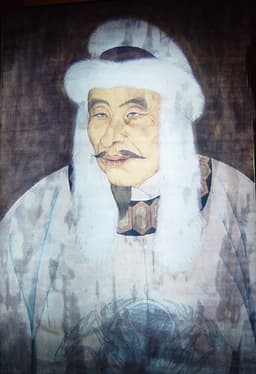
Emperor Taizu of Jin
Emperor · Medieval
63.5Total

Louis IV
Emperor · Medieval
46.5Total
Basic Information
Born
1068
1282
Died
1123
1347
Era
Medieval
Medieval
Nationality
China
Holy Roman Empire
Occupation
Emperor
Emperor
Civilization
Eastern
Western
Score Comparison
Military (10%)
82.0
10.0
Political (20%)
65.0
45.1
Influence (20%)
55.0
52.5
Legacy (20%)
55.0
45.8
Leadership (15%)
72.0
65.7
Strategy (15%)
72.0
43.3
TOTAL
63.5
46.5
Emperor Taizu of Jin — Complete Timeline
1114 AD
Unification of the Jurchen tribesWar◆ Major
Wanyan Aguda led the Jurchen tribes in a rebellion against the Khitan-led Liao dynasty. He unified the Jurchen clans under his leadership, establishing a confederation that would form the basis of the Jin dynasty.
Jurchen unificationRebellionLiao dynasty
Impact: regionalconstructive
1115 AD
Battle of Hubu RiverWar◆ Major
Aguda's Jin forces defeated a Liao army at the Hubu River. This victory secured Jin control over the Liao's eastern territories and demonstrated the military effectiveness of the Jurchen cavalry against the Khitan.
BattleLiao-Jin WarMilitary victory
Impact: regional
Proclamation of the Jin dynastyPolitical Action◆ Major
Wanyan Aguda declared himself emperor, founding the Jin dynasty. He adopted the Chinese-style reign name Shouguo and established a centralized administration, marking the formal beginning of the Jin state.
Dynasty foundingImperial proclamationJin dynasty
Impact: regionalconstructive
1120 AD
Capture of the Liao Supreme CapitalWar◆ Major
Jin forces under Aguda captured the Liao dynasty's Supreme Capital (Shangjing). This conquest crippled the Liao state and forced the Liao emperor Tianzuo to flee, effectively ending Liao resistance in the region.
Capital captureLiao-Jin WarConquest
Impact: regional
Alliance with the Song dynastyPolitical Action◆ Major
Aguda negotiated the Alliance of the Sea with the Song dynasty, agreeing to jointly attack the Liao dynasty. The Song would receive the Sixteen Prefectures, while Jin would take the rest of Liao territory.
Diplomatic allianceSong-Jin relationsLiao partition
Impact: regional
Louis IV — Complete Timeline
1314 AD
Elected King of GermanyPolitical Action◆ Major
Louis IV of Bavaria was elected King of Germany by a faction of prince-electors, opposing Frederick the Fair. This election was part of a double election that led to a civil war between the Wittelsbach and Habsburg dynasties.
ElectionWittelsbachDouble Election
Impact: regional
1322 AD
Defeated Frederick the Fair at the Battle of MühldorfWar◆ Major
Louis IV of Bavaria defeated Frederick the Fair at the Battle of M
BattleWittelsbachVictory
Impact: regional
1328 AD
Crowned Holy Roman Emperor by the Roman PeoplePolitical Action
Louis IV of Bavaria was crowned Holy Roman Emperor in Rome by the Roman people, defying Pope John XXII who had excommunicated him. This act asserted imperial authority over the Papacy and led to a prolonged conflict with the Avignon Papacy.
CoronationPapal ConflictImperial Authority
Impact: global
1338 AD
Issued the Declaration of RhensePolitical Action◆ Major
Louis IV of Bavaria issued the Declaration of Rhense, which stated that the German king's election by the prince-electors alone conferred imperial authority without papal approval. This declaration strengthened the independence of the Holy Roman Empire from the Papacy.
DeclarationImperial IndependencePapacy
Impact: regionalconstructive
Expert Analysis
Origins
Emperor Taizu of Jin, born Wanyan Aguda in 1068, was a chieftain of the Wanyan clan among the Jurchen tribes in what is now northeastern China. The Jurchen were semi-nomadic, living under the domination of the Khitan-led Liao dynasty. Aguda grew up in a warrior culture, learning horsemanship and archery from an early age. His father, Helibo, was a leader who had begun unifying the Jurchen clans, and Aguda continued this work after his brother Wuyashu died in 1103. Aguda's early experiences included leading raids against rival tribes and the Liao, and he was known for his personal bravery and tactical acumen.
Louis IV, born in 1282, was a member of the House of Wittelsbach, the ruling family of Bavaria. He was the son of Duke Louis II of Upper Bavaria and Mechthild of Habsburg. Louis IV grew up in a period of political fragmentation within the Holy Roman Empire, where the princely electors often contested royal authority. He received a typical noble education, focusing on chivalric values and governance. Unlike Aguda, Louis IV did not have to forge a state from scratch; he inherited a duchy and navigated the complex politics of the empire.
Rise to Power
Aguda's rise began in earnest when he succeeded his brother as chieftain of the Wanyan clan in 1103. He continued unifying the Jurchen tribes, using a combination of diplomacy and force. In 1114, he led a rebellion against the Liao dynasty, winning a decisive victory at the Battle of Hubu River. This victory secured Jin control over the Liao's eastern territories and demonstrated the military prowess of the Jurchen. In 1115, Aguda declared himself emperor, founding the Jin dynasty with the reign name Shouguo. He then captured the Liao's Supreme Capital (Shangjing) in 1120, crippling the Liao state. To further weaken the Liao, he negotiated the Alliance of the Sea with the Song dynasty in 1120, agreeing to jointly attack the Liao. By 1122, the Liao were in retreat, and Aguda had established the Jin as a major power.
Louis IV's rise was marked by electoral politics and civil war. In 1314, he was elected King of Germany by a faction of prince-electors, opposing Frederick the Fair of Habsburg. This double election led to a civil war lasting until 1322. Louis IV defeated Frederick decisively at the Battle of Mühldorf on September 28, 1322. After this victory, he consolidated his rule over Germany. In 1328, he marched to Rome and was crowned Holy Roman Emperor by the Roman people, defying Pope John XXII who had excommunicated him. This act of defiance asserted imperial authority over papal claims, but it also embroiled him in a long conflict with the papacy.
Leadership & Governance
Aguda's leadership style was that of a warrior-king. He led from the front, personally commanding armies and sharing hardships with his soldiers. His governance was pragmatic: he adopted Chinese-style administration, establishing a centralized bureaucracy and using Chinese officials to manage conquered territories. He also maintained the Jurchen tribal structure for military organization, which gave his army flexibility and loyalty. Aguda scored 72.0 in leadership and 72.0 in strategy, reflecting his effectiveness in both combat and state-building.
Louis IV's leadership was more political than military. He scored only 10.0 in military, as he rarely commanded armies personally after Mühldorf. His governance focused on asserting imperial rights against the pope and the princes. He issued the Declaration of Rhense in 1338, which stated that the German king's election by the prince-electors alone conferred imperial authority without papal confirmation. This was a key assertion of imperial sovereignty. However, his rule was marked by constant conflict with the papacy and internal dissent, limiting his ability to enact lasting reforms. He scored 45.1 in political, indicating moderate effectiveness.
Triumph & Tragedy
Aguda's greatest triumph was the founding of the Jin dynasty and the conquest of the Liao. He unified the Jurchen tribes, a feat that required both military skill and diplomatic finesse. His victory at the Hubu River and capture of the Liao capital were turning points in East Asian history. However, his tragedy was that he died in 1123, before the Jin completed the conquest of the Liao and before they turned on the Song. He did not live to see the Jin's greatest expansion. His alliance with the Song ultimately led to war, but he was not responsible for that.
Louis IV's triumph was his victory over Frederick the Fair and his coronation as emperor, defying the pope. The Declaration of Rhense was a significant constitutional statement. However, his tragedy was that his reign accomplished little beyond these symbolic victories. He failed to secure a stable succession; after his death in 1347, the Wittelsbach dynasty lost the imperial throne. His conflict with the papacy weakened the empire and distracted from more pressing issues. He scored 52.5 in influence and 45.8 in legacy, indicating limited long-term impact.
Character & Destiny
Aguda was decisive, courageous, and pragmatic. He was known for his personal bravery and ability to inspire loyalty. His character was suited to a period of warfare and state formation. His destiny was to create a dynasty that would dominate northern China for a century. In contrast, Louis IV was stubborn and defiant, but also pragmatic in his political maneuvering. His defiance of the pope was bold but ultimately counterproductive, as it isolated him from the broader Christian world. His character led him to a path of conflict that limited his effectiveness.
Legacy
Aguda's legacy is profound. The Jin dynasty ruled northern China until 1234, and its administrative innovations influenced later dynasties. The Jurchen people became more Sinicized, and their military organization set a model for later conquest dynasties. Aguda scored 55.0 in both influence and legacy, reflecting his importance in Chinese history. Louis IV's legacy is more modest. The Declaration of Rhense was a step toward imperial independence from the papacy, but it was not fully realized until later. His reign is often seen as a period of conflict and stagnation. He scored 45.8 in legacy.
Conclusion
Emperor Taizu of Jin had a greater impact than Louis IV. Aguda founded a dynasty that reshaped East Asia, while Louis IV's achievements were mainly symbolic. Aguda's total score of 63.5 far exceeds Louis IV's 46.5, a gap of 17 points. In military, strategy, and leadership, Aguda dominated. Even in political and legacy scores, Aguda was higher. Louis IV's defiance of the pope was notable, but it did not lead to lasting change. Aguda's unification of the Jurchen and conquest of the Liao created a new power structure that endured for over a century. Therefore, Emperor Taizu of Jin is the more consequential figure.
Rankings
🥇
Emperor Taizu of JinLeader
Mil: 82.0Pol: 65.0Inf: 55.0
63.5
🥈
Louis IV
Mil: 10.0Pol: 45.1Inf: 52.5
46.5
+17.0 behind
How This Comparison Works
Algorithm
Each figure is scored on 6 dimensions (0—100 scale) based on structured historical data: Military (10%), Political (20%), Influence (20%), Legacy (20%), Leadership (15%), Strategy (15%). The weighted total produces the final ranking.
Data Sources
Scores are computed from structured sub-indicators in the database. Scale factors adjust for era (Ancient ×0.85, Modern ×1.0) and civilization size (Eastern ×1.05, Other ×0.80) to account for differences in population and military scale.
Maximum 3 Figures
Comparisons are limited to 2—3 figures to ensure readability and statistical meaningfulness.
Error Margins
±5 points per dimension — Sub-scores are derived from historical records with inherent uncertainty. Two figures within 5 points on a dimension should be considered roughly equivalent in that area.
Total Score Accuracy
±3 points overall — The weighted combination of 6 dimensions produces a total score with approximately ±3 points of uncertainty. Differences of less than 3 points are not statistically significant— the figures are effectively tied.
Known Limitations
- Historical records are incomplete and uneven across civilizations
- Figures from oral-tradition societies may be underrepresented
- Occupation labels can misclassify multi-role figures
- Scores measure capability and impact, not moral character
- Quantitative scoring is a comparison tool, not absolute truth
Capability Radar
Military (10%) — Battles & Warfare
Battles
85
45
Win Rate
90
40
Expansion
85
35
Political (20%) — Governance & Reform
Reform
75
40
Diplomacy
80
50
Economy
65
35
Influence (20%) — Cultural & Global Reach
Cultural
55
30
Global
50
25
Legacy (20%) — Historical Impact
Historical
70
45
Longevity
60
30
Leadership (15%) — Power & Stability
Tenure
70
55
Stability
60
30
Strategy (15%) — Tactics & Innovation
Strategy
85
40
Tactics
88
35
Reform
75
30
Similar Comparisons
Comments & Discussion
No comments yet. Be the first to share your thoughts!